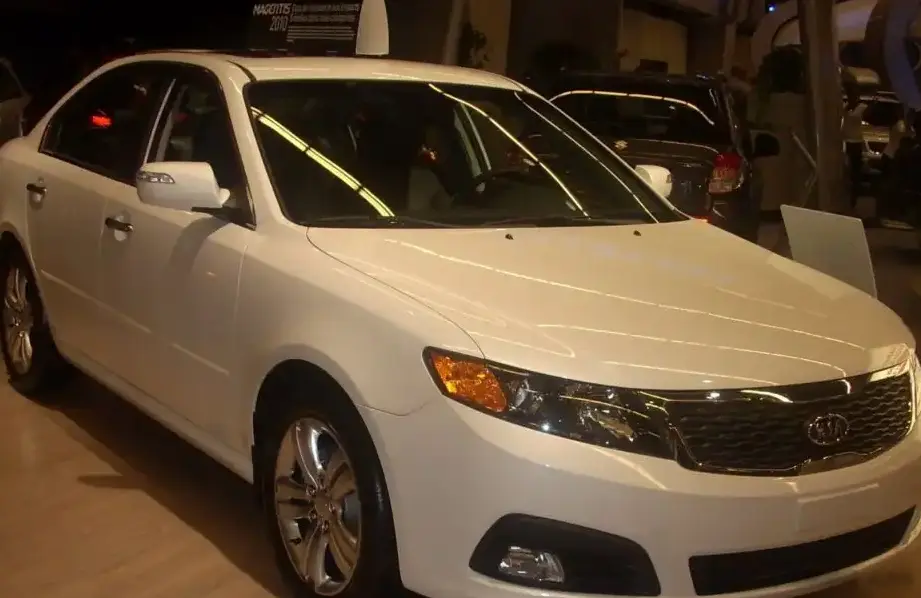
The Kia Magentis II 2.0 CRDi Automatic, produced between 2005 and 2008, represented a significant step forward for Kia in the mid-size sedan segment. Positioned as a comfortable and well-equipped offering, this variant utilized a 2.0-liter common-rail diesel engine paired with a four-speed automatic transmission. It aimed to provide a balance between fuel efficiency and acceptable performance for buyers prioritizing convenience and refinement over outright sportiness. The Magentis II, known as the Optima in some markets, was Kia’s attempt to establish a stronger foothold against established competitors like the Toyota Camry, Honda Accord, and Ford Fusion. This specific 2.0 CRDi Automatic trim occupied a mid-range position within the Magentis II lineup, offering more power and features than the base gasoline models but falling short of the flagship trims.
Technical Specifications
| Brand | Kia |
| Model | Magentis |
| Generation | Magentis II |
| Type (Engine) | 2.0 CRDi (140 Hp) Automatic |
| Start of production | 2005 |
| End of production | 2008 |
| Powertrain Architecture | Internal Combustion engine |
| Body type | Sedan |
| Seats | 5 |
| Doors | 4 |
| Fuel consumption (urban) | 10.4 l/100 km (22.6 US mpg, 27.2 UK mpg, 9.6 km/l) |
| Fuel consumption (extra urban) | 5.6 l/100 km (42 US mpg, 50.4 UK mpg, 17.9 km/l) |
| Fuel consumption (combined) | 7.3 l/100 km (32.2 US mpg, 38.7 UK mpg, 13.7 km/l) |
| CO2 emissions | 191 g/km |
| Fuel Type | Diesel |
| Acceleration 0 – 100 km/h | 11.7 sec |
| Acceleration 0 – 62 mph | 11.7 sec |
| Acceleration 0 – 60 mph | 11.1 sec |
| Maximum speed | 200 km/h (124.27 mph) |
| Emission standard | Euro 4 |
| Weight-to-power ratio | 11.7 kg/Hp, 85.8 Hp/tonne |
| Weight-to-torque ratio | 5.4 kg/Nm, 186.9 Nm/tonne |
| Power | 140 Hp @ 4000 rpm |
| Power per litre | 70.3 Hp/l |
| Torque | 305 Nm @ 1800-2500 rpm (224.96 lb.-ft. @ 1800-2500 rpm) |
| Engine layout | Front, Transverse |
| Engine Model/Code | D4EA |
| Engine displacement | 1991 cm3 (121.5 cu. in.) |
| Number of cylinders | 4 |
| Engine configuration | Inline |
| Cylinder Bore | 83 mm (3.27 in.) |
| Piston Stroke | 92 mm (3.62 in.) |
| Compression ratio | 17.3:1 |
| Number of valves per cylinder | 4 |
| Fuel injection system | Diesel Commonrail |
| Engine aspiration | Turbocharger, Intercooler |
| Valvetrain | DOHC |
| Engine oil capacity | 5.9 l (6.23 US qt | 5.19 UK qt) |
| Coolant | 6.7 l (7.08 US qt | 5.9 UK qt) |
| Kerb Weight | 1632 kg (3597.94 lbs.) |
| Max. weight | 2060 kg (4541.52 lbs.) |
| Max load | 428 kg (943.58 lbs.) |
| Trunk (boot) space – minimum | 496 l (17.52 cu. ft.) |
| Trunk (boot) space – maximum | 816 l (28.82 cu. ft.) |
| Fuel tank capacity | 62 l (16.38 US gal | 13.64 UK gal) |
| Max. roof load | 80 kg (176.37 lbs.) |
| Permitted trailer load with brakes (12%) | 1700 kg (3747.86 lbs.) |
| Permitted trailer load without brakes | 750 kg (1653.47 lbs.) |
| Permitted towbar download | 60 kg (132.28 lbs.) |
| Length | 4735 mm (186.42 in.) |
| Width | 1805 mm (71.06 in.) |
| Height | 1480 mm (58.27 in.) |
| Wheelbase | 2720 mm (107.09 in.) |
| Front track | 1558 mm (61.34 in.) |
| Rear (Back) track | 1552 mm (61.1 in.) |
| Minimum turning circle (turning diameter) | 11.8 m (38.71 ft.) |
| Drivetrain Architecture | The Internal combustion engine (ICE) drives the front wheels of the vehicle. |
| Drive wheel | Front wheel drive |
| Number of gears and type of gearbox | 4 gears, automatic transmission |
| Front suspension | Independent, type McPherson with coil spring and anti-roll bar |
| Rear suspension | Independent multi-link suspension |
| Front brakes | Ventilated discs |
| Rear brakes | Disc |
| Assisting systems | ABS (Anti-lock braking system) |
| Steering type | Steering rack and pinion |
| Power steering | Hydraulic Steering |
| Tires size | 205/60 R16 |
| Wheel rims size | 6.5J x 16 |
INTRODUCTION
The Kia Magentis II, launched in 2005, represented a significant upgrade over its predecessor. Built on the 1HX0/A3 platform (shared with the Hyundai Sonata of the same era), the Magentis II aimed to offer a more refined and modern driving experience. The 2.0 CRDi Automatic variant was a key component of the lineup, targeting buyers who desired the fuel economy benefits of a diesel engine combined with the convenience of an automatic transmission. This model year saw Kia attempting to shed its reputation for budget-focused vehicles and move towards a more premium image, and the Magentis II was a crucial part of that strategy.
Powertrain & Engine Architecture
At the heart of the Magentis II 2.0 CRDi Automatic lies the D4EA engine, a 1991cc inline-four cylinder diesel. This engine utilizes a second-generation common-rail direct injection system, delivering fuel at extremely high pressure for improved combustion efficiency and reduced emissions. The D4EA features a turbocharger with an intercooler, boosting power output to 140 horsepower at 4000 rpm and 305 Nm (224.96 lb-ft) of torque between 1800 and 2500 rpm. The engine employs a double overhead camshaft (DOHC) valvetrain with four valves per cylinder. The four-speed automatic transmission, while providing smooth shifts, was a somewhat dated design by the mid-2000s, lacking the efficiency and responsiveness of newer transmissions with more gears. It was chosen for its reliability and cost-effectiveness.
Driving Characteristics
The 2.0 CRDi Automatic Magentis offered a comfortable, if not particularly exciting, driving experience. The engine’s torque peak was relatively low in the rev range, providing decent acceleration from a standstill and good passing power. However, the four-speed automatic transmission limited the engine’s ability to stay in its optimal power band, especially at highway speeds. Compared to the manual transmission versions, the automatic felt slightly less responsive. The gear ratios were geared towards fuel economy rather than performance. While not a sports sedan, the Magentis II 2.0 CRDi Automatic was perfectly adequate for everyday commuting and long-distance cruising.
Equipment & Trim Levels
The 2.0 CRDi Automatic trim typically included features such as air conditioning, power windows and locks, a CD player with AM/FM radio, and standard safety equipment like ABS and dual front airbags. Higher trim levels added features like leather upholstery, a sunroof, alloy wheels, and upgraded audio systems. Interior materials were generally of good quality for the price point, and the cabin offered ample space for passengers. The dashboard layout was functional and straightforward, prioritizing ease of use over stylistic flair.
Chassis & Braking
The Magentis II utilized an independent McPherson strut suspension in the front and an independent multi-link suspension in the rear, providing a comfortable ride quality. The front brakes were ventilated discs, while the rear brakes were solid discs. The steering was hydraulic power-assisted rack and pinion, offering reasonable feedback. Stabilizer bars were fitted both front and rear to reduce body roll during cornering. The suspension tuning was geared towards comfort rather than sporty handling.
Market Reception & Comparison
The Kia Magentis II 2.0 CRDi Automatic was generally well-received by automotive critics as a practical and value-for-money option. It offered a good level of equipment and a comfortable ride at a competitive price. However, some reviewers criticized the dated four-speed automatic transmission and the somewhat uninspired driving dynamics. Compared to the gasoline-powered versions, the 2.0 CRDi Automatic offered significantly better fuel economy, making it an attractive option for high-mileage drivers. Compared to rivals like the Toyota Camry and Honda Accord, the Magentis II offered a similar level of practicality but often at a lower price point.
Legacy
The Kia Magentis II 2.0 CRDi Automatic has proven to be a relatively reliable vehicle in the used car market. The D4EA engine is known for its durability, and the automatic transmission, while not the most advanced, is generally dependable. Common issues include wear and tear on suspension components and potential problems with the diesel particulate filter (DPF) in older models. Today, these vehicles represent an affordable and practical option for buyers seeking a comfortable and fuel-efficient mid-size sedan. While not a collector’s item, the Magentis II 2.0 CRDi Automatic remains a testament to Kia’s progress in the automotive industry during the mid-2000s.