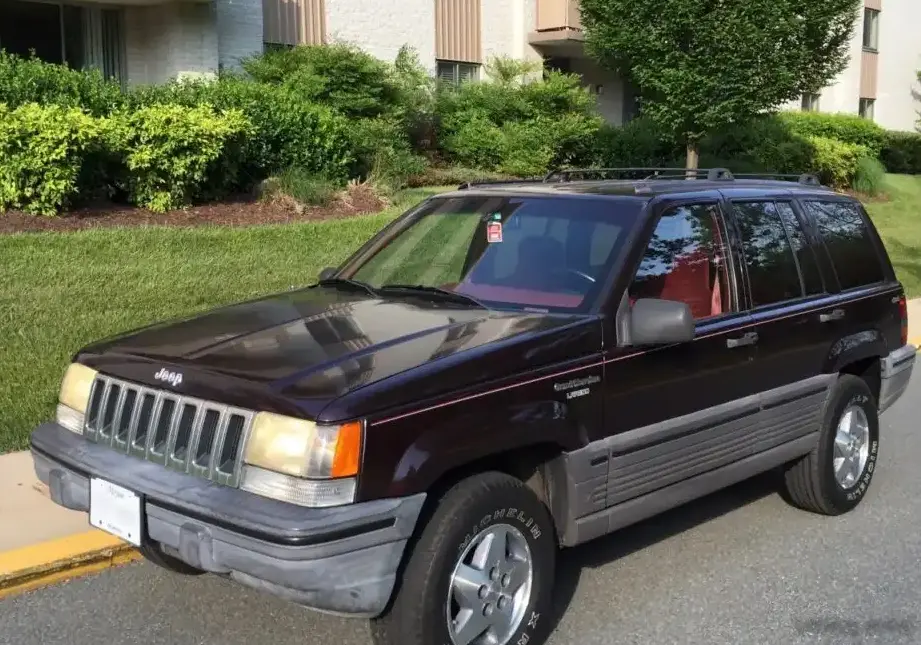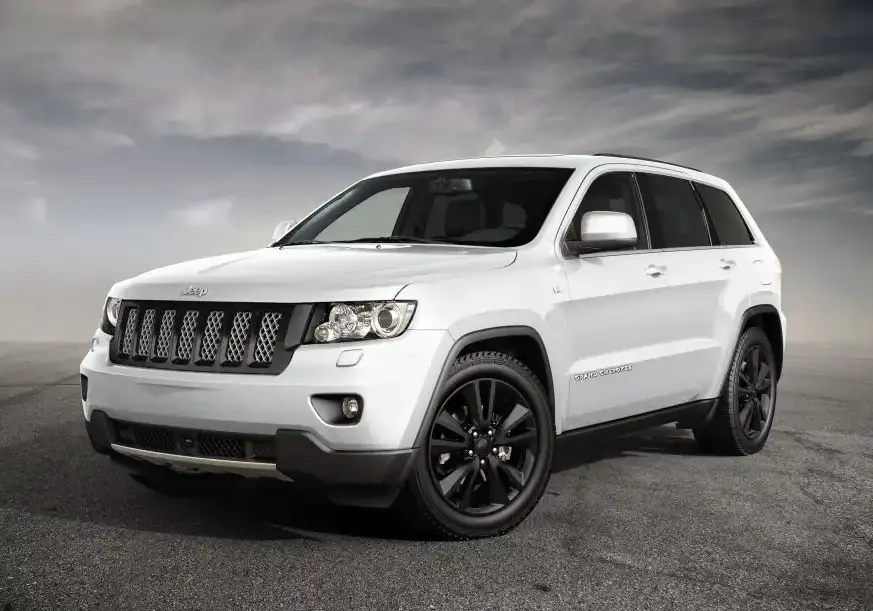
The Jeep Grand Cherokee WK2, produced from 2010 to 2013, represented a significant leap forward for the iconic American SUV. This fourth generation of the Grand Cherokee moved the model into a more premium segment, offering a blend of off-road capability, on-road refinement, and available luxury features. Among the various engine and drivetrain configurations offered, the 5.7-liter V8 paired with a five-speed automatic transmission held a prominent position, particularly in the North American market. This variant aimed to deliver robust performance and towing capacity, appealing to buyers needing a powerful and versatile SUV.
Technical Specifications
| Brand | Jeep |
| Model | Grand Cherokee |
| Generation | Grand Cherokee IV (WK2) |
| Type (Engine) | 5.7 V8 (352 Hp) 4×4 Automatic |
| Start of production | 2010 |
| End of production | 2013 |
| Powertrain Architecture | Internal Combustion engine |
| Body type | SUV |
| Seats | 5 |
| Doors | 5 |
| Fuel consumption (urban) | 21.1 l/100 km (11.1 US mpg, 13.4 UK mpg, 4.7 km/l) |
| Fuel consumption (extra urban) | 10 l/100 km (23.5 US mpg, 28.2 UK mpg, 10 km/l) |
| Fuel consumption (combined) | 14.1 l/100 km (16.7 US mpg, 20 UK mpg, 7.1 km/l) |
| CO2 emissions | 327 g/km |
| Fuel Type | Petrol (Gasoline) |
| Acceleration 0 – 100 km/h | 8.7 sec |
| Acceleration 0 – 62 mph | 8.7 sec |
| Acceleration 0 – 60 mph | 8.3 sec |
| Maximum speed | 225 km/h (139.81 mph) |
| Emission standard | Euro 5 |
| Weight-to-power ratio | 6.6 kg/Hp, 152.6 Hp/tonne |
| Weight-to-torque ratio | 4.4 kg/Nm, 225.4 Nm/tonne |
| Power | 352 Hp @ 5200 rpm |
| Power per litre | 62.3 Hp/l |
| Torque | 520 Nm @ 4200 rpm (383.53 lb.-ft. @ 4200 rpm) |
| Engine layout | Front, Longitudinal |
| Engine Model/Code | EZH |
| Engine displacement | 5654 cm3 (345.03 cu. in.) |
| Number of cylinders | 8 |
| Engine configuration | V-engine |
| Cylinder Bore | 99.5 mm (3.92 in.) |
| Piston Stroke | 90.9 mm (3.58 in.) |
| Compression ratio | 10.5:1 |
| Number of valves per cylinder | 2 |
| Fuel injection system | Multi-port manifold injection |
| Engine aspiration | Naturally aspirated engine |
| Valvetrain | OHV |
| Engine oil capacity | 6.6 l (6.97 US qt | 5.81 UK qt) |
| Coolant | 14.6 l (15.43 US qt | 12.85 UK qt) |
| Kerb Weight | 2307 kg (5086.06 lbs.) |
| Max. weight | 2949 kg (6501.43 lbs.) |
| Max load | 642 kg (1415.37 lbs.) |
| Trunk (boot) space – minimum | 457 l (16.14 cu. ft.) |
| Trunk (boot) space – maximum | 1554 l (54.88 cu. ft.) |
| Fuel tank capacity | 93 l (24.57 US gal | 20.46 UK gal) |
| Permitted trailer load with brakes (12%) | 3500 kg (7716.18 lbs.) |
| Permitted trailer load without brakes | 750 kg (1653.47 lbs.) |
| Length | 4822 mm (189.84 in.) |
| Width | 1943 mm (76.5 in.) |
| Width including mirrors | 2154 mm (84.8 in.) |
| Height | 1781 mm (70.12 in.) |
| Wheelbase | 2915 mm (114.76 in.) |
| Front track | 1628 mm (64.09 in.) |
| Rear (Back) track | 1633 mm (64.29 in.) |
| Ride height (ground clearance) | 217 mm (8.54 in.) |
| Drag coefficient (Cd) | 0.37 |
| Minimum turning circle (turning diameter) | 11.6 m (38.06 ft.) |
| Approach angle | 30.7° |
| Departure angle | 26° |
| Ramp-over (brakeover) angle | 18.9° |
| Drive wheel | All wheel drive (4×4) |
| Number of gears and type of gearbox | 5 gears, automatic transmission |
| Front suspension | Double wishbone |
| Rear suspension | Independent multi-link suspension |
| Front brakes | Ventilated discs |
| Rear brakes | Ventilated discs |
| Assisting systems | ABS (Anti-lock braking system) |
| Steering type | Steering rack and pinion |
| Tires size | 265/50 R20 |
| Wheel rims size | 8J x 20 |
Powertrain & Engine Architecture
The heart of this Grand Cherokee variant is the 5.7-liter “HEMI” V8 engine, internally designated as the EZH. This engine is a naturally aspirated, overhead valve (OHV) configuration, known for its robust construction and relatively simple design. It utilizes a multi-port fuel injection system, delivering fuel directly into the intake ports. The 5.7L HEMI benefits from Chrysler’s Multi-Displacement System (MDS), which allows it to deactivate four cylinders under light load conditions to improve fuel economy. The engine produces 352 horsepower at 5200 rpm and 383 lb-ft of torque at 4200 rpm. This power is channeled through a five-speed automatic transmission, a workhorse unit designed for durability and smooth operation. While not the most advanced transmission available at the time, it was well-suited to the engine’s torque characteristics and the Grand Cherokee’s intended use.
Driving Characteristics
The 5.7L V8 and five-speed automatic combination delivers a noticeable step up in performance compared to the base V6 models. Acceleration from 0-60 mph takes approximately 8.3 seconds, making it a reasonably quick SUV for its size and weight. The automatic transmission provides smooth shifts, although it can sometimes feel a bit hesitant when downshifting for quicker acceleration. The MDS system is generally seamless in operation, but some drivers may notice a slight vibration when transitioning between V8 and V4 modes. The Grand Cherokee’s four-wheel-drive system provides excellent traction in various conditions, making it capable both on and off-road. However, the vehicle’s weight and size do contribute to a less agile feel compared to smaller SUVs.
Equipment & Trim Levels
The 5.7L V8 was typically offered on higher trim levels of the Grand Cherokee, such as the Limited and Overland. Standard features included leather upholstery, heated front seats, a premium sound system, and a power liftgate. Optional extras included navigation, rear-seat entertainment, and advanced safety features like adaptive cruise control and blind-spot monitoring. The Overland trim, in particular, offered a more luxurious interior with upgraded materials and additional features.
Chassis & Braking
The WK2 Grand Cherokee utilizes a robust chassis with a double wishbone front suspension and an independent multi-link rear suspension. This setup provides a comfortable ride quality while maintaining good handling characteristics. Ventilated disc brakes are used on all four wheels, providing ample stopping power. The anti-lock braking system (ABS) is standard, enhancing safety during emergency braking situations. The vehicle’s relatively high ground clearance and capable four-wheel-drive system contribute to its off-road prowess.
Market Reception & Comparison
The 5.7L V8 Grand Cherokee was generally well-received by critics and consumers alike. It was praised for its powerful engine, comfortable ride, and luxurious features. However, its fuel economy was a common criticism, as the V8 engine consumes a significant amount of fuel, especially in city driving. Compared to the V6 models, the V8 offered a substantial performance upgrade but came at a higher price and with lower fuel efficiency. Compared to competitors like the BMW X5 and Mercedes-Benz ML-Class, the Grand Cherokee offered a more affordable option with comparable levels of luxury and performance.
Legacy
The 5.7L V8-powered Grand Cherokee WK2 has proven to be a relatively reliable vehicle, although some common issues have been reported, such as oil leaks and electrical problems. The HEMI engine is known for its durability, but regular maintenance is essential to ensure its longevity. Today, these Grand Cherokees can be found on the used car market at reasonable prices, offering a compelling combination of power, luxury, and capability. They remain a popular choice for buyers seeking a capable and comfortable SUV with a proven track record.