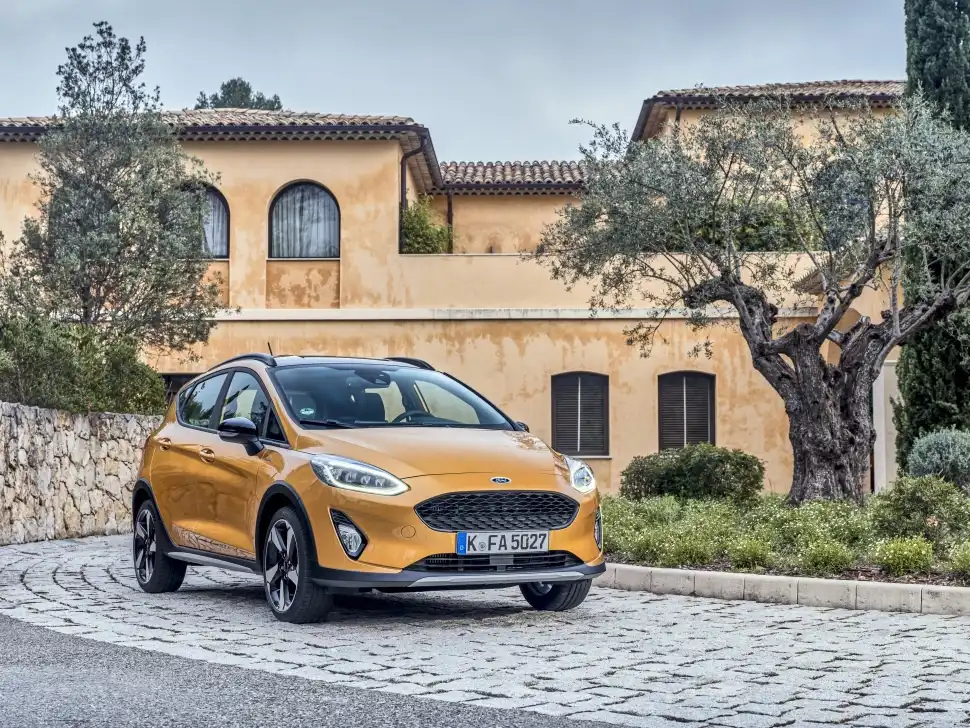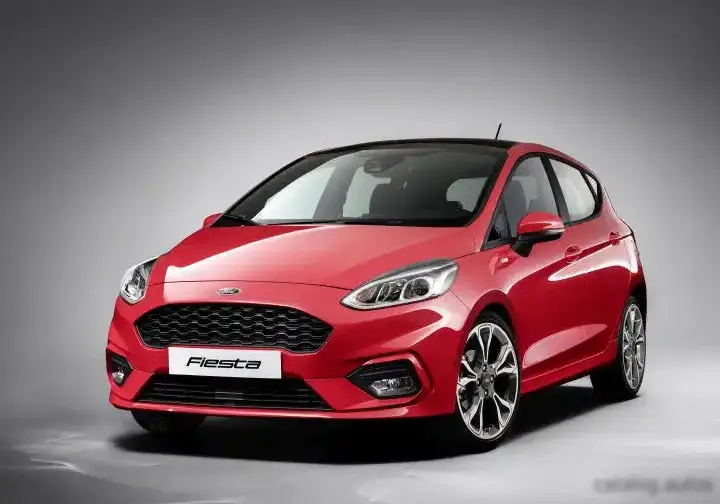
The Ford Fiesta Mk8, launched in July 2017, represented a significant evolution for Ford’s long-running supermini. Within the Mk8 range, the 1.5 TDCi 85 horsepower variant – produced through August 2020 – served as a fuel-efficient entry point into the lineup, particularly appealing to buyers prioritizing economy over outright performance. This five-door hatchback aimed to deliver low running costs and practicality in a stylish package, competing with rivals like the Volkswagen Polo, Opel Corsa, and Renault Clio. It was positioned as a sensible choice for urban commuters and those seeking a cost-effective first car.
Technical Specifications
| Brand | Ford |
| Model | Fiesta |
| Generation | Fiesta VIII (Mk8) 5 door |
| Type (Engine) | 1.5 TDCi (85 Hp) |
| Start of production | July, 2017 |
| End of production | August, 2020 |
| Powertrain Architecture | Internal Combustion engine |
| Body type | Hatchback |
| Seats | 5 |
| Doors | 5 |
| Fuel consumption (urban) | 4.1-4.3 l/100 km (57.4 – 54.7 US mpg, 68.9 – 65.7 UK mpg, 24.4 – 23.3 km/l) |
| Fuel consumption (extra urban) | 3.1-3.2 l/100 km (75.9 – 73.5 US mpg, 91.1 – 88.3 UK mpg, 32.3 – 31.3 km/l) |
| Fuel consumption (combined) | 3.5-3.6 l/100 km (67.2 – 65.3 US mpg, 80.7 – 78.5 UK mpg, 28.6 – 27.8 km/l) |
| CO2 emissions | 90-93 g/km |
| Fuel Type | Diesel |
| Acceleration 0 – 100 km/h | 12.5 sec |
| Acceleration 0 – 62 mph | 12.5 sec |
| Acceleration 0 – 60 mph | 11.9 sec |
| Maximum speed | 175 km/h (108.74 mph) |
| Emission standard | Euro 6 |
| Weight-to-power ratio | 14 kg/Hp, 71.7 Hp/tonne |
| Weight-to-torque ratio | 5.5 kg/Nm, 181.3 Nm/tonne |
| Power | 85 Hp @ 3750 rpm |
| Power per litre | 56.7 Hp/l |
| Torque | 215 Nm @ 1750-2500 rpm (158.58 lb.-ft. @ 1750-2500 rpm) |
| Engine layout | Front, Transverse |
| Engine Model/Code | XUJC, XUJD, XUJE, XUJF, XUJG, XUJK, XUJM |
| Engine displacement | 1499 cm3 (91.47 cu. in.) |
| Number of cylinders | 4 |
| Engine configuration | Inline |
| Cylinder Bore | 73.5 mm (2.89 in.) |
| Piston Stroke | 88.3 mm (3.48 in.) |
| Compression ratio | 16:1 |
| Number of valves per cylinder | 2 |
| Fuel injection system | Diesel Commonrail |
| Engine aspiration | Turbocharger, Intercooler |
| Valvetrain | SOHC |
| Engine oil capacity | 3.85 l (4.07 US qt | 3.39 UK qt) |
| Coolant | 5.5 l (5.81 US qt | 4.84 UK qt) |
| Kerb Weight | 1186 kg (2614.68 lbs.) |
| Max. weight | 1655-1670 kg (3648.65 – 3681.72 lbs.) |
| Max load | 469-484 kg (1033.97 – 1067.04 lbs.) |
| Trunk (boot) space – minimum | 303 l (10.7 cu. ft.) |
| Trunk (boot) space – maximum | 984 l (34.75 cu. ft.) |
| Fuel tank capacity | 42 l (11.1 US gal | 9.24 UK gal) |
| Max. roof load | 50 kg (110.23 lbs.) |
| Permitted trailer load with brakes (12%) | 750 kg (1653.47 lbs.) |
| Permitted trailer load without brakes | 590 kg (1300.73 lbs.) |
| Permitted towbar download | 45 kg (99.21 lbs.) |
| Length | 4040-4065 mm (159.06 – 160.04 in.) |
| Width | 1735 mm (68.31 in.) |
| Width with mirrors folded | 1783 mm (70.2 in.) |
| Width including mirrors | 1941 mm (76.42 in.) |
| Height | 1466-1476 mm (57.72 – 58.11 in.) |
| Wheelbase | 2493 mm (98.15 in.) |
| Drag coefficient (Cd) | 0.29 |
| Drivetrain Architecture | The Internal combustion engine (ICE) drives the front wheels of the vehicle. |
| Drive wheel | Front wheel drive |
| Number of gears and type of gearbox | 6 gears, manual transmission |
| Front suspension | Independent, type McPherson with coil spring and anti-roll bar |
| Rear suspension | Semi-independent, coil spring, Elastic beam |
| Front brakes | Ventilated discs |
| Rear brakes | Drum |
| Assisting systems | ABS (Anti-lock braking system) |
| Steering type | Steering rack and pinion |
| Power steering | Electric Steering |
| Tires size | 195/60 R15; 195/55 R16; 205/45 R17; 205/40 R18 |
| Wheel rims size | 6J x 15; 6.5J x 16; 7J x 17; 7J x 18 |
INTRODUCTION
The Ford Fiesta Mk8 1.5 TDCi 85 hp, produced from 2017 to 2020, was a key variant within the eighth generation of Ford’s globally successful Fiesta. Built on the B720 platform (internally known as the 1HX0), this model aimed to balance fuel efficiency, practicality, and affordability. It represented a significant step forward in terms of styling, technology, and driving dynamics compared to its predecessor. The 1.5 TDCi engine was a mainstay of the Mk8 range, offering a diesel option for those covering high mileages or prioritizing fuel economy. This particular 85 horsepower version was often considered the entry-level diesel, appealing to a broad customer base.
Powertrain & Engine Architecture
The heart of this Fiesta variant is the 1.499-liter, inline-four cylinder 1.5 TDCi diesel engine. Ford utilized various engine codes for this powerplant, including XUJC, XUJD, XUJE, XUJF, XUJG, XUJK, and XUJM, depending on the specific calibration and market. The engine features a turbocharger with intercooling, enhancing power and efficiency. Fuel is delivered via a common-rail direct injection system, allowing for precise fuel metering and optimized combustion. The engine employs a single overhead camshaft (SOHC) valvetrain with two valves per cylinder. The 85 horsepower output is achieved at 3750 rpm, while peak torque of 215 Nm (158.58 lb.-ft.) is available between 1750 and 2500 rpm. This engine was typically paired with a six-speed manual transmission, although a six-speed automatic option was also available, albeit less common. The automatic transmission was a conventional torque converter type, prioritizing smooth shifts over outright performance.
Driving Characteristics
The 1.5 TDCi 85 hp Fiesta offered a comfortable and economical driving experience. Acceleration was modest, taking around 12.5 seconds to reach 62 mph (100 km/h), and a calculated 11.9 seconds to 60 mph. The engine’s torque delivery, peaking at relatively low revs, provided adequate pulling power for everyday driving situations. Compared to higher-output Fiesta variants, such as the 1.0 EcoBoost, the 1.5 TDCi felt less responsive, particularly during overtaking maneuvers. The six-speed manual transmission helped to keep the engine within its optimal operating range, while the automatic version, while convenient, resulted in slightly slower acceleration due to efficiency losses. The steering was light and precise, making it easy to maneuver in urban environments. Overall, the driving experience was geared towards practicality and fuel efficiency rather than sporty performance.
Equipment & Trim Levels
The 1.5 TDCi 85 hp Fiesta typically came equipped with a reasonable level of standard features. Base models included air conditioning, power front windows, a basic audio system with Bluetooth connectivity, and ABS brakes. Higher trim levels, such as Zetec and Titanium, added features like alloy wheels, a touchscreen infotainment system with Apple CarPlay and Android Auto compatibility, cruise control, and parking sensors. Interior upholstery was typically cloth, with options for upgraded materials on higher trims. Optional extras included a panoramic sunroof, heated seats, and a premium sound system. The dashboard layout was modern and functional, with a focus on ease of use.
Chassis & Braking
The Fiesta Mk8 utilized a McPherson strut front suspension setup with a coil spring and anti-roll bar, providing a comfortable ride and predictable handling. The rear suspension employed a semi-independent elastic beam configuration, which was a cost-effective solution that offered a good balance between ride quality and handling. Front brakes were ventilated discs, providing ample stopping power, while rear brakes were drums on most variants, contributing to cost savings. ABS (Anti-lock Braking System) was standard across the range. The chassis was designed to be lightweight, contributing to the car’s overall fuel efficiency and agility.
Market Reception & Comparison
The Ford Fiesta Mk8 1.5 TDCi 85 hp was generally well-received by critics for its fuel efficiency and practicality. However, some reviewers noted that the engine lacked the refinement and performance of some of its rivals. Compared to the 1.0 EcoBoost variants, the 1.5 TDCi offered significantly better fuel economy but less exciting performance. The 1.5 TDCi also provided a more affordable diesel option compared to higher-powered diesel engines in the Fiesta range. Its fuel economy figures of 3.5-3.6 l/100 km (67.2 – 65.3 US mpg) were highly competitive in its class. Reliability was generally good, although diesel particulate filter (DPF) issues could occur with frequent short journeys.
Legacy
The 1.5 TDCi engine proved to be a reliable and durable powerplant when properly maintained. The Fiesta Mk8 1.5 TDCi 85 hp remains a popular choice in the used car market, particularly for buyers seeking a fuel-efficient and affordable supermini. While diesel car sales have declined in recent years due to environmental concerns, these Fiestas continue to offer a practical and economical transportation solution. Regular servicing, including DPF maintenance, is crucial to ensure the long-term reliability of this powertrain. The Mk8 Fiesta, in general, is considered a well-rounded and capable supermini, and the 1.5 TDCi 85 hp variant represents a sensible and economical option within the range.