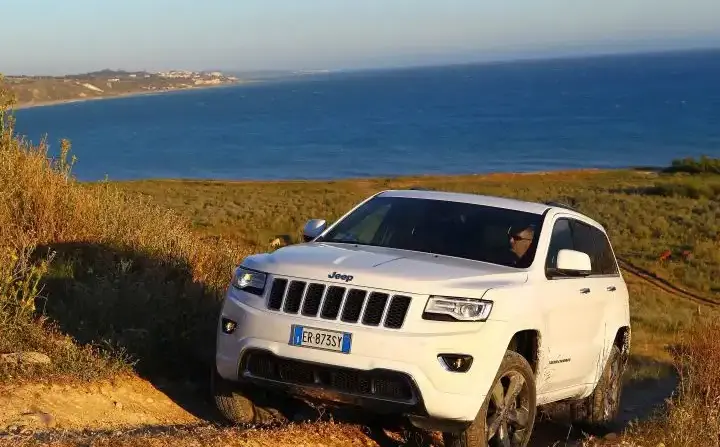
The Jeep Grand Cherokee IV (WK2), particularly the facelifted version introduced in 2014, represented a significant step forward for the iconic American SUV. Among the engine options available, the 3.0-liter EcoDiesel V6, producing 243 horsepower and paired with an eight-speed automatic transmission, carved out a specific niche in the lineup. Produced from 2014 through 2017, this variant aimed to deliver a blend of Jeep’s renowned off-road capability with improved fuel economy, appealing to buyers seeking a capable and efficient full-size SUV. It sat in the mid-range of the Grand Cherokee offerings, positioned above the base V6 models but below the high-performance SRT and Trailhawk trims.
Technical Specifications
| Brand | Jeep |
| Model | Grand Cherokee |
| Generation | Grand Cherokee IV (WK2, facelift 2013) |
| Type (Engine) | 3.0 EcoDiesel (243 Hp) 4×4 Automatic |
| Start of production | 2014 |
| End of production | 2017 |
| Powertrain Architecture | Internal Combustion engine |
| Body type | SUV |
| Seats | 5 |
| Doors | 5 |
| Fuel consumption (urban) | 11.2 l/100 km (21 US mpg, 25.2 UK mpg, 8.9 km/l) |
| Fuel consumption (extra urban) | 8.4 l/100 km (28 US mpg, 33.6 UK mpg, 11.9 km/l) |
| Fuel consumption (combined) | 9.8 l/100 km (24 US mpg, 28.8 UK mpg, 10.2 km/l) |
| Fuel Type | Diesel |
| Weight-to-power ratio | 9.8 kg/Hp, 101.5 Hp/tonne |
| Weight-to-torque ratio | 4.2 kg/Nm, 237.8 Nm/tonne |
| Power | 243 Hp @ 4000 rpm |
| Power per litre | 81.4 Hp/l |
| Torque | 569 Nm @ 2000 rpm (419.67 lb.-ft. @ 2000 rpm) |
| Engine layout | Front, Longitudinal |
| Engine Model/Code | EXN |
| Engine displacement | 2987 cm3 (182.28 cu. in.) |
| Number of cylinders | 6 |
| Engine configuration | V-engine |
| Cylinder Bore | 83 mm (3.27 in.) |
| Piston Stroke | 92 mm (3.62 in.) |
| Compression ratio | 15.5:1 |
| Number of valves per cylinder | 4 |
| Fuel injection system | Diesel Commonrail |
| Engine aspiration | Turbocharger, Intercooler |
| Valvetrain | DOHC |
| Engine oil capacity | 8.4 l (8.88 US qt | 7.39 UK qt) |
| Coolant | 13.2 l (13.95 US qt | 11.61 UK qt) |
| Kerb Weight | 2393 kg (5275.66 lbs.) |
| Max. weight | 3084 kg (6799.06 lbs.) |
| Max load | 691 kg (1523.39 lbs.) |
| Fuel tank capacity | 93 l (24.57 US gal | 20.46 UK gal) |
| Permitted trailer load with brakes (12%) | 3266 kg (7200.3 lbs.) |
| Length | 4822 mm (189.84 in.) |
| Width | 1943 mm (76.5 in.) |
| Height | 1761 mm (69.33 in.) |
| Wheelbase | 2915 mm (114.76 in.) |
| Front track | 1623 mm (63.9 in.) |
| Rear track | 1627 mm (64.06 in.) |
| Ride height (ground clearance) | 218 mm (8.58 in.) |
| Drag coefficient (Cd) | 0.37 |
| Minimum turning circle | 11.3 m (37.07 ft.) |
| Approach angle | 26.3° |
| Departure angle | 26.5° |
| Ramp-over angle | 18.8° |
| Drive wheel | All wheel drive (4×4) |
| Number of gears | 8 |
| Gearbox type | automatic transmission |
| Front brakes | Ventilated discs |
| Rear brakes | Ventilated discs |
| Assisting systems | ABS (Anti-lock braking system) |
| Steering type | Steering rack and pinion |
| Power steering | Electric Steering |
| Tires size | 265/60 R18 |
| Wheel rims size | 18 |
Powertrain & Engine Architecture
The heart of this Grand Cherokee variant is the 3.0-liter EcoDiesel V6 engine, internally designated as the EXN. This engine is a member of the VM Motori family, an Italian diesel engine manufacturer acquired by Fiat (and subsequently Stellantis). It features a 60-degree V-configuration, contributing to a smoother running character compared to inline diesel engines. The engine utilizes a sophisticated common-rail direct injection system, delivering fuel at extremely high pressures for optimized combustion. A variable geometry turbocharger (VGT) with an intercooler further enhances performance and efficiency. The DOHC (Double Overhead Camshaft) valvetrain, with four valves per cylinder, optimizes airflow into and out of the combustion chambers. The eight-speed automatic transmission, sourced from ZF, was a key component in maximizing fuel economy and providing smooth shifts. This transmission offered a wide gear ratio spread, allowing the engine to operate in its most efficient range more often.
Driving Characteristics
The 3.0-liter EcoDiesel Grand Cherokee offered a distinctly different driving experience compared to its gasoline-powered siblings. While not as overtly powerful as the 3.6L Pentastar V6 or the 5.7L Hemi V8, it delivered ample torque – 419.67 lb-ft – from low engine speeds. This made it particularly well-suited for towing and off-road driving, where low-end grunt is crucial. The eight-speed automatic transmission helped to keep the engine in its sweet spot, providing responsive acceleration. However, it wasn’t a particularly sporty vehicle; acceleration was adequate but not exhilarating. Compared to the manual transmission options available on other Grand Cherokee trims, the automatic prioritized comfort and ease of use over driver engagement. The diesel engine also contributed to a noticeable difference in sound and vibration compared to the gasoline engines.
Equipment & Trim Levels
The 3.0 EcoDiesel was typically offered in Limited and Overland trim levels. The Limited trim included standard features such as leather upholstery, dual-zone automatic climate control, a touchscreen infotainment system, and a suite of safety features including blind-spot monitoring and rear cross-path detection. The Overland trim added more luxurious appointments, such as premium leather, wood trim, and a more advanced infotainment system. Optional extras included a panoramic sunroof, a rear-seat entertainment system, and advanced safety technologies like adaptive cruise control and forward collision warning.
Chassis & Braking
The WK2 Grand Cherokee featured an independent front suspension with coil springs and a multi-link rear suspension. The EcoDiesel models, due to their added weight, often featured slightly stiffer spring rates compared to the base V6 models to maintain handling composure. Braking systems consisted of ventilated discs at all four corners, providing adequate stopping power. Anti-lock brakes (ABS) were standard, along with electronic stability control and traction control systems. The 4×4 system utilized a Quadra-Trac II active transfer case, allowing for seamless switching between two-wheel drive and four-wheel drive modes, including a low-range setting for off-road use.
Market Reception & Comparison
The 3.0 EcoDiesel Grand Cherokee was generally well-received by critics and consumers alike. It offered a compelling combination of capability, comfort, and fuel efficiency that was unmatched by other full-size SUVs at the time. Fuel economy figures of around 24 mpg combined were significantly better than those achieved by the gasoline-powered models. However, the diesel engine did come with a higher initial cost and potentially higher maintenance expenses. Compared to the 3.6L V6, the EcoDiesel offered more torque and better towing capacity, but at the expense of outright acceleration. Compared to the 5.7L Hemi V8, the EcoDiesel prioritized fuel economy and efficiency over raw power.
Legacy
The 3.0-liter EcoDiesel engine proved to be a relatively reliable powertrain, although early models were subject to emissions-related recalls and software updates. On the used car market, these Grand Cherokees hold their value reasonably well, particularly those that have been well-maintained. The combination of Jeep’s reputation for off-road prowess, the EcoDiesel’s fuel efficiency, and the comfortable interior make it a desirable option for buyers seeking a versatile and capable SUV. The engine’s longevity and relatively low running costs contribute to its continued appeal in the used vehicle segment.