Technical Specifications
| Brand | Peugeot |
| Model | Rifter |
| Generation | Rifter L1 |
| Type (Engine) | e-Rifter 50 kWh (136 Hp) |
| Start of production | June, 2021 |
| End of production | March, 2024 |
| Powertrain Architecture | BEV (Electric Vehicle) |
| Body type | Minivan |
| Seats | 5 |
| Doors | 5 |
| Fuel Type | Electricity |
| Acceleration 0 – 100 km/h | 11.7 sec |
| Acceleration 0 – 62 mph | 11.7 sec |
| Acceleration 0 – 60 mph | 11.1 sec |
| Maximum speed | 135 km/h (83.89 mph) |
| Weight-to-power ratio | 12.4 kg/Hp, 80.5 Hp/tonne |
| Weight-to-torque ratio | 6.5 kg/Nm, 153.8 Nm/tonne |
| Gross battery capacity | 50 kWh |
| Net (usable) battery capacity | 45 kWh |
| Battery technology | Lithium-ion (Li-Ion) |
| Battery location | Below the floor |
| All-electric range (WLTP) | 273-282 km (169.63 – 175.23 mi) |
| Average Energy consumption (WLTP) | 19.6-20.3 kWh/100 km (31.54 – 32.67 kWh/100 mi) |
| MPGe | 107 – 103 |
| km/kWh | 5.1 – 4.9 |
| mi/kWh | 3.2 – 3.1 |
| Electric motor power | 136 Hp @ 5500 rpm |
| Electric motor Torque | 260 Nm @ 0-3674 rpm (191.77 lb.-ft. @ 0-3674 rpm) |
| Electric motor model/code | ZK01 |
| Electric motor location | Front axle, Transverse |
| System power | 136 Hp @ 5500 rpm |
| System torque | 260 Nm @ 0-3674 rpm (191.77 lb.-ft. @ 0-3674 rpm) |
| Kerb Weight | 1690 kg (3725.81 lbs) |
| Max. weight | 2305 kg (5081.66 lbs) |
| Max load | 615 kg (1355.84 lbs) |
| Trunk (boot) space – minimum | 775 l (27.37 cu. ft) |
| Trunk (boot) space – maximum | 3000 l (105.94 cu. ft) |
| Permitted trailer load with brakes (12%) | 750 kg (1653.47 lbs) |
| Permitted trailer load without brakes | 750 kg (1653.47 lbs) |
| Permitted towbar download | 50 kg (110.23 lbs) |
| Length | 4403 mm (173.35 in) |
| Width | 1848 mm (72.76 in) |
| Width with mirrors folded | 1921 mm (75.63 in) |
| Width including mirrors | 2107 mm (82.95 in) |
| Height | 1874-1878 mm (73.78 – 73.94 in) |
| Wheelbase | 2785 mm (109.65 in) |
| Front track | 1553 mm (61.14 in) |
| Rear (Back) track | 1567 mm (61.69 in) |
| Front overhang | 892 mm (35.12 in) |
| Rear overhang | 726 mm (28.58 in) |
| Ride height (ground clearance) | 216 mm (8.5 in) |
| Minimum turning circle | 10.8 m (35.43 ft) |
| Approach angle | 17.5° |
| Departure angle | 25.7° |
| Drivetrain Architecture | One electric motor drives the front wheels |
| Drive wheel | Front wheel drive |
| Number of gears and type of gearbox | 1 gears, automatic transmission |
| Front suspension | Independent type McPherson |
| Front brakes | Ventilated discs |
| Rear brakes | Disc |
| Assisting systems | ABS (Anti-lock braking system) |
| Steering type | Steering rack and pinion |
| Power steering | Electric Steering |
| Tires size | 215/65 R16; 215/60 R17 |
| Wheel rims size | 6.5J x 16; 7J x 17 |
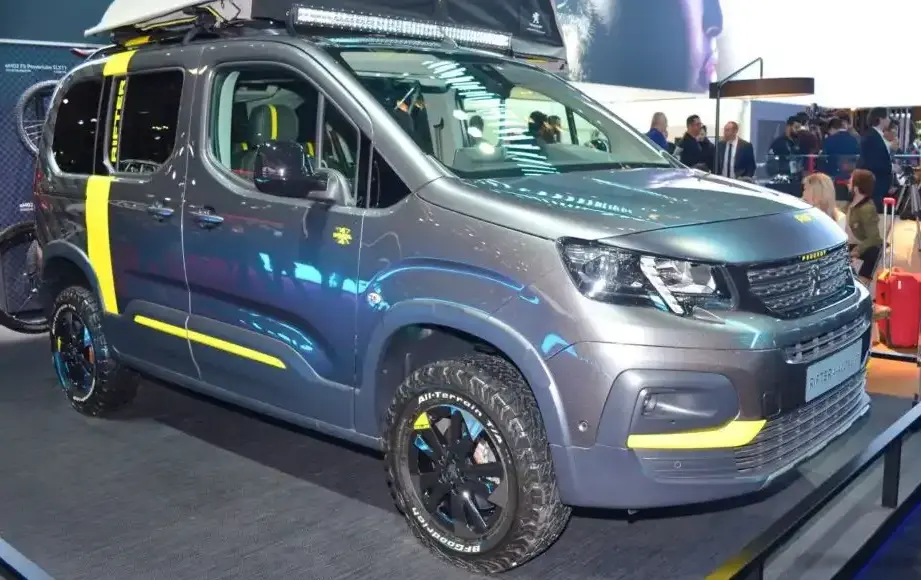
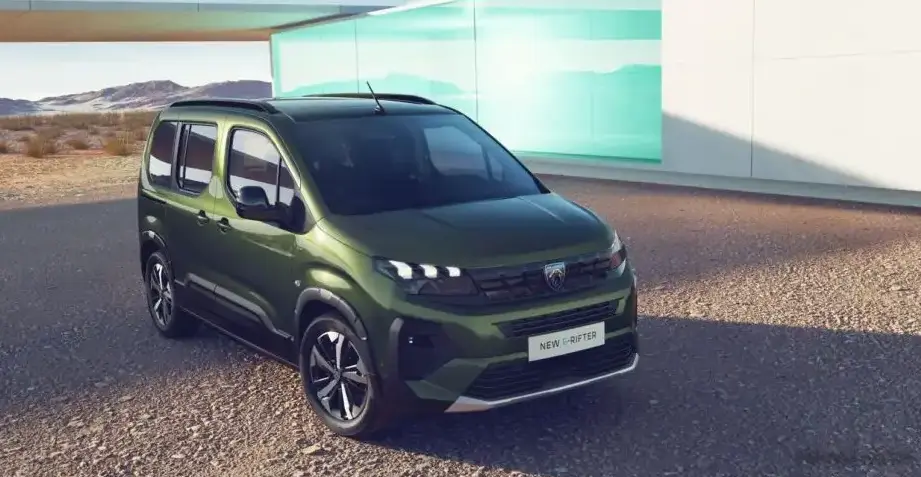
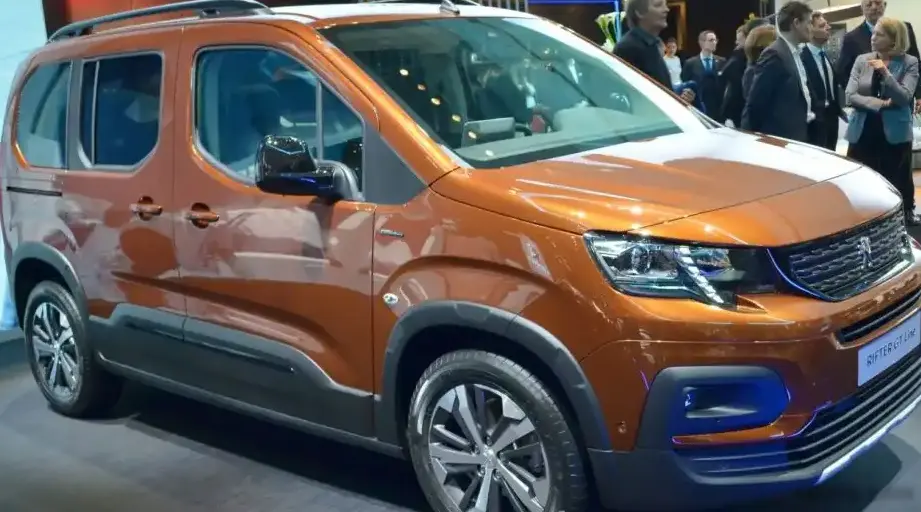
The Peugeot e-Rifter 50 kWh is a battery electric vehicle (BEV) introduced by Peugeot in June 2021 and produced through March 2024. It represents Peugeot’s entry into the electric minivan segment, building upon the popularity of the standard Rifter L1, a vehicle known for its practicality and versatility. The e-Rifter is part of the broader Peugeot Rifter range, which itself is based on the shared EMP2 platform developed by Stellantis (formerly PSA Group). This platform underpins several other vehicles, including the Citroën Berlingo and Opel/Vauxhall Combo Life, allowing for economies of scale and shared componentry. The 50 kWh variant was positioned as the entry-level electric Rifter, offering a balance between range, performance, and affordability within the lineup.
Powertrain & Engine Architecture
The e-Rifter 50 kWh utilizes a single electric motor, designated ZK01, producing 136 horsepower at 5500 rpm and 260 Nm (191.77 lb-ft) of torque available from 0 to 3674 rpm. This motor is transversely mounted on the front axle, driving the front wheels. The powertrain is a direct-drive system, employing a single-speed automatic transmission, typical of most electric vehicles. The 50 kWh lithium-ion battery pack is located under the floor of the vehicle, contributing to a lower center of gravity and maximizing interior space. The battery management system (BMS) is crucial for optimizing battery life, performance, and safety, monitoring cell voltages, temperatures, and overall health. The e-Rifter supports various charging options, including AC charging for slower, overnight replenishment and DC fast charging for quicker top-ups on the go.
Driving Characteristics
The e-Rifter 50 kWh offers a smooth and quiet driving experience, characteristic of electric vehicles. Acceleration is adequate for everyday driving, achieving 0-60 mph in approximately 11.1 seconds. The instant torque delivery of the electric motor provides responsive acceleration at lower speeds, making it well-suited for urban environments. Compared to higher-powered electric variants or internal combustion engine (ICE) Rifter models, the 50 kWh version feels less brisk, particularly when fully loaded or traveling uphill. The single-speed transmission simplifies operation, but lacks the gear ratios found in traditional automatic transmissions, potentially impacting efficiency at higher speeds. The regenerative braking system allows for deceleration without relying solely on the friction brakes, contributing to increased range and reduced brake wear.
Equipment & Trim Levels
The e-Rifter 50 kWh typically came equipped with a respectable level of standard features, including air conditioning, a touchscreen infotainment system with smartphone integration (Apple CarPlay and Android Auto), and various safety systems such as ABS, electronic stability control, and multiple airbags. Higher trim levels offered additional features like a larger touchscreen, navigation system, rear parking sensors, and a panoramic sunroof. Interior upholstery was typically cloth, with options for upgraded materials on higher trims. The dashboard layout was functional and user-friendly, prioritizing practicality over luxury. Optional extras included features like a head-up display, adaptive cruise control, and a more advanced sound system.
Chassis & Braking
The e-Rifter L1 utilizes an independent McPherson strut suspension at the front, providing a comfortable ride and decent handling characteristics. The rear suspension typically employs a torsion beam setup, which is cost-effective and space-efficient. The braking system consists of ventilated discs at the front and solid discs at the rear. The added weight of the battery pack, compared to ICE Rifter models, necessitates a robust braking system to ensure adequate stopping power. The electric power steering provides light and precise steering feel, making it easy to maneuver in tight spaces.
Market Reception & Comparison
The Peugeot e-Rifter 50 kWh was generally well-received by critics as a practical and affordable electric minivan. Its compact size, spacious interior, and decent range made it a compelling option for families and individuals seeking a versatile electric vehicle. Compared to other trims in the Rifter lineup, the e-Rifter offered a significantly different driving experience, prioritizing efficiency and quietness over outright performance. Fuel economy, expressed as energy consumption, ranged from 19.6 to 20.3 kWh per 100 km, translating to approximately 107-103 MPGe. Reliability reports have been generally positive, with the electric powertrain proving to be relatively trouble-free. However, as with any new technology, potential issues with the battery pack and charging infrastructure remain considerations.
Legacy
The Peugeot e-Rifter 50 kWh represents a significant step in Peugeot’s transition towards electrification. While the initial 50 kWh variant offered a more limited range compared to later iterations with larger battery packs, it served as an accessible entry point into the electric minivan market. On the used car market, the e-Rifter 50 kWh remains a popular choice for buyers seeking a practical and affordable electric vehicle. The longevity of the battery pack is a key factor influencing resale value, and well-maintained examples with documented service history tend to command higher prices. The e-Rifter’s impact extends beyond its direct sales figures, contributing to the growing acceptance and adoption of electric vehicles in the minivan segment.