Technical Specifications
| Brand | BMW |
| Model | X6 M |
| Generation | X6 M (F96 LCI, facelift 2023) |
| Type (Engine) | Competition 4.4 V8 (625 Hp) Mild Hybrid M xDrive M Steptronic |
| Start of production | April, 2023 |
| Powertrain Architecture | MHEV (Mild Hybrid Electric Vehicle) |
| Body type | SAC |
| Seats | 5 |
| Doors | 5 |
| Combined fuel consumption (WLTP) | 12.7-12.9 l/100 km (18.5 – 18.2 US mpg, 22.2 – 21.9 UK mpg, 7.9 – 7.8 km/l) |
| CO2 emissions (WLTP) | 287-292 g/km |
| Fuel Type | Petrol (Gasoline) |
| Acceleration 0 – 100 km/h | 3.9 sec |
| Acceleration 0 – 62 mph | 3.9 sec |
| Acceleration 0 – 60 mph | 3.7 sec |
| Acceleration 0 – 200 km/h | 13.6 sec |
| Maximum speed | 250 km/h (155.34 mph), Electronically limited |
| Emission standard | Euro 6d |
| Weight-to-power ratio | 3.8 kg/Hp, 263.7 Hp/tonne |
| Weight-to-torque ratio | 3.2 kg/Nm, 316.5 Nm/tonne |
| Gross battery capacity | 0.96 kWh |
| Battery voltage | 48 V |
| Battery technology | Lithium-ion (Li-Ion) |
| Battery location | Under the front hood |
| Electric motor power | 12 Hp |
| Electric motor Torque | 200 Nm (147.51 lb.-ft.) |
| Electric motor location | Integrated into the transmission |
| Power | 625 Hp @ 6000 rpm |
| Torque | 750 Nm @ 1800-5800 rpm (553.17 lb.-ft. @ 1800-5800 rpm) |
| Engine layout | Front, Longitudinal |
| Engine Model/Code | S68 |
| Engine displacement | 4395 cm3 (268.2 cu. in.) |
| Number of cylinders | 8 |
| Engine configuration | V-engine |
| Cylinder Bore | 89 mm (3.5 in.) |
| Piston Stroke | 88.3 mm (3.48 in.) |
| Compression ratio | 10.5:1 |
| Number of valves per cylinder | 4 |
| Fuel injection system | Direct injection |
| Engine aspiration | Twin-power turbo, Intercooler |
| Valvetrain | VALVETRONIC, Double-VANOS |
| Kerb Weight | 2370 kg (5224.96 lbs.) |
| Max. weight | 3040 kg (6702.05 lbs.) |
| Max load | 670 kg (1477.1 lbs.) |
| Trunk (boot) space – minimum | 580 l (20.48 cu. ft.) |
| Trunk (boot) space – maximum | 1530 l (54.03 cu. ft.) |
| Fuel tank capacity | 83 l (21.93 US gal, 18.26 UK gal) |
| Max. roof load | 100 kg (220.46 lbs.) |
| Permitted trailer load with brakes (12%) | 3000 kg (6613.87 lbs.) |
| Permitted trailer load without brakes | 750 kg (1653.47 lbs.) |
| Permitted towbar download | 140 kg (308.65 lbs.) |
| Length | 4948 mm (194.8 in.) |
| Width | 2019 mm (79.49 in.) |
| Width including mirrors | 2212 mm (87.09 in.) |
| Height | 1695 mm (66.73 in.) |
| Wheelbase | 2972 mm (117.01 in.) |
| Front track | 1699 mm (66.89 in.) |
| Rear (Back) track | 1688 mm (66.46 in.) |
| Front overhang | 890 mm (35.04 in.) |
| Rear overhang | 1086 mm (42.76 in.) |
| Ride height (ground clearance) | 212 mm (8.35 in.) |
| Drag coefficient (Cd) | 0.38 |
| Minimum turning circle (turning diameter) | 12.8 m (41.99 ft.) |
| Approach angle | 19.3° |
| Departure angle | 22.1° |
| Ramp-over (brakeover) angle | 18.2° |
| Wading depth | 450 mm (17.72 in.) |
| Drivetrain Architecture | ICE and electric motor drive rear wheels, with on-demand front wheel drive |
| Drive wheel | All wheel drive (4×4) |
| Number of gears and type of gearbox | 8 gears, automatic transmission M Steptronic |
| Front suspension | Double wishbone, Air Suspension – Optional |
| Rear suspension | Independent multi-link suspension, Air Suspension – Optional |
| Front brakes | Ventilated discs, 395 mm |
| Rear brakes | Ventilated discs, 380 mm |
| Assisting systems | ABS (Anti-lock braking system) |
| Steering type | Steering rack and pinion |
| Power steering | Electric Steering |
| Tires size | Front wheel tires: 295/35 R21, Rear wheel tires: 315/30 R22 |
| Wheel rims size | Front wheel rims: 10.5J x 21, Rear wheel rims: 11.5J x 22 |
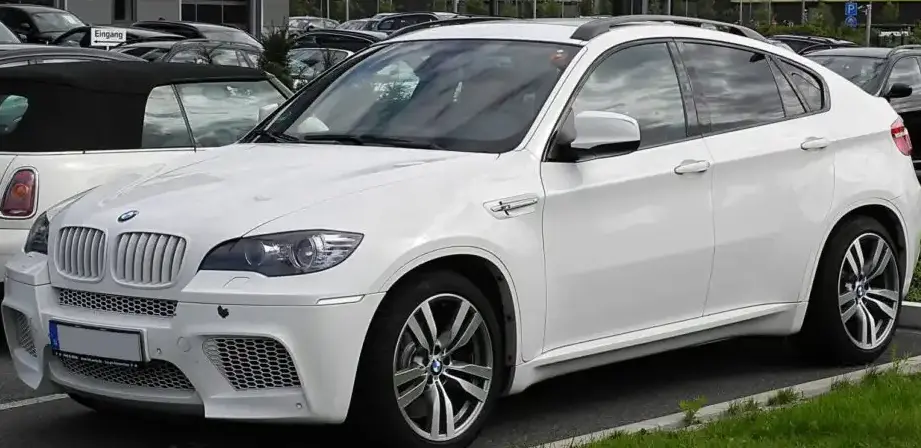
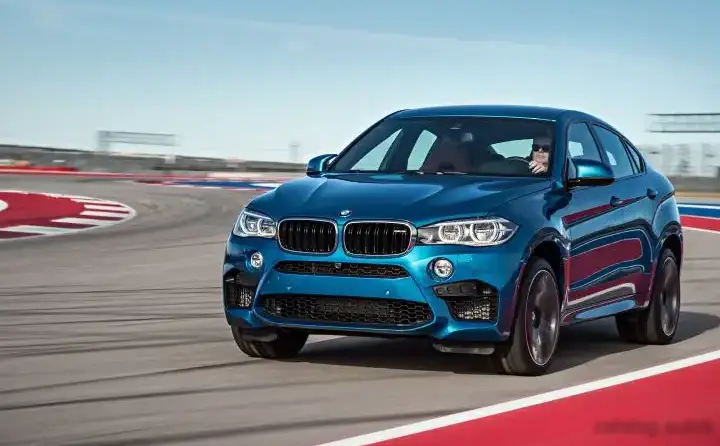
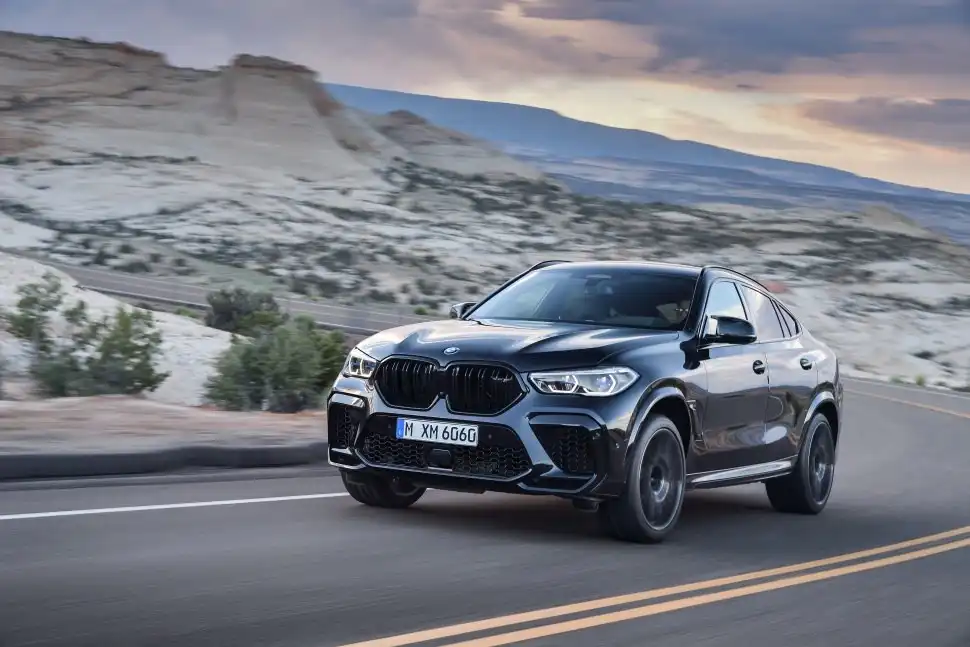
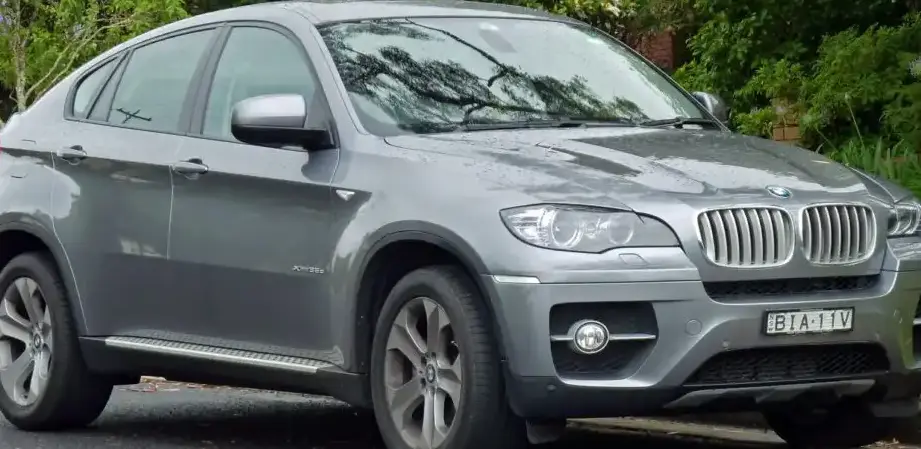
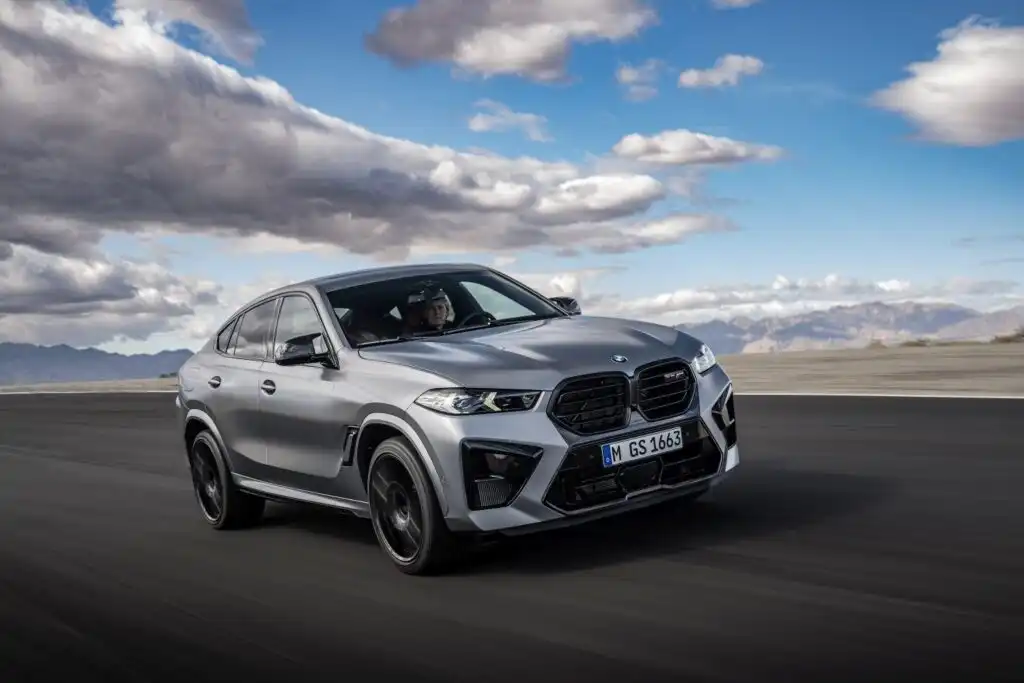
The BMW X6 M (F96 LCI) Competition represents the highest performance iteration of BMW’s distinctive Sports Activity Coupe. Launched in April 2023, the LCI (Life Cycle Impulse) facelift brought styling updates, technological enhancements, and a continuation of the potent 4.4-liter twin-turbocharged V8 engine. This variant sits at the very top of the X6 lineup, offering a blend of luxury, performance, and technology aimed at discerning buyers. It’s built on the Cluster Architecture (CLAR) platform, shared with other BMW models, and is positioned as a competitor to high-performance SUVs like the Porsche Cayenne Turbo and the Mercedes-AMG GLE 63 S.
Powertrain & Engine Architecture
At the heart of the X6 M Competition lies the S68 engine, a 4.4-liter twin-turbocharged V8. This engine produces 625 horsepower at 6000 rpm and a substantial 750 Nm (553.17 lb.-ft.) of torque available from 1800 to 5800 rpm. The engine utilizes direct injection, VALVETRONIC variable valve timing, and Double-VANOS variable camshaft timing to optimize performance and efficiency. The addition of a 48V mild-hybrid system provides an additional 12 hp and 200 Nm (147.51 lb.-ft.) of torque, assisting during acceleration and enabling smoother start-stop operation. The engine’s layout is front-mounted and longitudinal. The transmission is an 8-speed M Steptronic automatic, specifically tuned for rapid and precise gear changes. This transmission features Drivelogic, allowing the driver to select different shift programs to suit their driving style.
Driving Characteristics
The X6 M Competition delivers exhilarating performance. The 0-60 mph sprint is achieved in just 3.7 seconds, and it can reach a limited top speed of 155.34 mph (250 km/h). The mild-hybrid system contributes to improved responsiveness, particularly during initial acceleration. The M Steptronic transmission provides quick and seamless gear changes, enhancing the driving experience. Compared to lower-powered X6 variants, the Competition model offers significantly more aggressive acceleration and a more engaging driving feel. While the standard X6 provides a comfortable and refined ride, the X6 M prioritizes performance, with a firmer suspension and more direct steering. The xDrive all-wheel-drive system provides excellent traction in all conditions, distributing power between the front and rear axles as needed.
Equipment & Trim Levels
The X6 M Competition comes standard with a comprehensive array of luxury and performance features. Interior appointments include M Sport seats upholstered in Merino leather, an M leather steering wheel, and carbon fiber trim. Standard technology includes BMW’s iDrive infotainment system with a large touchscreen display, a digital instrument cluster, and a premium sound system. Optional extras include extended leather upholstery, massaging seats, a head-up display, and various driver-assistance systems. The exterior features aggressive styling cues, including a unique front fascia, flared wheel arches, and quad exhaust outlets. Available exterior colors include metallic and non-metallic options, as well as several exclusive M colors.
Chassis & Braking
The X6 M Competition features a specially tuned chassis designed to maximize handling and stability. The suspension utilizes double wishbones at the front and an independent multi-link setup at the rear. Adaptive air suspension is available as an option, allowing the driver to adjust the ride height and damping characteristics. Braking performance is provided by large, ventilated discs at all four corners, measuring 395 mm at the front and 380 mm at the rear. The braking system includes ABS, dynamic stability control, and other advanced safety features. The vehicle’s weight distribution is carefully balanced to enhance cornering agility.
Market Reception & Comparison
The X6 M Competition has been well-received by automotive critics, who praise its powerful engine, dynamic handling, and luxurious interior. Comparisons to rivals like the Porsche Cayenne Turbo and Mercedes-AMG GLE 63 S often highlight the X6 M’s more aggressive styling and engaging driving experience. Fuel economy, as expected for a high-performance SUV, is relatively low, with combined fuel consumption ranging from 12.7-12.9 l/100 km. Reliability is generally considered to be good, although the complexity of the engine and drivetrain may result in higher maintenance costs compared to lower-powered X6 variants.
Legacy
The F96 generation X6 M, and particularly the LCI Competition model, represents a significant step forward in performance and technology for BMW’s flagship SUV. The S68 engine is a highly capable powerplant, and the mild-hybrid system adds a layer of refinement and efficiency. On the used car market, these models are expected to hold their value well due to their exclusivity and performance credentials. The long-term reliability of the S68 engine remains to be fully assessed, but BMW’s reputation for engineering quality suggests that it should prove to be a durable and dependable powertrain.