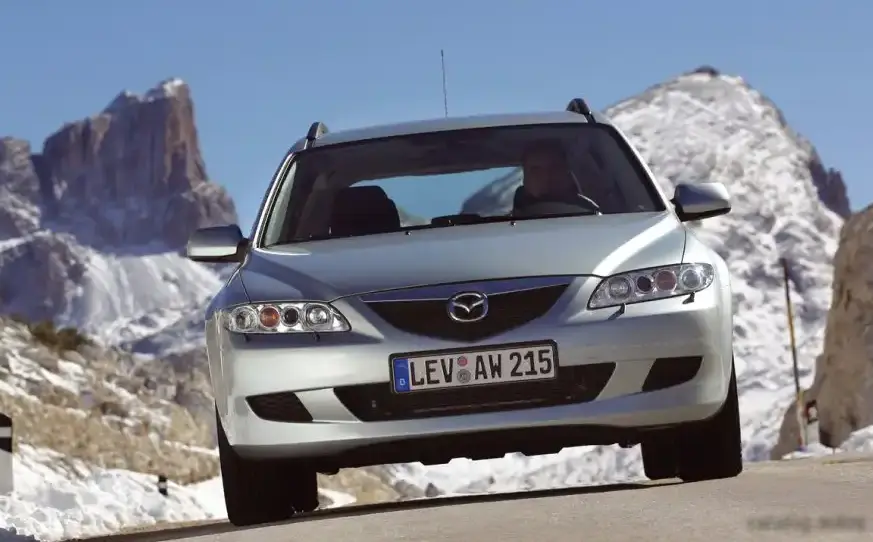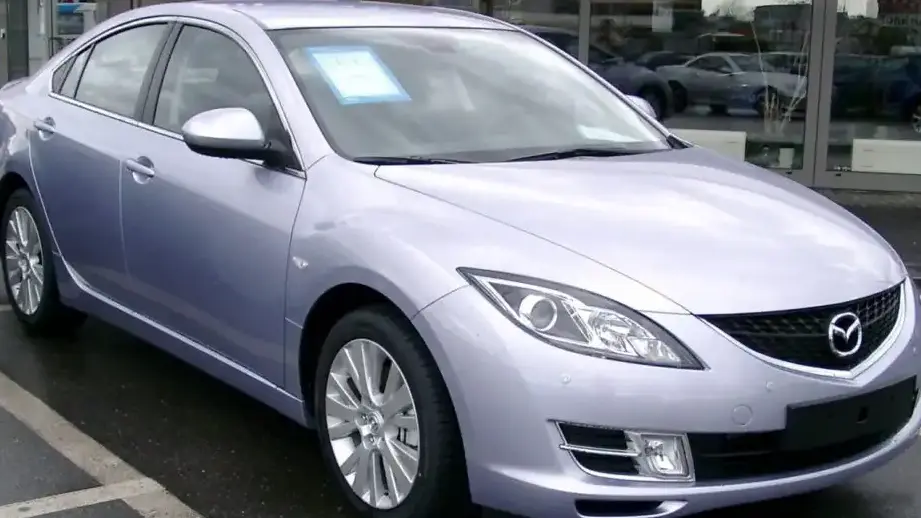
The Mazda 6 II Sedan (GH) 2.0 CD, producing 140 horsepower, was a key variant in Mazda’s second-generation 6 lineup, manufactured from 2007 to 2010. Positioned as a fuel-efficient and practical option within the range, it catered to buyers seeking a balance between performance and economy. This model played a significant role in establishing the Mazda 6 as a competitive contender in the mid-size sedan segment, particularly in European and Asian markets where diesel engines were highly favored. It was part of the GH generation, which represented a substantial redesign over the first-generation Mazda 6, focusing on improved refinement, handling, and interior quality.
Technical Specifications
| Brand | Mazda |
| Model | 6 |
| Generation | 6 II Sedan (GH) |
| Type (Engine) | 2.0 CD (140 Hp) |
| Start of production | 2007 |
| End of production | 2010 |
| Powertrain Architecture | Internal Combustion engine |
| Body type | Sedan |
| Seats | 5 |
| Doors | 4 |
| Fuel consumption (urban) | 6.7 l/100 km (35.1 US mpg, 42.2 UK mpg, 14.9 km/l) |
| Fuel consumption (extra urban) | 5 l/100 km (47 US mpg, 56.5 UK mpg, 20 km/l) |
| Fuel consumption (combined) | 5.6 l/100 km (42 US mpg, 50.4 UK mpg, 17.9 km/l) |
| CO2 emissions | 147 g/km |
| Fuel Type | Diesel |
| Acceleration 0 – 100 km/h | 10.5 sec |
| Acceleration 0 – 62 mph | 10.5 sec |
| Acceleration 0 – 60 mph | 10 sec |
| Maximum speed | 204 km/h (126.76 mph) |
| Emission standard | Euro 4 |
| Weight-to-power ratio | 10.2 kg/Hp, 98.2 Hp/tonne |
| Weight-to-torque ratio | 4.3 kg/Nm, 231.6 Nm/tonne |
| Power | 140 Hp @ 3500 rpm |
| Power per litre | 70.1 Hp/l |
| Torque | 330 Nm @ 2000 rpm (243.4 lb.-ft. @ 2000 rpm) |
| Engine layout | Front, Transverse |
| Engine Model/Code | RF7J |
| Engine displacement | 1998 cm3 (121.93 cu. in.) |
| Number of cylinders | 4 |
| Engine configuration | Inline |
| Cylinder Bore | 86 mm (3.39 in.) |
| Piston Stroke | 86 mm (3.39 in.) |
| Compression ratio | 16.7:1 |
| Number of valves per cylinder | 4 |
| Fuel injection system | Diesel Commonrail |
| Engine aspiration | Turbocharger, Intercooler |
| Valvetrain | DOHC |
| Engine oil capacity | 4.1 l (4.33 US qt | 3.61 UK qt) |
| Coolant | 9 l (9.51 US qt | 7.92 UK qt) |
| Kerb Weight | 1425 kg (3141.59 lbs.) |
| Max. weight | 2035 kg (4486.41 lbs.) |
| Max load | 610 kg (1344.82 lbs.) |
| Trunk (boot) space – minimum | 519 l (18.33 cu. ft.) |
| Fuel tank capacity | 64 l (16.91 US gal | 14.08 UK gal) |
| Max. roof load | 100 kg (220.46 lbs.) |
| Permitted trailer load with brakes (8%) | 1800 kg (3968.32 lbs.) |
| Permitted trailer load with brakes (12%) | 1600 kg (3527.4 lbs.) |
| Permitted towbar download | 75 kg (165.35 lbs.) |
| Length | 4755 mm (187.2 in.) |
| Width | 1795 mm (70.67 in.) |
| Height | 1440 mm (56.69 in.) |
| Wheelbase | 2725 mm (107.28 in.) |
| Front track | 1550-1570 mm (61.02 – 61.81 in.) |
| Rear (Back) track | 1550-1570 mm (61.02 – 61.81 in.) |
| Ride height (ground clearance) | 165 mm (6.5 in.) |
| Minimum turning circle | 11.4 m (37.4 ft.) |
| Drivetrain Architecture | Front wheel drive |
| Drive wheel | Front wheel drive |
| Number of gears | 6 |
| Type of gearbox | Manual transmission |
| Front suspension | Double wishbone, Transverse stabilizer |
| Rear suspension | Independent multi-link suspension, Transverse stabilizer |
| Front brakes | Ventilated discs, 299 mm |
| Rear brakes | Disc, 280 mm |
| Assisting systems | ABS (Anti-lock braking system) |
| Steering type | Steering rack and pinion |
| Power steering | Electric Steering |
| Tires size | 205/60 R16; 215/50 R17; 225/45 R18 |
| Wheel rims size | 6.5J x 16; 7J x 17; 7.5J x 18 |
INTRODUCTION
The Mazda 6 II Sedan (GH) 2.0 CD, powered by the RF7J engine, was a significant offering in Mazda’s lineup during its 2007-2010 production run. It was designed to appeal to a broad audience seeking a comfortable, reliable, and economical mid-size sedan. The “GH” designation refers to the second generation of the Mazda 6, which brought with it a more sophisticated design language and improved driving dynamics compared to the original. This 2.0 CD variant was particularly popular in Europe and Asia, where diesel engines were favored for their fuel efficiency and torque characteristics. It occupied a middle ground in the trim levels, offering a balance between affordability and features.
Powertrain & Engine Architecture
At the heart of the Mazda 6 2.0 CD lies the RF7J engine, a 1998cc inline-four cylinder diesel engine. This engine utilized a common-rail direct injection system, delivering fuel directly into the combustion chamber at extremely high pressure for improved efficiency and reduced emissions. The RF7J featured a turbocharger with an intercooler, boosting power output and providing enhanced responsiveness. The engine also incorporated a Double Overhead Camshaft (DOHC) valvetrain with four valves per cylinder, optimizing airflow for increased performance. The compression ratio was relatively high at 16.7:1, typical for diesel engines. The engine was transversely mounted in the front of the vehicle. The 6-speed manual transmission was the standard offering, providing a good balance of fuel economy and driver engagement.
Driving Characteristics
The 140 horsepower and 330 Nm (243.4 lb-ft) of torque produced by the 2.0 CD engine provided adequate performance for everyday driving. Acceleration from 0 to 100 km/h (0-62 mph) took around 10.5 seconds, which was competitive for its class. While not a sports car, the engine delivered a usable amount of power for overtaking and highway cruising. The manual transmission offered precise shifts, and the gear ratios were well-matched to the engine’s torque curve. Compared to higher-output versions of the Mazda 6, such as those with gasoline engines, the 2.0 CD prioritized fuel economy and low-end torque over outright speed. The turbocharger did exhibit some lag at lower RPMs, but once spooled up, it provided a noticeable boost in power.
Equipment & Trim Levels
The 2.0 CD trim typically included standard features such as air conditioning, power windows, power mirrors, a CD player with auxiliary input, and basic safety equipment like ABS and airbags. Higher trim levels offered upgrades such as alloy wheels, a sunroof, leather upholstery, and a more advanced audio system. Interior upholstery was generally cloth, with options for partial leather in some markets. The dashboard layout was functional and well-designed, with a focus on ergonomics. Optional extras included navigation systems, parking sensors, and automatic climate control.
Chassis & Braking
The Mazda 6 II Sedan featured a double wishbone front suspension and an independent multi-link rear suspension, providing a comfortable ride and good handling characteristics. A transverse stabilizer bar was included on both axles to reduce body roll during cornering. The braking system consisted of ventilated discs on the front wheels and solid discs on the rear wheels. ABS (Anti-lock Braking System) was standard, enhancing braking performance and stability. The suspension was tuned to provide a balance between comfort and handling, making it suitable for both city driving and long highway journeys.
Market Reception & Comparison
The Mazda 6 2.0 CD was generally well-received by automotive critics. It was praised for its fuel efficiency, comfortable ride, and refined interior. However, some reviewers noted that the engine could be somewhat noisy compared to gasoline engines. Compared to other trims in the Mazda 6 lineup, the 2.0 CD offered a more economical option for buyers who prioritized fuel efficiency over performance. The gasoline-powered variants offered more horsepower but at the expense of fuel economy. The 2.0 CD also compared favorably to competitors like the Ford Mondeo and Volkswagen Passat in terms of fuel efficiency and overall value.
Legacy
The RF7J engine, while generally reliable, is known to require regular maintenance, particularly regarding the diesel particulate filter (DPF). Proper servicing and the use of high-quality diesel fuel are crucial for preventing DPF issues. Today, the Mazda 6 II Sedan 2.0 CD remains a popular choice in the used car market, particularly for buyers seeking a fuel-efficient and reliable mid-size sedan. Its relatively simple mechanical design and readily available parts contribute to its affordability and ease of maintenance. The model continues to be appreciated for its blend of practicality, comfort, and driving dynamics.