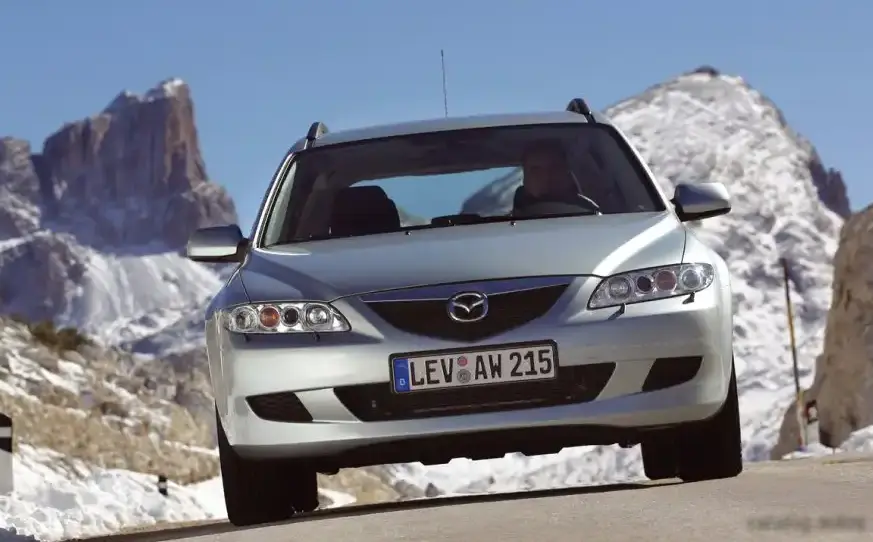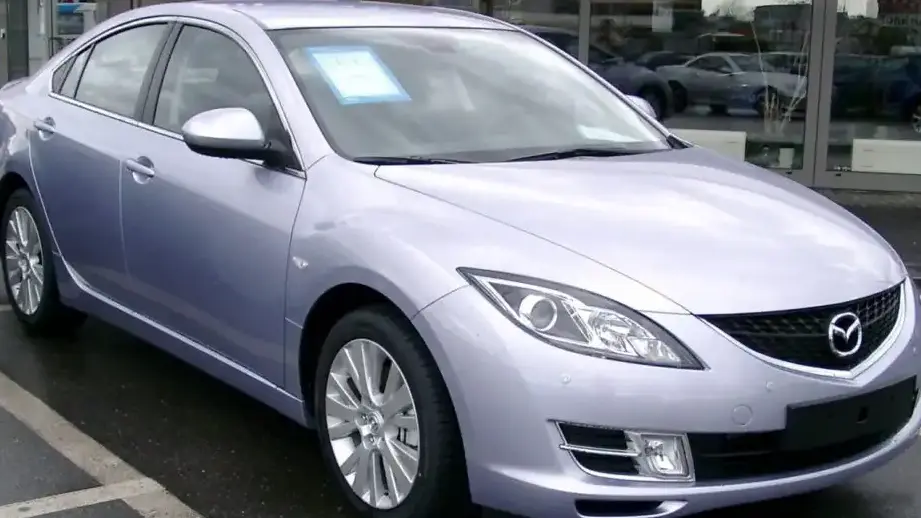
The Mazda 6 II Sedan (GH) 2.2 CD, producing 163 horsepower, was a key variant in Mazda’s second-generation 6 lineup, manufactured from 2007 to 2010. Positioned as a mid-range offering, it aimed to balance fuel efficiency with respectable performance, appealing to buyers seeking a comfortable and practical sedan with diesel power. This model played a significant role in the European and Asian markets, where diesel engines were – and continue to be – popular for their economy and torque. The GH generation represented a substantial step forward for Mazda in terms of design and refinement, moving the 6 into a more competitive segment against established rivals like the Ford Mondeo, Volkswagen Passat, and Toyota Camry.
Technical Specifications
| Brand | Mazda |
| Model | 6 |
| Generation | 6 II Sedan (GH) |
| Type (Engine) | 2.2 CD (163 Hp) |
| Start of production | 2007 |
| End of production | 2010 |
| Powertrain Architecture | Internal Combustion engine |
| Body type | Sedan |
| Seats | 5 |
| Doors | 4 |
| Fuel consumption (urban) | 6.9 l/100 km (34.1 US mpg) |
| Fuel consumption (extra urban) | 4.5 l/100 km (52.3 US mpg) |
| Fuel consumption (combined) | 5.4 l/100 km (43.6 US mpg) |
| Fuel Type | Diesel |
| Acceleration 0 – 100 km/h | 8.9 sec |
| Acceleration 0 – 62 mph | 8.9 sec |
| Acceleration 0 – 60 mph | 8.5 sec |
| Maximum speed | 212 km/h (131.73 mph) |
| Emission standard | Euro 5 |
| Weight-to-power ratio | 9.3 kg/Hp |
| Power | 163 Hp @ 3500 rpm |
| Power per litre | 74.6 Hp/l |
| Engine layout | Front, Transverse |
| Engine Model/Code | R2AA |
| Engine displacement | 2184 cm3 (133.28 cu. in.) |
| Number of cylinders | 4 |
| Engine configuration | Inline |
| Cylinder Bore | 86 mm (3.39 in.) |
| Piston Stroke | 94 mm (3.7 in.) |
| Compression ratio | 16.3:1 |
| Number of valves per cylinder | 4 |
| Fuel injection system | Diesel Commonrail |
| Engine aspiration | Turbocharger, Intercooler |
| Engine oil capacity | 4.7 l (4.97 US qt | 4.14 UK qt) |
| Coolant capacity | 9 l (9.51 US qt | 7.92 UK qt) |
| Kerb Weight | 1510 kg (3328.98 lbs.) |
| Max. weight | 2065 kg (4552.55 lbs.) |
| Max load | 555 kg (1223.57 lbs.) |
| Trunk (boot) space – minimum | 519 l (18.33 cu. ft.) |
| Fuel tank capacity | 64 l (16.91 US gal | 14.08 UK gal) |
| Length | 4735 mm (186.42 in.) |
| Width | 1795 mm (70.67 in.) |
| Height | 1440 mm (56.69 in.) |
| Wheelbase | 2725 mm (107.28 in.) |
| Front track | 1550 mm (61.02 in.) |
| Rear track | 1550 mm (61.02 in.) |
| Drivetrain Architecture | Front wheel drive |
| Number of gears | 6 |
| Gearbox type | Manual transmission |
| Front brakes | Ventilated discs |
| Rear brakes | Ventilated discs |
Powertrain & Engine Architecture
The heart of the Mazda 6 II 2.2 CD was the R2AA engine, a 2.2-liter inline-four cylinder diesel. This engine utilized a common-rail direct injection system, delivering fuel at extremely high pressure for optimized combustion. A turbocharger with an intercooler was employed to boost power and torque, mitigating turbo lag and improving overall responsiveness. The engine featured four valves per cylinder, contributing to efficient gas exchange. The 16.3:1 compression ratio was typical for a diesel engine, maximizing thermal efficiency. This engine was designed to meet stringent Euro 5 emission standards, incorporating a diesel particulate filter (DPF) to reduce soot emissions. The six-speed manual transmission was the standard offering, providing a good balance between fuel economy and driver engagement.
Driving Characteristics
The 163 hp 2.2 CD offered a noticeable step up in performance compared to the lower-powered 1.8-liter gasoline variants. While not a sports car, it provided ample torque for comfortable highway cruising and confident overtaking. The manual transmission allowed for precise control, and the gear ratios were well-matched to the engine’s powerband. Acceleration from 0-60 mph took approximately 8.5 seconds, making it competitive within its class. The turbocharger provided a noticeable surge of power in the mid-range, enhancing drivability. Compared to the higher-output 2.5-liter gasoline engine, the 2.2 CD prioritized fuel economy and low-end torque over outright horsepower.
Equipment & Trim Levels
The 2.2 CD trim typically included features such as air conditioning, power windows, power mirrors, a CD player with auxiliary input, and alloy wheels. Higher trim levels added features like leather upholstery, a sunroof, automatic climate control, and a premium sound system. Safety features included ABS, electronic brakeforce distribution (EBD), and multiple airbags. Optional extras included navigation systems, parking sensors, and xenon headlights. The interior design was generally considered modern and well-appointed for its time, with a focus on ergonomics and practicality.
Chassis & Braking
The Mazda 6 II utilized a MacPherson strut front suspension and a multi-link rear suspension, providing a comfortable ride and good handling characteristics. Ventilated disc brakes were fitted on all four wheels, offering ample stopping power. The steering was rack-and-pinion with electric power assistance, providing a responsive and precise feel. Stabilizer bars were included on both the front and rear axles to reduce body roll during cornering. The chassis was designed to balance ride comfort with handling agility, making it a pleasant car to drive on a variety of road surfaces.
Market Reception & Comparison
The Mazda 6 II 2.2 CD was generally well-received by automotive critics. It was praised for its fuel efficiency, comfortable ride, and refined interior. However, some critics noted that the engine could be somewhat noisy compared to gasoline engines. Compared to other diesel variants in the lineup, the 163 hp version offered a good balance between performance and economy. It was more affordable than the higher-output 185 hp diesel, while still providing significantly more torque than the gasoline engines. Fuel economy figures of around 43.6 US mpg combined were highly competitive for its class.
Legacy
The R2AA 2.2-liter diesel engine proved to be relatively reliable, although like all diesel engines, it required regular maintenance, including oil changes and DPF regeneration. The Mazda 6 II 2.2 CD remains a popular choice in the used car market, particularly for buyers seeking a fuel-efficient and comfortable sedan. While older examples may require some maintenance due to age, the engine is generally considered durable and capable of providing many years of reliable service. The GH generation Mazda 6 established Mazda as a serious contender in the mid-size sedan segment, and the 2.2 CD variant played a key role in its success.