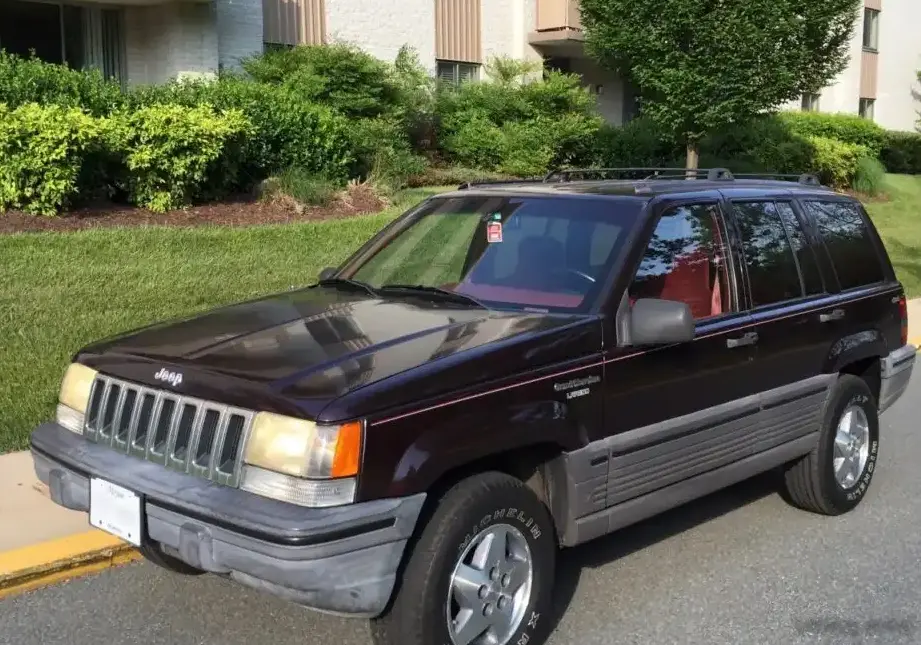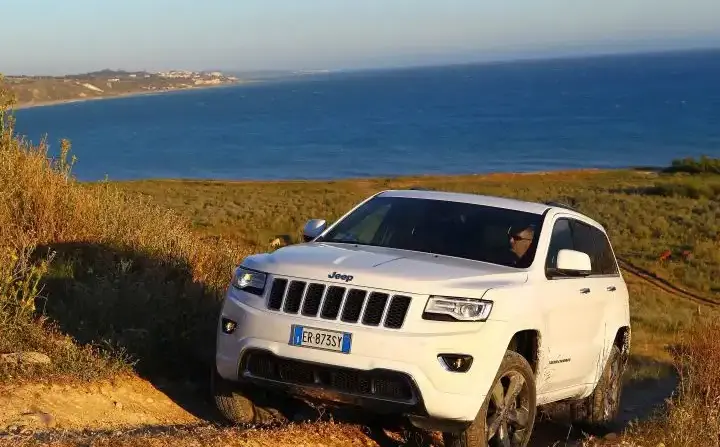
The Jeep Grand Cherokee IV (WK2), particularly the facelifted version produced from 2013 to 2017, represented a significant step forward for the iconic American SUV. Among the various engine and drivetrain configurations offered, the 5.7-liter V8 paired with an eight-speed automatic transmission stands out as a popular and well-regarded choice. This variant occupied a premium position within the Grand Cherokee lineup, offering a blend of substantial power, refined comfort, and capable four-wheel-drive performance. It was positioned above the V6 models and below the high-performance SRT trim, appealing to buyers seeking a luxurious and powerful SUV without the extreme focus on track performance.
Technical Specifications
| Brand | Jeep |
| Model | Grand Cherokee |
| Generation | Grand Cherokee IV (WK2, facelift 2013) |
| Type (Engine) | 5.7 V8 (352 Hp) 4×4 Automatic |
| Start of production | 2013 |
| End of production | 2017 |
| Powertrain Architecture | Internal Combustion engine |
| Body type | SUV |
| Seats | 5 |
| Doors | 5 |
| Fuel consumption (urban) | 19.6 l/100 km (12 US mpg, 14.4 UK mpg, 5.1 km/l) |
| Fuel consumption (extra urban) | 9.2 l/100 km (25.6 US mpg, 30.7 UK mpg, 10.9 km/l) |
| Fuel consumption (combined) | 13 l/100 km (18.1 US mpg, 21.7 UK mpg, 7.7 km/l) |
| CO2 emissions | 304 g/km |
| Fuel Type | Petrol (Gasoline) |
| Acceleration 0 – 100 km/h | 7.3 sec |
| Acceleration 0 – 62 mph | 7.3 sec |
| Acceleration 0 – 60 mph | 6.9 sec |
| Maximum speed | 225 km/h (139.81 mph) |
| Emission standard | Euro 6 |
| Weight-to-power ratio | 6.8 kg/Hp, 147.8 Hp/tonne |
| Weight-to-torque ratio | 4.6 kg/Nm, 218.3 Nm/tonne |
| Power | 352 Hp @ 5200 rpm |
| Power per litre | 62.3 Hp/l |
| Torque | 520 Nm @ 4200 rpm (383.53 lb.-ft. @ 4200 rpm) |
| Engine layout | Front, Longitudinal |
| Engine Model/Code | EZH |
| Engine displacement | 5654 cm3 (345.03 cu. in.) |
| Number of cylinders | 8 |
| Engine configuration | V-engine |
| Cylinder Bore | 99.5 mm (3.92 in.) |
| Piston Stroke | 90.9 mm (3.58 in.) |
| Compression ratio | 10.5:1 |
| Number of valves per cylinder | 2 |
| Fuel injection system | Multi-port manifold injection |
| Engine aspiration | Naturally aspirated engine |
| Valvetrain | OHV |
| Engine oil capacity | 6.6 l (6.97 US qt | 5.81 UK qt) |
| Coolant | 14.6 l (15.43 US qt | 12.85 UK qt) |
| Kerb Weight | 2382-2499 kg (5251.41 – 5509.35 lbs.) |
| Max. weight | 2949 kg (6501.43 lbs.) |
| Max load | 450-567 kg (992.08 – 1250.02 lbs.) |
| Trunk (boot) space – minimum | 457 l (16.14 cu. ft.) |
| Trunk (boot) space – maximum | 1554 l (54.88 cu. ft.) |
| Fuel tank capacity | 93 l (24.57 US gal | 20.46 UK gal) |
| Permitted trailer load with brakes (12%) | 3500 kg (7716.18 lbs.) |
| Length | 4828 mm (190.08 in.) |
| Width | 1943 mm (76.5 in.) |
| Height | 1802 mm (70.94 in.) |
| Wheelbase | 2915 mm (114.76 in.) |
| Front track | 1628 mm (64.09 in.) |
| Rear (Back) track | 1634 mm (64.33 in.) |
| Ride height (ground clearance) | 264 mm (10.39 in.) |
| Drag coefficient (Cd) | 0.37 |
| Minimum turning circle (turning diameter) | 11.3 m (37.07 ft.) |
| Approach angle | 35.8° |
| Departure angle | 29.6° |
| Ramp-over (brakeover) angle | 23.5° |
| Drive wheel | All wheel drive (4×4) |
| Number of gears and type of gearbox | 8 gears, automatic transmission |
| Front suspension | Double wishbone |
| Rear suspension | Independent multi-link suspension |
| Front brakes | Ventilated discs |
| Rear brakes | Disc |
| Assisting systems | ABS (Anti-lock braking system) |
| Steering type | Steering rack and pinion |
| Power steering | Electric Steering |
| Tires size | 265/50 R20 |
| Wheel rims size | 8J x 20 |
INTRODUCTION
The 2013-2017 Jeep Grand Cherokee, designated as the WK2 facelift, built upon the success of the previous generation, offering improved refinement, technology, and a more luxurious interior. The 5.7-liter V8 4×4 Automatic variant was a cornerstone of this model range, providing a compelling combination of performance and capability. It was designed to appeal to buyers who needed a robust SUV for towing, off-roading, or simply enjoying a powerful driving experience. The WK2 platform, shared with the Dodge Durango, provided a solid foundation for the Grand Cherokee’s blend of on-road comfort and off-road prowess.
Powertrain & Engine Architecture
At the heart of this Grand Cherokee variant lies the 5.7-liter “Hemi” V8 engine, internally designated as the EZH. This engine is a naturally aspirated, overhead valve (OHV) design featuring multi-port fuel injection. The engine’s architecture is a traditional V-configuration, providing a relatively compact footprint for its displacement. The 5.7L Hemi benefits from Chrysler’s Fuel Saver Technology (cylinder deactivation), which shuts down four cylinders during light-load cruising to improve fuel economy. The eight-speed automatic transmission, sourced from ZF, is a crucial component of this powertrain. Its wide gear ratio spread allows for both strong acceleration and efficient highway cruising. The transmission features a sophisticated electronic control system that adapts to driving conditions and driver input.
Driving Characteristics
The 5.7-liter V8 delivers a robust 352 horsepower and 383 lb-ft of torque, providing ample power for everyday driving and towing. Acceleration from 0-60 mph is achieved in around 6.9 seconds, making it a relatively quick SUV for its size and weight. The eight-speed automatic transmission contributes to a smooth and responsive driving experience. While not as sporty as some competitors, the Grand Cherokee 5.7 offers a comfortable and confident ride. The four-wheel-drive system provides excellent traction in various conditions, making it capable both on and off-road. Compared to the V6 models, the V8 offers significantly more power and a more refined driving experience. However, it comes at the cost of reduced fuel economy. Compared to the high-performance SRT variant, the 5.7L offers a more balanced approach, prioritizing comfort and capability over outright speed.
Equipment & Trim Levels
The 5.7L V8 Grand Cherokee typically came well-equipped, often including features such as leather upholstery, heated front seats, a premium sound system, and a touchscreen infotainment system. Higher trim levels, such as the Limited and Overland, added features like ventilated front seats, a panoramic sunroof, and advanced safety technologies. Optional extras included a rear-seat entertainment system, adaptive cruise control, and a blind-spot monitoring system. The interior design emphasized luxury and comfort, with high-quality materials and a spacious cabin.
Chassis & Braking
The Grand Cherokee’s chassis features an independent front suspension with a double wishbone design and an independent multi-link rear suspension. This setup provides a comfortable ride and good handling characteristics. The braking system consists of ventilated discs at all four corners, providing ample stopping power. Anti-lock brakes (ABS) are standard, along with electronic stability control. The 4×4 system utilizes a variety of modes, allowing drivers to select the appropriate setting for different driving conditions, including snow, sand, and mud.
Market Reception & Comparison
The Jeep Grand Cherokee 5.7 V8 4×4 Automatic was generally well-received by automotive critics. It was praised for its powerful engine, comfortable ride, and capable four-wheel-drive system. However, some critics noted its relatively poor fuel economy compared to V6 models and competitors. In terms of reliability, the 5.7L Hemi engine has a generally good reputation, although some owners have reported issues with the oil consumption. Compared to other SUVs in its class, such as the Chevrolet Tahoe and Ford Explorer, the Grand Cherokee offered a more luxurious interior and a more refined driving experience.
Legacy
The 2013-2017 Jeep Grand Cherokee 5.7 V8 4×4 Automatic remains a popular choice in the used car market. Its combination of power, luxury, and capability continues to appeal to buyers. The 5.7L Hemi engine, while not the most fuel-efficient, is known for its durability and relatively straightforward maintenance. With proper care, these engines can provide many years of reliable service. The eight-speed automatic transmission has also proven to be a reliable unit. Overall, the WK2 Grand Cherokee 5.7L V8 represents a well-rounded and capable SUV that continues to hold its value.