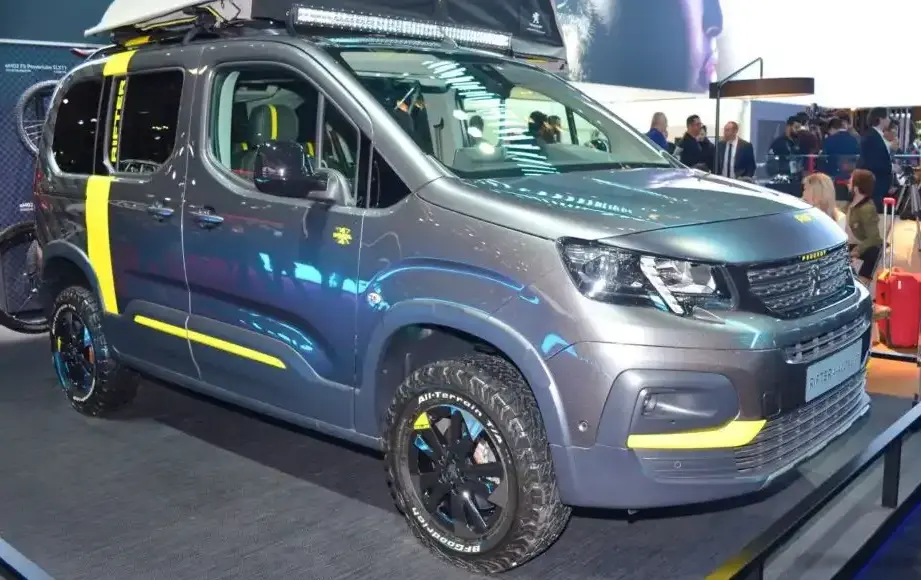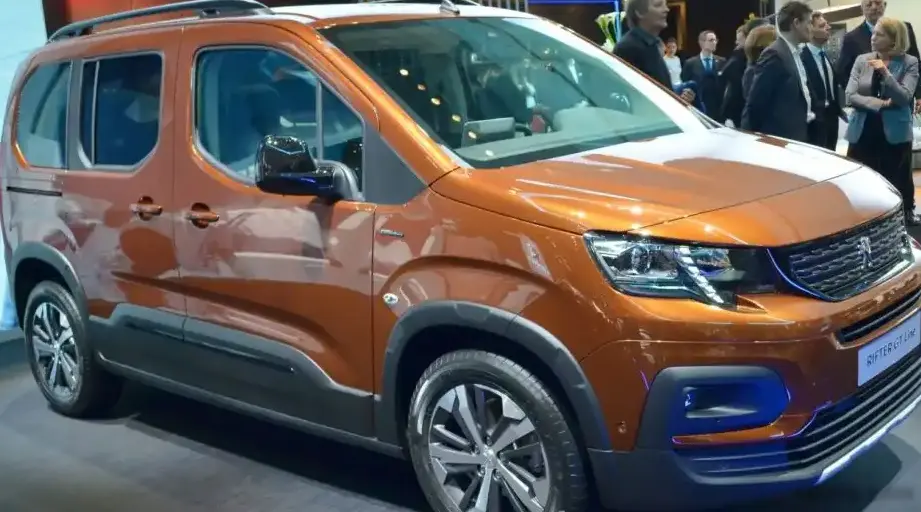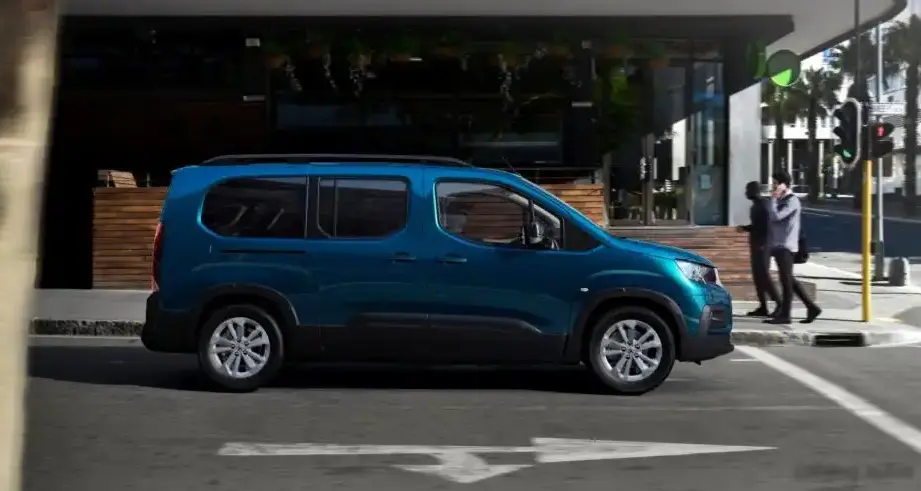
The Peugeot Rifter L2 1.5 BlueHDi (102 hp) is a diesel-powered minivan produced by the French manufacturer Peugeot between April 2020 and March 2024. Part of the second generation Rifter lineup (internally designated as a facelift of the original model), the L2 variant denotes an extended wheelbase, offering increased interior space and cargo capacity. This particular engine and power output represented an entry-level option within the Rifter range, aimed at buyers prioritizing fuel efficiency and practicality over outright performance. It competed directly with other compact MPVs like the Citroën Berlingo, Opel Combo Life, and Volkswagen Caddy, all of which share a common platform and many components.
Technical Specifications
| Brand | Peugeot |
| Model | Rifter |
| Generation | Rifter L2 |
| Type (Engine) | 1.5 BlueHDi (102 Hp) |
| Start of production | April, 2020 |
| End of production | March, 2024 |
| Powertrain Architecture | Internal Combustion engine |
| Body type | Minivan |
| Seats | 7 |
| Doors | 5 |
| Fuel consumption at Low speed (WLTP) | 5.1-5.9 l/100 km (46.1 – 39.9 US mpg, 55.4 – 47.9 UK mpg, 19.6 – 16.9 km/l) |
| Fuel consumption at Medium speed (WLTP) | 4.5-5.5 l/100 km (52.3 – 42.8 US mpg, 62.8 – 51.4 UK mpg, 22.2 – 18.2 km/l) |
| Fuel consumption at high speed (WLTP) | 4.2-5.1 l/100 km (56 – 46.1 US mpg, 67.3 – 55.4 UK mpg, 23.8 – 19.6 km/l) |
| Fuel consumption at very high speed (WLTP) | 5.7-6.8 l/100 km (41.3 – 34.6 US mpg, 49.6 – 41.5 UK mpg, 17.5 – 14.7 km/l) |
| Combined fuel consumption (WLTP) | 4.9-5.9 l/100 km (48 – 39.9 US mpg, 57.6 – 47.9 UK mpg, 20.4 – 16.9 km/l) |
| CO2 emissions (WLTP) | 141-154 g/km |
| Fuel Type | Diesel |
| Acceleration 0 – 100 km/h | 15 sec |
| Acceleration 0 – 62 mph | 15 sec |
| Acceleration 0 – 60 mph | 14.3 sec |
| Maximum speed | 172 km/h (106.88 mph) |
| Emission standard | Euro 6d-ISC |
| Weight-to-power ratio | 15.1 kg/Hp, 66.2 Hp/tonne |
| Weight-to-torque ratio | 6.2 kg/Nm, 162.3 Nm/tonne |
| Power | 102 Hp @ 3750 rpm |
| Power per litre | 68 Hp/l |
| Torque | 250 Nm @ 1750 rpm (184.39 lb.-ft. @ 1750 rpm) |
| Engine layout | Front, Transverse |
| Engine Model/Code | YHY DV5RD |
| Engine displacement | 1499 cm3 (91.47 cu. in.) |
| Number of cylinders | 4 |
| Engine configuration | Inline |
| Number of valves per cylinder | 4 |
| Fuel injection system | Diesel Commonrail |
| Engine aspiration | Turbocharger, Intercooler |
| Engine oil capacity | 4 l (4.23 US qt | 3.52 UK qt) |
| Kerb Weight | 1540 kg (3395.12 lbs.) |
| Max. weight | 2320 kg (5114.72 lbs.) |
| Max load | 780 kg (1719.61 lbs.) |
| Trunk (boot) space – minimum | 1050 l (37.08 cu. ft.) |
| Trunk (boot) space – maximum | 3500 l (123.6 cu. ft.) |
| Fuel tank capacity | 51 l (13.47 US gal | 11.22 UK gal) |
| AdBlue tank | 17 l (4.49 US gal | 3.74 UK gal) |
| Permitted trailer load with brakes (12%) | 1050 kg (2314.85 lbs.) |
| Permitted towbar download | 74 kg (163.14 lbs.) |
| Length | 4753 mm (187.13 in.) |
| Width | 1848 mm (72.76 in.) |
| Width with mirrors folded | 1921 mm (75.63 in.) |
| Width including mirrors | 2107 mm (82.95 in.) |
| Height | 1879-1882 mm (73.98 – 74.09 in.) |
| Wheelbase | 2975 mm (117.13 in.) |
| Front track | 1553 mm (61.14 in.) |
| Rear (Back) track | 1567 mm (61.69 in.) |
| Front overhang | 892 mm (35.12 in.) |
| Rear overhang | 886 mm (34.88 in.) |
| Ride height (ground clearance) | 216 mm (8.5 in.) |
| Approach angle | 17.5° |
| Departure angle | 25.7° |
| Drivetrain Architecture | The Internal combustion engine (ICE) drives the front wheels of the vehicle. |
| Drive wheel | Front wheel drive |
| Number of gears and type of gearbox | 6 gears, manual transmission |
| Front suspension | Independent type McPherson |
| Rear suspension | Wishbone |
| Front brakes | Disc |
| Rear brakes | Disc |
| Assisting systems | ABS (Anti-lock braking system) |
| Steering type | Steering rack and pinion |
| Tires size | 215/65 R16 95U; 215/60 R17 95U |
| Wheel rims size | 6.5J x 16 ET47; 7.0J x 17 ET44 |
INTRODUCTION
The Peugeot Rifter L2 1.5 BlueHDi (102 hp) is a practical and versatile minivan designed for families and those requiring ample space. Introduced as part of the Rifter’s mid-life refresh, the L2 designation signifies the extended body length, adding significant cargo volume behind the third row of seats. This variant, powered by the 1.5-liter BlueHDi diesel engine producing 102 horsepower, served as a core offering in the Rifter lineup, positioned as a fuel-efficient and affordable option. Built on the EMP2 platform shared with Citroën and Opel/Vauxhall, the Rifter aimed to provide a comfortable and functional alternative to traditional SUVs and MPVs.
Powertrain & Engine Architecture
The heart of the Rifter L2 1.5 BlueHDi (102 hp) is the PSA Group’s DV5RD engine, a 1.5-liter inline-four cylinder diesel. This engine, identified by the code YHY, utilizes a common-rail direct injection system, delivering fuel at extremely high pressure for optimized combustion. A turbocharger with an intercooler is employed to boost power and torque. The engine features four valves per cylinder and is known for its relatively quiet operation and good fuel economy. The 102 hp output is achieved at 3750 rpm, while peak torque of 250 Nm (184 lb-ft) is available from 1750 rpm. This engine is paired with a six-speed manual transmission, delivering power to the front wheels. The transmission is chosen for its efficiency and relatively low cost, contributing to the overall affordability of the vehicle.
Driving Characteristics
The 1.5 BlueHDi 102 hp engine in the Rifter L2 provides adequate, but not exhilarating, performance. Acceleration from 0-60 mph takes around 14.3 seconds, and top speed is limited to 172 km/h (107 mph). The engine’s torque delivery is relatively flat, making it suitable for everyday driving and carrying a full load of passengers and cargo. The six-speed manual transmission is well-matched to the engine, allowing for comfortable cruising on the highway. Compared to higher-powered Rifter variants (like those with the 130 hp version of the same engine), this version feels noticeably slower, particularly when fully loaded or climbing hills. However, the trade-off is significantly improved fuel economy. The gear ratios are optimized for fuel efficiency rather than outright performance.
Equipment & Trim Levels
The Rifter L2 1.5 BlueHDi (102 hp) typically came equipped with a reasonable level of standard features. These included air conditioning, a touchscreen infotainment system with Bluetooth connectivity, electric front windows, and a height-adjustable driver’s seat. Safety features such as ABS, ESP (Electronic Stability Program), and multiple airbags were also standard. Higher trim levels offered additional features like rear parking sensors, a reversing camera, navigation system, and upgraded interior trim. Interior upholstery was typically cloth, with options for more durable and washable materials geared towards family use. The dashboard layout is functional and straightforward, prioritizing usability over aesthetic flair.
Chassis & Braking
The Rifter L2 utilizes a McPherson strut front suspension and a twist-beam rear suspension. This setup provides a comfortable ride quality, absorbing bumps and imperfections in the road effectively. The extended wheelbase of the L2 variant contributes to improved stability, particularly at higher speeds. Braking duties are handled by disc brakes on all four wheels, providing adequate stopping power. ABS (Anti-lock Braking System) is standard, enhancing safety during emergency braking situations. The steering is a rack-and-pinion system, offering precise and responsive control. The vehicle’s weight, around 1540 kg (3395 lbs), is relatively high, which impacts handling somewhat, but the suspension is tuned to mitigate body roll.
Market Reception & Comparison
The Peugeot Rifter L2 1.5 BlueHDi (102 hp) was generally well-received by automotive critics as a practical and affordable family vehicle. Its fuel efficiency was a major selling point, and the spacious interior and versatile seating arrangements were praised. However, some reviewers noted that the engine felt underpowered, especially when the vehicle was fully loaded. Compared to the 130 hp version of the same engine, the 102 hp variant offered a lower price point but sacrificed performance. Against competitors like the Citroën Berlingo and Opel Combo Life, the Rifter offered a similar package, with styling being a key differentiator. The Rifter’s more rugged appearance appealed to some buyers.
Legacy
The 1.5 BlueHDi engine has proven to be a relatively reliable unit, although, like all diesel engines, it requires regular maintenance, including oil changes and adherence to recommended service intervals. The Rifter L2, in general, has established a reputation for practicality and durability. On the used car market, these models represent good value for money, offering a lot of space and functionality for a reasonable price. However, potential buyers should be aware of the potential for diesel particulate filter (DPF) issues, particularly if the vehicle has been primarily used for short journeys. The Rifter L2 1.5 BlueHDi (102 hp) remains a popular choice for families and businesses seeking a versatile and economical minivan.