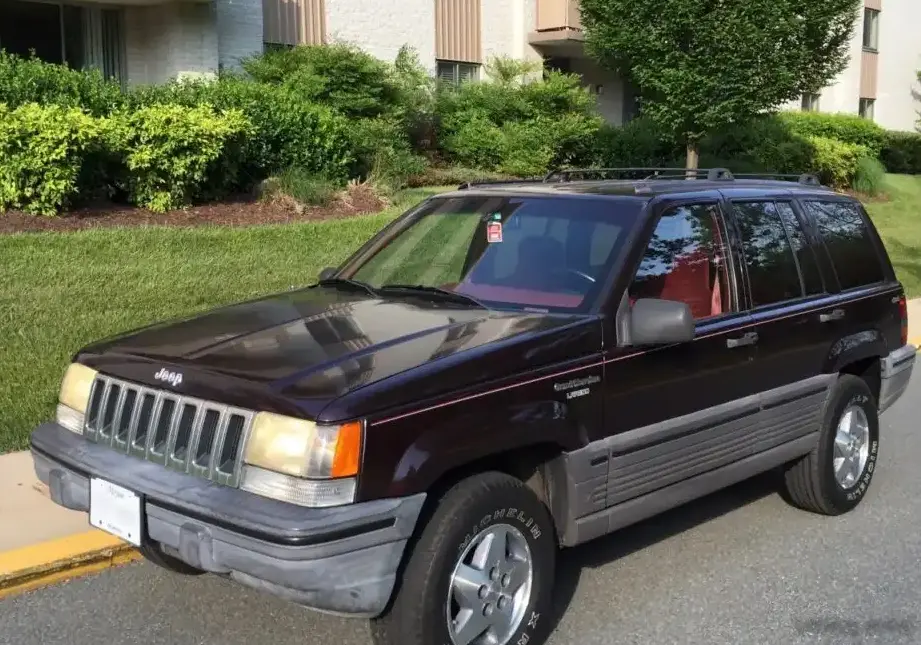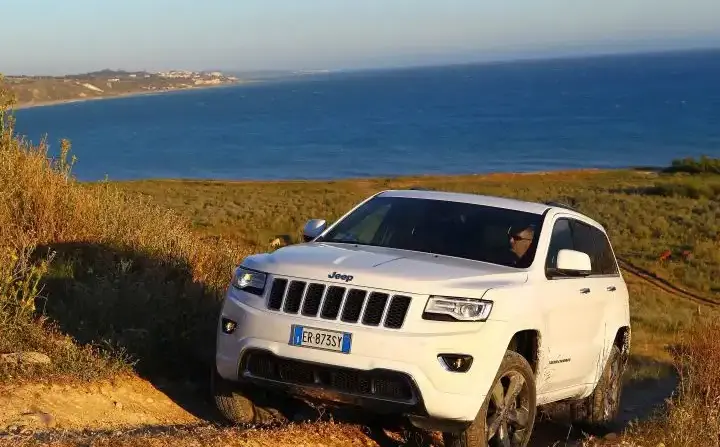
The Jeep Grand Cherokee IV (WK2), specifically the facelifted version produced from 2014 to 2017, offered a potent 5.7-liter V8 engine paired with an eight-speed automatic transmission. This configuration represented a significant step up in performance and refinement within the WK2 lineup, positioning itself as the premium engine choice for buyers prioritizing power and towing capacity. The facelift brought updated styling, improved interior materials, and enhanced technology features, solidifying the Grand Cherokee’s position as a competitive luxury SUV in the American market.
Technical Specifications
| Brand | Jeep |
| Model | Grand Cherokee |
| Generation | Grand Cherokee IV (WK2, facelift 2013) |
| Type (Engine) | 5.7 V8 (364 Hp) Automatic |
| Start of production | 2014 |
| End of production | 2017 |
| Powertrain Architecture | Internal Combustion engine |
| Body type | SUV |
| Seats | 5 |
| Doors | 5 |
| Fuel consumption (economy) – urban | 16.8 l/100 km (14 US mpg, 16.8 UK mpg, 6 km/l) |
| Fuel consumption (economy) – extra urban | 10.7 l/100 km (22 US mpg, 26.4 UK mpg, 9.3 km/l) |
| Fuel consumption (economy) – combined | 13.8 l/100 km (17 US mpg, 20.5 UK mpg, 7.2 km/l) |
| Fuel Type | Petrol (Gasoline) |
| Weight-to-power ratio | 6.1 kg/Hp, 163.9 Hp/tonne |
| Weight-to-torque ratio | 4.2 kg/Nm, 238.2 Nm/tonne |
| Power | 364 Hp @ 5150 rpm |
| Power per litre | 64.4 Hp/l |
| Torque | 529 Nm @ 4250 rpm (390.17 lb.-ft. @ 4250 rpm) |
| Engine layout | Front, Longitudinal |
| Engine Model/Code | EZH |
| Engine displacement | 5654 cm3 (345.03 cu. in.) |
| Number of cylinders | 8 |
| Engine configuration | V-engine |
| Cylinder Bore | 99.5 mm (3.92 in.) |
| Piston Stroke | 90.9 mm (3.58 in.) |
| Compression ratio | 10.5:1 |
| Number of valves per cylinder | 2 |
| Fuel injection system | Multi-port manifold injection |
| Engine aspiration | Naturally aspirated engine |
| Valvetrain | OHV |
| Engine oil capacity | 6.6 l (6.97 US qt | 5.81 UK qt) |
| Coolant | 14.6 l (15.43 US qt | 12.85 UK qt) |
| Kerb Weight | 2221 kg (4896.47 lbs.) |
| Max. weight | 2948 kg (6499.23 lbs.) |
| Max load | 727 kg (1602.76 lbs.) |
| Fuel tank capacity | 93 l (24.57 US gal | 20.46 UK gal) |
| Permitted trailer load with brakes (12%) | 3357 kg (7400.92 lbs.) |
| Length | 4822 mm (189.84 in.) |
| Width | 1943 mm (76.5 in.) |
| Height | 1761 mm (69.33 in.) |
| Wheelbase | 2915 mm (114.76 in.) |
| Front track | 1623 mm (63.9 in.) |
| Rear (Back) track | 1627 mm (64.06 in.) |
| Ride height (ground clearance) | 218 mm (8.58 in.) |
| Drag coefficient (Cd) | 0.37 |
| Minimum turning circle (turning diameter) | 11.3 m (37.07 ft.) |
| Approach angle | 26.3° |
| Departure angle | 26.5° |
| Ramp-over (brakeover) angle | 18.8° |
| Drivetrain Architecture | The Internal combustion engine (ICE) drives the rear wheels of the vehicle. |
| Drive wheel | Rear wheel drive |
| Number of gears and type of gearbox | 8 gears, automatic transmission |
| Front brakes | Ventilated discs |
| Rear brakes | Ventilated discs |
| Assisting systems | ABS (Anti-lock braking system) |
| Steering type | Steering rack and pinion |
| Power steering | Electric Steering |
| Tires size | 265/60 R18 |
| Wheel rims size | 18 |
Powertrain & Engine Architecture
The heart of this Grand Cherokee variant is the 5.7-liter “HEMI” V8 engine, designated with the EZH engine code. This engine is a naturally aspirated, overhead valve (OHV) design featuring multi-port fuel injection. The HEMI architecture is characterized by its hemispherical combustion chambers, designed to enhance airflow and improve combustion efficiency. The 5.7L HEMI benefits from Chrysler’s Multi-Displacement System (MDS), which allows it to deactivate four cylinders during low-load cruising conditions, improving fuel economy. The eight-speed automatic transmission, sourced from ZF, plays a crucial role in maximizing the engine’s potential. Its closely spaced gear ratios provide smooth acceleration and efficient highway cruising. The transmission is electronically controlled, adapting shift points based on driving conditions and throttle input.
Driving Characteristics
The 5.7L V8 and eight-speed automatic combination delivers a noticeably more engaging driving experience compared to the lower-displacement engines offered in the Grand Cherokee lineup. Acceleration is brisk, with the SUV capable of reaching 60 mph in around 6.8 seconds. The eight-speed transmission keeps the engine in its optimal power band, providing responsive acceleration in various driving scenarios. While not as fuel-efficient as the V6 or diesel options, the V8 offers a satisfying exhaust note and ample power for towing and hauling. The rear-wheel-drive configuration contributes to a balanced feel, although four-wheel-drive versions were also readily available.
Equipment & Trim Levels
The 5.7L V8 was typically offered in higher trim levels such as the Limited, Overland, and Summit. Standard features included leather upholstery, heated front seats, a premium sound system, and a touchscreen infotainment system. Optional extras included a panoramic sunroof, adaptive cruise control, blind-spot monitoring, and a rear-seat entertainment system. The Overland trim added features like upgraded leather, wood trim, and a more sophisticated suspension system. The Summit trim represented the pinnacle of luxury, offering a host of premium features and exclusive styling cues.
Chassis & Braking
The WK2 Grand Cherokee features an independent front suspension and a multi-link rear suspension. The 5.7L V8 models often received slightly stiffer suspension tuning to handle the increased power and weight. Braking duties are handled by ventilated discs on all four wheels, providing ample stopping power. The anti-lock braking system (ABS) is standard, enhancing safety and control during emergency braking situations. The rear-wheel-drive models typically featured smaller rear brake rotors compared to the four-wheel-drive versions.
Market Reception & Comparison
Critics generally praised the 5.7L V8 Grand Cherokee for its powerful engine, refined ride, and luxurious interior. However, fuel economy was a common concern. Compared to the 3.6L V6, the V8 offered significantly more power but at the expense of fuel efficiency. The diesel-powered Grand Cherokee provided a balance between power and fuel economy, but the V8 remained the preferred choice for buyers prioritizing performance and towing capacity. The V8 models commanded a higher price tag, reflecting their increased capabilities and premium features.
Legacy
The 5.7L HEMI V8 in the WK2 Grand Cherokee has proven to be a relatively reliable powertrain. While routine maintenance is essential, the engine is generally known for its durability. The eight-speed automatic transmission has also demonstrated good reliability. On the used car market, these models hold their value reasonably well, particularly those in good condition with a well-documented service history. The combination of power, luxury, and capability continues to make the 5.7L V8 Grand Cherokee a desirable SUV for many buyers.