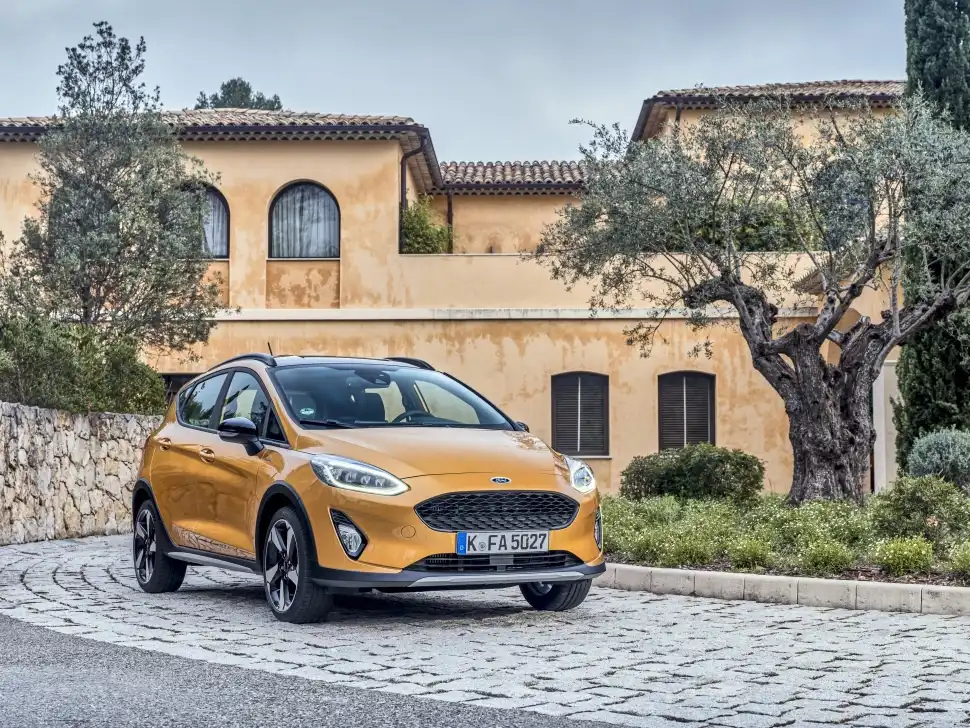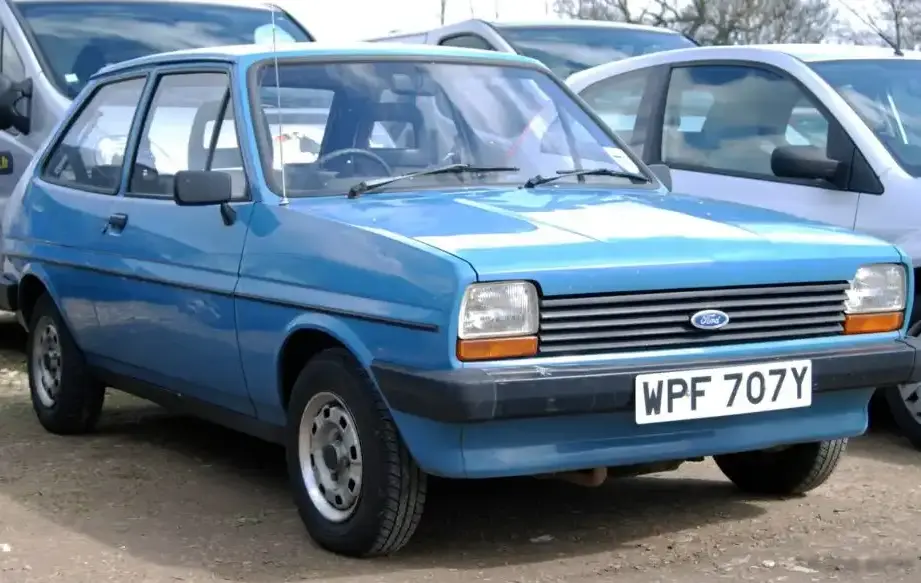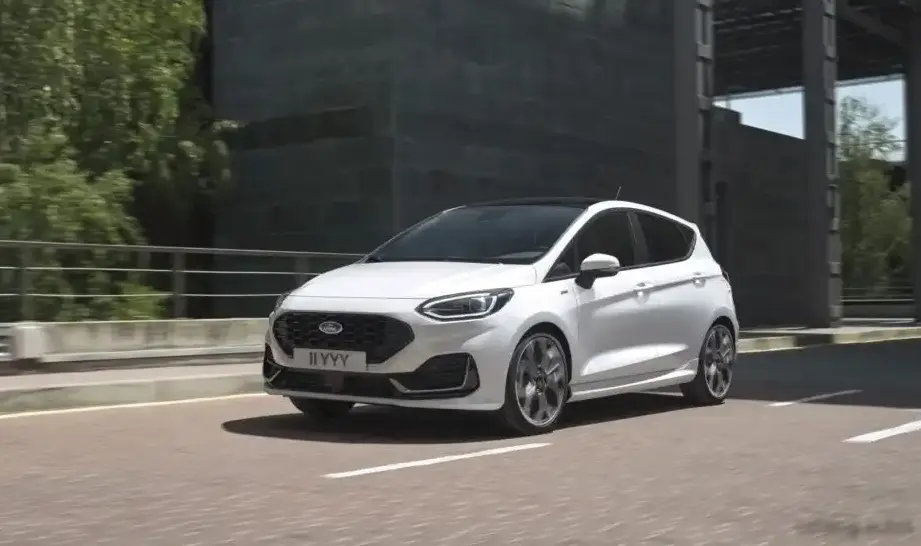
The Ford Fiesta Mk8, specifically the 5-door variant equipped with the 1.0 EcoBoost 125 horsepower engine and PowerShift automatic transmission, represents a significant iteration in Ford’s long-running supermini lineage. Introduced in late 2021 as part of a facelift for the Mk8 generation (produced from 2017-2023), this model aimed to balance fuel efficiency with a more refined driving experience. Positioned as a mid-range offering within the Fiesta lineup, it slotted between the lower-powered 1.0 EcoBoost 100 PS versions and the performance-oriented ST models. Production of this specific configuration concluded in July 2023, coinciding with the end of Fiesta production in Europe.
Technical Specifications
| Brand | Ford |
| Model | Fiesta |
| Generation | Fiesta VIII (Mk8, facelift 2022) 5 door |
| Type (Engine) | 1.0 EcoBoost (125 Hp) Hybrid PowerShift |
| Start of production | November, 2021 |
| End of production | July, 2023 |
| Powertrain Architecture | MHEV (Mild Hybrid Electric Vehicle) |
| Body type | Hatchback |
| Seats | 5 |
| Doors | 5 |
| Fuel consumption at Low speed (WLTP) | 6.7-7.3 l/100 km (35.1 – 32.2 US mpg) |
| Fuel consumption at Medium speed (WLTP) | 5-5.7 l/100 km (47 – 41.3 US mpg) |
| Fuel consumption at high speed (WLTP) | 4.5-5.3 l/100 km (52.3 – 44.4 US mpg) |
| Fuel consumption at very high speed (WLTP) | 5.6-6.7 l/100 km (42 – 35.1 US mpg) |
| Combined fuel consumption (WLTP) | 5.3-6.1 l/100 km (44.4 – 38.6 US mpg) |
| CO2 emissions (WLTP) | 119-138 g/km |
| Fuel Type | Petrol (Gasoline) |
| Acceleration 0 – 100 km/h | 9.6 sec |
| Acceleration 0 – 62 mph | 9.6 sec |
| Acceleration 0 – 60 mph | 9.1 sec |
| Maximum speed | 199 km/h (123.65 mph) |
| Emission standard | Euro 6d-ISC-FCM |
| Weight-to-power ratio | 9.4 kg/Hp |
| Weight-to-torque ratio | 5.9 kg/Nm |
| Power | 125 Hp @ 6000 rpm |
| Torque | 200 Nm @ 1750 rpm (147.51 lb.-ft. @ 1750 rpm) |
| Engine layout | Front, Transverse |
| Engine Model/Code | B7JB |
| Engine displacement | 999 cm3 (60.96 cu. in.) |
| Number of cylinders | 3 |
| Engine configuration | Inline |
| Cylinder Bore | 71.9 mm (2.83 in.) |
| Piston Stroke | 82 mm (3.23 in.) |
| Compression ratio | 10.5:1 |
| Number of valves per cylinder | 4 |
| Fuel injection system | Direct injection |
| Engine aspiration | Turbocharger, Intercooler |
| Valvetrain | DOHC |
| Engine oil capacity | 4.52 l (4.78 US qt | 3.98 UK qt) |
| Coolant | 5.6 l (5.92 US qt | 4.93 UK qt) |
| Kerb Weight | 1176 kg (2592.64 lbs.) |
| Max. weight | 1710 kg (3769.9 lbs.) |
| Max load | 534 kg (1177.27 lbs.) |
| Trunk (boot) space – minimum | 292 l (10.31 cu. ft.) |
| Trunk (boot) space – maximum | 1093 l (38.6 cu. ft.) |
| Fuel tank capacity | 42 l (11.1 US gal | 9.24 UK gal) |
| Max. roof load | 50 kg (110.23 lbs.) |
| Permitted trailer load with brakes (12%) | 1000 kg (2204.62 lbs.) |
| Permitted trailer load without brakes | 625 kg (1377.89 lbs.) |
| Permitted towbar download | 45 kg (99.21 lbs.) |
| Length | 4048-4069 mm (159.37 – 160.2 in.) |
| Width | 1735 mm (68.31 in.) |
| Width with mirrors folded | 1783 mm (70.2 in.) |
| Width including mirrors | 1941 mm (76.42 in.) |
| Height | 1484-1490 mm (58.43 – 58.66 in.) |
| Wheelbase | 2493 mm (98.15 in.) |
| Front overhang | 846-847 mm (33.31 – 33.35 in.) |
| Rear overhang | 708-730 mm (27.87 – 28.74 in.) |
| Ride height (ground clearance) | 122-130 mm (4.8 – 5.12 in.) |
| Minimum turning circle | 9.8-10 m (32.15 – 32.81 ft.) |
| Drivetrain Architecture | Front wheel drive, MHEV |
| Number of gears and type of gearbox | 7 gears, automatic transmission PowerShift |
| Front suspension | Independent, type McPherson with coil spring and anti-roll bar |
| Rear suspension | Torsion |
| Front brakes | Ventilated discs, 262×23 mm |
| Rear brakes | Drum, 202.8 mm |
| Tires size | 195/60 R15; 205/45 R17 |
| Wheel rims size | 6J x 15; 7.5J x 17 |
INTRODUCTION
The Fiesta Mk8 facelift, launched in 2021, brought with it a refreshed exterior design, an upgraded interior featuring a larger touchscreen infotainment system, and importantly, a revised powertrain lineup. The 1.0 EcoBoost 125 PS PowerShift model was a key component of this update. It utilized a mild-hybrid system (MHEV) to improve fuel economy and reduce emissions, aligning with increasingly stringent European regulations. This variant was aimed at buyers seeking a balance between affordability, practicality, and a reasonably engaging driving experience. The PowerShift transmission, a dual-clutch automatic, was intended to provide smoother and quicker shifts compared to a traditional torque-converter automatic.
Powertrain & Engine Architecture
At the heart of this Fiesta variant lies the Ford 1.0 EcoBoost engine, specifically the B7JB code. This is a three-cylinder, 999cc turbocharged gasoline engine featuring direct fuel injection and a double overhead camshaft (DOHC) valvetrain. The addition of a 48-volt mild-hybrid system incorporates a belt-driven integrated starter generator (BiSG) which allows for start-stop functionality, regenerative braking, and a small amount of electric assistance during acceleration. The PowerShift 7-speed dual-clutch transmission (DCT) is a crucial element, offering automated gear changes and a manual mode for driver control. The DCT utilizes two separate clutches – one for odd-numbered gears and one for even-numbered gears – allowing for pre-selection of the next gear and seamless shifts. The engine produces 125 horsepower at 6000 rpm and 200 Nm (147.51 lb-ft) of torque at 1750 rpm.
Driving Characteristics
The 1.0 EcoBoost 125 PS PowerShift Fiesta delivers a surprisingly sprightly driving experience. While not as overtly sporty as the ST models, the combination of the turbocharged engine and the quick-shifting PowerShift transmission provides adequate acceleration. The 0-60 mph sprint takes approximately 9.1 seconds, and the car reaches a top speed of 199 km/h (123.65 mph). The PowerShift transmission generally offers smooth and responsive shifts, although some drivers have reported occasional hesitation at low speeds. Compared to the 100 PS version, the 125 PS model offers noticeably more punch, particularly during overtaking maneuvers. However, it doesn’t possess the raw power of the higher-output engines found in the ST variants. The mild-hybrid system is largely transparent to the driver, contributing to improved fuel economy without significantly impacting performance.
Equipment & Trim Levels
The 1.0 EcoBoost 125 PS PowerShift Fiesta typically came equipped with features such as air conditioning, a touchscreen infotainment system with Apple CarPlay and Android Auto compatibility, alloy wheels, and a suite of safety features including lane-keeping assist and automatic emergency braking. Higher trim levels, such as Titanium and Vignale, added features like a larger touchscreen, heated seats, a rear-view camera, and premium interior materials. Interior upholstery was typically cloth, with options for leather upgrades on higher trims. Optional extras included a panoramic sunroof, parking sensors, and a premium sound system.
Chassis & Braking
The Fiesta Mk8 utilizes a McPherson strut front suspension and a torsion beam rear suspension. This setup provides a good balance between ride comfort and handling. The front brakes are ventilated discs measuring 262x23mm, while the rear brakes are drums measuring 202.8mm. ABS (Anti-lock Braking System) is standard. The suspension tuning is geared towards providing a comfortable ride for everyday driving, although it’s still capable of handling corners with reasonable composure. Stabilizer bars are fitted to both the front and rear axles to reduce body roll.
Market Reception & Comparison
The 1.0 EcoBoost 125 PS PowerShift Fiesta was generally well-received by automotive critics. It was praised for its fuel efficiency, refined engine, and comfortable ride. However, the PowerShift transmission occasionally drew criticism for its occasional hesitation and lack of outright sportiness compared to a manual gearbox. Compared to the 1.0 EcoBoost 100 PS version, the 125 PS model offered a noticeable performance upgrade, justifying the higher price tag for drivers who prioritized power. Against competitors like the Volkswagen Polo and Opel Corsa, the Fiesta offered a compelling package with a stylish design and a well-equipped interior.
Legacy
The 1.0 EcoBoost engine has proven to be a reliable and fuel-efficient powerplant, although some early versions of the engine experienced issues with timing belt failures. The PowerShift transmission, while generally reliable, has been known to experience occasional issues with clutch wear and mechatronic unit failures. In the used car market, the 1.0 EcoBoost 125 PS PowerShift Fiesta represents a good value proposition for buyers seeking a practical and economical supermini. Regular maintenance, including oil changes and transmission servicing, is crucial to ensure the long-term reliability of this powertrain.