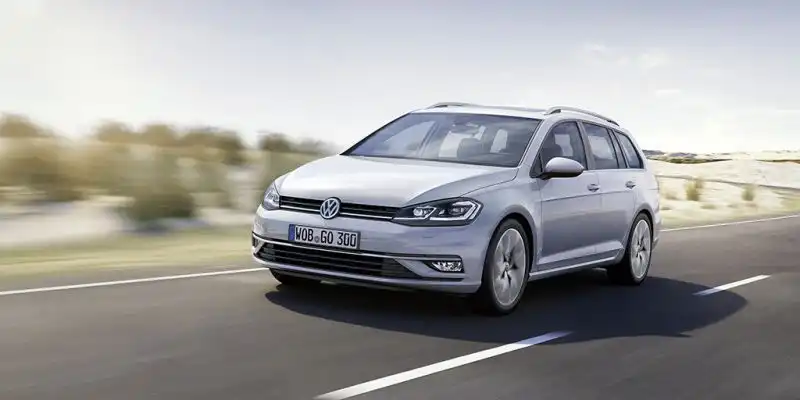
The Volkswagen Golf VII Variant GTD 2.0 TDI (184 hp) DSG, produced from 2017 to 2019, represents a compelling blend of practicality, performance, and fuel efficiency within the Golf VII range. This variant, part of the facelifted Golf VII (designated the 7.5 series), offered a diesel-powered station wagon option aimed at buyers seeking a versatile vehicle for both daily commuting and longer journeys. Positioned as a mid-to-high trim level, the GTD bridged the gap between the more economical diesel models and the performance-focused GTI, offering a sportier driving experience than the standard TDI variants while maintaining excellent fuel economy. It was primarily marketed in Europe, where the station wagon body style remains highly popular, and offered a sophisticated alternative to traditional hatchbacks.
Technical Specifications
| Brand | Volkswagen |
| Model | Golf |
| Generation | Golf VII Variant (facelift 2017) |
| Type (Engine) | GTD 2.0 TDI (184 Hp) DSG |
| Start of production | 2017 |
| End of production | 2019 |
| Powertrain Architecture | Internal Combustion engine |
| Body type | Station wagon (estate) |
| Seats | 5 |
| Doors | 5 |
| Fuel consumption (urban) | 5.7 l/100 km (41.3 US mpg, 49.6 UK mpg, 17.5 km/l) |
| Fuel consumption (extra urban) | 4.5 l/100 km (52.3 US mpg, 62.8 UK mpg, 22.2 km/l) |
| Fuel consumption (combined) | 5 l/100 km (47 US mpg, 56.5 UK mpg, 20 km/l) |
| CO2 emissions | 130 g/km |
| Fuel Type | Diesel |
| Acceleration 0 – 100 km/h | 7.8 sec |
| Acceleration 0 – 62 mph | 7.8 sec |
| Acceleration 0 – 60 mph | 7.4 sec |
| Maximum speed | 230 km/h (142.92 mph) |
| Emission standard | Euro 6 |
| Weight-to-power ratio | 7.7 kg/Hp, 129.9 Hp/tonne |
| Weight-to-torque ratio | 3.7 kg/Nm, 268.2 Nm/tonne |
| Power | 184 Hp @ 3500-4000 rpm |
| Power per litre | 93.5 Hp/l |
| Torque | 380 Nm @ 1750-3250 rpm (280.27 lb.-ft. @ 1750-3250 rpm) |
| Engine layout | Front, Transverse |
| Engine Model/Code | CUNA, DGCA |
| Engine displacement | 1968 cm3 (120.09 cu. in.) |
| Number of cylinders | 4 |
| Engine configuration | Inline |
| Number of valves per cylinder | 4 |
| Fuel injection system | Diesel Commonrail |
| Engine aspiration | Turbocharger, Intercooler |
| Engine oil capacity | 4.7 l (4.97 US qt | 4.14 UK qt) |
| Kerb Weight | 1417 kg (3123.95 lbs.) |
| Max. weight | 2020 kg (4453.34 lbs.) |
| Max load | 603 kg (1329.39 lbs.) |
| Trunk (boot) space – minimum | 605 l (21.37 cu. ft.) |
| Trunk (boot) space – maximum | 1620 l (57.21 cu. ft.) |
| Fuel tank capacity | 50 l (13.21 US gal | 11 UK gal) |
| Max. roof load | 75 kg (165.35 lbs.) |
| Permitted trailer load with brakes (8%) | 1800 kg (3968.32 lbs.) |
| Permitted trailer load with brakes (12%) | 1600 kg (3527.4 lbs.) |
| Permitted trailer load without brakes | 740 kg (1631.42 lbs.) |
| Permitted towbar download | 80 kg (176.37 lbs.) |
| Length | 4567 mm (179.8 in.) |
| Width | 1799 mm (70.83 in.) |
| Width including mirrors | 2027 mm (79.8 in.) |
| Height | 1515 mm (59.65 in.) |
| Wheelbase | 2620 mm (103.15 in.) |
| Front track | 1533-1549 mm (60.35 – 60.98 in.) |
| Rear (Back) track | 1504-1520 mm (59.21 – 59.84 in.) |
| Ride height (ground clearance) | 131 mm (5.16 in.) |
| Minimum turning circle (turning diameter) | 10.9 m (35.76 ft.) |
| Drive wheel | Front wheel drive |
| Number of gears and type of gearbox | 7 gears, automatic transmission DSG |
| Front brakes | Ventilated discs |
| Rear brakes | Disc |
| Assisting systems | ABS (Anti-lock braking system) |
| Steering type | Steering rack and pinion |
| Power steering | Electric Steering |
| Tires size | 205/55 R16; 225/40 R18; 225/35 R19 |
| Wheel rims size | 6J x 16; 7.5J x 18; 7.5J x 19 |
INTRODUCTION
The Golf VII Variant GTD 2.0 TDI (184 hp) DSG, launched in 2017 as part of the facelifted Golf VII range, offered a practical and efficient option for buyers seeking a diesel-powered station wagon. Built on the Volkswagen Group’s MQB platform (specifically the A5 variant), the Golf VII Variant GTD aimed to deliver a balance of performance, economy, and space. The “GTD” designation signified a sporty diesel model, positioned below the GTI in the lineup but above the standard TDI trims. This variant was particularly popular in European markets where estate cars are favored for their versatility and cargo capacity.
Powertrain & Engine Architecture
At the heart of the Golf VII Variant GTD lies the 2.0-liter four-cylinder diesel engine, specifically the CUNA or DGCA engine code depending on the market and specific production date. This engine utilizes a common rail direct injection system, delivering fuel at extremely high pressure for optimized combustion. A turbocharger with an intercooler further enhances performance, boosting power output to 184 horsepower at 3500-4000 rpm and 380 Nm (280 lb-ft) of torque between 1750-3250 rpm. The engine also incorporates a diesel particulate filter (DPF) to meet stringent Euro 6 emission standards. The engine’s inline configuration and four valves per cylinder contribute to its smooth operation and efficient power delivery. Paired with the engine is a seven-speed dual-clutch transmission (DSG), providing quick and seamless gear changes. This DSG transmission is known for its efficiency and responsiveness, enhancing both performance and fuel economy.
Driving Characteristics
The Golf VII Variant GTD 2.0 TDI DSG offers a refined and capable driving experience. The 184 hp engine and DSG transmission combine to deliver brisk acceleration, with a 0-62 mph (0-100 km/h) time of around 7.8 seconds. While not as overtly sporty as the GTI, the GTD provides ample power for overtaking and cruising on highways. The DSG transmission’s quick shifts contribute to a responsive feel, and the engine’s strong low-end torque makes it easy to navigate city traffic. Compared to the lower-powered TDI variants, the GTD offers a noticeable performance upgrade. The gear ratios in the DSG are tuned to prioritize both acceleration and fuel efficiency, providing a good balance between the two. Compared to a manual transmission, the DSG offers convenience and potentially slightly improved fuel economy, but some drivers may prefer the greater control of a manual gearbox.
Equipment & Trim Levels
The GTD trim level came well-equipped as standard. Interior features typically included sport seats upholstered in a unique fabric pattern, a leather-wrapped multi-function steering wheel, and stainless steel pedal caps. The dashboard featured GTD-specific trim elements, and the infotainment system included a touchscreen display with navigation and smartphone integration. Standard safety features included ABS, electronic stability control, and multiple airbags. Optional extras included adaptive cruise control, park assist, a panoramic sunroof, and upgraded sound systems. The GTD trim generally offered a more premium feel than the base Golf variants, with a focus on sporty aesthetics and enhanced comfort.
Chassis & Braking
The Golf VII Variant GTD featured a fully independent suspension system, with MacPherson struts at the front and a multi-link setup at the rear. This suspension configuration provides a comfortable ride while maintaining good handling characteristics. The GTD trim typically included a slightly lowered suspension compared to the standard Golf Variant, further enhancing its sporty feel. Braking duties were handled by ventilated disc brakes at the front and solid disc brakes at the rear. The ABS system ensured optimal braking performance in various conditions. The chassis was tuned to provide a balance between comfort and handling, making it suitable for both daily commuting and longer journeys.
Market Reception & Comparison
The Golf VII Variant GTD was generally well-received by automotive critics. It was praised for its blend of performance, fuel efficiency, and practicality. Reviewers noted the engine’s strong torque and the DSG transmission’s responsiveness. Compared to the Golf GTI, the GTD offered a more economical alternative without sacrificing too much in terms of driving enjoyment. Compared to other TDI variants, the GTD provided a significant performance boost. Fuel economy figures were consistently impressive, making it an attractive option for drivers who cover long distances. Reliability was generally good, although, like all modern diesel vehicles, the DPF could require occasional maintenance.
Legacy
The Golf VII Variant GTD 2.0 TDI DSG remains a popular choice in the used car market. Its combination of practicality, efficiency, and performance has ensured its enduring appeal. The 2.0 TDI engine, while subject to some scrutiny regarding emissions in earlier iterations, has proven to be relatively reliable when properly maintained. The DSG transmission, while requiring occasional servicing, is generally durable. The Golf VII Variant GTD represents a well-rounded and versatile vehicle that continues to offer a compelling package for buyers seeking a practical and efficient station wagon.