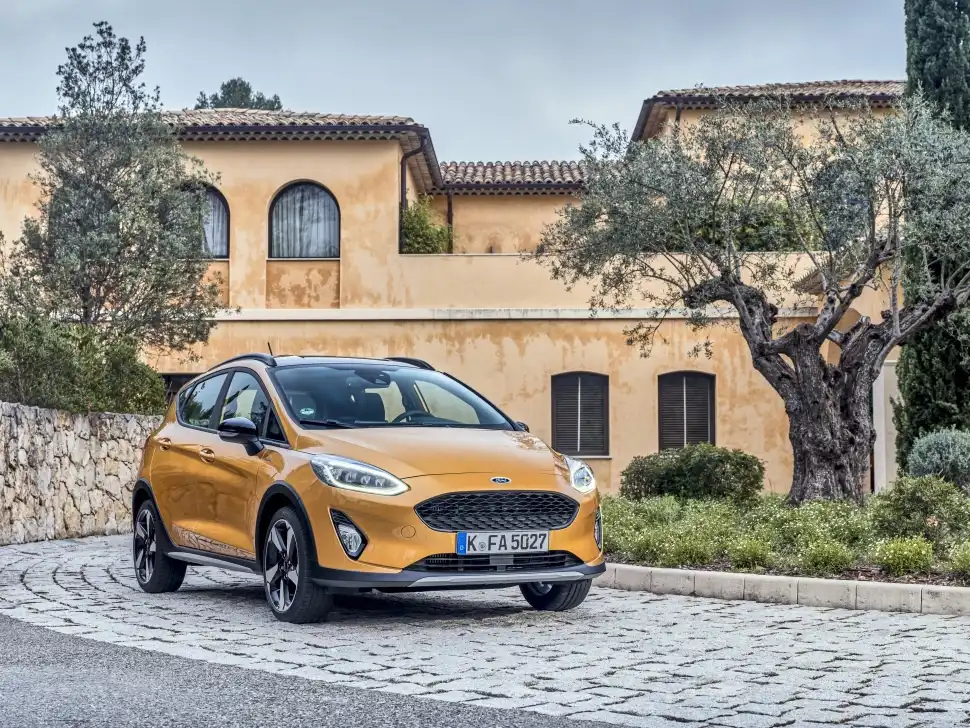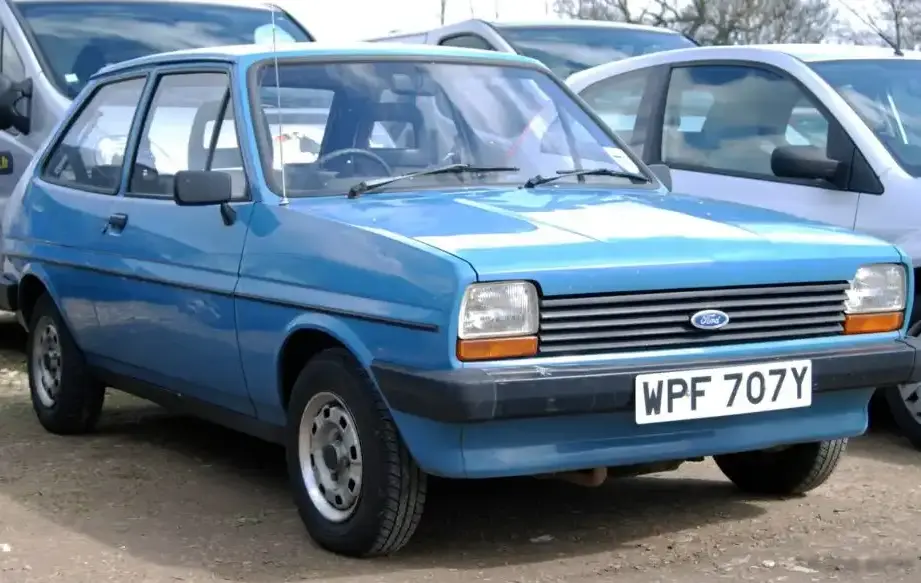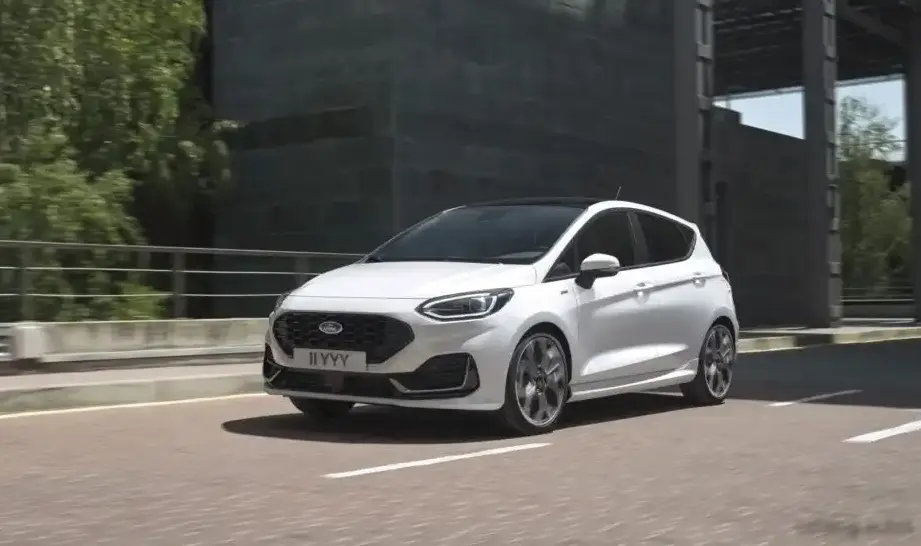
The Ford Fiesta VIII, specifically the facelifted model introduced in late 2021, represented a continuation of Ford’s highly successful subcompact hatchback. The 1.1-liter (75 horsepower) five-door variant, produced from November 2021 until July 2023, served as an entry point into the Mk8 Fiesta range, aimed at buyers prioritizing fuel efficiency and affordability. This model occupied a crucial position in the European market, where the Fiesta consistently ranked among the best-selling vehicles in its class. While not sold in the US market, the Fiesta was a mainstay for Ford of Europe, competing with vehicles like the Volkswagen Polo, Opel Corsa, and Renault Clio. This particular engine and transmission combination was designed to appeal to urban drivers and those seeking a low-cost-of-ownership vehicle.
Technical Specifications
| Brand | Ford |
| Model | Fiesta |
| Generation | Fiesta VIII (Mk8, facelift 2022) 5 door |
| Type (Engine) | 1.1 (75 Hp) |
| Start of production | November, 2021 |
| End of production | July, 2023 |
| Powertrain Architecture | Internal Combustion engine |
| Body type | Hatchback |
| Seats | 5 |
| Doors | 5 |
| Fuel consumption at Low speed (WLTP) | 6.5-6.8 l/100 km (36.2 – 34.6 US mpg, 43.5 – 41.5 UK mpg, 15.4 – 14.7 km/l) |
| Fuel consumption at Medium speed (WLTP) | 5.1-5.4 l/100 km (46.1 – 43.6 US mpg, 55.4 – 52.3 UK mpg, 19.6 – 18.5 km/l) |
| Fuel consumption at high speed (WLTP) | 4.6-5.0 l/100 km (51.1 – 47 US mpg, 61.4 – 56.5 UK mpg, 21.7 – 20 km/l) |
| Fuel consumption at very high speed (WLTP) | 5.7-6.1 l/100 km (41.3 – 38.6 US mpg, 49.6 – 46.3 UK mpg, 17.5 – 16.4 km/l) |
| Combined fuel consumption (WLTP) | 5.3-5.7 l/100 km (44.4 – 41.3 US mpg, 53.3 – 49.6 UK mpg, 18.9 – 17.5 km/l) |
| CO2 emissions (WLTP) | 120-129 g/km |
| Fuel Type | Petrol (Gasoline) |
| Acceleration 0 – 100 km/h | 14.7 sec |
| Acceleration 0 – 62 mph | 14.7 sec |
| Acceleration 0 – 60 mph | 14 sec |
| Maximum speed | 165 km/h (102.53 mph) |
| Emission standard | Euro 6d-ISC-FCM |
| Weight-to-power ratio | 14.5 kg/Hp, 69.2 Hp/tonne |
| Weight-to-torque ratio | 9.9 kg/Nm, 101.5 Nm/tonne |
| Power | 75 Hp @ 5500 rpm |
| Power per litre | 69.2 Hp/l |
| Torque | 110 Nm @ 3500 rpm (81.13 lb.-ft. @ 3500 rpm) |
| Engine layout | Front, Transverse |
| Engine Model/Code | FSJA |
| Engine displacement | 1084 cm3 (66.15 cu. in.) |
| Number of cylinders | 3 |
| Engine configuration | Inline |
| Number of valves per cylinder | 4 |
| Fuel injection system | Multi-port manifold injection |
| Engine aspiration | Naturally aspirated engine |
| Engine oil capacity | 4 l (4.23 US qt | 3.52 UK qt) |
| Kerb Weight | 1084 kg (2389.81 lbs.) |
| Max. weight | 1525 kg (3362.05 lbs.) |
| Max load | 441 kg (972.24 lbs.) |
| Trunk (boot) space – minimum | 292 l (10.31 cu. ft.) |
| Trunk (boot) space – maximum | 1093 l (38.6 cu. ft.) |
| Fuel tank capacity | 42 l (11.1 US gal | 9.24 UK gal) |
| Max. roof load | 50 kg (110.23 lbs.) |
| Length | 4048 mm (159.37 in.) |
| Width | 1735 mm (68.31 in.) |
| Width with mirrors folded | 1783 mm (70.2 in.) |
| Width including mirrors | 1941 mm (76.42 in.) |
| Height | 1490 mm (58.66 in.) |
| Wheelbase | 2493 mm (98.15 in.) |
| Front overhang | 847 mm (33.35 in.) |
| Rear overhang | 708 mm (27.87 in.) |
| Ride height (ground clearance) | 130 mm (5.12 in.) |
| Minimum turning circle (turning diameter) | 9.8 m (32.15 ft.) |
| Drivetrain Architecture | The Internal combustion engine (ICE) drives the front wheels of the vehicle. |
| Drive wheel | Front wheel drive |
| Number of gears and type of gearbox | 5 gears, manual transmission |
| Front suspension | Independent, type McPherson with coil spring and anti-roll bar |
| Rear suspension | Torsion |
| Front brakes | Ventilated discs, 262×23 mm |
| Rear brakes | Drum, 202.8 mm |
| Assisting systems | ABS (Anti-lock braking system) |
| Steering type | Steering rack and pinion |
| Power steering | Electric Steering |
| Tires size | 195/60 R15 |
| Wheel rims size | 6J x 15 |
Powertrain & Engine Architecture
The heart of this Fiesta variant is the Ford 1.1-liter Duratec three-cylinder petrol engine, internally designated as the FSJA. This engine is a naturally aspirated unit featuring multi-point fuel injection and four valves per cylinder. The engine’s compact size and lightweight construction contribute to the Fiesta’s overall efficiency. The FSJA engine utilizes a timing chain, reducing the need for periodic belt replacements common in some other engines. The engine is paired with a five-speed manual transmission, chosen for its simplicity and cost-effectiveness. While an automatic transmission was offered on other Fiesta trims, it wasn’t available with the 1.1-liter engine. The engine’s relatively low compression ratio (around 10.5:1) and modest power output prioritize fuel economy over outright performance.
Driving Characteristics
The 1.1-liter Fiesta delivers modest performance, with a 0-62 mph (0-100 km/h) time of around 14.7 seconds. The engine feels adequate for city driving and short commutes, but struggles when fully loaded or attempting overtaking maneuvers on faster roads. The five-speed gearbox is well-matched to the engine’s characteristics, with relatively short ratios designed to keep the engine in its optimal power band. However, drivers will find themselves frequently shifting gears to maintain momentum, especially on inclines. Compared to the more powerful 1.0 EcoBoost variants, the 1.1 feels significantly less responsive. The manual transmission provides a more engaging driving experience than an automatic would, but it also requires more driver involvement.
Equipment & Trim Levels
The 1.1-liter Fiesta typically came equipped as a base model, often referred to as ‘Trend’ or similar depending on the specific market. Standard features generally included air conditioning, power front windows, a basic audio system with Bluetooth connectivity, and ABS brakes. Safety features like electronic stability control (ESC) were also standard. Interior upholstery was typically cloth, and the dashboard featured a simple, functional design. Optional extras included alloy wheels, upgraded audio systems, and parking sensors. The focus was on providing essential features at an affordable price point.
Chassis & Braking
The Fiesta Mk8 utilizes a McPherson strut front suspension and a torsion beam rear suspension. This setup provides a good balance between ride comfort and handling. The front brakes are ventilated discs, while the rear brakes are drums, a cost-saving measure common on entry-level models. The steering is electrically assisted, providing light and precise control. The relatively lightweight nature of the 1.1-liter engine contributes to a well-balanced chassis, making the car feel nimble and easy to maneuver in urban environments.
Market Reception & Comparison
The 1.1-liter Fiesta was generally well-received by critics as a sensible and economical choice for budget-conscious buyers. Its fuel efficiency was a major selling point, and its low running costs made it an attractive option for first-time car owners and those seeking a reliable city car. Compared to the more powerful Fiesta variants, the 1.1 offered significantly lower fuel consumption but at the expense of performance. The 1.0 EcoBoost engine, while more expensive, provided a noticeable improvement in power and responsiveness. The 1.5-liter diesel variants offered even better fuel economy but came with the added cost and potential maintenance concerns associated with diesel technology.
Legacy
The 1.1-liter Fiesta, while not the most exciting variant in the Mk8 range, proved to be a reliable and durable powertrain. The FSJA engine is known for its relative simplicity and robustness. On the used car market, these models represent an affordable entry point into Fiesta ownership. While not as sought-after as the higher-performance trims, the 1.1-liter Fiesta remains a practical and economical choice for those seeking a dependable subcompact hatchback. Its longevity and low running costs continue to make it a viable option for budget-minded drivers.