Technical Specifications
| Brand | Kia |
| Model | Niro |
| Generation | Niro I (facelift 2019) |
| Type (Engine) | 1.6 GDI (141 Hp) Hybrid DCT |
| Start of production | July, 2019 |
| End of production | June, 2022 |
| Powertrain Architecture | FHEV (Full Hybrid Electric Vehicle) |
| Body type | SUV |
| Seats | 5 |
| Doors | 5 |
| Combined fuel consumption (WLTP) | 4.4-5.2 l/100 km (53.5 – 45.2 US mpg, 64.2 – 54.3 UK mpg, 22.7 – 19.2 km/l) |
| CO2 emissions (WLTP) | 100-119 g/km |
| Fuel consumption (urban – NEDC/WLTP equivalent) | 3.4-3.8 l/100 km (69.2 – 61.9 US mpg, 83.1 – 74.3 UK mpg, 29.4 – 26.3 km/l) |
| Fuel consumption (extra urban – NEDC/WLTP equivalent) | 3.6-4.5 l/100 km (65.3 – 52.3 US mpg, 78.5 – 62.8 UK mpg, 27.8 – 22.2 km/l) |
| Fuel consumption (combined – NEDC/WLTP equivalent) | 3.4-4.2 l/100 km (69.2 – 56 US mpg, 83.1 – 67.3 UK mpg, 29.4 – 23.8 km/l) |
| CO2 emissions (NEDC/WLTP equivalent) | 79-97 g/km |
| Fuel Type | Petrol (Gasoline) |
| Acceleration 0 – 100 km/h | 11.5 sec |
| Acceleration 0 – 62 mph | 11.5 sec |
| Acceleration 0 – 60 mph | 10.9 sec |
| Maximum speed | 162 km/h (100.66 mph) |
| Emission standard | Euro 6d |
| Weight-to-power ratio | 10 kg/Hp, 99.6 Hp/tonne |
| Weight-to-torque ratio | 5.3 kg/Nm, 187.3 Nm/tonne |
| Gross battery capacity | 1.56 kWh |
| Max speed (electric) | 120 km/h (74.56 mph) |
| Electric motor power | 44 Hp @ 1798-2500 rpm (170 Nm @ 0-1798 rpm / 125.39 lb.-ft. @ 0-1798 rpm) |
| Electric motor location | Between the combustion engine and the transmission |
| System power | 141 Hp @ 5700 rpm (265 Nm @ 1000-2400 rpm / 195.45 lb.-ft. @ 1000-2400 rpm) |
| Internal combustion engine power | 105 Hp @ 5700 rpm (147 Nm @ 4000 rpm / 108.42 lb.-ft. @ 4000 rpm) |
| Engine layout | Front, Transverse |
| Engine Model/Code | Smartstream / G4LE |
| Engine displacement | 1580 cm3 (96.42 cu. in.) |
| Number of cylinders | 4 |
| Engine configuration | Inline |
| Cylinder Bore | 72 mm (2.83 in.) |
| Piston Stroke | 97 mm (3.82 in.) |
| Compression ratio | 13:1 |
| Number of valves per cylinder | 4 |
| Fuel injection system | Direct injection |
| Engine aspiration | Naturally aspirated engine |
| Valvetrain | DOHC, Dual CVVT |
| Engine oil capacity | 3.8 l (4.02 US qt | 3.34 UK qt) |
| Coolant capacity | 6 l (6.34 US qt | 5.28 UK qt) |
| Kerb Weight | 1415-1510 kg (3119.54 – 3328.98 lbs.) |
| Max. weight | 1930 kg (4254.92 lbs.) |
| Max load | 420-515 kg (925.94 – 1135.38 lbs.) |
| Trunk (boot) space – minimum | 382 l (13.49 cu. ft.) |
| Trunk (boot) space – maximum | 1434 l (50.64 cu. ft.) |
| Fuel tank capacity | 45 l (11.89 US gal | 9.9 UK gal) |
| Permitted trailer load with brakes (12%) | 1300 kg (2866.01 lbs.) |
| Permitted trailer load without brakes | 600 kg (1322.77 lbs.) |
| Permitted towbar download | 100 kg (220.46 lbs.) |
| Length | 4355 mm (171.46 in.) |
| Width | 1805 mm (71.06 in.) |
| Height | 1545 mm (60.83 in.) |
| Wheelbase | 2700 mm (106.3 in.) |
| Front track | 1555-1565 mm (61.22 – 61.61 in.) |
| Rear track | 1569-1579 mm (61.77 – 62.17 in.) |
| Front overhang | 870 mm (34.25 in.) |
| Rear overhang | 785 mm (30.91 in.) |
| Ride height (ground clearance) | 160 mm (6.3 in.) |
| Drag coefficient (Cd) | 0.29 |
| Minimum turning circle | 10.6 m (34.78 ft.) |
| Drivetrain Architecture | Front wheel drive, FHEV |
| Number of gears and type of gearbox | 6 gears, automatic transmission DCT |
| Front suspension | Independent type McPherson |
| Rear suspension | Independent multi-link suspension |
| Front brakes | Ventilated discs |
| Rear brakes | Disc |
| Assisting systems | ABS (Anti-lock braking system) |
| Steering type | Steering rack and pinion |
| Power steering | Electric Steering |
| Tires size | 205/60 R16 92H; 225/45 R18 91W |
| Wheel rims size | 6.5J x 16 ET45; 7.5J x 18 ET50 |
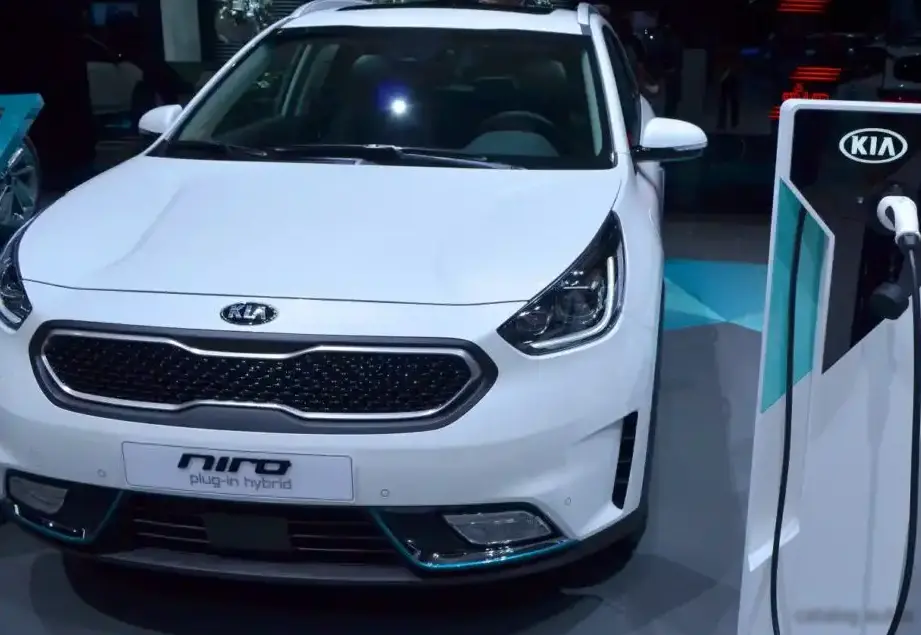
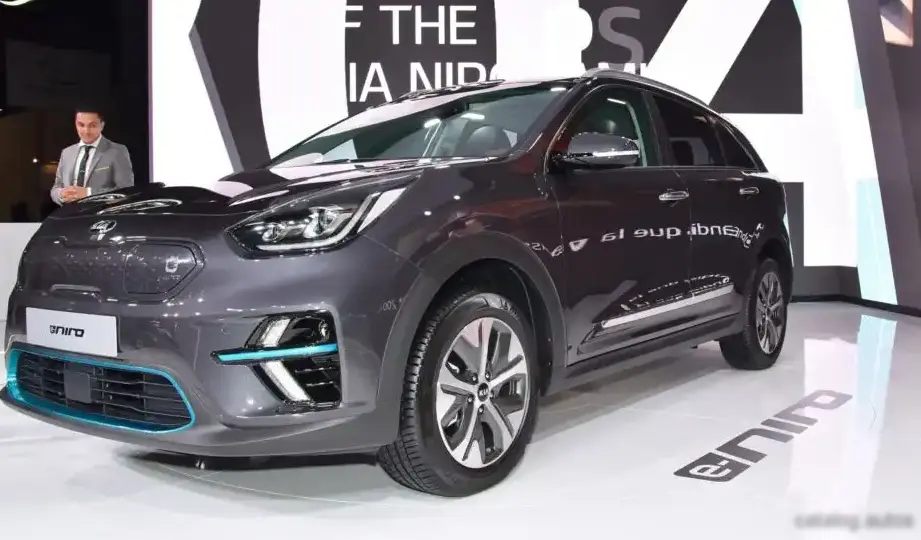
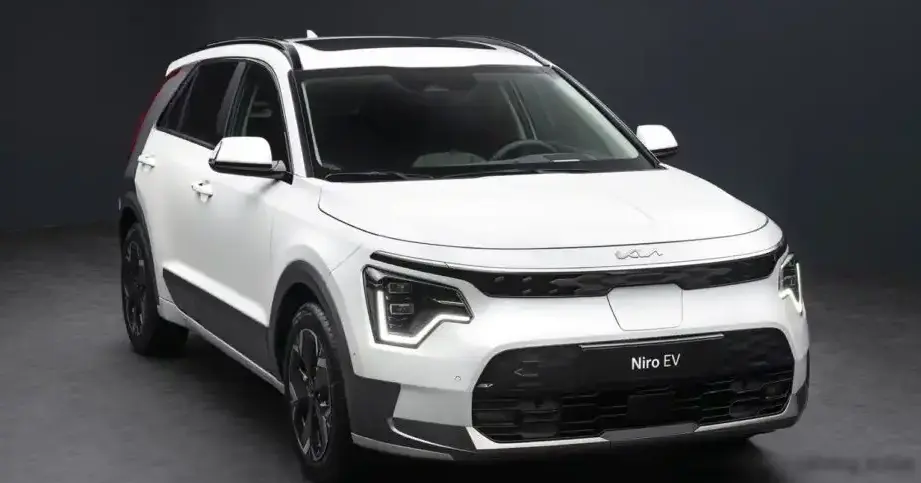
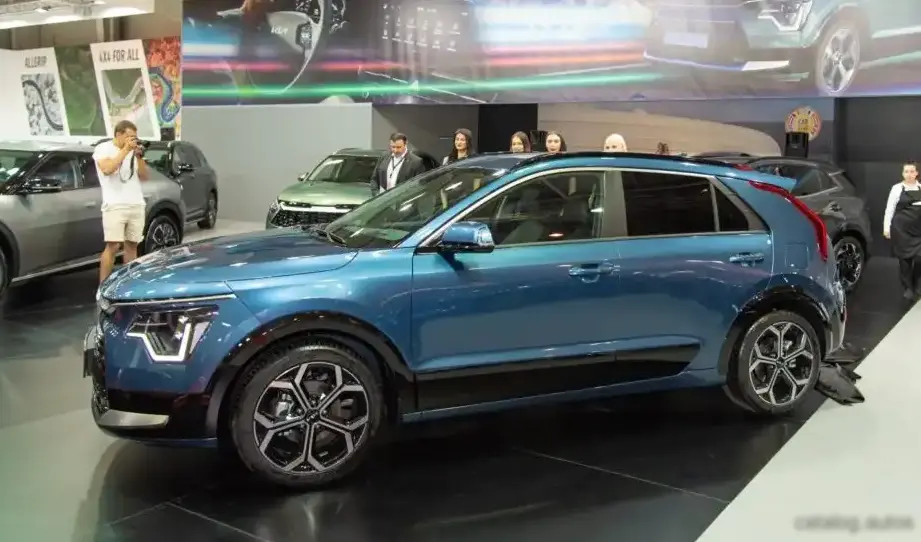
The Kia Niro I facelift, specifically the 1.6 GDI (141 Hp) Hybrid DCT model, was introduced in July 2019 as part of a mid-cycle refresh for the first-generation Niro. Positioned as a mainstream hybrid crossover, it aimed to provide a compelling alternative to established competitors like the Toyota Prius and Hyundai Ioniq. The Niro distinguished itself with a more conventional SUV aesthetic compared to the Prius’s distinctive styling. This variant, with its 1.6-liter gasoline engine paired with an electric motor and a dual-clutch transmission (DCT), represented a sweet spot in the Niro range, offering a good balance of fuel economy, performance, and affordability. It was built on the Kia/Hyundai B-platform, shared with models like the Hyundai Kona and Kia Soul.
Powertrain & Engine Architecture
At the heart of the Niro 1.6 GDI Hybrid DCT lies Kia’s Smartstream G4LE 1.6-liter inline-four cylinder gasoline engine. This engine produces 105 horsepower at 5700 rpm and 147 Nm (108.42 lb-ft) of torque at 4000 rpm. It utilizes direct fuel injection (GDI) and a dual continuously variable valve timing (DOHC, Dual CVVT) system to optimize efficiency and power delivery. The engine is paired with a 44 horsepower electric motor, which generates 170 Nm (125.39 lb-ft) of torque. The electric motor is strategically positioned between the engine and the transmission. The combined system output is 141 horsepower at 5700 rpm and 265 Nm (195.45 lb-ft) of torque between 1000-2400 rpm. The powertrain utilizes a 1.56 kWh lithium-ion polymer battery pack. The 6-speed dual-clutch transmission (DCT) provides quick and smooth gear changes, contributing to a more engaging driving experience compared to a traditional continuously variable transmission (CVT) often found in hybrids. The DCT allows for both fully electric driving at lower speeds and seamless transitions between electric and gasoline power.
Driving Characteristics
The Niro 1.6 GDI Hybrid DCT delivers a comfortable and refined driving experience. Acceleration from 0 to 60 mph takes approximately 10.9 seconds, and 0-100 km/h in 11.5 seconds, which is adequate for everyday driving but doesn’t offer particularly sporty performance. The DCT transmission provides responsive shifts, and the hybrid system effectively blends power from the gasoline engine and electric motor. The electric motor provides instant torque, which helps with initial acceleration and makes city driving particularly smooth. The gear ratios are tuned for fuel efficiency, meaning the engine can sometimes feel strained during aggressive acceleration. Compared to the higher-output Niro trims, this variant feels less powerful, but it compensates with superior fuel economy. The steering is light and precise, making it easy to maneuver in urban environments. The suspension is tuned for comfort, absorbing bumps and imperfections in the road well.
Equipment & Trim Levels
The Niro 1.6 GDI Hybrid DCT typically came well-equipped, even in its base trim levels. Standard features often included automatic climate control, a touchscreen infotainment system with Apple CarPlay and Android Auto compatibility, a rearview camera, and a suite of safety features such as lane departure warning, forward collision avoidance assist, and automatic emergency braking. Higher trim levels added features like a larger touchscreen display, a premium sound system, leather upholstery, heated front seats, and a power liftgate. Interior upholstery was typically cloth in lower trims and leather in higher trims. Dashboard configurations were generally consistent across the range, with a focus on a clean and modern design. Optional extras included a panoramic sunroof, navigation system, and advanced driver-assistance systems.
Chassis & Braking
The Niro 1.6 GDI Hybrid DCT utilizes an independent McPherson strut suspension in the front and an independent multi-link suspension in the rear, providing a comfortable ride and good handling characteristics. The front brakes are ventilated discs, while the rear brakes are discs. The braking system is equipped with ABS (Anti-lock Braking System) and electronic stability control. The suspension tuning is geared towards comfort, with a focus on absorbing bumps and providing a stable ride. Stabilizer bars are present on both the front and rear axles to reduce body roll during cornering. The weight distribution is well-balanced, contributing to predictable handling.
Market Reception & Comparison
The Kia Niro 1.6 GDI Hybrid DCT was generally well-received by automotive critics. It was praised for its fuel efficiency, comfortable ride, spacious interior, and user-friendly technology. Critics noted that its acceleration was not particularly brisk, but it was considered adequate for most drivers. Compared to other Niro trims, such as those with more powerful engines, this variant offered the best fuel economy. Against competitors like the Toyota Prius, the Niro was often lauded for its more conventional SUV styling and more engaging driving experience. The Niro’s reliability was generally considered good, although some owners reported minor issues with the infotainment system.
Legacy
The Kia Niro 1.6 GDI Hybrid DCT has proven to be a reliable and durable vehicle. The Smartstream engine and DCT transmission have generally held up well over time, with proper maintenance. In the used car market, these models remain popular due to their fuel efficiency and practicality. The Niro helped establish Kia as a major player in the hybrid vehicle segment, and it paved the way for the introduction of the fully electric Niro EV. The powertrain, while not groundbreaking in terms of performance, offered a compelling combination of efficiency and affordability, making it a popular choice for environmentally conscious buyers.