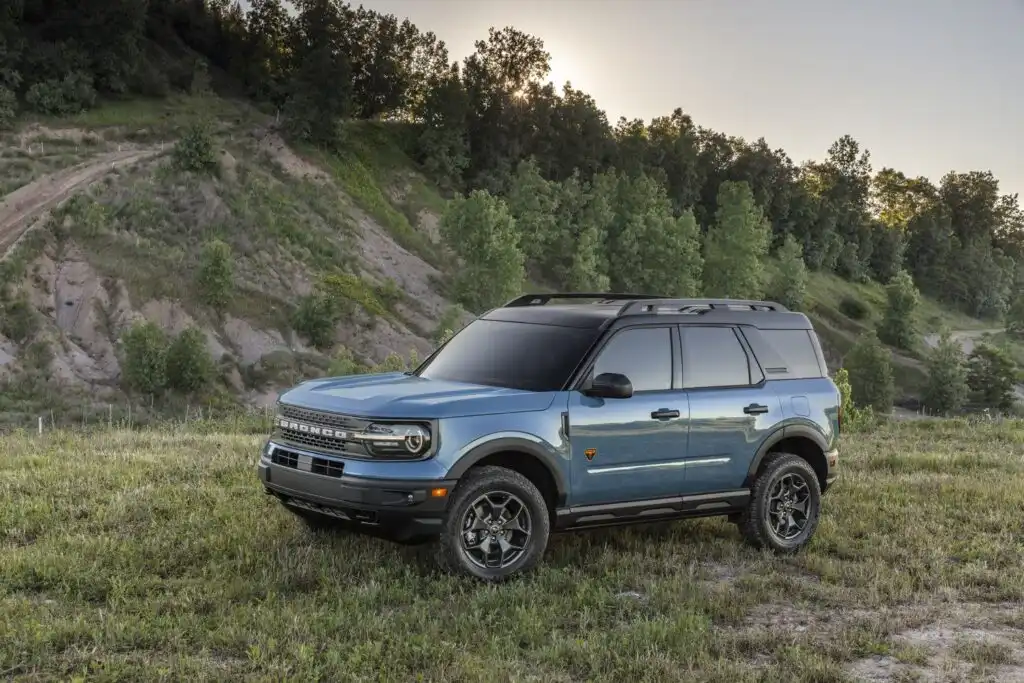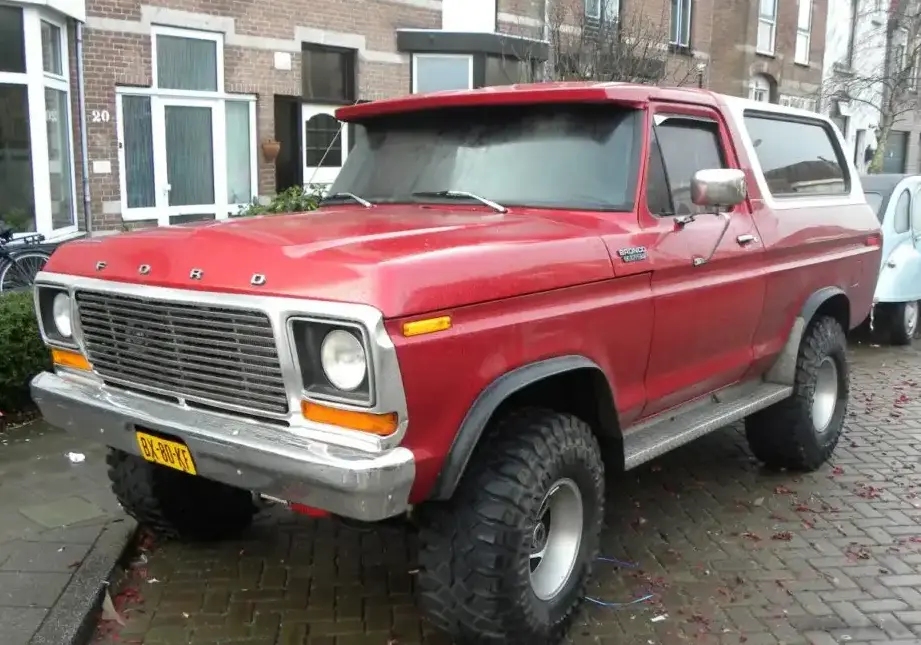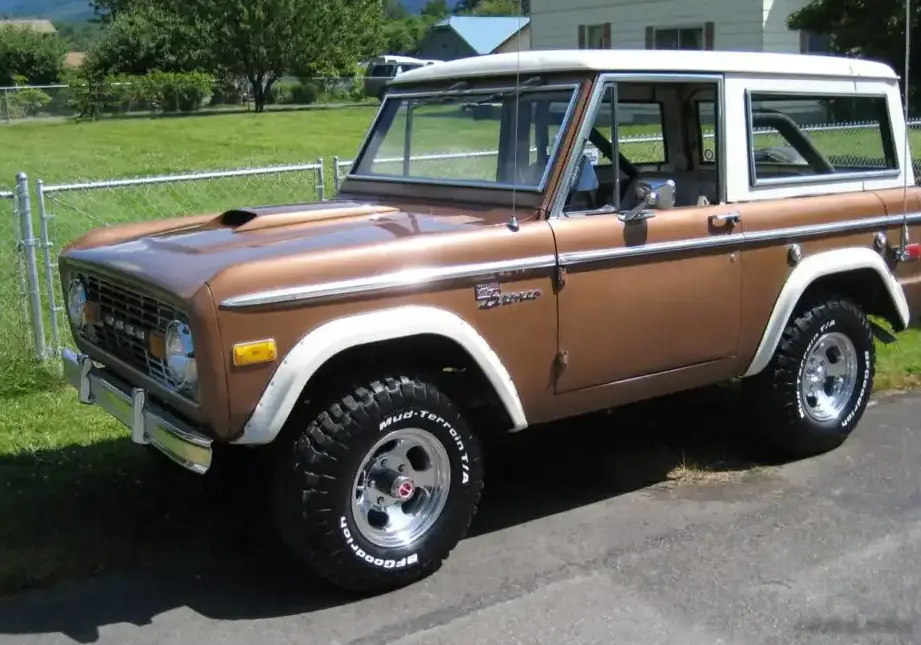
The Ford Bronco I, specifically the variant equipped with the 4.9-liter V8 engine producing 127 horsepower and paired with a three-speed automatic transmission and all-wheel drive, represents a significant entry point into the first generation of this iconic American SUV. Produced from 1966 to 1977, this configuration offered a blend of off-road capability and relative affordability, making it a popular choice for recreational drivers and those needing a rugged utility vehicle. This model occupied the lower-mid range of the Bronco lineup, positioned below the more powerful inline-six and larger V8 options, but above any potential base models that might have been offered with less standard equipment.
Technical Specifications
| Brand | Ford |
| Model | Bronco |
| Generation | Bronco I |
| Type (Engine) | 4.9 V8 (127 Hp) AWD Automatic |
| Start of production | 1966 year |
| End of production | 1977 year |
| Powertrain Architecture | Internal Combustion engine |
| Body type | SUV |
| Seats | 5 |
| Doors | 3 |
| Fuel consumption (economy) – combined | 19.8 l/100 km |
| Fuel consumption (economy) – combined | 11.9 US mpg |
| Fuel consumption (economy) – combined | 14.3 UK mpg |
| Fuel consumption (economy) – combined | 5.1 km/l |
| Fuel Type | Petrol (Gasoline) |
| Acceleration 0 – 100 km/h | 15 sec |
| Acceleration 0 – 62 mph | 15 sec |
| Acceleration 0 – 60 mph | 14.3 sec |
| Maximum speed | 142 km/h |
| Maximum speed | 88.23 mph |
| Weight-to-power ratio | 12.8 kg/Hp |
| Weight-to-power ratio | 78.3 Hp/tonne |
| Weight-to-torque ratio | 5.4 kg/Nm |
| Weight-to-torque ratio | 183.6 Nm/tonne |
| Power | 127 Hp @ 3800 rpm |
| Power per litre | 25.7 Hp/l |
| Torque | 298 Nm @ 1800 rpm |
| Torque | 219.79 lb.-ft. @ 1800 rpm |
| Engine layout | Front, Longitudinal |
| Engine displacement | 4942 cm3 |
| Engine displacement | 301.58 cu. in. |
| Number of cylinders | 8 |
| Engine configuration | V-engine |
| Cylinder Bore | 101.6 mm |
| Cylinder Bore | 4 in. |
| Piston Stroke | 76.2 mm |
| Piston Stroke | 3 in. |
| Compression ratio | 8:1 |
| Number of valves per cylinder | 2 |
| Fuel injection system | Carburettor |
| Engine aspiration | Naturally aspirated engine |
| Kerb Weight | 1623 kg |
| Kerb Weight | 3578.1 lbs. |
| Max. weight | 1950 kg |
| Max. weight | 4299.01 lbs. |
| Max load | 327 kg |
| Max load | 720.91 lbs. |
| Length | 3863 mm |
| Length | 152.09 in. |
| Width | 1748 mm |
| Width | 68.82 in. |
| Height | 1859 mm |
| Height | 73.19 in. |
| Wheelbase | 2337 mm |
| Wheelbase | 92.01 in. |
| Front track | 1453 mm |
| Front track | 57.2 in. |
| Rear (Back) track | 1453 mm |
| Rear (Back) track | 57.2 in. |
| Ride height (ground clearance) | 201 mm |
| Ride height (ground clearance) | 7.91 in. |
| Drag coefficient (Cd) | 0.65 |
| Minimum turning circle (turning diameter) | 10.2 m |
| Minimum turning circle (turning diameter) | 33.46 ft. |
| Drive wheel | All wheel drive (4×4) |
| Number of gears and type of gearbox | 3 gears, automatic transmission |
| Front brakes | Ventilated discs |
| Rear brakes | Drum |
| Tires size | 165/75 R16 |
| Wheel rims size | 16 |
Powertrain & Engine Architecture
The heart of this Bronco variant is the 302 cubic inch (4.9 liter) Ford Windsor V8 engine. This engine, designated with various codes depending on the year (often found as a 302), is a pushrod engine featuring a cast iron block and cylinder heads. It utilizes a two-barrel carburetor for fuel delivery, a relatively simple system for the era, and a 8:1 compression ratio. The valvetrain consists of two valves per cylinder, operated by a hydraulic lifter camshaft. The three-speed C4 automatic transmission was the standard automatic option, known for its durability and relatively smooth shifting, though it lacked the overdrive gear found in some later transmissions. The transmission is coupled to a transfer case providing part-time four-wheel drive, selectable via a lever typically located on the floor.
Driving Characteristics
The 127 horsepower and 219.79 lb-ft of torque delivered by this powertrain configuration resulted in a driving experience that prioritized usability over outright speed. Acceleration was modest, with 0-60 mph times around 14.3 seconds. However, the engine’s torque peak at 1800 rpm provided adequate pulling power for off-road adventures and towing light loads. The automatic transmission, while convenient, did rob some power compared to the available manual transmissions. The gear ratios were optimized for low-end torque, making it well-suited for navigating challenging terrain, but less responsive at higher speeds. Compared to the six-cylinder Bronco, this V8 offered a noticeable increase in power and refinement, while the higher-output V8s provided significantly more performance at the expense of fuel economy.
Equipment & Trim Levels
The 4.9L V8 automatic Bronco typically came with a fairly basic level of standard equipment. Interiors were generally utilitarian, featuring vinyl upholstery and a simple dashboard layout. Standard features included a heater and defroster, basic instrumentation (speedometer, fuel gauge, temperature gauge), and a steering wheel. Optional extras included power steering, power brakes, a radio, and upgraded interior trim. The trim level often dictated the availability of these options, with higher trims offering more standard features and a wider range of customization possibilities. The exterior typically featured minimal chrome trim, reflecting its rugged, functional design.
Chassis & Braking
The Bronco I utilized a body-on-frame construction, providing a robust and durable platform for off-road use. The suspension consisted of coil springs with stabilizer bars in the front, and leaf springs in the rear. The front brakes were ventilated discs, offering better stopping power than the rear drum brakes. This configuration was typical for the era and provided adequate braking performance for the vehicle’s weight and intended use. The relatively short wheelbase (92.01 inches) contributed to its maneuverability in tight spaces, but also resulted in a somewhat bumpy ride on paved roads.
Market Reception & Comparison
The 4.9L V8 automatic Bronco was generally well-received as a capable and affordable SUV. Critics praised its off-road prowess and rugged construction, but noted its relatively slow acceleration and modest fuel economy (around 11.9 US mpg). Compared to the inline-six engine, the V8 offered a smoother and more refined driving experience, but at a higher price point. Compared to the larger V8 options, it provided a balance between performance and fuel efficiency, making it a popular choice for buyers who didn’t need the extra power. Its reliability was generally good, although carburetor maintenance was a common requirement.
Legacy
The 4.9L V8 automatic Bronco has become a sought-after classic among enthusiasts. The Windsor V8 engine is known for its durability and relative ease of maintenance, making it a popular choice for restoration projects. While fuel economy is poor by modern standards, the Bronco’s iconic styling and off-road capability continue to attract buyers in the used car market. These Broncos are often found in well-preserved condition, having been cherished by owners who appreciated their rugged charm and timeless appeal. The combination of the V8 engine and automatic transmission provides a unique driving experience that is both nostalgic and enjoyable.