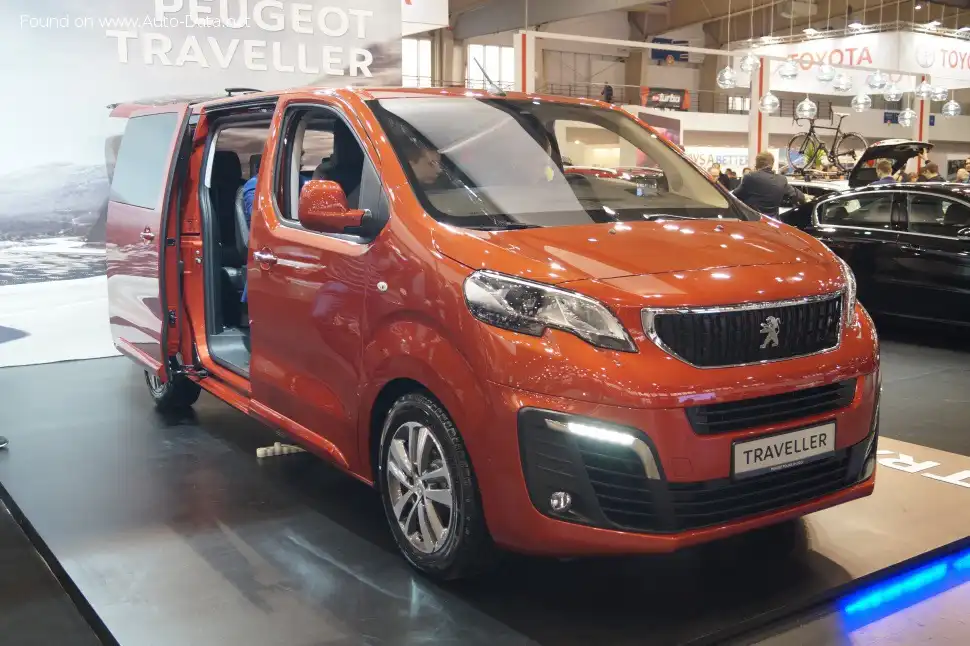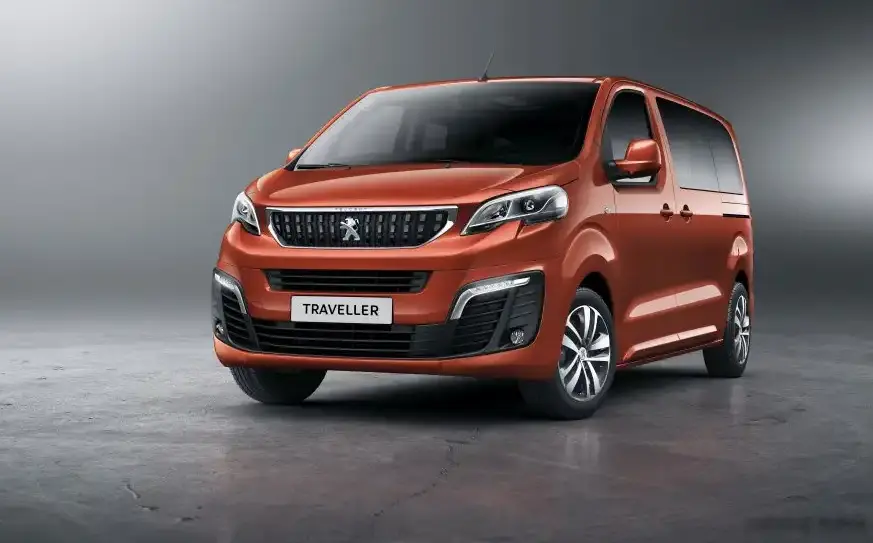
The Peugeot Traveller Compact 1.6 BlueHDi (95 hp) was a popular entry-level variant of the first-generation Peugeot Traveller, produced between September 2016 and June 2018. Positioned as an affordable and efficient people-carrier, it catered to families and those needing a versatile vehicle for both passenger and light cargo transport. This compact version, shorter than the standard Traveller, aimed to improve maneuverability in urban environments while retaining the core functionality of a multi-purpose vehicle. It was primarily sold in the European market, where compact MPVs were in high demand.
Technical Specifications
| Brand | Peugeot |
| Model | Traveller |
| Generation | Traveller Compact |
| Type (Engine) | 1.6 BlueHDi (95 Hp) |
| Start of production | September, 2016 |
| End of production | June, 2018 |
| Powertrain Architecture | Internal Combustion engine |
| Body type | Minivan |
| Seats | 5-8 |
| Doors | 5 |
| Fuel consumption (urban) | 6 l/100 km (39.2 US mpg, 47.1 UK mpg, 16.7 km/l) |
| Fuel consumption (extra urban) | 5.2 l/100 km (45.2 US mpg, 54.3 UK mpg, 19.2 km/l) |
| Fuel consumption (combined) | 5.5 l/100 km (42.8 US mpg, 51.4 UK mpg, 18.2 km/l) |
| CO2 emissions | 144 g/km |
| Fuel Type | Diesel |
| Acceleration 0 – 100 km/h | 15.9 sec |
| Acceleration 0 – 62 mph | 15.9 sec |
| Acceleration 0 – 60 mph | 15.1 sec |
| Maximum speed | 145 km/h (90.1 mph) |
| Emission standard | Euro 6 |
| Weight-to-power ratio | 16.7 kg/Hp, 59.9 Hp/tonne |
| Weight-to-torque ratio | 7.6 kg/Nm, 132.3 Nm/tonne |
| Power | 95 Hp @ 3750 rpm |
| Power per litre | 60.9 Hp/l |
| Torque | 210 Nm @ 1750 rpm (154.89 lb.-ft. @ 1750 rpm) |
| Engine layout | Front, Transverse |
| Engine Model/Code | BHV DV6FDU, BHS DV6FDU |
| Engine displacement | 1560 cm3 (95.2 cu. in.) |
| Number of cylinders | 4 |
| Engine configuration | Inline |
| Cylinder Bore | 75 mm (2.95 in.) |
| Piston Stroke | 88.3 mm (3.48 in.) |
| Number of valves per cylinder | 2 |
| Fuel injection system | Diesel Commonrail |
| Engine aspiration | Turbocharger, Intercooler |
| Engine oil capacity | 5.5 l (5.81 US qt | 4.84 UK qt) |
| Kerb Weight | 1587 kg (3498.74 lbs.) |
| Max. weight | 2585 kg (5698.95 lbs.) |
| Max load | 998 kg (2200.21 lbs.) |
| Trunk (boot) space – maximum | 2100 l (74.16 cu. ft.) |
| Fuel tank capacity | 69 l (18.23 US gal | 15.18 UK gal) |
| AdBlue tank | 22.4 l (5.92 US gal | 4.93 UK gal) |
| Max. roof load | 140-170 kg (308.65 – 374.79 lbs.) |
| Permitted trailer load with brakes (12%) | 1800 kg (3968.32 lbs.) |
| Length | 4606 mm (181.34 in.) |
| Width | 1920 mm (75.59 in.) |
| Width with mirrors folded | 2010 mm (79.13 in.) |
| Width including mirrors | 2204 mm (86.77 in.) |
| Height | 1905 mm (75 in.) |
| Wheelbase | 2925 mm (115.16 in.) |
| Front overhang | 881 mm (34.69 in.) |
| Minimum turning circle | 11.8 m (38.71 ft.) |
| Drivetrain Architecture | ICE to Front Wheels |
| Drive wheel | Front wheel drive |
| Number of gears | 5 |
| Gearbox type | Manual transmission |
| Front suspension | Independent type McPherson |
| Rear suspension | Independent coil spring |
| Front brakes | Ventilated discs |
| Rear brakes | Disc |
| Assisting systems | ABS (Anti-lock braking system) |
| Steering type | Steering rack and pinion |
| Tires size | 215/60 R17 |
| Wheel rims size | 17 |
Powertrain & Engine Architecture
The Peugeot Traveller Compact 1.6 BlueHDi utilized the DV6FDU engine family, specifically the BHV or BHS engine code variants. This 1.6-liter, four-cylinder diesel engine was a mainstay in the PSA Group’s (Peugeot Société Anonyme) lineup. It featured a turbocharger with an intercooler to boost power and efficiency. The engine employed a common rail direct injection system, delivering fuel directly into the cylinders at high pressure for optimized combustion. The engine’s valvetrain consisted of two valves per cylinder (SOHC). The 95 horsepower output was achieved at 3750 rpm, while peak torque of 210 Nm (154.89 lb-ft) was available from 1750 rpm, providing reasonable low-end grunt for everyday driving. The engine was paired with a five-speed manual transmission, chosen for its simplicity and cost-effectiveness in this entry-level trim.
Driving Characteristics
The 1.6 BlueHDi 95 hp engine, coupled with the five-speed manual gearbox, provided adequate, but not exhilarating, performance. Acceleration from 0-100 km/h (0-62 mph) took approximately 15.9 seconds. The focus was on fuel economy rather than outright speed. The gear ratios were tuned for efficiency, with a relatively long fifth gear to reduce engine speed at highway cruising speeds. Compared to higher-powered Traveller variants (like those with the 1.8 or 2.0 BlueHDi engines), this version felt noticeably slower, particularly when fully loaded with passengers and luggage. The manual transmission allowed for greater driver control, but required more driver involvement than the automatic options available on other Traveller trims. The torque delivery was reasonably smooth, making it suitable for urban driving and moderate highway journeys.
Equipment & Trim Levels
The Traveller Compact 1.6 BlueHDi typically came with a basic, yet functional, equipment level. Standard features generally included air conditioning, power steering, electric front windows, a basic audio system with USB connectivity, and ABS brakes. Safety features such as driver and passenger airbags were also standard. Interior upholstery was typically cloth, and the dashboard featured a simple, utilitarian design. Optional extras included rear parking sensors, a touchscreen infotainment system with navigation, and cruise control. The trim level was positioned as the entry point to the Traveller range, appealing to budget-conscious buyers.
Chassis & Braking
The Traveller Compact utilized a McPherson strut independent suspension at the front and a coil spring independent suspension at the rear. This setup provided a comfortable ride quality, absorbing bumps and imperfections in the road surface effectively. The front brakes were ventilated discs, offering good stopping power, while the rear brakes were solid discs. ABS (Anti-lock Braking System) was standard, enhancing safety during emergency braking situations. The suspension was tuned for comfort rather than sporty handling, prioritizing a smooth and stable ride for passengers. Stabilizer bars were included to reduce body roll during cornering.
Market Reception & Comparison
The Peugeot Traveller Compact 1.6 BlueHDi was generally well-received by critics as a practical and economical people-carrier. Its fuel economy of around 5.5 l/100 km (42.8 US mpg) was a major selling point. Compared to the more powerful Traveller variants, it offered a lower purchase price and lower running costs. However, some reviewers noted its lack of performance, particularly when fully loaded. Compared to competitors like the Citroën Berlingo and Renault Scenic, the Traveller offered a similar level of practicality and fuel efficiency, with a slightly more refined interior in some opinions. Reliability reports were generally positive, with the 1.6 BlueHDi engine proving to be a robust and dependable unit.
Legacy
The 1.6 BlueHDi engine has proven to be a relatively reliable powertrain, with many examples still in service today. Common issues, when they arise, often relate to the diesel particulate filter (DPF) requiring regeneration, particularly on vehicles used primarily for short journeys. The Traveller Compact 1.6 BlueHDi remains a popular choice in the used car market, offering a cost-effective and practical solution for families and those needing a versatile vehicle. Its fuel efficiency and relatively low maintenance costs continue to make it an attractive option for budget-conscious buyers. The engine’s longevity and availability of spare parts contribute to its continued appeal.