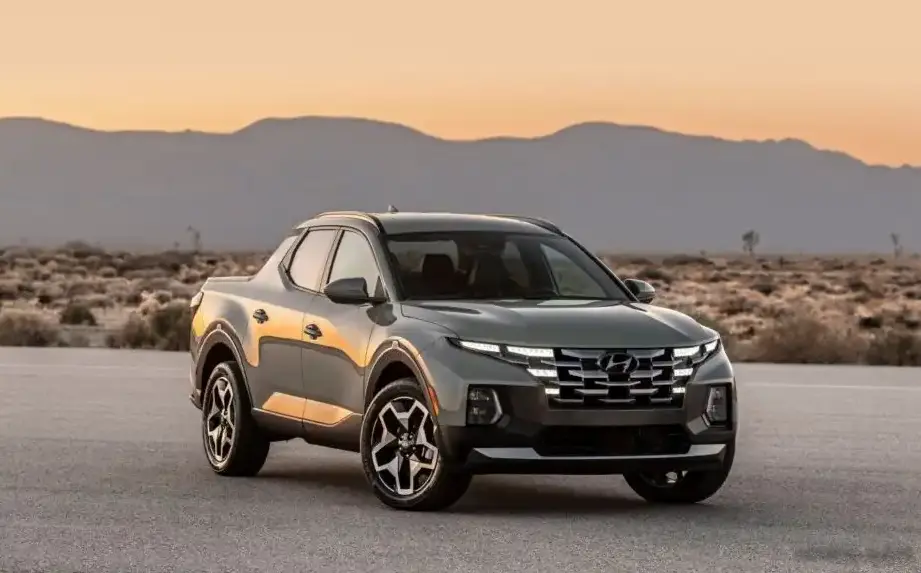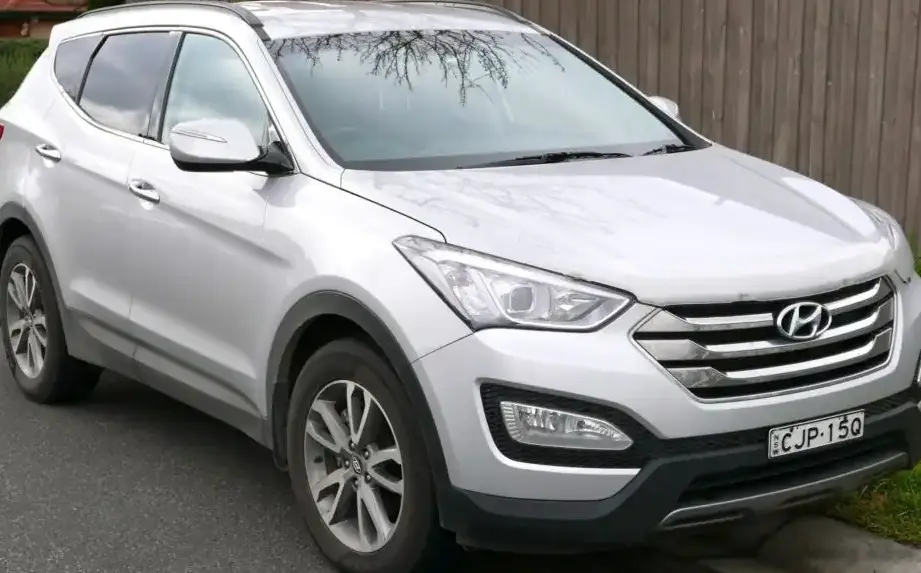
The Hyundai Santa Fe III (DM), produced from 2013 to 2015, marked a significant advancement for Hyundai in the highly competitive mid-size SUV segment. The 2.4 GDI (Gasoline Direct Injection) variant, paired with a six-speed automatic transmission, was a key offering within the lineup, strategically positioned to balance affordability, fuel efficiency, and family-oriented practicality. This model aimed to attract buyers desiring a comfortable and well-equipped SUV without the premium price associated with larger engines or higher trim levels. It played a vital role in Hyundai’s ongoing efforts to build brand recognition and increase market share in North America and globally.
Technical Specifications
| Brand | Hyundai |
| Model | Santa Fe |
| Generation | Santa Fe III (DM) |
| Type (Engine) | 2.4 GDI (192 Hp) Automatic |
| Start of production | 2013 |
| End of production | 2015 |
| Powertrain Architecture | Internal Combustion engine |
| Body type | SUV |
| Seats | 7 |
| Doors | 5 |
| Fuel consumption (urban) | 12.2 l/100 km (19.3 US mpg) |
| Fuel consumption (extra urban) | 7.1 l/100 km (33.1 US mpg) |
| Fuel consumption (combined) | 8.7 l/100 km (27 US mpg) |
| Fuel Type | Petrol (Gasoline) |
| Acceleration 0 – 100 km/h | 10.9 sec |
| Acceleration 0 – 62 mph | 10.9 sec |
| Acceleration 0 – 60 mph | 10.4 sec |
| Maximum speed | 190 km/h (118.06 mph) |
| Emission standard | Euro 5 |
| Weight-to-power ratio | 8.8 kg/Hp |
| Power | 192 Hp @ 6300 rpm |
| Power per litre | 81.4 Hp/l |
| Engine layout | Front, Transverse |
| Engine Model/Code | Theta II / G4KJ |
| Engine displacement | 2359 cm3 (143.96 cu. in.) |
| Number of cylinders | 4 |
| Engine configuration | Inline |
| Cylinder Bore | 88 mm (3.46 in.) |
| Piston Stroke | 97 mm (3.82 in.) |
| Number of valves per cylinder | 4 |
| Fuel injection system | Direct injection |
| Engine aspiration | Naturally aspirated engine |
| Valvetrain | DOHC |
| Engine oil capacity | 4.8 l (5.07 US qt | 4.22 UK qt) |
| Coolant capacity | 7.1 l (7.5 US qt | 6.25 UK qt) |
| Kerb Weight | 1691 kg (3728.02 lbs.) |
| Max. weight | 2510 kg (5533.6 lbs.) |
| Max load | 819 kg (1805.59 lbs.) |
| Trunk (boot) space – minimum | 585 l (20.66 cu. ft.) |
| Trunk (boot) space – maximum | 1570 l (55.44 cu. ft.) |
| Fuel tank capacity | 64 l (16.91 US gal | 14.08 UK gal) |
| Length | 4690 mm (184.65 in.) |
| Width | 1880 mm (74.02 in.) |
| Height | 1680 mm (66.14 in.) |
| Wheelbase | 2700 mm (106.3 in.) |
| Front track | 1633 mm (64.29 in.) |
| Rear track | 1644 mm (64.72 in.) |
| Minimum turning circle | 10.9 m (35.76 ft.) |
| Drivetrain | Front wheel drive |
| Number of gears | 6 |
| Gearbox type | Automatic transmission |
| Front suspension | Independent type McPherson |
| Rear suspension | Independent coil spring |
| Front brakes | Ventilated discs |
| Rear brakes | Disc |
| Steering type | Steering rack and pinion |
| Power steering | Electric Steering |
| Tires size | 235/65 R17; 235/60 R18; 235/55 R19 |
| Wheel rims size | 7.0J x 17; 7.5J x 18; 7.5J x 19 |
Powertrain & Engine Architecture
The Santa Fe 2.4 GDI was powered by the Hyundai Theta II engine, specifically the G4KJ code. This 2.4-liter inline-four engine incorporated Gasoline Direct Injection (GDI) technology, a crucial element in enhancing both power output and fuel economy. GDI enables more precise fuel delivery and allows for a higher compression ratio, leading to improved efficiency and reduced emissions. The engine featured a double overhead camshaft (DOHC) valvetrain with four valves per cylinder, optimizing airflow for increased performance. The six-speed automatic transmission, a common choice for vehicles in this segment, was engineered to deliver smooth and efficient gear changes. While not designed for sporty performance, it complemented the engine’s characteristics and the vehicle’s intended role as a comfortable family SUV.
Driving Characteristics
The 2.4 GDI automatic Santa Fe provided a comfortable and predictable driving experience. Producing 192 horsepower and 195 lb-ft of torque, acceleration was sufficient for typical daily driving, though not particularly quick. The 0-60 mph time of approximately 10.4 seconds reflects this. Compared to the available 2.0L turbocharged engine or the later 3.3L V6 options, the 2.4 GDI felt less powerful, especially when carrying a full load of passengers and cargo. The automatic transmission’s gear ratios were optimized for fuel efficiency, prioritizing smooth cruising over rapid acceleration. This made it a pleasant vehicle for highway driving, but required more forethought when overtaking or merging into traffic. The front-wheel-drive configuration contributed to reasonable fuel economy, but limited traction in inclement weather conditions.
Equipment & Trim Levels
The 2.4 GDI trim generally came standard with a solid set of features. These included air conditioning, power windows and locks, a touchscreen infotainment system with Bluetooth connectivity, and a rearview camera. Higher trim levels added amenities such as leather upholstery, heated front seats, a panoramic sunroof, and a premium audio system. Safety features like anti-lock brakes (ABS), electronic stability control, and multiple airbags were standard across all trim levels. The Santa Fe DM offered a compelling value proposition, providing a generous amount of features for its price point.
Chassis & Braking
The Santa Fe DM employed an independent McPherson strut suspension in the front and an independent coil spring suspension in the rear. This configuration delivered a comfortable ride quality, effectively absorbing bumps and road imperfections. The front brakes consisted of ventilated discs, providing good stopping power, while the rear brakes were solid discs. Electric power steering offered light and effortless steering, enhancing maneuverability in urban environments. Stabilizer bars were incorporated both front and rear to minimize body roll during cornering, although the Santa Fe wasn’t engineered for sporty handling.
Market Reception & Comparison
The Hyundai Santa Fe 2.4 GDI Automatic received largely positive reviews from automotive critics. It was lauded for its spacious interior, comfortable ride, and extensive list of standard features. However, some reviewers pointed out that the engine felt somewhat underpowered, particularly when compared to competitors offering turbocharged engines or V6 options. Fuel economy was considered competitive for its class, averaging around 27 mpg combined. In comparison to the more powerful Santa Fe trims, the 2.4 GDI offered a lower purchase price and improved fuel efficiency, making it an appealing choice for budget-conscious buyers. The 2.0T delivered a noticeable performance upgrade, while the 3.3L V6 provided even greater power but at the expense of fuel economy.
Legacy
The Hyundai Santa Fe III (DM) 2.4 GDI Automatic has proven to be a relatively reliable vehicle in the used car market. The Theta II engine, while experiencing some early issues with oil consumption in certain iterations, generally demonstrates good durability with proper maintenance. The six-speed automatic transmission is also known for its robustness. Today, these Santa Fes represent a good value for buyers seeking a spacious, comfortable, and well-equipped SUV at an affordable price. Consistent maintenance, including regular oil changes and fluid checks, is essential for ensuring the long-term reliability of this powertrain. The 2.4 GDI variant continues to be a popular choice for families and individuals seeking a practical and dependable vehicle.