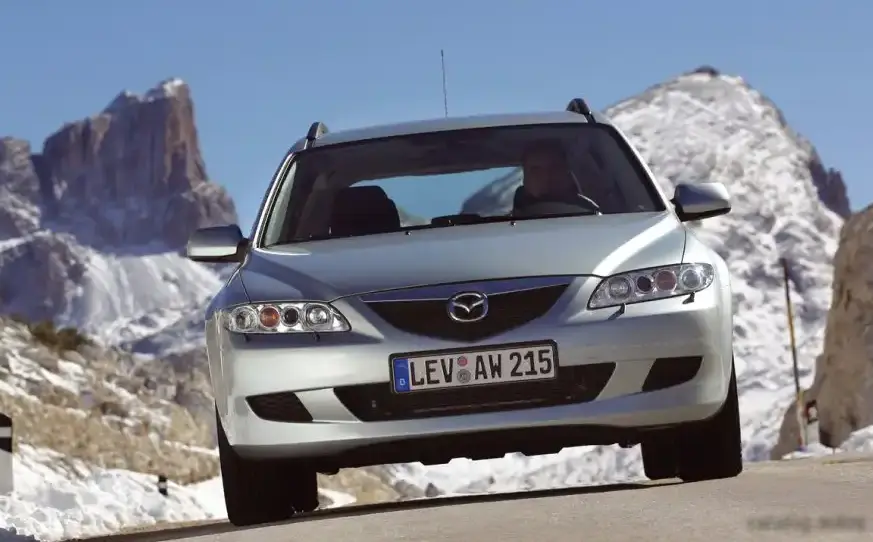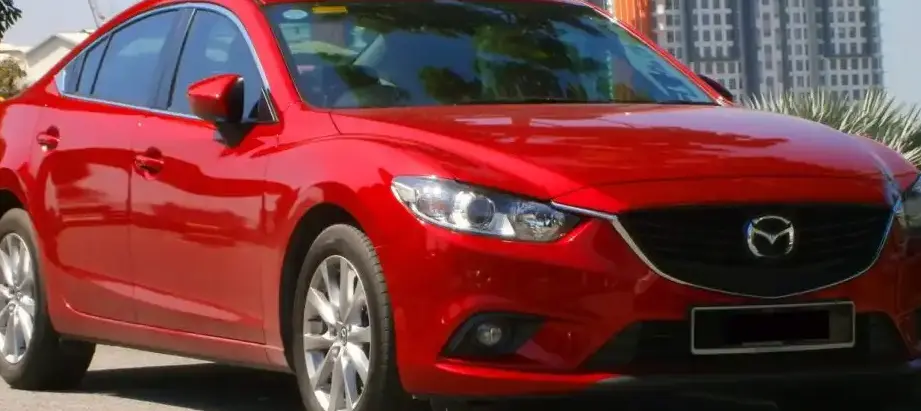
The Mazda 6 III Sedan (GJ) 2.2 SKYACTIV-D (175 Hp) i-ELOOP, produced from 2012 to 2015, represents a significant step forward in Mazda’s mid-size sedan offerings. Positioned as a premium trim within the GJ generation (2012-2018), this variant combined Mazda’s innovative SKYACTIV technology with a diesel powertrain and the i-ELOOP regenerative braking system, aiming for both performance and exceptional fuel efficiency. It was primarily marketed in Europe and other regions where diesel engines held a strong market share, offering a compelling alternative to gasoline-powered competitors.
Technical Specifications
| Brand | Mazda |
| Model | 6 |
| Generation | 6 III Sedan (GJ) |
| Type (Engine) | 2.2 SKYACTIV-D (175 Hp) i-ELOOP |
| Start of production | 2012 |
| End of production | 2015 |
| Powertrain Architecture | Internal Combustion engine |
| Body type | Sedan |
| Seats | 5 |
| Doors | 4 |
| Fuel consumption (urban) | 5.5 l/100 km (42.8 US mpg) |
| Fuel consumption (extra urban) | 3.9 l/100 km (60.3 US mpg) |
| Fuel consumption (combined) | 4.5 l/100 km (52.3 US mpg) |
| Fuel Type | Diesel |
| Acceleration 0 – 100 km/h | 7.8 sec |
| Acceleration 0 – 62 mph | 7.8 sec |
| Acceleration 0 – 60 mph | 7.4 sec |
| Maximum speed | 223 km/h (138.57 mph) |
| Emission standard | Euro 6 |
| Weight-to-power ratio | 8 kg/Hp |
| Weight-to-torque ratio | 3.3 kg/Nm |
| Power | 175 Hp @ 4500 rpm |
| Torque | 420 Nm @ 2000 rpm (309.78 lb.-ft. @ 2000 rpm) |
| Engine layout | Front, Transverse |
| Engine displacement | 2184 cm3 (133.28 cu. in.) |
| Number of cylinders | 4 |
| Engine configuration | Inline |
| Number of valves per cylinder | 4 |
| Fuel injection system | Diesel Commonrail |
| Engine aspiration | BiTurbo, Intercooler |
| Engine oil capacity | 5.1 l (5.39 US qt | 4.49 UK qt) |
| Coolant capacity | 8.5 l (8.98 US qt | 7.48 UK qt) |
| Kerb Weight | 1405 kg (3097.49 lbs) |
| Trunk (boot) space – minimum | 489 l (17.27 cu. ft) |
| Fuel tank capacity | 62 l (16.38 US gal | 13.64 UK gal) |
| Length | 4865 mm (191.54 in) |
| Width | 1840 mm (72.44 in) |
| Height | 1450 mm (57.09 in) |
| Wheelbase | 2830 mm (111.42 in) |
| Drivetrain Architecture | Front wheel drive |
| Number of gears and type of gearbox | 6 gears, manual transmission |
| Assisting systems | ABS (Anti-lock braking system) |
| Steering type | Steering rack and pinion |
Introduction
The GJ generation Mazda 6, launched in 2012, marked a departure from its predecessors with a more sophisticated design and a focus on Mazda’s SKYACTIV technology. The 2.2 SKYACTIV-D 175 hp i-ELOOP variant was a key offering in markets favoring diesel engines, particularly in Europe. It sat towards the upper end of the trim levels, offering a balance between performance, fuel economy, and features. The “i-ELOOP” system, Mazda’s regenerative braking technology, was a distinguishing feature, further enhancing fuel efficiency by recovering energy during deceleration.
Powertrain & Engine Architecture
At the heart of this Mazda 6 variant lies the 2.2-liter SKYACTIV-D diesel engine. This engine, designated with codes like SH-VPTS, is a four-cylinder, inline configuration featuring a common-rail direct injection system and a two-stage turbocharger. The twin-turbo setup was crucial for delivering both low-end torque and high-end power. The first, smaller turbocharger spooled up quickly to provide immediate response at lower engine speeds, while the larger turbocharger took over at higher speeds for sustained power. The engine also incorporated a cooled exhaust gas recirculation (EGR) system to reduce NOx emissions, complying with stringent Euro 6 standards. The 6-speed manual transmission was the standard offering, chosen for its efficiency and driver engagement. The engine’s architecture prioritized efficiency through a high compression ratio (typically around 14:1) and optimized combustion chamber design.
Driving Characteristics
The 175 hp SKYACTIV-D engine, paired with the 6-speed manual transmission, provided a surprisingly engaging driving experience. While not as overtly sporty as some of its gasoline-powered counterparts, it delivered ample torque – 420 Nm (309.78 lb-ft) – from as low as 2000 rpm. This made for effortless cruising and strong acceleration in everyday driving situations. The gear ratios were well-matched, allowing the engine to remain in its optimal power band during most driving scenarios. Compared to the lower-powered 2.0-liter gasoline engine options, the 2.2 SKYACTIV-D offered significantly more pulling power, especially when fully loaded or tackling inclines. While the higher-output 175 hp version was more refined than the lower-powered diesel options, it still exhibited some of the characteristic diesel engine noise, particularly during cold starts.
Equipment & Trim Levels
The 2.2 SKYACTIV-D 175 hp i-ELOOP trim typically included a generous array of standard features. Interior appointments often featured cloth or partial leather upholstery, with a focus on comfort and durability. Standard equipment included air conditioning, a multi-function steering wheel, power windows and mirrors, and a basic audio system. Higher sub-trims often added features like automatic climate control, a touchscreen infotainment system with navigation, and parking sensors. The i-ELOOP system itself was a key feature, displayed prominently on the instrument cluster, showing the amount of energy being recovered during braking. Optional extras could include a sunroof, premium sound system, and advanced safety features like lane departure warning and blind-spot monitoring.
Chassis & Braking
The Mazda 6 GJ utilized a front-engine, front-wheel-drive layout. The suspension consisted of MacPherson struts at the front and multi-link suspension at the rear, providing a good balance between ride comfort and handling. The 2.2 SKYACTIV-D models, being heavier than their gasoline counterparts, often featured slightly stiffer suspension components to maintain stability. Braking systems typically consisted of ventilated disc brakes at the front and either disc or drum brakes at the rear, depending on the specific sub-trim level. Anti-lock Braking System (ABS) with Electronic Brakeforce Distribution (EBD) was standard. Stabilizer bars were fitted to both the front and rear axles to reduce body roll during cornering.
Market Reception & Comparison
The Mazda 6 III Sedan 2.2 SKYACTIV-D 175 hp i-ELOOP was generally well-received by automotive critics. It was praised for its fuel efficiency, comfortable ride, and refined interior. The i-ELOOP system was seen as a genuine innovation, contributing to real-world fuel savings. Compared to other diesel-powered sedans in its class, such as the Ford Mondeo and Volkswagen Passat, the Mazda 6 offered a more engaging driving experience and a more stylish interior. However, some critics noted that the engine could be somewhat noisy compared to some of its competitors. Fuel economy figures consistently exceeded those of comparable gasoline engines, making it an attractive option for high-mileage drivers.
Legacy
The 2.2 SKYACTIV-D engine proved to be a reliable and durable powertrain, although, like all diesel engines, it required regular maintenance, including oil changes and diesel particulate filter (DPF) regeneration. The i-ELOOP system also proved to be relatively trouble-free. On the used car market, these Mazda 6 variants continue to be sought after for their fuel efficiency and overall reliability. However, potential buyers should be aware of the potential costs associated with diesel engine maintenance and the importance of using high-quality diesel fuel. The SKYACTIV-D engine and i-ELOOP technology laid the groundwork for Mazda’s continued development of efficient and engaging vehicles.