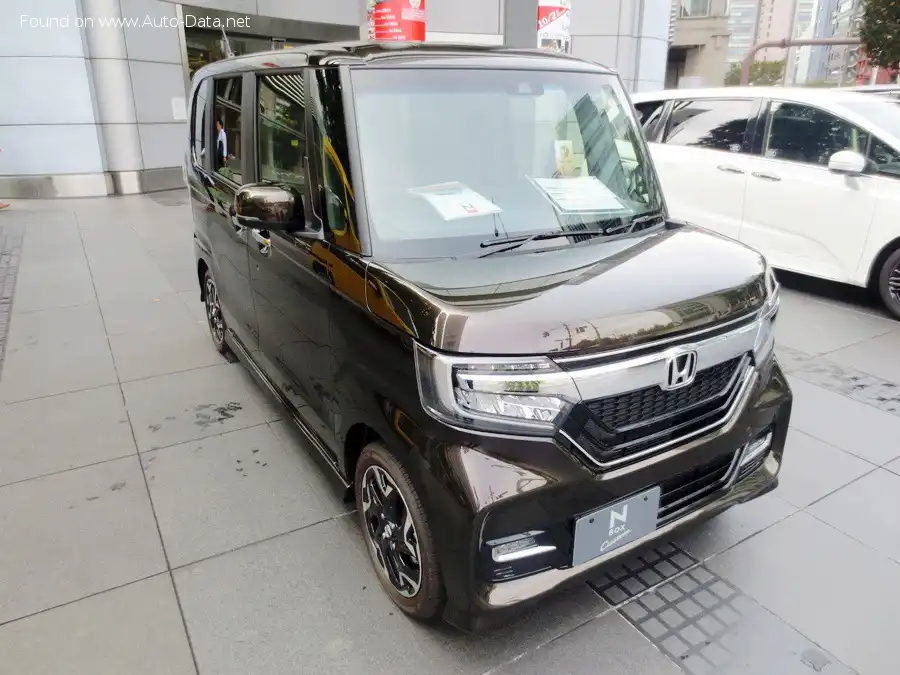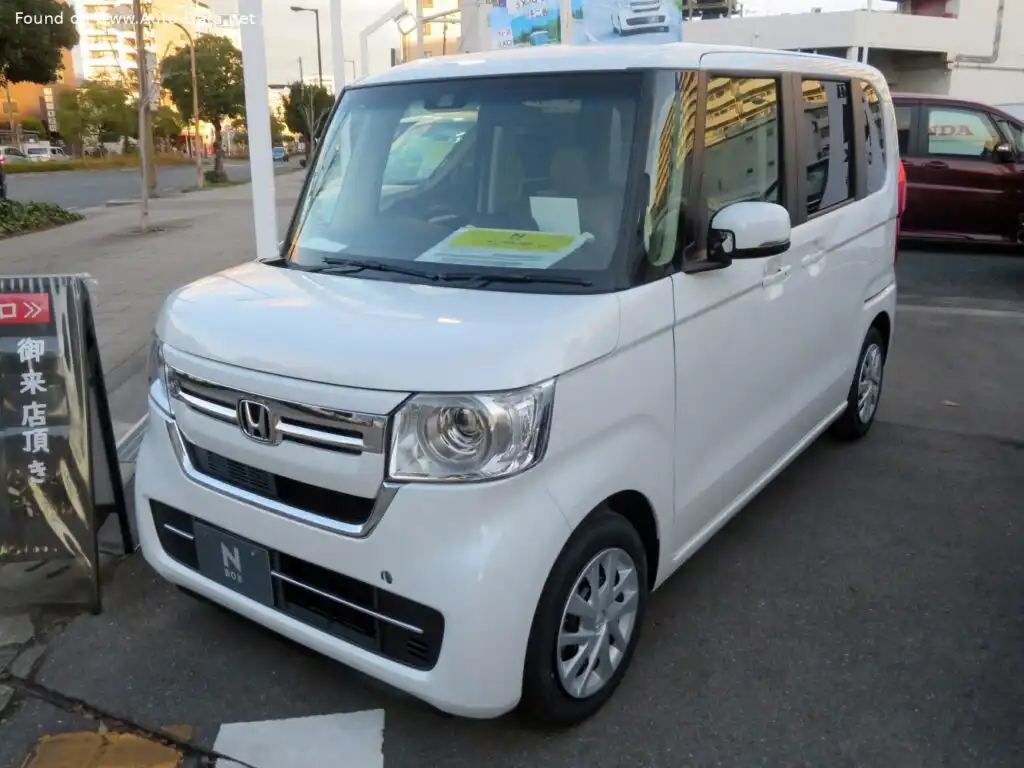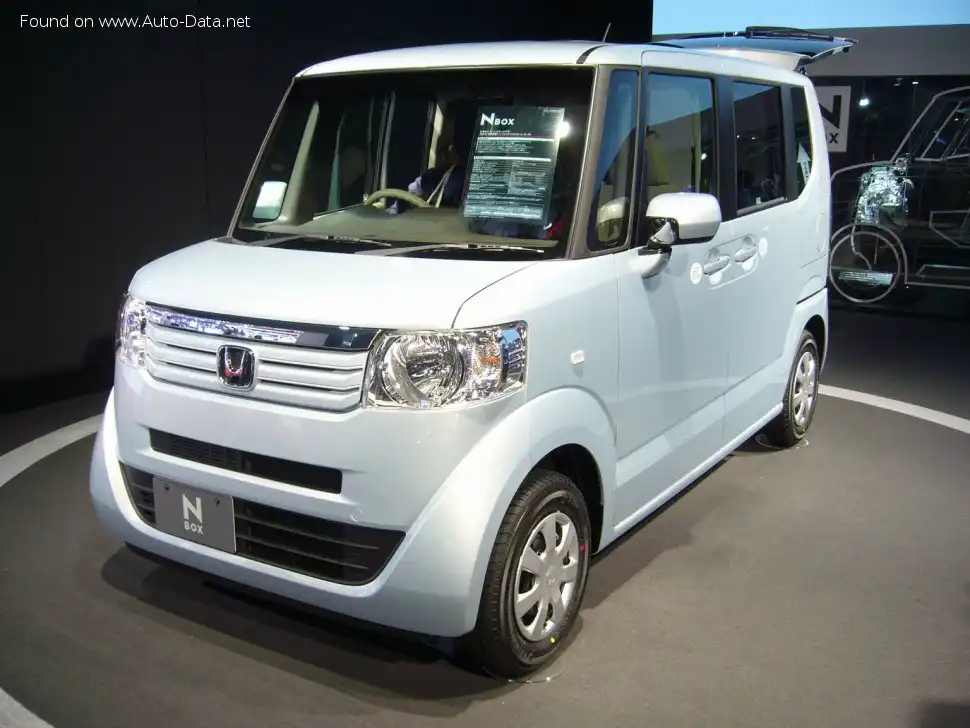
The Honda N-Box I 0.7i (64 hp) 4WD CVT, produced between 2011 and 2017, represents a key variant within the first generation of Honda’s popular kei car MPV. Designed specifically for the Japanese domestic market (JDM), the N-Box aimed to maximize interior space and practicality within the strict regulations governing kei cars. This particular configuration, featuring a 658cc engine, a continuously variable transmission (CVT), and all-wheel drive, was positioned as a practical and economical choice for buyers prioritizing all-weather capability and ease of use. It served as an entry point into the N-Box range, offering a balance between affordability and functionality.
Technical Specifications
| Brand | Honda |
| Model | N-Box |
| Generation | N-Box I |
| Type (Engine) | 0.7i (64 Hp) 4WD CVT |
| Start of production | 2011 |
| End of production | 2017 |
| Powertrain Architecture | Internal Combustion engine |
| Body type | MPV |
| Seats | 4 |
| Doors | 5 |
| Fuel consumption (combined) | 4.7 l/100 km (50 US mpg, 60.1 UK mpg, 21.3 km/l) |
| Fuel Type | Petrol (Gasoline) |
| Weight-to-power ratio | 16.1 kg/Hp, 62.1 Hp/tonne |
| Weight-to-torque ratio | 9.9 kg/Nm, 101 Nm/tonne |
| Power | 64 Hp @ 6000 rpm |
| Power per litre | 97.3 Hp/l |
| Torque | 104 Nm @ 2600 rpm (76.71 lb.-ft. @ 2600 rpm) |
| Engine layout | Front, Transverse |
| Engine Model/Code | S07A |
| Engine displacement | 658 cm3 (40.15 cu. in.) |
| Number of cylinders | 3 |
| Engine configuration | Inline |
| Cylinder Bore | 64 mm (2.52 in.) |
| Piston Stroke | 68.2 mm (2.69 in.) |
| Compression ratio | 9.2:1 |
| Number of valves per cylinder | 4 |
| Fuel injection system | Multi-port manifold injection |
| Engine aspiration | Naturally Aspirated |
| Engine oil capacity | 2.6 l (2.75 US qt | 2.29 UK qt) |
| Coolant capacity | 2.89 l (3.05 US qt | 2.54 UK qt) |
| Kerb Weight | 1030 kg (2270.76 lbs.) |
| Fuel tank capacity | 30 l (7.93 US gal | 6.6 UK gal) |
| Length | 3395 mm (133.66 in.) |
| Width | 1475 mm (58.07 in.) |
| Height | 1800 mm (70.87 in.) |
| Wheelbase | 2520 mm (99.21 in.) |
| Front track | 1290 mm (50.79 in.) |
| Rear track | 1295 mm (50.98 in.) |
| Ride height (ground clearance) | 150 mm (5.91 in.) |
| Minimum turning circle | 9.4 m (30.84 ft.) |
| Drive wheel | All wheel drive (4×4) |
| Number of gears and type of gearbox | automatic transmission CVT |
| Front brakes | Ventilated discs |
| Rear brakes | Drum |
| Assisting systems | ABS (Anti-lock braking system) |
| Tires size | 165/55 R15 |
| Wheel rims size | 15 |
Powertrain & Engine Architecture
The N-Box 0.7i utilizes Honda’s S07A engine, a 658cc inline-three cylinder petrol engine. This engine is naturally aspirated and employs a multi-point fuel injection system. The S07A engine is known for its relatively simple design, contributing to its reliability and ease of maintenance. The engine features a double overhead camshaft (DOHC) valvetrain, optimizing airflow for improved efficiency. The engine’s compact size is crucial for meeting kei car regulations. Paired with the engine is a continuously variable transmission (CVT), chosen for its smooth operation and fuel efficiency. The CVT lacks fixed gear ratios, instead providing a seamless range of ratios to keep the engine operating in its most efficient zone. This combination prioritizes fuel economy over outright performance.
Driving Characteristics
The 64 hp output and CVT pairing result in modest acceleration. The N-Box 0.7i 4WD is not designed for spirited driving; instead, it excels in urban environments and on relatively flat terrain. The CVT contributes to a smooth, linear power delivery, but can sometimes feel ‘slushy’ under hard acceleration. The all-wheel drive system provides enhanced traction in slippery conditions, making it a practical choice for regions with inclement weather. Compared to the more powerful N-Box variants, such as those with the 660cc turbocharged engine, this version feels significantly less responsive. However, the CVT’s efficiency helps to offset the lower power output, resulting in competitive fuel economy.
Equipment & Trim Levels
The 0.7i 4WD CVT trim typically included basic amenities such as power windows, power door locks, and air conditioning. Interior upholstery was generally cloth, with a functional, rather than luxurious, design. Optional extras could include a navigation system, upgraded audio systems, and alloy wheels. The N-Box prioritized practicality, so even base models offered a surprisingly spacious interior for a kei car. The ‘G’ trim level, a common variant, added features like body-colored door handles and mirrors, and sometimes included a keyless entry system.
Chassis & Braking
The N-Box I features a front-engine, front-wheel-drive (with the 4WD system adding drive to the rear wheels when needed) layout. The suspension consists of MacPherson struts at the front and a torsion beam axle at the rear. The front brakes are ventilated discs, providing adequate stopping power for the vehicle’s weight and performance. The rear brakes are drums, a cost-saving measure common in kei cars. The 4WD system is typically a part-time system, engaging the rear wheels automatically when wheel slip is detected. Stabilizer bars were often omitted on the base models to keep costs down.
Market Reception & Comparison
The Honda N-Box, in general, was a resounding success in Japan, consistently ranking among the best-selling kei cars. The 0.7i 4WD CVT variant appealed to buyers seeking a practical, economical, and reliable vehicle for daily commuting and family use. Critics praised the N-Box’s spacious interior and fuel efficiency, but noted its limited performance. Compared to other kei car MPVs, such as the Daihatsu Tanto and Suzuki Spacia, the N-Box offered a slightly more refined driving experience and a reputation for Honda’s renowned reliability. The 0.7i version was often seen as a sensible choice for those who didn’t require the extra performance of the turbocharged models.
Legacy
The S07A engine and CVT combination in the N-Box I 0.7i 4WD has proven to be remarkably reliable. Common issues are relatively minor, often related to routine maintenance items such as spark plugs and air filters. The CVT, while not known for its sporty feel, has generally held up well over time with proper fluid changes. In the used car market, these N-Boxes are still sought after for their affordability, fuel efficiency, and practicality. They represent a cost-effective option for those needing a small, versatile vehicle, particularly in areas where all-wheel drive is beneficial. The first-generation N-Box established the model as a dominant force in the Japanese kei car segment, paving the way for subsequent generations that continue to build on its success.