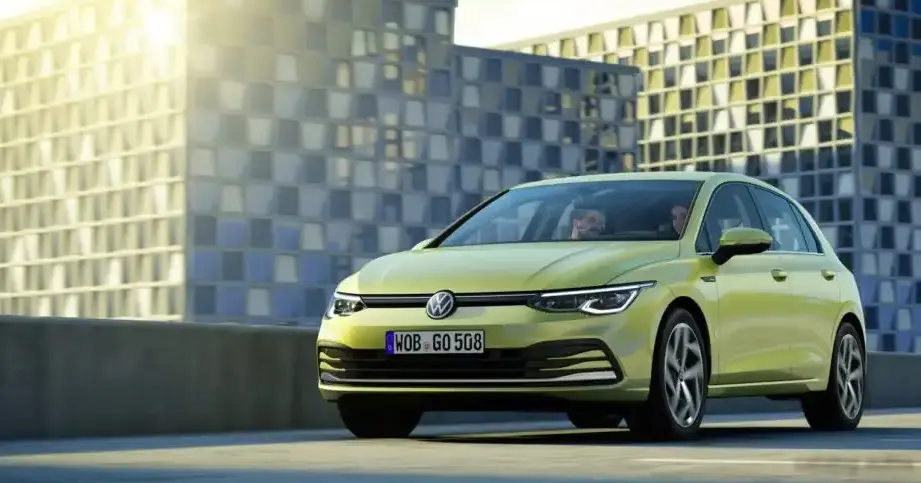
The Volkswagen Golf VIII 2.0 TDI, producing 150 horsepower, represents a significant iteration in the long-running Golf lineage. Introduced in 2020 as part of the Mk8 Golf range and continuing through 2024, this variant aimed to balance fuel efficiency with respectable performance, catering to a broad segment of the European and global markets. Positioned as a mid-range offering within the Golf VIII lineup, it slotted between the lower-powered diesel options and the more performance-focused GTI and R models. The Golf VIII platform (PQ24) brought a substantial technological overhaul compared to its predecessor, focusing on digitalization and connectivity.
Technical Specifications
| Brand | Volkswagen |
| Model | Golf |
| Generation | Golf VIII |
| Type (Engine) | 2.0 TDI (150 Hp) |
| Start of production | 2020 |
| End of production | 2024 |
| Powertrain Architecture | Internal Combustion engine |
| Body type | Hatchback |
| Seats | 5 |
| Doors | 5 |
| Fuel consumption at Low speed (WLTP) | 6.2 l/100 km (37.9 US mpg, 45.6 UK mpg, 16.1 km/l) |
| Fuel consumption at Medium speed (WLTP) | 4.3 l/100 km (54.7 US mpg, 65.7 UK mpg, 23.3 km/l) |
| Fuel consumption at high speed (WLTP) | 3.7 l/100 km (63.6 US mpg, 76.3 UK mpg, 27 km/l) |
| Fuel consumption at very high speed (WLTP) | 4.5 l/100 km (52.3 US mpg, 62.8 UK mpg, 22.2 km/l) |
| Combined fuel consumption (WLTP) | 4.4 l/100 km (53.5 US mpg, 64.2 UK mpg, 22.7 km/l) |
| CO2 emissions (WLTP) | 116 g/km |
| Fuel consumption (economy) – urban (NEDC) | 5 l/100 km (47 US mpg, 56.5 UK mpg, 20 km/l) |
| Fuel consumption (economy) – extra urban (NEDC) | 3.2 l/100 km (73.5 US mpg, 88.3 UK mpg, 31.3 km/l) |
| Fuel consumption (economy) – combined (NEDC) | 3.9 l/100 km (60.3 US mpg, 72.4 UK mpg, 25.6 km/l) |
| CO2 emissions (NEDC) | 102 g/km |
| Fuel Type | Diesel |
| Acceleration 0 – 100 km/h | 8.8 sec |
| Acceleration 0 – 62 mph | 8.8 sec |
| Acceleration 0 – 60 mph | 8.4 sec |
| Maximum speed | 223 km/h (138.57 mph) |
| Emission standard | Euro 6d-ISC-FCM |
| Weight-to-power ratio | 9 kg/Hp, 110.9 Hp/tonne |
| Weight-to-torque ratio | 4 kg/Nm, 251.3 Nm/tonne |
| Power | 150 Hp @ 3500 rpm |
| Torque | 340 Nm @ 1600-3000 rpm (250.77 lb.-ft. @ 1600-3000 rpm) |
| Engine layout | Front, Transverse |
| Engine Model/Code | EA288 evo / DTSA |
| Engine displacement | 1968 cm3 (120.09 cu. in.) |
| Number of cylinders | 4 |
| Engine configuration | Inline |
| Cylinder Bore | 81 mm (3.19 in.) |
| Piston Stroke | 95.5 mm (3.76 in.) |
| Number of valves per cylinder | 4 |
| Fuel injection system | Diesel Commonrail |
| Engine aspiration | Turbocharger, Intercooler |
| Valvetrain | DOHC |
| Engine oil capacity | 5.5 l (5.81 US qt | 4.84 UK qt) |
| Kerb Weight | 1353 kg (2982.85 lbs.) |
| Max. weight | 1930 kg (4254.92 lbs.) |
| Max load | 577 kg (1272.07 lbs.) |
| Trunk (boot) space – minimum | 380 l (13.42 cu. ft.) |
| Trunk (boot) space – maximum | 1237 l (43.68 cu. ft.) |
| Max. roof load | 75 kg (165.35 lbs.) |
| Permitted trailer load with brakes (8%) | 1800 kg (3968.32 lbs.) |
| Permitted trailer load with brakes (12%) | 1600 kg (3527.4 lbs.) |
| Permitted trailer load without brakes | 710 kg (1565.28 lbs.) |
| Permitted towbar download | 80 kg (176.37 lbs.) |
| Length | 4284-4287 mm (168.66 – 168.78 in.) |
| Width | 1789 mm (70.43 in.) |
| Height | 1491 mm (58.7 in.) |
| Wheelbase | 2619 mm (103.11 in.) |
| Front track | 1533-1549 mm (60.35 – 60.98 in.) |
| Rear (Back) track | 1503-1519 mm (59.17 – 59.8 in.) |
| Drag coefficient (Cd) | 0.275 |
| Minimum turning circle (turning diameter) | 10.9 m (35.76 ft.) |
| Drivetrain Architecture | The Internal combustion engine (ICE) drives the front wheels of the vehicle. |
| Drive wheel | Front wheel drive |
| Number of gears and type of gearbox | 6 gears, manual transmission |
| Front suspension | Independent type McPherson, Transverse stabilizer |
| Rear suspension | Independent multi-link suspension, Transverse stabilizer |
| Front brakes | Ventilated discs |
| Rear brakes | Disc |
| Assisting systems | ABS (Anti-lock braking system) |
| Steering type | Steering rack and pinion |
| Power steering | Electric Steering |
| Tires size | 205/55 R16; 225/45 R17; 225/40 R18 |
| Wheel rims size | 7J x 16; 7.5J x 17; 7.5J x 18 |
INTRODUCTION
The Volkswagen Golf VIII 2.0 TDI (150 hp) was produced from 2020 to 2024 and is a key member of the eighth-generation Golf family. Built on the MQB Evo platform, it represents a significant leap forward in technology and refinement compared to the Mk7. This variant was primarily aimed at the European market, where diesel engines continue to hold a substantial share due to their fuel efficiency and suitability for long-distance driving. The 2.0 TDI engine offered a balance between performance and economy, making it a popular choice for both private buyers and fleet operators. It was positioned as a practical and efficient option within the Golf VIII range.
Powertrain & Engine Architecture
At the heart of the Golf VIII 2.0 TDI is the EA288 evo diesel engine, specifically the DTSA code variant. This is a four-cylinder, inline engine with a displacement of 1968cc. It utilizes a common rail direct injection system, delivering fuel at extremely high pressures for optimized combustion. The engine features a turbocharger with an intercooler, enhancing power output and efficiency. The valvetrain employs a dual overhead camshaft (DOHC) configuration with four valves per cylinder. The 150 hp output is achieved at 3500 rpm, while peak torque of 340 Nm (250.77 lb-ft) is available between 1600 and 3000 rpm. This broad torque curve provides strong pulling power across a wide range of engine speeds. The engine is paired with a 6-speed manual transmission as standard, although a 7-speed dual-clutch transmission (DSG) was also available as an option.
Driving Characteristics
The 2.0 TDI 150 hp variant of the Golf VIII delivers a composed and refined driving experience. Acceleration from 0 to 100 km/h (0-62 mph) takes approximately 8.8 seconds. While not a particularly sporty configuration, the engine provides ample power for everyday driving and overtaking maneuvers. The broad torque band ensures responsive acceleration in most situations. Compared to the higher-output 2.0 TDI variants (e.g., 200 hp), this version prioritizes fuel economy over outright performance. The manual transmission offers precise gear changes, while the optional DSG provides smooth and rapid shifts. The suspension setup is tuned for comfort, absorbing bumps and imperfections in the road surface effectively. The steering is accurate and well-weighted, providing a confident feel behind the wheel.
Equipment & Trim Levels
The Golf VIII 2.0 TDI 150 hp was available in various trim levels, each offering a different level of equipment. Standard features typically included air conditioning, a touchscreen infotainment system with Apple CarPlay and Android Auto compatibility, LED headlights, and a suite of safety features such as automatic emergency braking and lane departure warning. Higher trim levels added features such as a larger touchscreen display, digital instrument cluster, adaptive cruise control, heated seats, and a panoramic sunroof. Interior upholstery ranged from cloth to leather, depending on the trim level. Optional extras included a premium sound system, navigation system, and various driver assistance technologies.
Chassis & Braking
The Golf VIII utilizes an independent suspension system on both the front and rear axles. The front suspension features a McPherson strut design with a transverse stabilizer bar, while the rear suspension employs a multi-link setup, also with a stabilizer bar. This configuration provides a good balance between ride comfort and handling. The braking system consists of ventilated discs on the front wheels and solid discs on the rear wheels. Anti-lock braking system (ABS) is standard, along with electronic stability control (ESC). The Golf VIII’s chassis is designed to be lightweight yet rigid, contributing to its agile handling characteristics.
Market Reception & Comparison
The Golf VIII 2.0 TDI 150 hp received generally positive reviews from automotive critics. It was praised for its fuel efficiency, comfortable ride, and refined driving experience. However, some critics noted that the interior design was overly reliant on touchscreen controls, which could be distracting while driving. Compared to the lower-powered diesel variants, the 150 hp version offered a noticeable improvement in performance. Compared to the petrol-powered Golf models, the 2.0 TDI provided superior fuel economy, particularly on long journeys. The 2.0 TDI 150 hp was a direct competitor to other compact diesel hatchbacks, such as the Ford Focus, Opel Astra, and Peugeot 308.
Legacy
The EA288 evo engine family, including the 2.0 TDI variant found in the Golf VIII, has proven to be a reliable and durable powertrain. While diesel engines have faced increasing scrutiny in recent years due to emissions concerns, the Golf VIII 2.0 TDI remains a popular choice in the used car market. Its fuel efficiency and relatively low running costs make it an attractive option for buyers seeking a practical and economical vehicle. Regular maintenance, including oil changes and filter replacements, is essential to ensure the long-term reliability of this engine. The Golf VIII 2.0 TDI 150 hp represents a well-rounded and capable compact hatchback that continues to offer a compelling blend of performance, efficiency, and comfort.