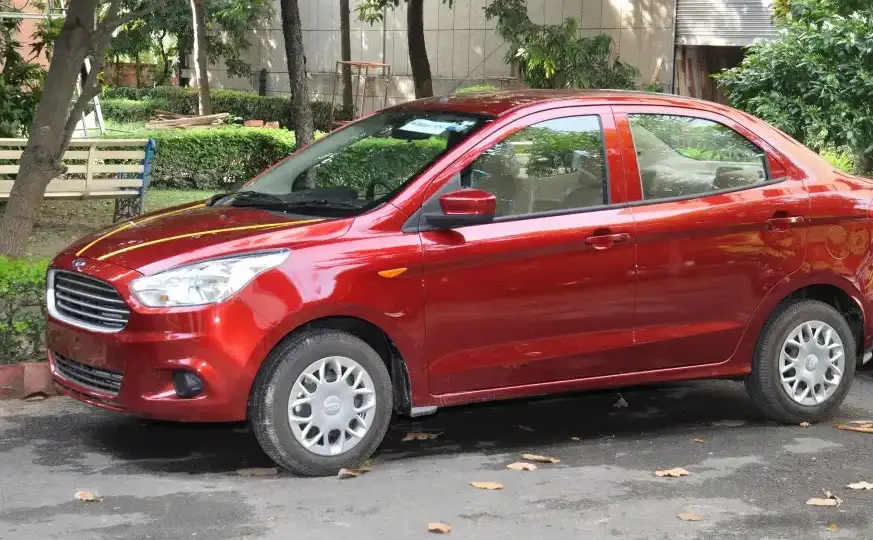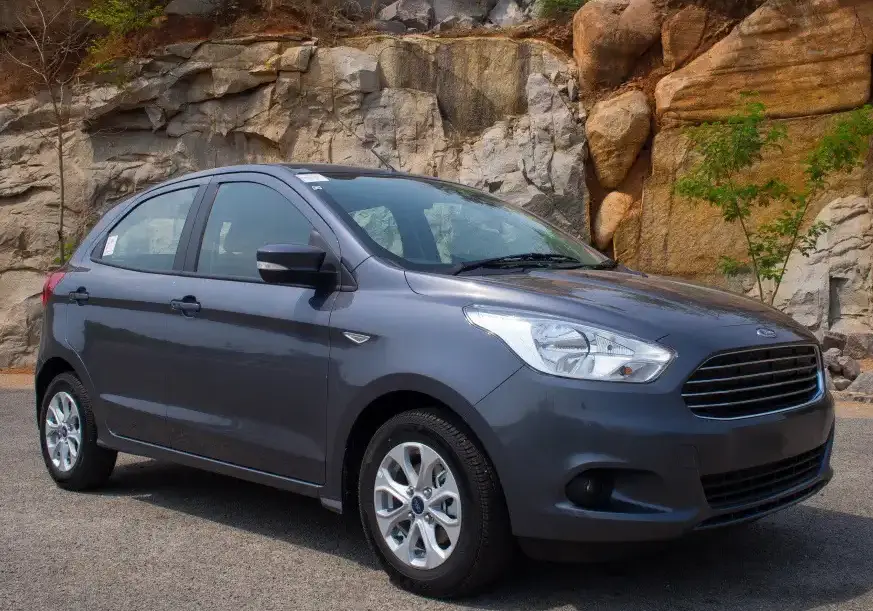
The Ford Figo II 1.5 Ti-VCT (112 hp) DCT represents a significant iteration within the second generation of Ford’s globally-marketed subcompact hatchback. Introduced in 2015 and continuing through 2018, this variant was primarily aimed at the Indian and South American markets, offering a blend of fuel efficiency, modern features, and a more engaging driving experience than base models. It occupied a mid-range position in the Figo II lineup, bridging the gap between the more economical 1.2L engine options and the performance-oriented, though less commonly available, 1.5L manual transmission versions. The Figo II itself was a crucial model for Ford, designed to compete in the rapidly growing subcompact segment and provide an affordable, feature-rich option for emerging markets.
Technical Specifications
| Brand | Ford |
| Model | Figo |
| Generation | Figo II |
| Type (Engine) | 1.5 Ti-VCT (112 Hp) DCT |
| Start of production | 2015 |
| End of production | 2018 |
| Powertrain Architecture | Internal Combustion engine |
| Body type | Hatchback |
| Seats | 5 |
| Doors | 5 |
| Fuel consumption (combined) | 6 l/100 km (39.2 US mpg, 47.1 UK mpg, 16.7 km/l) |
| CO2 emissions | 142 g/km |
| Fuel Type | Petrol (Gasoline) |
| Acceleration 0 – 100 km/h | 12 sec |
| Acceleration 0 – 62 mph | 12 sec |
| Acceleration 0 – 60 mph | 11.4 sec |
| Maximum speed | 175 km/h (108.74 mph) |
| Power | 112 Hp @ 6300 rpm |
| Power per litre | 74.7 Hp/l |
| Torque | 136 Nm @ 4250 rpm (100.31 lb.-ft. @ 4250 rpm) |
| Engine layout | Front, Transverse |
| Engine displacement | 1499 cm3 (91.47 cu. in.) |
| Number of cylinders | 4 |
| Engine configuration | Inline |
| Compression ratio | 11:1 |
| Number of valves per cylinder | 4 |
| Fuel injection system | Multi-port manifold injection |
| Engine aspiration | Naturally aspirated engine |
| Valvetrain | Ti-VCT |
| Engine oil capacity | 4.05 l (4.28 US qt, 3.56 UK qt) |
| Coolant | 6.3 l (6.66 US qt, 5.54 UK qt) |
| Trunk (boot) space – minimum | 257 l (9.08 cu. ft.) |
| Fuel tank capacity | 42 l (11.1 US gal, 9.24 UK gal) |
| Length | 3886 mm (152.99 in.) |
| Width | 1695 mm (66.73 in.) |
| Height | 1525 mm (60.04 in.) |
| Wheelbase | 2491 mm (98.07 in.) |
| Front track | 1492 mm (58.74 in.) |
| Rear track | 1484 mm (58.43 in.) |
| Ride height (ground clearance) | 174 mm (6.85 in.) |
| Minimum turning circle | 9.8 m (32.15 ft.) |
| Drivetrain Architecture | Front wheel drive |
| Number of gears and type of gearbox | 6 gears, automatic transmission DCT |
| Front suspension | Independent, McPherson with coil spring and anti-roll bar |
| Rear suspension | Semi-independent, coil spring |
| Front brakes | Ventilated discs |
| Rear brakes | Drum |
| Assisting systems | ABS (Anti-lock braking system) |
| Steering type | Steering rack and pinion |
| Power steering | Electric Steering |
| Tires size | 175/65 R14 |
| Wheel rims size | 14 |
Powertrain & Engine Architecture
The heart of the Figo II 1.5 Ti-VCT DCT is the 1.5-liter inline-four cylinder gasoline engine. This engine, part of Ford’s Duratec family, utilizes a multi-point fuel injection system and is notable for its Twin Independent Variable Camshaft Timing (Ti-VCT) technology. Ti-VCT allows for independent control of intake and exhaust valve timing, optimizing engine performance and fuel efficiency across a wider range of engine speeds. The engine produces 112 horsepower at 6,300 rpm and 136 Nm (100.31 lb-ft) of torque at 4,250 rpm. The dual-clutch transmission (DCT) is a six-speed unit, offering quicker and smoother gear changes compared to a traditional automatic transmission. This DCT was sourced from Getrag, a well-respected transmission manufacturer. The combination of the Ti-VCT engine and the DCT aimed to provide a responsive and efficient driving experience.
Driving Characteristics
The 1.5L Ti-VCT DCT equipped Figo II offered a noticeable improvement in performance over the base 1.2L models. While not a sports car, the 112 hp engine provided adequate power for everyday driving and highway overtaking. The DCT transmission contributed to a more engaging driving experience, with quick shifts and minimal torque interruption. Acceleration from 0 to 60 mph was achieved in approximately 11.4 seconds, and the car had a top speed of 175 km/h (108.74 mph). The DCT’s gear ratios were tuned to prioritize fuel efficiency, but also allowed for reasonably brisk acceleration when needed. Compared to the manual transmission versions of the 1.5L engine, the DCT offered convenience and ease of use, but some enthusiasts noted a slight reduction in overall responsiveness.
Equipment & Trim Levels
The 1.5 Ti-VCT DCT trim typically included features such as air conditioning, power windows, power steering, and a basic audio system with USB connectivity. Higher sub-trims often added alloy wheels, a more sophisticated audio system with Bluetooth connectivity, and driver and passenger airbags. Optional extras included a rear parking sensor, a driver information system, and upgraded interior trim materials. The interior generally featured durable plastic materials, reflecting the car’s budget-conscious positioning. The dashboard layout was functional and straightforward, prioritizing usability over aesthetics.
Chassis & Braking
The Figo II utilized a McPherson strut front suspension and a semi-independent coil spring rear suspension. This setup provided a comfortable ride quality, suitable for the often-challenging road conditions found in its target markets. The front brakes were ventilated discs, offering good stopping power, while the rear brakes were drums. Anti-lock Braking System (ABS) was standard, enhancing safety. The steering was electrically assisted, providing light and easy steering feel. The relatively lightweight construction of the Figo II contributed to its nimble handling characteristics.
Market Reception & Comparison
The Ford Figo II 1.5 Ti-VCT DCT was generally well-received by automotive critics in its target markets. It was praised for its fuel efficiency, comfortable ride, and the convenience of the DCT transmission. However, some reviewers noted that the interior materials felt somewhat basic and that the rear drum brakes were a compromise in terms of braking performance. Compared to other subcompact hatchbacks in the same segment, such as the Maruti Suzuki Swift and the Hyundai Grand i10, the Figo II offered a competitive package with a focus on driving dynamics and modern features. Fuel economy was comparable to its rivals, and the DCT transmission provided a unique selling point.
Legacy
The Ford Figo II 1.5 Ti-VCT DCT has proven to be a relatively reliable powertrain in the used car market. The 1.5L Ti-VCT engine is known for its durability, and the DCT transmission, while requiring occasional maintenance, has generally held up well over time. Common issues reported by owners include minor electrical glitches and wear and tear on suspension components. Overall, the Figo II 1.5 Ti-VCT DCT remains a popular choice for budget-conscious buyers seeking a practical and reliable subcompact hatchback. Its combination of fuel efficiency, modern features, and engaging driving dynamics has ensured its continued relevance in the used car market.