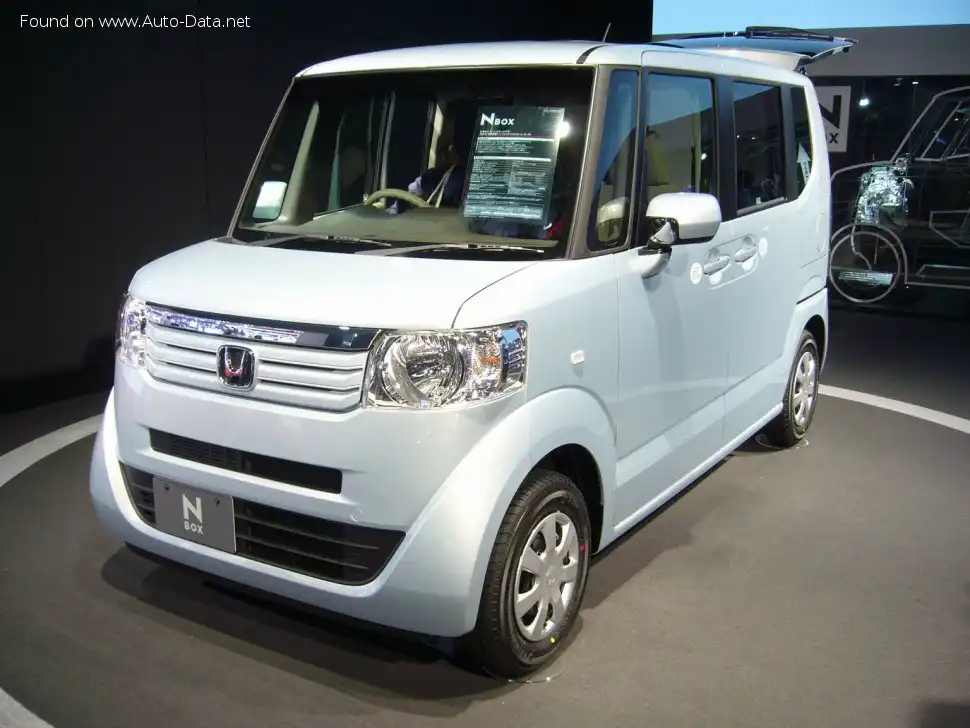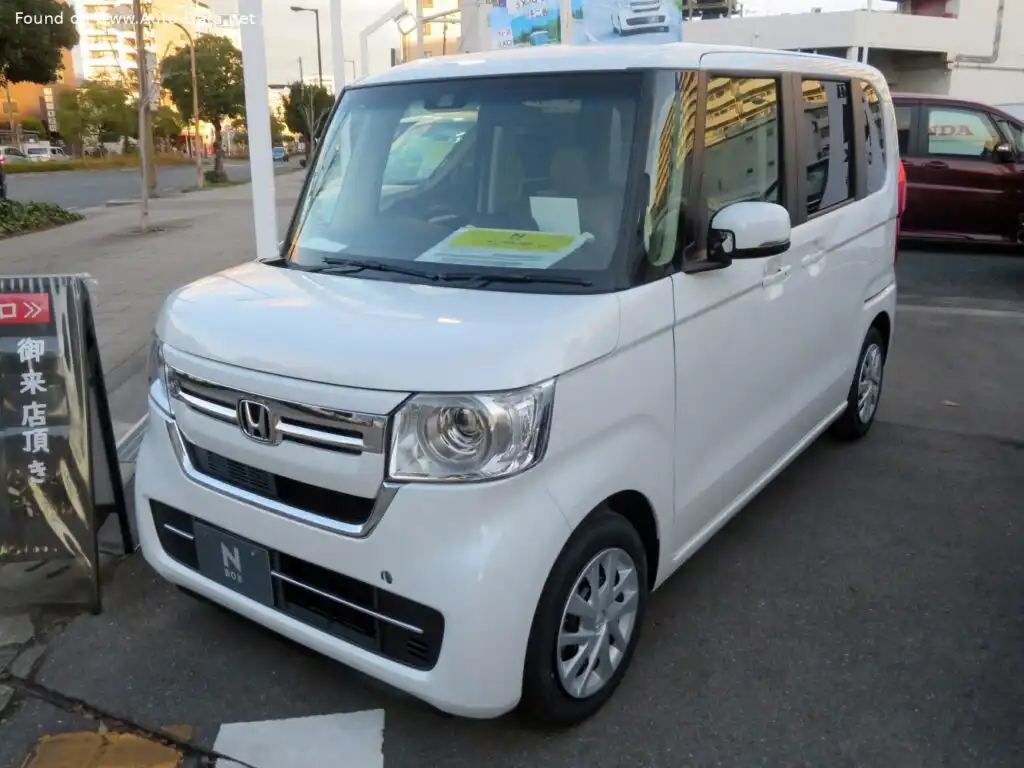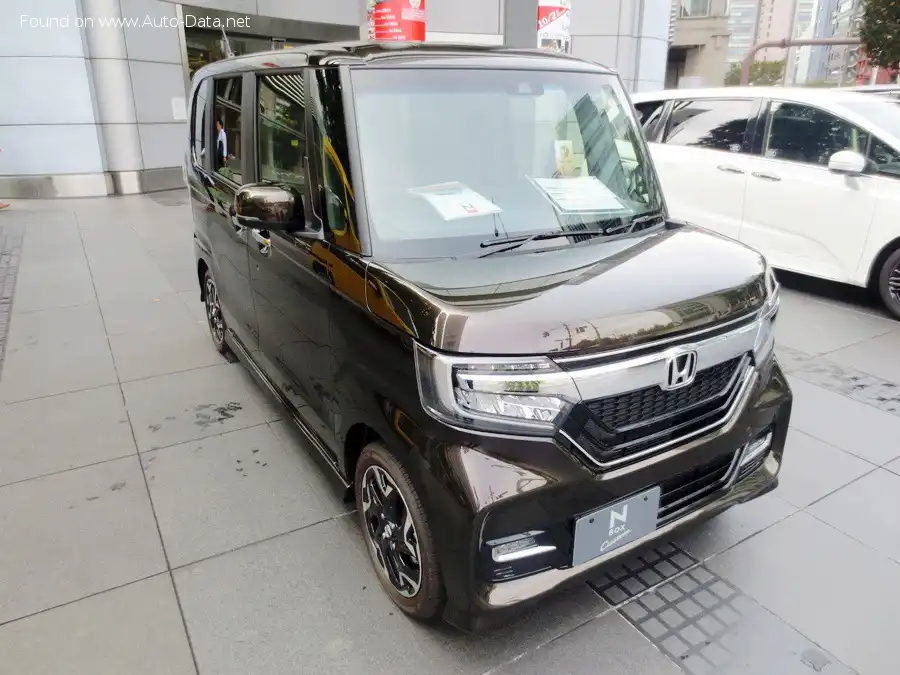
The Honda N-Box II 0.7i (58 hp) 4WD CVT is a micro-MPV produced by Honda between 2017 and 2020. It represents a key variant within the second generation (N-Box II) of the N-Box series, a vehicle specifically designed for the Japanese domestic market (JDM) and characterized by its spacious interior and compact exterior dimensions. This particular configuration – the 0.7-liter engine paired with a continuously variable transmission (CVT) and all-wheel drive – was positioned as an entry-level offering, prioritizing fuel efficiency and accessibility over outright performance. The N-Box, in general, aimed to cater to the needs of small families and individuals seeking a practical and versatile vehicle for urban environments.
Technical Specifications
| Brand | Honda |
| Model | N-Box |
| Generation | N-Box II |
| Type (Engine) | 0.7i (58 Hp) 4WD CVT |
| Start of production | 2017 |
| End of production | 2020 |
| Powertrain Architecture | Internal Combustion engine |
| Body type | MPV |
| Seats | 4 |
| Doors | 5 |
| Fuel consumption (combined) | 3.9-4.1 l/100 km (60.3 – 57.4 US mpg, 72.4 – 68.9 UK mpg, 25.6 – 24.4 km/l) |
| Fuel Type | Petrol (Gasoline) |
| Weight-to-power ratio | 16.4 kg/Hp, 61.1 Hp/tonne |
| Weight-to-torque ratio | 14.6 kg/Nm, 68.4 Nm/tonne |
| Power | 58 Hp @ 7300 rpm |
| Power per litre | 88.1 Hp/l |
| Torque | 65 Nm @ 4800 rpm (47.94 lb.-ft. @ 4800 rpm) |
| Engine layout | Front, Transverse |
| Engine Model/Code | S07B |
| Engine displacement | 658 cm3 (40.15 cu. in.) |
| Number of cylinders | 3 |
| Engine configuration | Inline |
| Cylinder Bore | 60 mm (2.36 in.) |
| Piston Stroke | 77.6 mm (3.06 in.) |
| Compression ratio | 12:1 |
| Number of valves per cylinder | 4 |
| Fuel injection system | Multi-port manifold injection |
| Engine aspiration | Naturally aspirated engine |
| Valvetrain | DOHC |
| Kerb Weight | 950-1020 kg (2094.39 – 2248.72 lbs.) |
| Fuel tank capacity | 25 l (6.6 US gal | 5.5 UK gal) |
| Length | 3395 mm (133.66 in.) |
| Width | 1475 mm (58.07 in.) |
| Height | 1815 mm (71.46 in.) |
| Wheelbase | 2520 mm (99.21 in.) |
| Front track | 1295-1305 mm (50.98 – 51.38 in.) |
| Rear (Back) track | 1295-1305 mm (50.98 – 51.38 in.) |
| Ride height (ground clearance) | 145 mm (5.71 in.) |
| Minimum turning circle (turning diameter) | 9.4 m (30.84 ft.) |
| Drive wheel | All wheel drive (4×4) |
| Number of gears and type of gearbox | automatic transmission CVT |
| Front suspension | Independent type McPherson |
| Rear suspension | Torsion |
| Front brakes | Ventilated discs |
| Rear brakes | Disc |
| Assisting systems | ABS (Anti-lock braking system) |
| Steering type | Steering rack and pinion |
| Power steering | Electric Steering |
| Tires size | 155/65 R14 |
| Wheel rims size | 14 |
Powertrain & Engine Architecture
The N-Box II 0.7i utilizes Honda’s S07B engine, a 658cc inline-three cylinder petrol engine. This engine is naturally aspirated and employs a multi-point fuel injection system. The S07B is known for its compact size and relatively simple design, contributing to the N-Box’s overall efficiency. The engine features a double overhead camshaft (DOHC) valvetrain with four valves per cylinder, optimizing breathing for improved power output despite its small displacement. Paired with this engine is a continuously variable transmission (CVT). Honda’s CVT design prioritizes smooth acceleration and fuel economy over traditional stepped gear changes. The CVT in the N-Box is tuned for relaxed driving, focusing on maximizing efficiency rather than providing sporty performance. The all-wheel-drive system is a part-time system, engaging the rear wheels when traction is needed, enhancing stability in inclement weather or on slippery surfaces.
Driving Characteristics
The 58 hp output and CVT pairing result in modest acceleration. The N-Box II 0.7i 4WD is not designed for rapid acceleration; instead, it prioritizes smooth, linear power delivery. The CVT effectively keeps the engine within its optimal power band, providing adequate performance for city driving and moderate highway speeds. Compared to higher-spec N-Box variants equipped with larger engines (like the 660cc turbocharged version), this 0.7i model feels noticeably less powerful, especially when fully loaded or climbing hills. The CVT’s lack of distinct gear changes can feel somewhat disconnected to drivers accustomed to traditional automatic transmissions. However, it contributes to a very smooth and comfortable driving experience. The all-wheel-drive system provides enhanced grip and stability, particularly beneficial in snowy or wet conditions, but it does slightly impact fuel economy compared to front-wheel-drive versions.
Equipment & Trim Levels
The 0.7i 4WD CVT trim typically represents the base level of the N-Box II range. Standard equipment generally includes air conditioning, power windows, power door locks, and basic audio system. Interior upholstery is typically cloth, and the dashboard features a functional, if somewhat basic, design. Optional extras available for this trim could include a touchscreen infotainment system, navigation, and various cosmetic enhancements. Safety features, such as ABS (Anti-lock Braking System) and airbags, are standard. The N-Box II is notable for its clever interior packaging, maximizing space within its small footprint. Features like the “Tall Gate” – a unique rear door design – facilitate easy loading and unloading of cargo.
Chassis & Braking
The N-Box II utilizes a McPherson strut suspension setup at the front and a torsion beam suspension at the rear. This configuration provides a comfortable ride quality, well-suited for urban driving conditions. The front brakes are ventilated discs, offering adequate stopping power, while the rear brakes are discs. The relatively lightweight nature of the vehicle contributes to its manageable braking performance. The steering system is a rack and pinion setup with electric power assistance, providing light and easy steering feel. The 155/65 R14 tires are chosen for a balance of comfort, fuel efficiency, and grip.
Market Reception & Comparison
The Honda N-Box II, and specifically the 0.7i 4WD CVT variant, was highly successful in the Japanese market. Critics praised its spacious interior, fuel efficiency, and ease of driving. Compared to other “kei car” MPVs (vehicles designed to fit within Japan’s strict size and engine displacement regulations), the N-Box stood out for its clever packaging and relatively refined driving experience. The 0.7i model, while the least powerful in the lineup, offered a compelling value proposition for buyers prioritizing affordability and fuel economy. Its fuel consumption of 3.9-4.1 l/100km was a significant selling point, particularly in a country with high fuel prices. Reliability was generally considered to be excellent, consistent with Honda’s reputation.
Legacy
The Honda N-Box II 0.7i 4WD CVT remains a popular choice in the used car market in Japan. The S07B engine is known for its durability and relatively low maintenance costs. While not a performance-oriented vehicle, its practicality, fuel efficiency, and reliability have ensured its continued appeal. The N-Box series, as a whole, has become a dominant force in the Japanese kei car segment, demonstrating Honda’s ability to cater to the specific needs of the domestic market. The N-Box II’s innovative interior design and focus on usability have influenced subsequent generations of kei car MPVs.