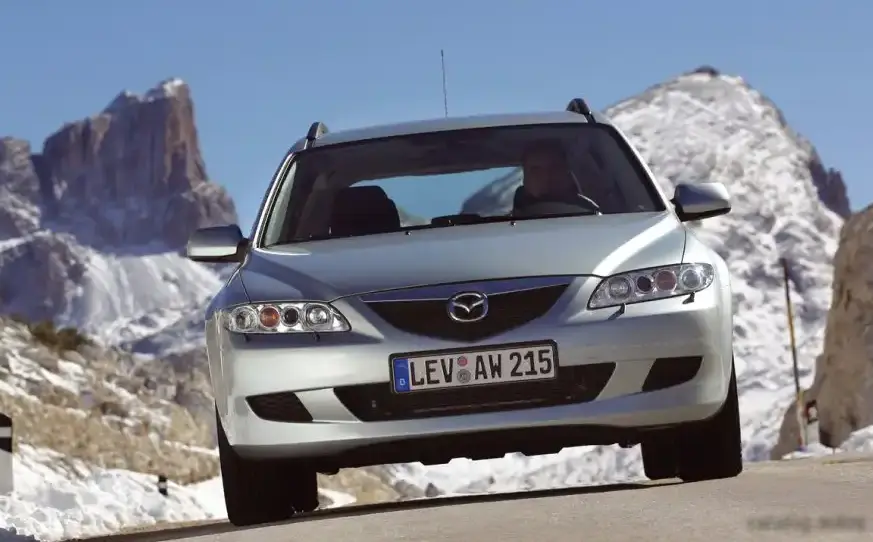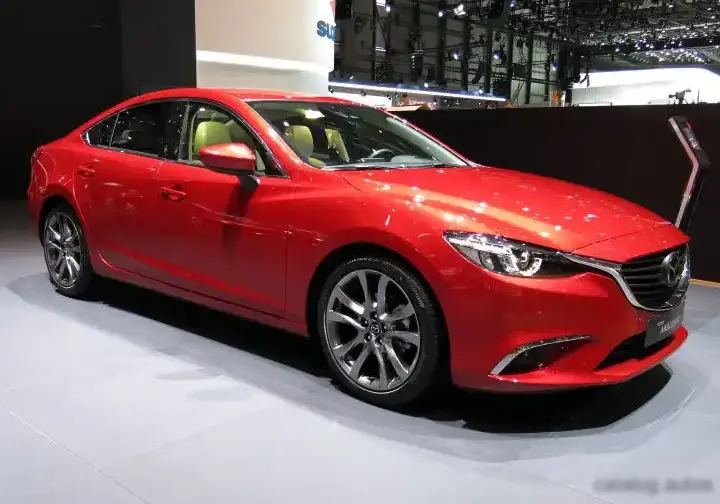
The Mazda 6 III Sedan, specifically the facelifted version produced from 2015 to 2017, represented a significant evolution of Mazda’s mid-size offering. Within the GJ generation, the 2.2 SKYACTIV-D variant with 175 horsepower and i-ELOOP technology occupied a key position as a fuel-efficient and refined option for buyers prioritizing both performance and economy. This model year saw updates to the exterior styling, interior materials, and technology features, further solidifying the Mazda 6’s reputation as a driver-focused sedan. The 2.2L diesel engine, coupled with Mazda’s innovative i-ELOOP regenerative braking system, aimed to deliver a compelling blend of power and efficiency in the competitive D-segment.
Technical Specifications
| Brand | Mazda |
| Model | 6 |
| Generation | 6 III Sedan (GJ, facelift 2015) |
| Type (Engine) | 2.2 SKYACTIV-D (175 Hp) i-ELOOP |
| Start of production | 2015 |
| End of production | 2017 |
| Powertrain Architecture | Internal Combustion engine |
| Body type | Sedan |
| Seats | 5 |
| Doors | 4 |
| Fuel consumption (urban) | 5.5 l/100 km (42.8 US mpg, 51.4 UK mpg, 18.2 km/l) |
| Fuel consumption (extra urban) | 3.9 l/100 km (60.3 US mpg, 72.4 UK mpg, 25.6 km/l) |
| Fuel consumption (combined) | 4.5 l/100 km (52.3 US mpg, 62.8 UK mpg, 22.2 km/l) |
| CO2 emissions | 119 g/km |
| Fuel Type | Diesel |
| Acceleration 0 – 100 km/h | 7.9 sec |
| Acceleration 0 – 62 mph | 7.9 sec |
| Acceleration 0 – 60 mph | 7.5 sec |
| Maximum speed | 223 km/h (138.57 mph) |
| Emission standard | Euro 6 |
| Weight-to-power ratio | 8.5 kg/Hp, 117.8 Hp/tonne |
| Weight-to-torque ratio | 3.5 kg/Nm, 282.8 Nm/tonne |
| Power | 175 Hp @ 4500 rpm |
| Power per litre | 79.9 Hp/l |
| Torque | 420 Nm @ 2000 rpm (309.78 lb.-ft. @ 2000 rpm) |
| Engine layout | Front, Transverse |
| Engine Model/Code | SHY4 |
| Engine displacement | 2191 cm3 (133.7 cu. in.) |
| Number of cylinders | 4 |
| Engine configuration | Inline |
| Cylinder Bore | 86 mm (3.39 in.) |
| Piston Stroke | 94.3 mm (3.71 in.) |
| Compression ratio | 14:1 |
| Number of valves per cylinder | 4 |
| Fuel injection system | Diesel Commonrail |
| Engine aspiration | BiTurbo, Intercooler |
| Engine oil capacity | 5.1 l (5.39 US qt | 4.49 UK qt) |
| Coolant | 8.5 l (8.98 US qt | 7.48 UK qt) |
| Kerb Weight | 1485-1590 kg (3273.86 – 3505.35 lbs.) |
| Max. weight | 2055 kg (4530.5 lbs.) |
| Max load | 465-570 kg (1025.15 – 1256.63 lbs.) |
| Trunk (boot) space – minimum | 480 l (16.95 cu. ft.) |
| Fuel tank capacity | 62 l (16.38 US gal | 13.64 UK gal) |
| Max. roof load | 75 kg (165.35 lbs.) |
| Permitted trailer load with brakes (8%) | 1800 kg (3968.32 lbs.) |
| Permitted trailer load with brakes (12%) | 1600 kg (3527.4 lbs.) |
| Permitted trailer load without brakes | 730 kg (1609.37 lbs.) |
| Permitted towbar download | 75 kg (165.35 lbs.) |
| Length | 4870 mm (191.73 in.) |
| Width | 1840 mm (72.44 in.) |
| Height | 1450 mm (57.09 in.) |
| Wheelbase | 2830 mm (111.42 in.) |
| Ride height (ground clearance) | 165 mm (6.5 in.) |
| Minimum turning circle | 11.2 m (36.75 ft.) |
| Drivetrain Architecture | The Internal combustion engine (ICE) drives the front wheels of the vehicle. |
| Drive wheel | Front wheel drive |
| Number of gears and type of gearbox | 6 gears, manual transmission |
| Front brakes | Ventilated discs |
| Rear brakes | Disc |
| Assisting systems | ABS (Anti-lock braking system) |
| Steering type | Steering rack and pinion |
| Power steering | Electric Steering |
INTRODUCTION
The 2015-2017 Mazda 6 2.2 SKYACTIV-D 175, as part of the GJ generation, was designed to appeal to European and Asian markets where diesel engines were highly favored for their fuel efficiency. In the US market, Mazda focused more on gasoline engines, but the SKYACTIV-D technology was a key component of Mazda’s global strategy to improve fuel economy across its entire lineup. This variant sat in the mid-range of the 6’s offerings, providing a balance between performance, fuel economy, and features. It was positioned above the lower-powered gasoline engines and below the more expensive, fully-equipped trims.
Powertrain & Engine Architecture
At the heart of this Mazda 6 variant lies the SHY4 2.2-liter SKYACTIV-D four-cylinder diesel engine. This engine is characterized by its high compression ratio of 14:1, achieved through advanced combustion control and optimized piston design. The engine utilizes a twin-turbocharger setup – a small turbo for quick response at low RPMs and a larger turbo for sustained power at higher speeds. An intercooler further enhances performance by cooling the intake air. Fuel is delivered via a common-rail direct injection system, allowing for precise fuel metering and optimized combustion. The i-ELOOP system, Mazda’s mild hybrid technology, recovers kinetic energy during braking and stores it in a capacitor, providing a boost to the electrical system and reducing the load on the alternator, thus improving fuel efficiency. This specific model was paired with a 6-speed manual transmission, offering drivers a more engaging driving experience compared to the optional automatic.
Driving Characteristics
The 175 horsepower and 420 Nm (309.78 lb-ft) of torque delivered by the 2.2 SKYACTIV-D engine provided a surprisingly lively driving experience for a mid-size sedan. Acceleration from 0-60 mph was achieved in around 7.5 seconds, making it competitive with many gasoline-powered rivals. The twin-turbo setup minimized turbo lag, providing a broad and usable powerband. The 6-speed manual transmission allowed for precise gear selection and enhanced driver control. While not as overtly sporty as some competitors, the Mazda 6 offered a well-balanced and refined driving experience, with a focus on comfort and responsiveness. The i-ELOOP system was largely transparent to the driver, contributing to improved fuel economy without noticeably impacting performance.
Equipment & Trim Levels
The 2.2 SKYACTIV-D 175 typically came equipped with a respectable level of standard features. These included automatic climate control, a touchscreen infotainment system with Bluetooth connectivity, power windows and locks, and alloy wheels. Higher trim levels offered upgrades such as leather upholstery, a premium sound system, navigation, and advanced safety features like lane departure warning and blind-spot monitoring. Interior materials were generally of good quality, with a focus on creating a comfortable and refined cabin environment. The dashboard layout was clean and functional, with intuitive controls.
Chassis & Braking
The Mazda 6’s chassis was designed to provide a balance between comfort and handling. It utilized a MacPherson strut front suspension and a multi-link rear suspension. The suspension tuning was geared towards providing a comfortable ride without sacrificing handling precision. Brakes consisted of ventilated discs at the front and solid discs at the rear, providing adequate stopping power for most driving situations. ABS (Anti-lock Braking System) was standard, enhancing safety and control during emergency braking maneuvers. The steering was precise and well-weighted, contributing to the car’s overall engaging driving experience.
Market Reception & Comparison
The Mazda 6 2.2 SKYACTIV-D 175 was generally well-received by automotive critics. It was praised for its fuel efficiency, refined engine, and engaging driving dynamics. Compared to other diesel-powered sedans in its class, the Mazda 6 offered a more premium feel and a more enjoyable driving experience. However, some critics noted that the interior space was not as generous as some competitors. In terms of reliability, the SKYACTIV-D engine proved to be generally robust, although some early models experienced issues with the diesel particulate filter (DPF). Fuel economy was a key selling point, with the 2.2 SKYACTIV-D consistently achieving impressive MPG figures in real-world testing.
Legacy
The Mazda 6 2.2 SKYACTIV-D 175 remains a popular choice in the used car market, particularly in Europe and Asia. Its combination of fuel efficiency, reliability, and driving enjoyment has made it a desirable option for buyers seeking a practical and rewarding mid-size sedan. While the diesel engine has faced increasing scrutiny in recent years due to emissions concerns, the SKYACTIV-D technology represented a significant step forward in diesel engine development, offering a cleaner and more efficient alternative to older diesel designs. Well-maintained examples of this model continue to provide years of reliable service, and their relatively affordable price point makes them an attractive option for budget-conscious buyers.