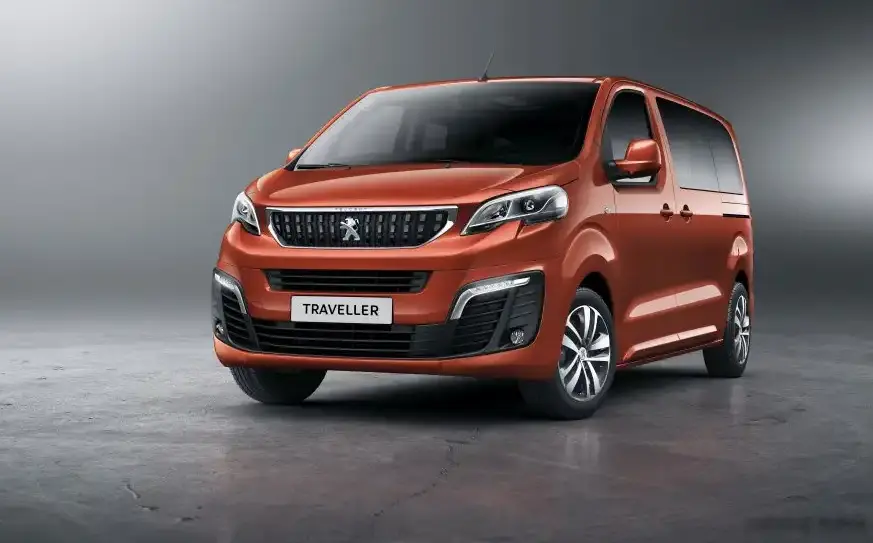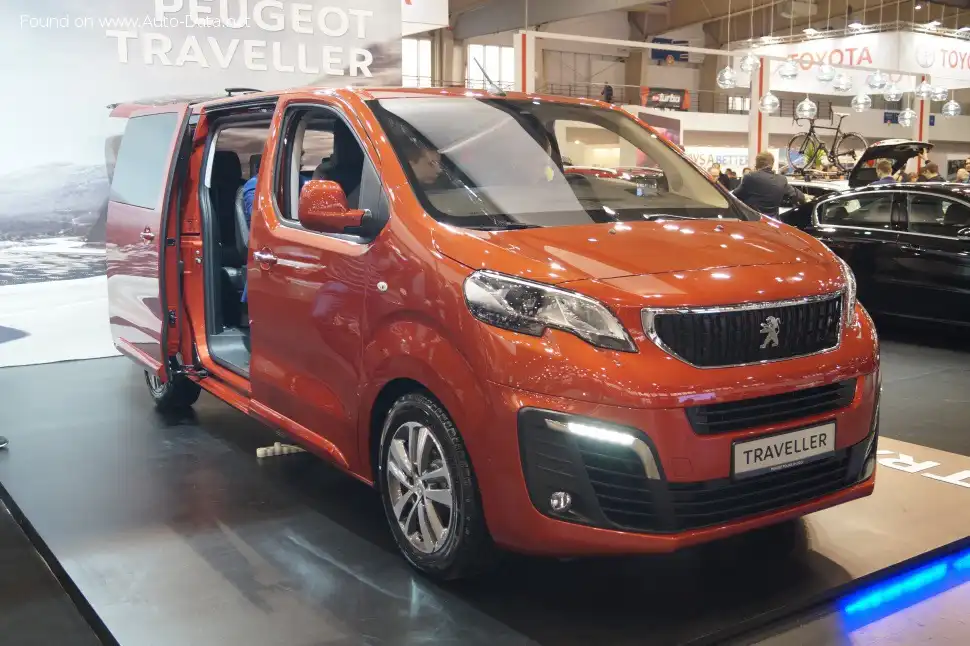
The Peugeot Traveller L2 e-Traveller 75 kWh, producing 136 horsepower, marked Peugeot’s initial foray into the electric minivan segment. Introduced in October 2020 and manufactured through April 2024, this variant is part of the second-generation Traveller (codenamed ZT_), built on the EMP2 platform – a modular architecture shared with other Stellantis vehicles including the Citroën SpaceTourer and Opel Zafira Life. The e-Traveller specifically targeted families and shuttle services within the European market, offering a spacious, practical, and zero-emission transportation solution. It was positioned as a mid-range offering within the broader e-Traveller lineup, balancing range, passenger/cargo capacity, and price point.
Technical Specifications
| Brand | Peugeot |
| Model | Traveller |
| Generation | Traveller L2 |
| Type (Engine) | e-Traveller 75 kWh (136 Hp) |
| Start of production | October, 2020 |
| End of production | April, 2024 |
| Powertrain Architecture | BEV (Electric Vehicle) |
| Body type | Minivan |
| Seats | 5-8 |
| Doors | 5 |
| Fuel Type | Electricity |
| Acceleration 0 – 100 km/h | 14.3 sec |
| Acceleration 0 – 62 mph | 14.3 sec |
| Acceleration 0 – 60 mph | 13.6 sec |
| Maximum speed | 130 km/h (80.78 mph) |
| Weight-to-power ratio | 15.2 kg/Hp, 65.9 Hp/tonne |
| Weight-to-torque ratio | 7.9 kg/Nm, 125.9 Nm/tonne |
| Gross battery capacity | 75 kWh |
| Battery technology | Lithium-ion (Li-Ion) |
| Battery location | Below the floor |
| All-electric range (WLTP) | 322 km (200.08 mi) |
| Average Energy consumption (WLTP) | 27.8 kWh/100 km (44.74 kWh/100 mi) |
| Electric motor power | 136 Hp @ 5500 rpm |
| Electric motor Torque | 260 Nm (191.77 lb.-ft.) |
| Electric motor model/code | ZK01 |
| Electric motor location | Front axle, Transverse |
| Electric motor type | Synchronous |
| System power | 136 Hp @ 5500 rpm |
| System torque | 260 Nm (191.77 lb.-ft.) |
| Kerb Weight | 2065-2412 kg (4552.55 – 5317.55 lbs.) |
| Max. weight | 3100 kg (6834.33 lbs.) |
| Max load | 688-1035 kg (1516.78 – 2281.78 lbs.) |
| Trunk (boot) space – minimum | 603-798 l (21.29 – 28.18 cu. ft.) |
| Trunk (boot) space – maximum | 2700 l (95.35 cu. ft.) |
| Length | 4959 mm (195.24 in.) |
| Width | 1920 mm (75.59 in.) |
| Width including mirrors | 2204 mm (86.77 in.) |
| Height | 1877 mm (73.9 in.) |
| Wheelbase | 3275 mm (128.94 in.) |
| Front track | 1630 mm (64.17 in.) |
| Rear (Back) track | 1618 mm (63.7 in.) |
| Front overhang | 881 mm (34.69 in.) |
| Rear overhang | 803 mm (31.61 in.) |
| Minimum turning circle | 12.9 m (42.32 ft.) |
| Drivetrain Architecture | One electric motor drives the front wheels. |
| Drive wheel | Front wheel drive |
| Number of gears | 1 gears, automatic transmission |
| Front suspension | Independent type McPherson |
| Rear suspension | Independent coil spring |
| Front brakes | Ventilated discs |
| Rear brakes | Disc |
| Steering type | Steering rack and pinion |
| Power steering | Electric Steering |
| Tires size | 225/55 R17 101V |
| Wheel rims size | 17 |
Powertrain & Engine Architecture
The Peugeot e-Traveller L2 75 kWh employs a fully electric powertrain. Its core component is a synchronous electric motor, designated ZK01, generating 136 horsepower at 5500 rpm and 260 Nm (191.77 lb.-ft.) of torque. This motor is mounted transversely on the front axle, powering the front wheels. Power delivery is managed by a single-speed automatic transmission, a common characteristic of electric vehicles. The 75 kWh lithium-ion battery pack is strategically positioned under the vehicle floor, contributing to a lower center of gravity and maximizing interior space. The battery supports fast charging, achieving an 80% charge in approximately 31 minutes using a 100kW DC fast charger. Notably, the vehicle lacks a traditional internal combustion engine, exhaust system, or multi-gear transmission, simplifying the mechanical layout and reducing maintenance demands.
Driving Characteristics
The 136 hp electric motor delivers adequate, though not particularly sporty, performance for the e-Traveller L2. Acceleration from 0-60 mph requires approximately 13.6 seconds, with a top speed electronically limited to 80.78 mph. The instant torque inherent in electric motors provides brisk acceleration at lower speeds, making it well-suited for urban environments. The single-speed transmission ensures seamless acceleration, eliminating the gear changes found in conventional vehicles. Compared to petrol or diesel-powered Traveller variants, the e-Traveller prioritizes smooth, quiet operation over outright speed. The battery pack’s weight does influence handling, resulting in a slightly less agile feel compared to lighter versions. Regenerative braking is adjustable, allowing drivers to customize the deceleration level when lifting off the accelerator, thereby enhancing range.
Equipment & Trim Levels
The e-Traveller L2 75 kWh generally came equipped with a comprehensive suite of standard features. These typically included air conditioning, an 8-inch touchscreen infotainment system with Apple CarPlay and Android Auto compatibility, a digital instrument cluster, and a range of safety technologies such as automatic emergency braking, lane departure warning, and speed limit recognition. Interior upholstery was commonly cloth, with optional leather upgrades available. Higher trim levels offered enhancements like a panoramic sunroof, heated seats, and advanced driver-assistance systems, including adaptive cruise control and blind-spot monitoring. The “L2” designation signifies a longer wheelbase compared to the standard Traveller, providing increased space for rear passengers and a larger cargo area.
Chassis & Braking
The e-Traveller L2 features an independent McPherson strut suspension at the front and an independent coil spring suspension at the rear. This configuration provides a comfortable ride, effectively absorbing road imperfections. Ventilated disc brakes are fitted to the front wheels, while solid discs are used at the rear. The braking system incorporates ABS (Anti-lock Braking System) and Electronic Stability Control for enhanced safety. Steering is electrically assisted, offering light and precise control. The vehicle is equipped with 225/55 R17 tires mounted on 17-inch alloy wheels.
Market Reception & Comparison
The Peugeot e-Traveller L2 75 kWh received generally positive reviews for its spacious interior, comfortable ride quality, and zero-emission operation. However, critics noted its relatively limited range compared to some competitors and its higher purchase price as potential drawbacks. Compared to petrol and diesel versions of the Traveller, the e-Traveller offered a quieter and more refined driving experience, albeit with a trade-off in performance and range. Energy consumption was rated at 27.8 kWh/100 km (44.74 kWh/100 mi), roughly equivalent to 75 MPGe. The e-Traveller competed with other electric minivans, such as the Volkswagen ID. Buzz and the Mercedes-Benz EQV.
Legacy
The Peugeot e-Traveller L2 75 kWh represents a significant step towards electrification for the Peugeot brand. While early electric vehicle powertrains often raised concerns about long-term reliability, the e-Traveller’s relatively simple electric drivetrain has proven to be generally dependable. In the used car market, these vehicles maintain their value reasonably well, particularly those with well-maintained batteries. The e-Traveller paved the way for future electric models from Peugeot and Stellantis, demonstrating the feasibility of electric power in the minivan segment. The longevity of the battery remains a crucial consideration for prospective buyers, with battery health checks becoming increasingly important during pre-purchase inspections.