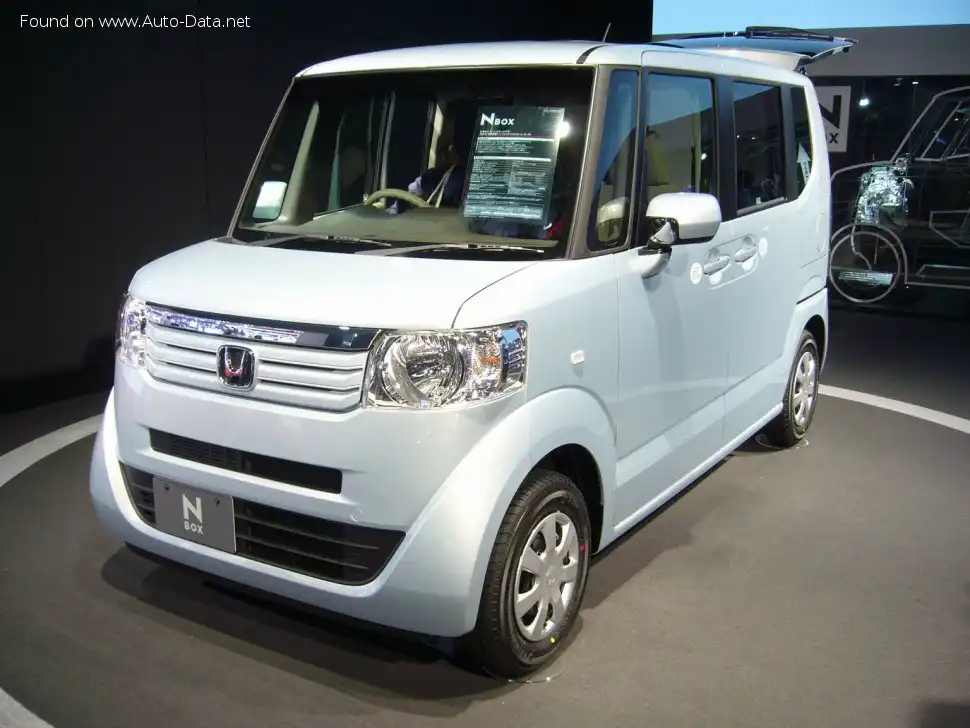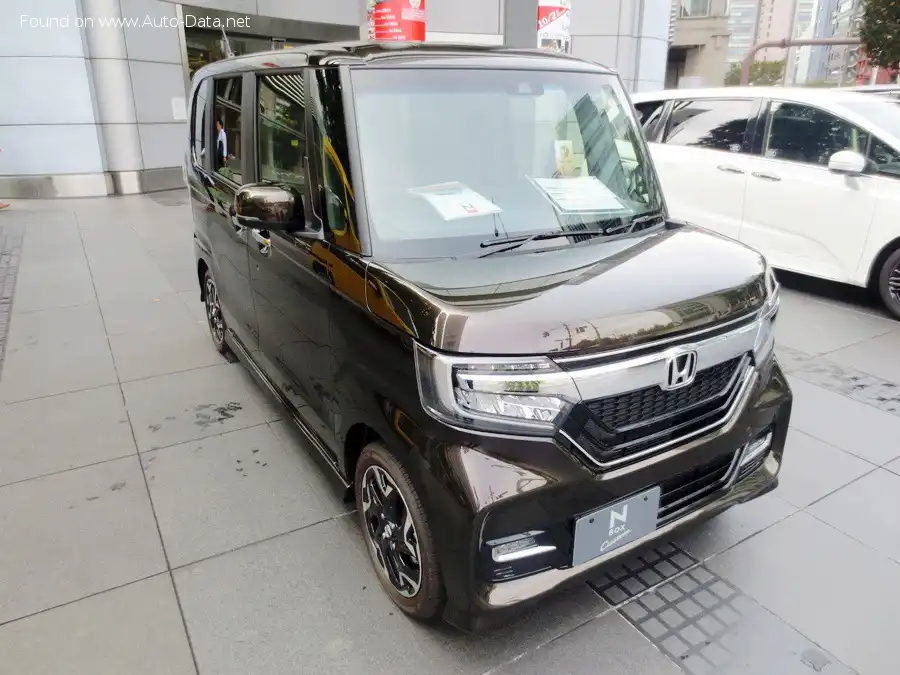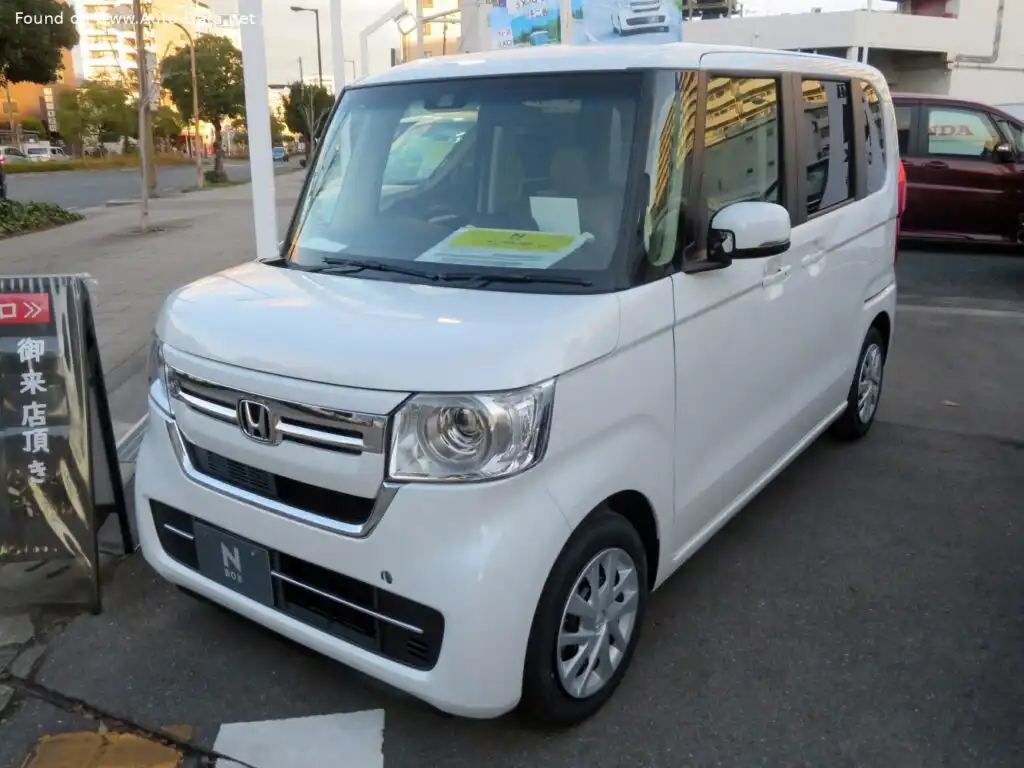
The Honda N-Box II, specifically the 0.7 (58 hp) variant with a continuously variable transmission (CVT) and four-wheel drive, represents a significant iteration in Honda’s “kei car” lineup. Introduced with the facelift in 2020, this model builds upon the success of the original N-Box, offering a practical and space-efficient solution for urban mobility, primarily targeted at the Japanese domestic market. The N-Box II falls within the second generation of the N-Box (introduced in 2017), and the 0.7L engine/CVT/4WD combination represents an entry-level configuration within the broader range of available powertrains and trim levels.
Technical Specifications
| Brand | Honda |
| Model | N-Box |
| Generation | N-Box II (facelift 2021) |
| Type (Engine) | 0.7 (58 Hp) 4WD CVT |
| Start of production | 2020 |
| Powertrain Architecture | Internal Combustion engine |
| Body type | MPV |
| Seats | 4 |
| Doors | 5 |
| Fuel consumption (urban) | 5.7 l/100 km (41.3 US mpg, 49.6 UK mpg, 17.5 km/l) |
| Fuel consumption (extra urban) | 4.7 l/100 km (50 US mpg, 60.1 UK mpg, 21.3 km/l) |
| Fuel consumption (combined) | 3.9 l/100 km (60.3 US mpg, 72.4 UK mpg, 25.6 km/l) |
| Fuel Type | Petrol (Gasoline) |
| Weight-to-power ratio | 16.4 kg/Hp, 61.1 Hp/tonne |
| Weight-to-torque ratio | 14.6 kg/Nm, 68.4 Nm/tonne |
| Power | 58 Hp @ 7300 rpm |
| Power per litre | 88.1 Hp/l |
| Torque | 65 Nm @ 4800 rpm (47.94 lb.-ft. @ 4800 rpm) |
| Engine layout | Front, Transverse |
| Engine Model/Code | S07B |
| Engine displacement | 658 cm3 (40.15 cu. in.) |
| Number of cylinders | 3 |
| Engine configuration | Inline |
| Cylinder Bore | 60 mm (2.36 in.) |
| Piston Stroke | 77.6 mm (3.06 in.) |
| Compression ratio | 12:1 |
| Number of valves per cylinder | 4 |
| Fuel injection system | Multi-port manifold injection |
| Engine aspiration | Naturally aspirated engine |
| Valvetrain | DOHC |
| Kerb Weight | 950-1020 kg (2094.39 – 2248.72 lbs.) |
| Fuel tank capacity | 25 l (6.6 US gal | 5.5 UK gal) |
| Length | 3395 mm (133.66 in.) |
| Width | 1475 mm (58.07 in.) |
| Height | 1790 mm (70.47 in.) |
| Wheelbase | 2520 mm (99.21 in.) |
| Front track | 1305 mm (51.38 in.) |
| Rear track | 1305 mm (51.38 in.) |
| Ride height (ground clearance) | 145 mm (5.71 in.) |
| Minimum turning circle | 9.4 m (30.84 ft.) |
| Drive wheel | All wheel drive (4×4) |
| Number of gears and type of gearbox | automatic transmission CVT |
| Front suspension | Independent type McPherson |
| Rear suspension | Torsion |
| Front brakes | Ventilated discs |
| Rear brakes | Disc |
| Assisting systems | ABS (Anti-lock braking system) |
| Steering type | Steering rack and pinion |
| Power steering | Electric Steering |
| Tires size | 155/65 R14 |
| Wheel rims size | 14 |
INTRODUCTION
The Honda N-Box II, facelifted in 2020, continues Honda’s tradition of producing highly practical and efficient kei cars. The N-Box, in general, is known for its exceptionally spacious interior for its diminutive exterior size, achieved through a clever center-tank fuel layout and a tall, boxy design. This 0.7L 4WD CVT variant is positioned as the entry point to the N-Box II range, appealing to buyers prioritizing affordability and fuel efficiency. It’s a common sight on Japanese roads, serving as a versatile vehicle for commuting, small family transport, and navigating the often-congested urban environments.
Powertrain & Engine Architecture
At the heart of this N-Box variant lies the S07B engine, a 658cc inline three-cylinder petrol engine. This engine utilizes multi-point fuel injection and a double overhead camshaft (DOHC) valvetrain to maximize efficiency and power output within the constraints of the kei car regulations. The engine is naturally aspirated, meaning it doesn’t employ a turbocharger or supercharger. The 58 horsepower peak is achieved at 7300 rpm, while the 65 Nm (47.94 lb-ft) of torque is delivered at 4800 rpm. This engine is paired with a continuously variable transmission (CVT), which prioritizes smooth acceleration and fuel economy over outright performance. The CVT is tuned for efficiency, and while it doesn’t offer the sporty feel of a traditional automatic or manual transmission, it provides a comfortable and predictable driving experience. The four-wheel drive system is a part-time system, engaging the rear wheels when traction is needed, enhancing stability in slippery conditions.
Driving Characteristics
The 0.7L engine and CVT combination in the N-Box II delivers adequate, though not exhilarating, performance. Acceleration is linear and predictable, suitable for city driving and moderate highway speeds. The CVT effectively keeps the engine in its optimal power band, minimizing the need for downshifts. Compared to higher-spec N-Box models equipped with a 660cc turbocharged engine, this variant feels noticeably less powerful, particularly when fully loaded or climbing hills. The 4WD system adds weight and slightly reduces fuel economy compared to the 2WD version, but it provides enhanced grip and confidence in inclement weather. The steering is light and precise, making it easy to maneuver in tight spaces. Overall, the driving experience is geared towards comfort and practicality rather than sporty handling.
Equipment & Trim Levels
The base-level N-Box II 0.7 4WD CVT typically comes equipped with essential features such as air conditioning, power windows, power door locks, and an audio system. Safety features include ABS (Anti-lock Braking System) and airbags. Higher trim levels add features like alloy wheels, a touchscreen infotainment system, keyless entry, and advanced safety technologies like Honda Sensing, which includes features like adaptive cruise control and lane keeping assist. Interior upholstery is typically cloth, with a functional and durable design. Optional extras could include upgraded audio systems, navigation, and various cosmetic enhancements.
Chassis & Braking
The N-Box II utilizes a McPherson strut independent suspension at the front and a torsion beam suspension at the rear. This setup provides a comfortable ride quality, absorbing bumps and irregularities in the road surface effectively. The front brakes are ventilated discs, offering good stopping power, while the rear brakes are discs. The relatively light weight of the vehicle contributes to its manageable braking performance. The chassis is designed to maximize interior space while maintaining structural rigidity. The 4WD system adds some weight, but the overall balance remains neutral and predictable.
Market Reception & Comparison
The Honda N-Box has consistently been a top-selling kei car in Japan, and the 0.7L 4WD CVT variant contributes significantly to its overall success. Critics generally praise the N-Box for its spacious interior, fuel efficiency, and practicality. Compared to other kei car rivals like the Suzuki Spacia and Daihatsu Tanto, the N-Box is often lauded for its superior interior design and overall refinement. The 0.7L engine offers excellent fuel economy, making it an attractive option for budget-conscious buyers. However, some reviewers note that the engine can feel underpowered, especially when carrying passengers or cargo. Reliability is generally very good, as is typical for Honda vehicles.
Legacy
The Honda N-Box II, including the 0.7L 4WD CVT variant, has established itself as a popular and reliable choice in the Japanese kei car market. Its efficient powertrain and practical design have resonated with a wide range of buyers. While not typically exported in large numbers, the N-Box represents Honda’s commitment to innovative and space-efficient vehicle design. On the used car market, these models are generally well-regarded for their durability and low running costs, making them a sensible choice for those seeking an affordable and practical urban vehicle. The S07B engine, while simple in design, has proven to be a robust and dependable unit, contributing to the N-Box’s long-term reliability.