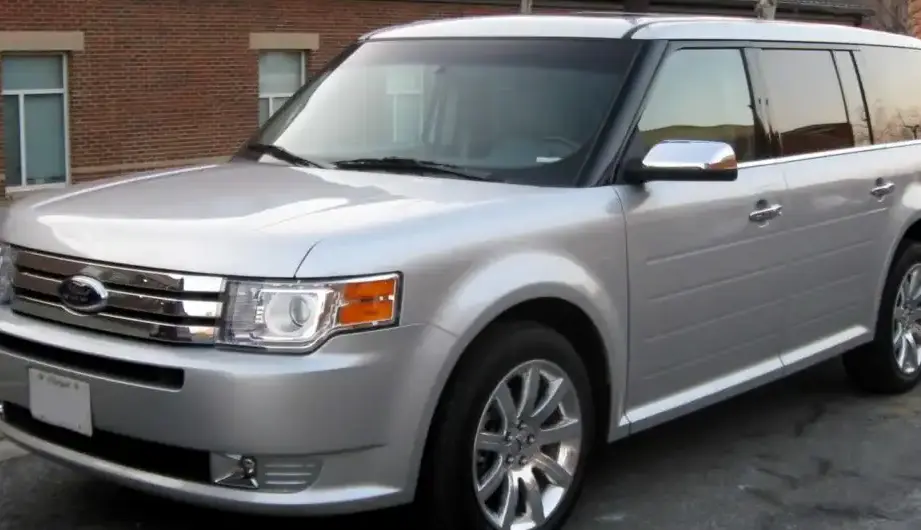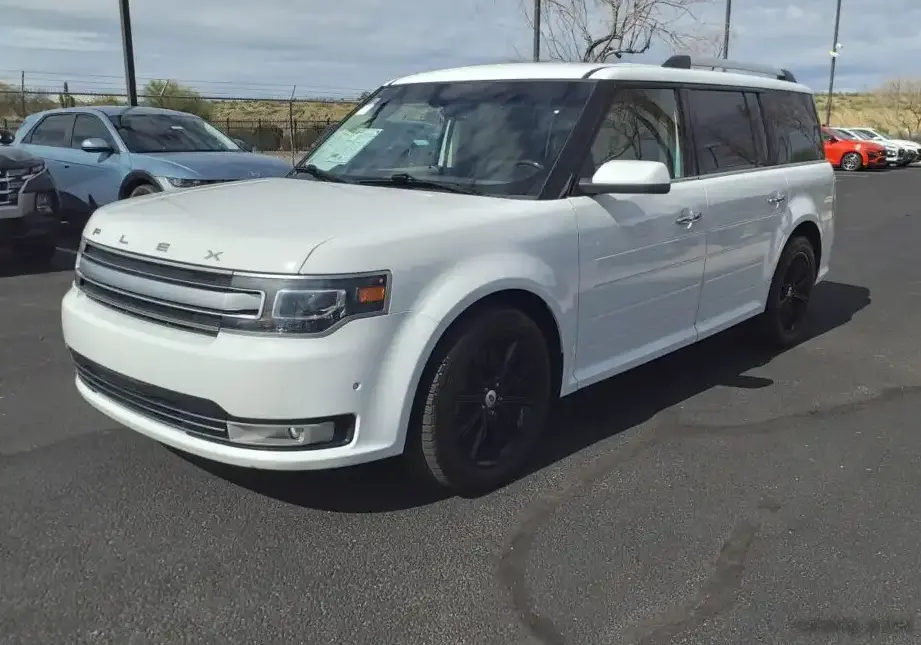
The Ford Flex, particularly the facelifted version produced from 2013 to 2019, represented a unique offering in the American automotive landscape. This boxy, three-row SUV aimed to blend the practicality of a minivan with the styling of a traditional SUV. Among the various configurations available, the 3.5-liter V6 paired with a six-speed automatic transmission became a popular choice, offering a balance of power, space, and relative affordability. This variant occupied a mid-range position within the Flex lineup, sitting above the base models but below the more luxurious and often all-wheel-drive equipped trims.
Technical Specifications
| Brand | Ford |
| Model | Flex |
| Generation | Flex (facelift 2013) |
| Type (Engine) | 3.5 V6 (286 Hp) Automatic |
| Start of production | 2013 |
| End of production | 2019 |
| Powertrain Architecture | Internal Combustion engine |
| Body type | SUV |
| Seats | 6-7 |
| Doors | 5 |
| Fuel consumption (economy) – urban | 13.1 l/100 km (18 US mpg, 21.6 UK mpg, 7.6 km/l) |
| Fuel consumption (economy) – extra urban | 9.4 l/100 km (25 US mpg, 30.1 UK mpg, 10.6 km/l) |
| Fuel consumption (economy) – combined | 11.8 l/100 km (19.9 US mpg, 23.9 UK mpg, 8.5 km/l) |
| Fuel Type | Petrol (Gasoline) |
| Maximum speed | 185 km/h (114.95 mph) |
| Power | 286 Hp @ 6500 rpm |
| Power per litre | 81.8 Hp/l |
| Torque | 343 Nm @ 4000 rpm (252.98 lb.-ft. @ 4000 rpm) |
| Engine layout | Front, Transverse |
| Engine Model/Code | Duratec 35 |
| Engine displacement | 3496 cm3 (213.34 cu. in.) |
| Number of cylinders | 6 |
| Engine configuration | V-engine |
| Cylinder Bore | 92.5 mm (3.64 in.) |
| Piston Stroke | 86.7 mm (3.41 in.) |
| Compression ratio | 10.3:1 |
| Number of valves per cylinder | 4 |
| Fuel injection system | Multi-port manifold injection |
| Engine aspiration | Naturally aspirated engine |
| Engine oil capacity | 5.7 l (6.02 US qt | 5.02 UK qt) |
| Coolant | 12.5 l (13.21 US qt | 11 UK qt) |
| Trunk (boot) space – minimum | 566 l (19.99 cu. ft.) |
| Fuel tank capacity | 71 l (18.76 US gal | 15.62 UK gal) |
| Length | 5130 mm (201.97 in.) |
| Width | 1930 mm (75.98 in.) |
| Height | 1727 mm (67.99 in.) |
| Wheelbase | 2995 mm (117.91 in.) |
| Front track | 1661 mm (65.39 in.) |
| Rear (Back) track | 1661 mm (65.39 in.) |
| Ride height (ground clearance) | 150 mm (5.91 in.) |
| Drivetrain Architecture | The Internal combustion engine (ICE) drives the front wheels of the vehicle. |
| Drive wheel | Front wheel drive |
| Number of gears and type of gearbox | 6 gears, automatic transmission |
| Front brakes | Ventilated discs |
| Rear brakes | Disc |
| Assisting systems | ABS (Anti-lock braking system) |
| Tires size | 235/60 R17 |
| Wheel rims size | 17 |
Powertrain & Engine Architecture
The heart of this Flex variant is Ford’s Duratec 35 engine, a 3.5-liter naturally aspirated V6. This engine, part of Ford’s Duratec family, utilizes a 60-degree V-angle and features a cast aluminum engine block with cast iron cylinder liners. The engine employs multi-port fuel injection, delivering fuel directly into the intake ports, and a dual overhead camshaft (DOHC) valvetrain with four valves per cylinder. This configuration contributes to a relatively broad torque curve and decent peak horsepower. The engine’s output of 286 horsepower at 6500 rpm and 253 lb-ft of torque at 4000 rpm provided adequate power for moving the Flex’s substantial weight. Paired with the engine is a six-speed automatic transmission, designed to provide smooth shifts and optimize fuel efficiency. This transmission was a common choice for Ford vehicles of this era, known for its reliability and responsiveness.
Driving Characteristics
The 3.5L V6 and six-speed automatic combination in the Flex delivered a comfortable, if not particularly sporty, driving experience. Acceleration was adequate for everyday driving and highway merging, but the Flex’s weight (over 4,500 pounds) meant it wasn’t a particularly quick vehicle. The automatic transmission was tuned for smooth operation, prioritizing comfort over aggressive shifting. Compared to the available EcoBoost turbocharged engines, this naturally aspirated V6 offered a more linear power delivery, lacking the low-end torque of the turbo variants. However, it also avoided the potential turbo lag associated with those engines. The six-speed automatic’s gear ratios were optimized for cruising, contributing to relatively quiet highway driving. Compared to manual transmission equipped models (which were rare on the Flex), the automatic offered greater convenience, especially in city traffic.
Equipment & Trim Levels
The 3.5L V6 automatic Flex typically came standard with features like tri-zone automatic climate control, a rearview camera, Ford’s Sync infotainment system, and power-adjustable front seats. Higher trim levels, such as the Limited, added features like leather upholstery, heated front seats, a power liftgate, and a premium sound system. Optional extras included all-wheel drive, a navigation system, and a DVD entertainment system for rear passengers. Interior upholstery generally consisted of cloth in the base trims, with leather becoming available on higher-end models. The dashboard layout was functional and straightforward, prioritizing ease of use over flashy design.
Chassis & Braking
The Ford Flex utilized a unibody construction with an independent front suspension and a multi-link rear suspension. The suspension was tuned for comfort, providing a relatively smooth ride over various road surfaces. Front brakes were ventilated discs, providing adequate stopping power, while rear brakes were solid discs. Anti-lock brakes (ABS) were standard equipment. The Flex’s relatively high center of gravity and weight meant that handling wasn’t particularly sharp, but it was predictable and stable. Stabilizer bars were included both front and rear to help reduce body roll during cornering.
Market Reception & Comparison
The Ford Flex, and specifically the 3.5L V6 automatic variant, received generally positive reviews for its spacious interior, comfortable ride, and unique styling. Critics praised its practicality and versatility, making it a popular choice for families. However, its fuel economy was often cited as a weakness, especially compared to smaller crossovers. Compared to the EcoBoost variants, the 3.5L V6 offered a lower price point and a simpler powertrain, making it attractive to buyers who prioritized value and reliability over outright performance. The 3.5L V6 also tended to be more reliable than the more complex EcoBoost engines, requiring less frequent maintenance.
Legacy
The Ford Flex was discontinued in 2019, but it remains a popular choice on the used car market, particularly among those seeking a spacious and distinctive SUV. The 3.5L V6 powertrain has proven to be relatively reliable, with many examples exceeding 150,000 miles with proper maintenance. Common issues include occasional timing chain noise and potential fuel injector problems, but these are generally not major concerns. The Flex’s unique styling and spacious interior have given it a cult following, and it is often praised for its practicality and comfort. Its discontinuation has left a void in the market for a boxy, three-row SUV with a focus on space and functionality.