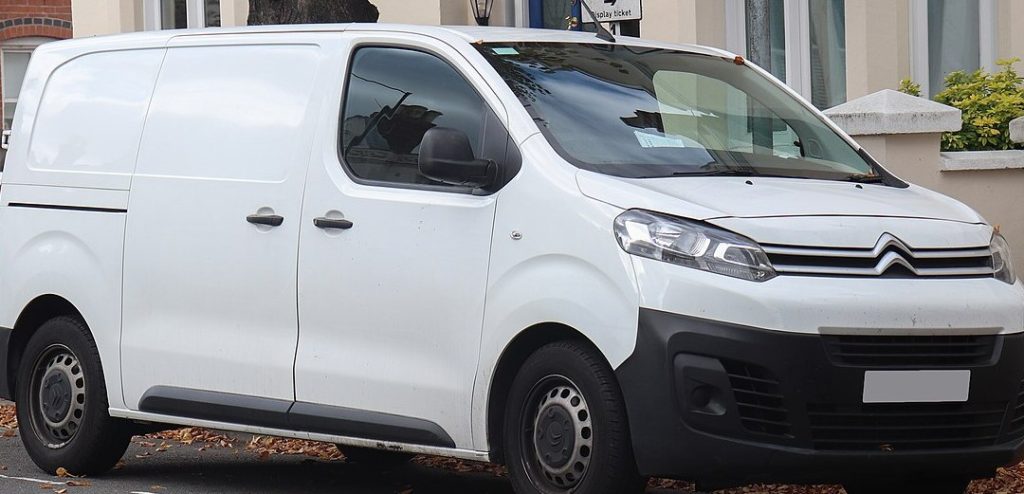
The Citroen Jumpy III XS 1.6 BlueHDi 95 horsepower variant was a popular choice in the European commercial vehicle market from its introduction in September 2016 until its production run ended in May 2019. Positioned as an entry-level offering within the third generation Jumpy (also sold as Peugeot Expert and Fiat Scudo due to the PSA Group partnership), this model prioritized fuel efficiency and affordability over outright performance. It served as a workhorse for businesses and tradespeople requiring a practical and economical van for urban and regional deliveries. The Jumpy III XS, built on the EMP2 platform, represented a significant step forward in terms of payload capacity, comfort, and technology compared to its predecessors.
Technical Specifications
| Brand | Citroen |
| Model | Jumpy |
| Generation | Jumpy III XS |
| Type (Engine) | 1.6 BlueHDi (95 Hp) |
| Start of production | September, 2016 |
| End of production | May, 2019 |
| Powertrain Architecture | Internal Combustion engine |
| Body type | Minivan |
| Seats | 2-3 |
| Doors | 4 |
| Fuel consumption (urban) | 6 l/100 km (39.2 US mpg, 47.1 UK mpg, 16.7 km/l) |
| Fuel consumption (extra urban) | 5.2 l/100 km (45.2 US mpg, 54.3 UK mpg, 19.2 km/l) |
| Fuel consumption (combined) | 5.5 l/100 km (42.8 US mpg, 51.4 UK mpg, 18.2 km/l) |
| CO2 emissions | 144 g/km |
| Fuel Type | Diesel |
| Maximum speed | 145 km/h (90.1 mph) |
| Emission standard | Euro 6 |
| Weight-to-power ratio | 15.8 kg/Hp, 63.5 Hp/tonne |
| Weight-to-torque ratio | 7.1 kg/Nm, 140.3 Nm/tonne |
| Power | 95 Hp @ 3750 rpm |
| Power per litre | 60.9 Hp/l |
| Torque | 210 Nm @ 1500 rpm (154.89 lb.-ft. @ 1500 rpm) |
| Engine layout | Front, Transverse |
| Engine Model/Code | BHS DV6FDU |
| Engine displacement | 1560 cm3 (95.2 cu. in.) |
| Number of cylinders | 4 |
| Engine configuration | Inline |
| Number of valves per cylinder | 4 |
| Fuel injection system | Diesel Commonrail |
| Engine aspiration | Turbocharger, Intercooler |
| Engine oil capacity | 5.5 l (5.81 US qt | 4.84 UK qt) |
| Kerb Weight | 1497-1740 kg (3300.32 – 3836.04 lbs.) |
| Max. weight | 2610 kg (5754.07 lbs.) |
| Max load | 870-1113 kg (1918.02 – 2453.74 lbs.) |
| Fuel tank capacity | 70 l (18.49 US gal | 15.4 UK gal) |
| Permitted trailer load with brakes (12%) | 1800 kg (3968.32 lbs.) |
| Permitted trailer load without brakes | 750 kg (1653.47 lbs.) |
| Permitted towbar download | 72 kg (158.73 lbs.) |
| Length | 4609 mm (181.46 in.) |
| Width | 1920 mm (75.59 in.) |
| Width including mirrors | 2204 mm (86.77 in.) |
| Height | 1877-1950 mm (73.9 – 76.77 in.) |
| Wheelbase | 2925 mm (115.16 in.) |
| Front track | 1630 mm (64.17 in.) |
| Front overhang | 881 mm (34.69 in.) |
| Rear overhang | 803 mm (31.61 in.) |
| Drivetrain Architecture | The Internal combustion engine (ICE) drives the front wheels of the vehicle. |
| Drive wheel | Front wheel drive |
| Number of gears and type of gearbox | 5 gears, manual transmission |
| Front suspension | Independent type McPherson |
| Front brakes | Ventilated discs |
| Rear brakes | Ventilated discs |
| Assisting systems | ABS (Anti-lock braking system) |
| Steering type | Steering rack and pinion |
| Tires size | 215/65 R16 |
INTRODUCTION
The Citroen Jumpy III XS 1.6 BlueHDi 95, produced between 2016 and 2019, was a key component of Citroen’s light commercial vehicle lineup. It represented the third generation of the Jumpy, a van known for its practicality and versatility. The “XS” designation indicated a medium length body style, offering a balance between cargo space and maneuverability. This particular variant, equipped with the 1.6-liter BlueHDi engine and a five-speed manual transmission, was designed to appeal to businesses seeking a cost-effective and reliable van for everyday use. It competed directly with similar offerings from Ford (Transit Courier/Connect), Volkswagen (Caddy), and Renault (Kangoo).
Powertrain & Engine Architecture
At the heart of the Jumpy III XS 1.6 BlueHDi 95 lies the PSA Group’s DV6FDU engine, a 1.6-liter inline-four cylinder diesel engine. This engine, identified by the code BHS, is a member of the BlueHDi family, incorporating advanced technologies to reduce emissions and improve fuel economy. It features a turbocharger with an intercooler to boost power output, and a common-rail direct fuel injection system operating at high pressure (typically around 1800 bar) for precise fuel delivery. The engine utilizes four valves per cylinder and an overhead camshaft. The 95 horsepower output is achieved at 3750 rpm, while peak torque of 210 Nm (154.89 lb.-ft.) is available from just 1500 rpm, providing good low-end pulling power. The five-speed manual transmission was the standard offering for this variant, chosen for its simplicity and cost-effectiveness. The gear ratios were optimized for fuel efficiency and everyday driving, rather than outright performance.
Driving Characteristics
The Jumpy III XS 1.6 BlueHDi 95, with its 95 horsepower and 210 Nm of torque, wasn’t designed for speed. Acceleration was adequate for urban and highway driving when unladen, but performance diminished noticeably when carrying a full load. The engine’s strength lay in its responsiveness at lower revs, making it well-suited for stop-and-go traffic. The five-speed manual transmission offered a reasonable spread of gears, but the relatively short gearing meant that engine speeds were higher at cruising speeds, potentially impacting fuel economy. Compared to higher-powered Jumpy variants (like those with the 2.0 BlueHDi engine), this 1.6-liter version felt less refined and required more frequent gear changes, especially when climbing hills or overtaking. However, the lower power output also contributed to better fuel economy and reduced wear and tear on the engine and drivetrain.
Equipment & Trim Levels
The Jumpy III XS 1.6 BlueHDi 95 typically came with a fairly basic level of equipment, reflecting its position as an entry-level work van. Standard features generally included power steering, a driver’s airbag, ABS brakes, and a basic audio system with USB connectivity. The cabin was functional and durable, with hard-wearing plastic trim and cloth upholstery. The “XS” designation indicated a medium length body, offering a reasonable amount of cargo space. Optional extras included air conditioning, a passenger airbag, rear parking sensors, and a touchscreen infotainment system with navigation. Higher trim levels, available with more powerful engines, offered additional features such as cruise control, automatic headlights, and rain-sensing wipers.
Chassis & Braking
The Jumpy III XS utilized a front-wheel-drive layout with an independent McPherson strut suspension at the front and a semi-independent twist beam suspension at the rear. This setup provided a comfortable ride quality, even when carrying a load. The front brakes were ventilated discs, offering good stopping power, while the rear brakes were typically solid discs. ABS (Anti-lock Braking System) was standard, enhancing safety in emergency braking situations. The steering was a rack and pinion system, providing precise and responsive handling. The suspension was tuned for practicality and load-carrying capacity, rather than sporty handling. Stabilizer bars were fitted to both the front and rear axles to reduce body roll during cornering.
Market Reception & Comparison
The Citroen Jumpy III XS 1.6 BlueHDi 95 was generally well-received by critics as a practical and economical work van. Its fuel efficiency was a major selling point, and its low running costs made it attractive to businesses. However, some reviewers noted that the engine lacked power when fully loaded, and the interior was somewhat basic. Compared to the more powerful Jumpy variants, this 1.6-liter version offered a lower purchase price but compromised on performance. Against competitors like the Ford Transit Connect and Volkswagen Caddy, the Jumpy offered a competitive level of practicality and fuel economy, but the Caddy was often praised for its higher build quality and more refined interior.
Legacy
The 1.6 BlueHDi engine, while generally reliable, has been known to exhibit issues with the diesel particulate filter (DPF) if not driven on longer journeys regularly. Proper maintenance, including regular oil changes and DPF regeneration, is crucial for ensuring the longevity of this powertrain. In the used car market, the Jumpy III XS 1.6 BlueHDi 95 remains a popular choice for businesses and tradespeople seeking an affordable and dependable van. Its relatively low purchase price and good fuel economy continue to make it an attractive option, despite its modest performance. The availability of spare parts is generally good, and the van’s simple mechanical design makes it relatively easy to maintain and repair.