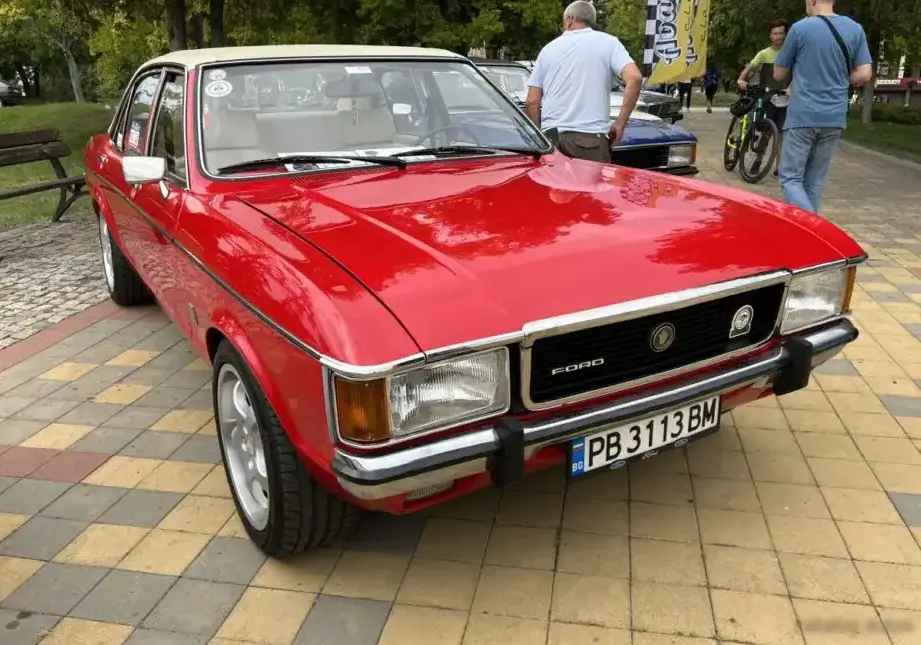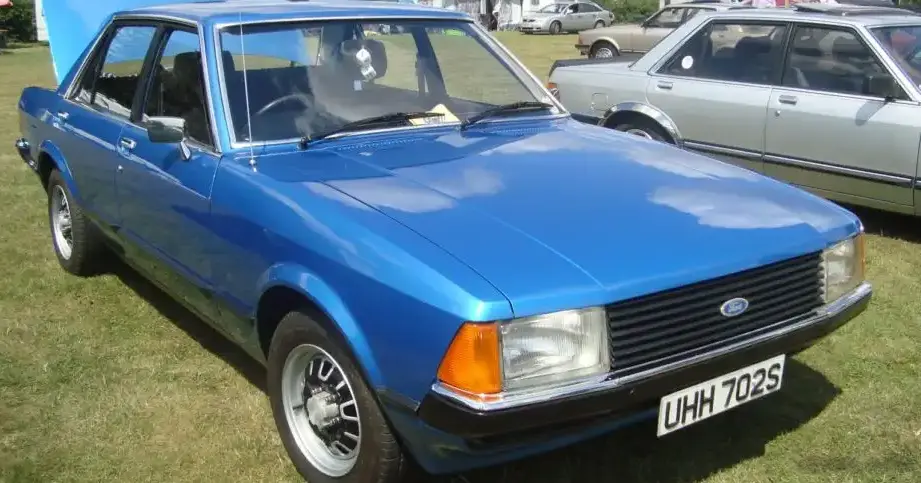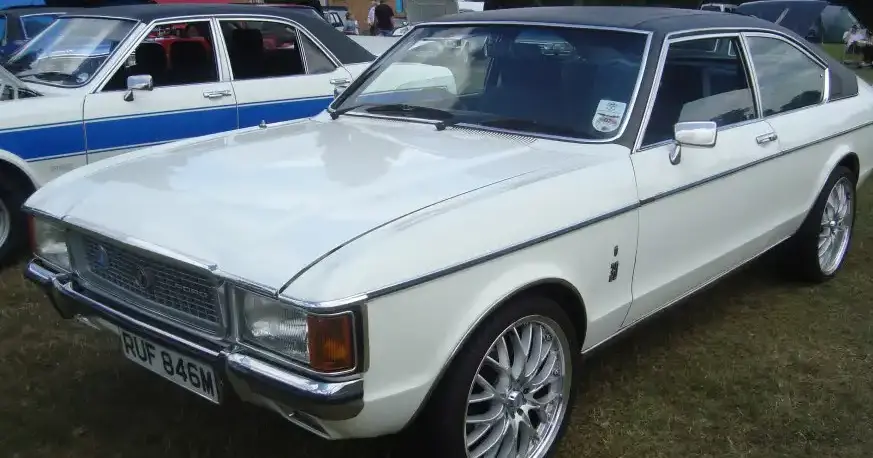
The Ford Granada Coupe (GGCL) 2.3, produced between 1972 and 1976, represented a significant offering in Ford of Britain’s large family car lineup. Positioned as a stylish alternative to the four-door Granada saloon, the Coupe aimed to capture a segment of the market seeking a more sporting and individualistic vehicle. The GGCL designation specifically refers to the coupe body style, while the 2.3 designation indicates the engine displacement. This variant, producing 107 horsepower, served as a mid-range option within the Granada Coupe range, offering a balance between performance and affordability. It was part of the first generation of the Granada, a car designed to consolidate several previously disparate Ford lines into a single, modern platform.
Technical Specifications
| Brand | Ford |
| Model | Granada |
| Generation | Granada Coupe (GGCL) |
| Type (Engine) | 2.3 (107 Hp) |
| Start of Production | 1972 |
| End of Production | 1976 |
| Powertrain Architecture | Internal Combustion Engine |
| Body Type | Coupe |
| Fuel Type | Petrol (Gasoline) |
| Power | 107 Hp |
| Engine Aspiration | Naturally Aspirated |
Powertrain & Engine Architecture
The heart of the Granada Coupe 2.3 was the Ford Cologne engine, a 2.3-liter inline-four cylinder unit. This engine, designated as the 2000E, was a robust and relatively simple design, featuring a cast iron block and an aluminum cylinder head. It utilized a single overhead camshaft (SOHC) design, operating two valves per cylinder. Fuel delivery was managed by a Ford-designed carburetor, typically a Zenith 34-VF, providing adequate but not exceptional fuel atomization. The engine’s 107 horsepower output at 5,000 rpm and 127 lb-ft of torque at 3,000 rpm were considered respectable for the time, but it wasn’t a particularly high-revving or powerful engine. The 2.3L engine was paired with a three-speed automatic transmission, a Borg-Warner unit, which was a popular choice for drivers prioritizing comfort and ease of use over outright performance. This transmission featured a torque converter and a relatively conventional gear selection mechanism. The automatic transmission was not known for its speed or efficiency, but it provided smooth shifts and contributed to the Granada Coupe’s comfortable cruising character.
Driving Characteristics
The Granada Coupe 2.3 Automatic offered a comfortable, if not particularly sporty, driving experience. The automatic transmission, while smooth, did detract from the engine’s available power. Acceleration was adequate for highway cruising and overtaking, but it wasn’t a quick car by any means. The three-speed automatic’s gear ratios were geared towards fuel economy and relaxed driving, rather than rapid acceleration. Compared to the manual transmission versions of the 2.3, the automatic suffered a noticeable performance penalty. The manual transmission allowed the engine to rev more freely and provided more direct control over gear selection. Higher-powered Granada Coupes, such as those equipped with the 3.0-liter V6 engine, offered significantly more performance, but at a higher price point. The suspension, consisting of independent front suspension with MacPherson struts and a live axle rear suspension with leaf springs, provided a comfortable ride, absorbing bumps and imperfections in the road reasonably well. However, the live axle rear suspension could sometimes feel unsettled on uneven surfaces.
Equipment & Trim Levels
The Granada Coupe 2.3 Automatic typically came equipped with a reasonable level of standard features for the early 1970s. These included cloth upholstery, a woodgrain-trimmed dashboard, and a basic AM radio. Power steering was often included, but air conditioning was typically an optional extra. Trim levels varied depending on the market, but generally, the 2.3 Automatic sat in the mid-range of the Granada Coupe lineup. Higher-spec models featured more luxurious interior appointments, such as leather upholstery, electric windows, and a more sophisticated sound system. Optional extras included a vinyl roof, a sunroof, and upgraded wheels. The interior design was generally functional and well-built, reflecting Ford’s commitment to quality and durability. The dashboard layout was straightforward and easy to use, with clearly labeled controls.
Chassis & Braking
The Granada Coupe utilized a body-on-frame construction, which was common for large cars of the era. This construction method provided a robust and durable chassis, but it also contributed to the car’s relatively heavy weight. The front suspension featured MacPherson struts, coil springs, and an anti-roll bar, providing good handling and stability. The rear suspension employed a live axle with leaf springs and, in most cases, lacked an anti-roll bar. Braking was initially provided by disc brakes on the front wheels and drum brakes on the rear wheels. Later models often featured disc brakes all around, offering improved stopping power. The braking system was hydraulically operated, with power assistance to reduce driver effort. Steering was typically power-assisted, making the car relatively easy to maneuver, even at low speeds.
Market Reception & Comparison
The Ford Granada Coupe 2.3 Automatic was generally well-received by critics and buyers alike. It was praised for its comfortable ride, spacious interior, and stylish design. However, some critics noted that the 2.3-liter engine and automatic transmission combination lacked the performance of some of its rivals. Fuel economy was also a concern, particularly in the wake of the 1973 oil crisis. Compared to other trims in the Granada Coupe lineup, the 2.3 Automatic offered a good balance between price and features. The 3.0-liter V6 models provided more performance, but at a higher cost. The smaller 1.6-liter and 2.0-liter models were more fuel-efficient, but they lacked the power and refinement of the 2.3. Against competitors like the Vauxhall Ventora and the Rover P6, the Granada Coupe offered a more modern design and a more competitive price.
Legacy
The Ford Granada Coupe 2.3 Automatic, while not a particularly rare or collectible car today, holds a nostalgic appeal for many enthusiasts. The Cologne engine proved to be a durable and reliable unit, and many examples are still on the road today. The automatic transmission, while not known for its longevity, can be rebuilt and maintained with relative ease. The Granada Coupe’s body-on-frame construction and relatively simple mechanicals make it a relatively straightforward car to work on for experienced mechanics. In the used car market, Granada Coupes in good condition can fetch reasonable prices, particularly those with low mileage and original features. The car represents a significant chapter in Ford’s history, marking a shift towards more modern and sophisticated designs. It remains a popular choice for classic car enthusiasts seeking a comfortable and stylish cruiser.