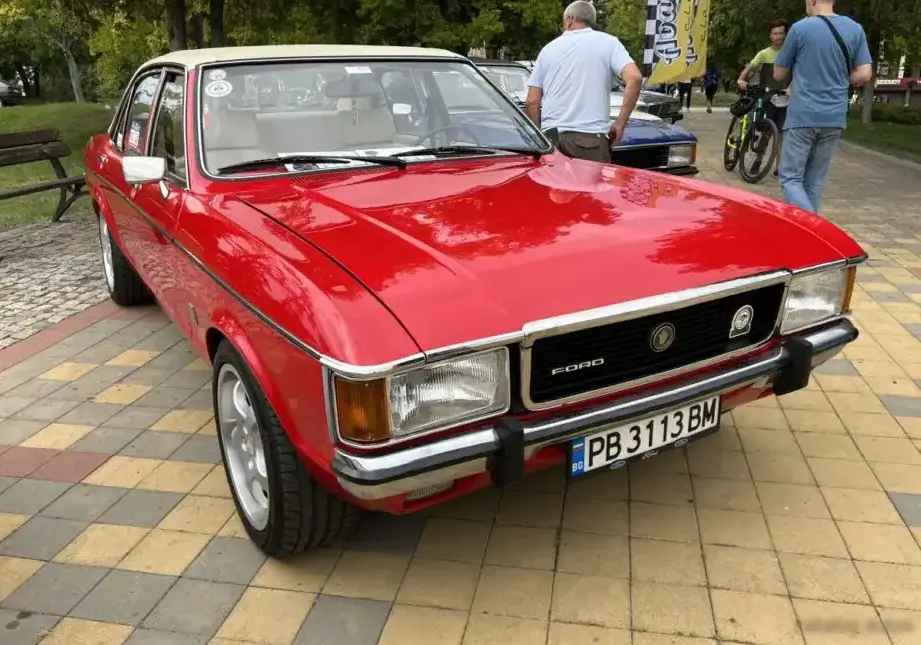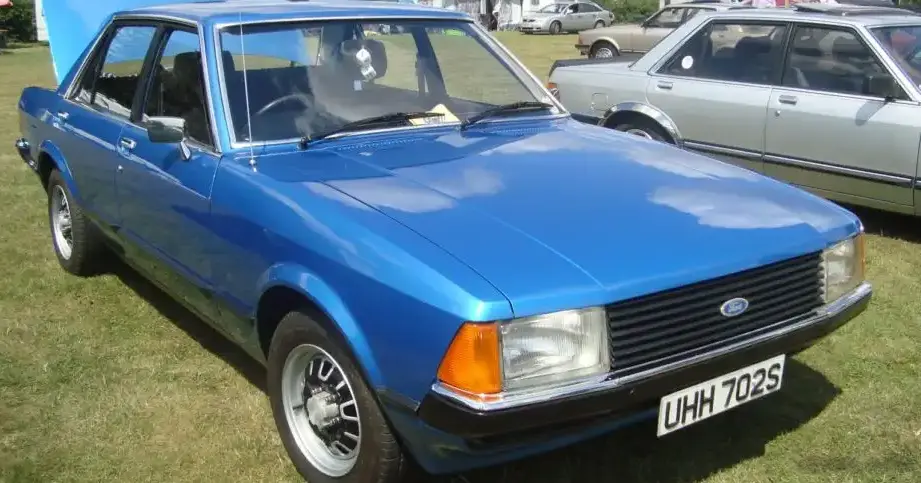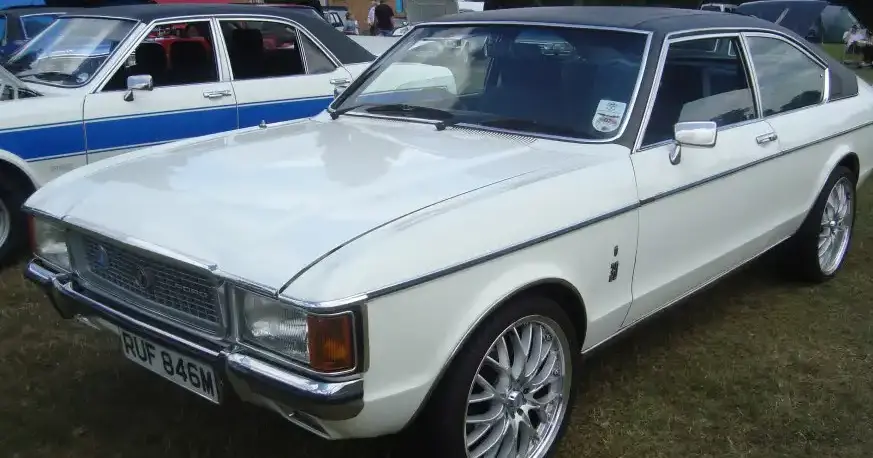
The Ford Granada Coupe (GGCL) 2.5, produced between 1972 and 1976, represented a significant offering in Ford of Britain’s large family car lineup. Positioned as a more stylish and sporting alternative to the four-door Granada saloon, the Coupe aimed to capture a segment of the market seeking a blend of comfort, performance, and aesthetic appeal. The GGCL designation specifically refers to the coupe body style, while the 2.5 denotes the engine displacement. This model occupied a mid-to-upper range position within the Granada family, offering a step up in performance and refinement compared to the smaller-engined variants, but remaining below the flagship 3.0-liter models. It was a key part of Ford’s strategy to offer a comprehensive range of vehicles catering to diverse customer preferences.
Technical Specifications
| Brand | Ford |
| Model | Granada |
| Generation | Granada Coupe (GGCL) |
| Type (Engine) | 2.5 (125 Hp) |
| Start of production | 1972 |
| End of production | 1976 |
| Powertrain Architecture | Internal Combustion Engine |
| Body type | Coupe |
| Fuel Type | Petrol (Gasoline) |
| Power | 125 Hp |
| Engine Aspiration | Naturally Aspirated |
Powertrain & Engine Architecture
The heart of the Granada Coupe 2.5 was the Ford Essex V6 engine. This 2.5-liter (152 cubic inch) engine, designated as the engine code 305, was a 60-degree V6, known for its relatively smooth operation and decent power output for its time. It featured a cast iron block and cylinder heads, with a single overhead camshaft operating two valves per cylinder. Fuel delivery was managed by a Ford-designed carburetor, typically a Zenith 360CD, providing adequate fuel atomization for the engine’s needs. The engine produced 125 horsepower at 4,800 rpm and 158 lb-ft of torque at 3,000 rpm. The V6’s design prioritized reliability and ease of maintenance over outright performance, making it a practical choice for everyday driving. The engine was typically paired with a Borg-Warner three-speed automatic transmission, although a four-speed manual transmission was also available. The automatic transmission, while offering convenience, did slightly diminish the car’s acceleration compared to the manual version.
Driving Characteristics
The Granada Coupe 2.5 with the automatic transmission offered a comfortable and relaxed driving experience. The V6 engine provided sufficient power for cruising on motorways and overtaking, although it wasn’t particularly quick. Acceleration from 0 to 60 mph took around 11-12 seconds, which was respectable for a large coupe of the era. The automatic transmission featured relatively widely spaced gear ratios, prioritizing fuel economy and smooth shifts over rapid acceleration. The power delivery was linear, with a noticeable surge in torque at mid-range revs. Compared to the manual transmission version, the automatic felt slightly less responsive, particularly when attempting quick downshifts. The suspension, consisting of independent front suspension with MacPherson struts and a live axle with trailing arms at the rear, provided a comfortable ride, absorbing bumps and imperfections in the road surface effectively. However, the car’s weight (approximately 3,200 lbs) and relatively soft suspension settings meant that it wasn’t particularly agile in corners.
Equipment & Trim Levels
The Granada Coupe 2.5 typically came well-equipped for its time, reflecting its position as a mid-to-upper range model. Standard features included reclining front seats, a wood-trimmed dashboard, and a comprehensive instrument panel. Interior upholstery was typically cloth, available in a range of colors and patterns. Optional extras included a vinyl roof, air conditioning, power steering, and a stereo radio. The Coupe also featured distinctive styling cues compared to the saloon, including a lower roofline and a more streamlined silhouette. Trim levels varied slightly depending on the market, but generally, the 2.5 Coupe offered a higher level of refinement than the base models. The interior was designed with comfort and practicality in mind, offering ample space for passengers and luggage.
Chassis & Braking
The Granada Coupe 2.5 utilized a robust chassis construction, featuring a separate body-on-frame design. This provided a solid and durable platform, but also contributed to the car’s relatively high weight. The front suspension employed MacPherson struts, offering independent wheel control and a comfortable ride. The rear suspension utilized a live axle with trailing arms and leaf springs, providing a stable and predictable handling characteristic. Braking was initially accomplished with Dunlop disc brakes at the front and drum brakes at the rear. Later models often featured disc brakes all around, improving stopping performance. Power assistance was standard for the brakes, making it easier to modulate braking force. The steering was a recirculating ball system, providing a relatively heavy but precise steering feel.
Market Reception & Comparison
The Ford Granada Coupe 2.5 was generally well-received by critics and buyers alike. It was praised for its stylish design, comfortable ride, and reliable V6 engine. However, some critics noted that the automatic transmission could feel sluggish, and the car’s handling wasn’t as sharp as some of its rivals. Compared to other trims in the Granada lineup, the 2.5 Coupe offered a good balance of performance and refinement. The smaller-engined models (e.g., 2.0-liter) were more economical but lacked the V6’s power, while the 3.0-liter models offered more performance but were more expensive. In terms of fuel economy, the 2.5 Coupe averaged around 18-22 mpg, which was typical for a large coupe of the era. Reliability was generally good, with the Essex V6 engine proving to be a durable and long-lasting unit.
Legacy
The Ford Granada Coupe 2.5 holds a respected place in British automotive history. The Essex V6 engine became a mainstay of Ford’s lineup for many years, powering a variety of vehicles. While the Granada Coupe itself was discontinued in 1976, it remains a popular classic car among enthusiasts. The 2.5-liter automatic combination, while not the most sought-after variant, is still valued for its reliability and comfortable driving experience. Today, well-maintained examples of the Granada Coupe 2.5 can fetch reasonable prices in the used car market, appealing to collectors and enthusiasts seeking a stylish and classic British coupe. Parts availability is generally good, thanks to the car’s widespread popularity and the continued support from Ford and aftermarket suppliers. The car represents a significant era in Ford’s history, showcasing the company’s commitment to producing stylish, comfortable, and reliable vehicles.