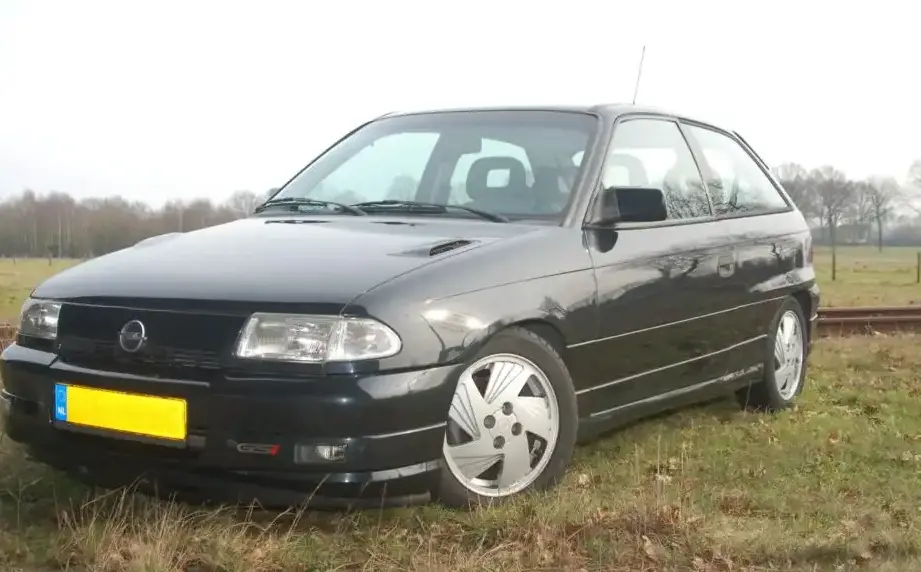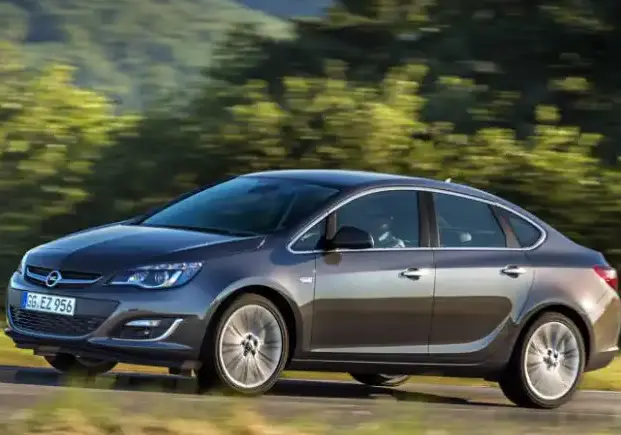
The Opel Astra J Sedan 1.4 Turbo, producing 140 horsepower, was a significant variant within the Astra J Sedan lineup, manufactured between 2012 and 2018. Positioned as a mid-range offering, it aimed to balance fuel efficiency with respectable performance, appealing to buyers seeking a practical and modern sedan. This model was primarily marketed in Europe, where the Astra J competed with rivals like the Ford Focus, Volkswagen Golf, and Peugeot 308. The Astra J Sedan itself represented Opel’s entry into the compact sedan market, offering a more traditional trunked body style alongside the hatchback version.
Technical Specifications
| Brand | Opel |
| Model | Astra |
| Generation | Astra J Sedan |
| Type (Engine) | 1.4 Turbo (140 Hp) |
| Start of production | 2012 |
| End of production | 2018 |
| Powertrain Architecture | Internal Combustion engine |
| Body type | Sedan |
| Seats | 5 |
| Doors | 4 |
| Fuel consumption (urban) | 7.6-7.9 l/100 km (30.9 – 29.8 US mpg) |
| Fuel consumption (extra urban) | 4.9-5.1 l/100 km (48 – 46.1 US mpg) |
| Fuel consumption (combined) | 5.9-6.1 l/100 km (39.9 – 38.6 US mpg) |
| CO2 emissions | 138-144 g/km |
| Fuel Type | Petrol (Gasoline) |
| Acceleration 0 – 100 km/h | 10.2 sec |
| Acceleration 0 – 62 mph | 10.2 sec |
| Acceleration 0 – 60 mph | 9.7 sec |
| Maximum speed | 207 km/h (128.62 mph) |
| Emission standard | Euro 5 |
| Power | 140 Hp @ 4900-6000 rpm |
| Torque | 200 Nm @ 1850-4900 rpm (147.51 lb.-ft. @ 1850-4900 rpm) |
| Engine layout | Front, Transverse |
| Engine Model/Code | A14NET |
| Engine displacement | 1364 cm3 (83.24 cu. in.) |
| Number of cylinders | 4 |
| Engine configuration | Inline |
| Cylinder Bore | 72.5 mm (2.85 in.) |
| Piston Stroke | 82.6 mm (3.25 in.) |
| Compression ratio | 9.5:1 |
| Number of valves per cylinder | 4 |
| Fuel injection system | Direct injection |
| Engine aspiration | Turbocharger, Intercooler |
| Engine oil capacity | 4 l (4.23 US qt | 3.52 UK qt) |
| Coolant | 6.2 l (6.55 US qt | 5.46 UK qt) |
| Max. weight | 1965 kg (4332.08 lbs.) |
| Trunk (boot) space – minimum | 460 l (16.24 cu. ft.) |
| Trunk (boot) space – maximum | 1010 l (35.67 cu. ft.) |
| Fuel tank capacity | 56 l (14.79 US gal | 12.32 UK gal) |
| Length | 4658 mm (183.39 in.) |
| Width | 1814 mm (71.42 in.) |
| Width including mirrors | 2013 mm (79.25 in.) |
| Height | 1500 mm (59.06 in.) |
| Wheelbase | 2685 mm (105.71 in.) |
| Front track | 1541 mm (60.67 in.) |
| Rear (Back) track | 1551 mm (61.06 in.) |
| Front overhang | 974 mm (38.35 in.) |
| Rear overhang | 999 mm (39.33 in.) |
| Minimum turning circle | 11.5 m (37.73 ft.) |
| Drivetrain Architecture | Front wheel drive |
| Number of gears | 6 gears, manual transmission |
| Front brakes | Ventilated discs |
| Rear brakes | Disc |
| Tires size | 215/60 R16 |
| Wheel rims size | 16 |
Powertrain & Engine Architecture
The heart of the Astra J Sedan 1.4 Turbo was the A14NET engine, a 1.4-liter inline-four cylinder gasoline engine. This engine featured direct fuel injection and a turbocharger with an intercooler, technologies designed to enhance both power output and fuel efficiency. The direct injection system allowed for precise fuel delivery, optimizing combustion and reducing emissions. The turbocharger, by forcing more air into the cylinders, increased power output without significantly increasing engine size. The engine produced 140 horsepower at 4900-6000 rpm and 200 Nm (147.51 lb.-ft.) of torque between 1850 and 4900 rpm. This configuration was paired with a six-speed manual transmission, providing drivers with a good balance of control and fuel economy. The engine’s layout was front-transverse, a common configuration for front-wheel-drive vehicles.
Driving Characteristics
The 1.4 Turbo engine in the Astra J Sedan delivered a reasonably responsive driving experience. While not a performance-oriented engine, it provided sufficient power for everyday driving situations, including highway merging and overtaking. The turbocharger did introduce a slight amount of turbo lag, but the broad torque curve helped to mitigate this effect. The six-speed manual transmission allowed drivers to keep the engine in its optimal power band, maximizing acceleration and fuel efficiency. Compared to the base 1.6-liter naturally aspirated engine, the 1.4 Turbo offered a noticeable improvement in performance. However, it didn’t match the more powerful 1.6 Turbo or diesel variants in terms of outright speed. The gear ratios were tuned for a balance between acceleration and fuel economy, making it a practical choice for daily commuting.
Equipment & Trim Levels
The Astra J Sedan 1.4 Turbo typically came with a respectable level of standard equipment. This included air conditioning, power windows, power mirrors, a CD/MP3 stereo system, and basic safety features like ABS and airbags. Higher trim levels offered additional features such as alloy wheels, a touchscreen infotainment system, automatic climate control, and parking sensors. Interior upholstery was typically cloth, with options for leather upgrades on higher trims. The dashboard layout was modern and functional, with a focus on ergonomics. Optional extras included a sunroof, navigation system, and upgraded audio systems.
Chassis & Braking
The Astra J Sedan featured a MacPherson strut front suspension and a torsion beam rear suspension. This setup provided a good balance of ride comfort and handling. The front brakes were ventilated discs, while the rear brakes were solid discs. ABS (Anti-lock Braking System) was standard, enhancing braking performance and safety. The steering was electric power steering, providing light and precise control. The chassis was designed to be relatively lightweight, contributing to improved fuel efficiency and handling. Stabilizer bars were included on both the front and rear axles to reduce body roll during cornering.
Market Reception & Comparison
The Opel Astra J Sedan 1.4 Turbo received generally positive reviews from automotive critics. It was praised for its fuel efficiency, comfortable ride, and modern features. However, some critics noted that the engine could feel strained when fully loaded or driving uphill. Compared to the 1.6-liter base engine, the 1.4 Turbo offered a significant performance upgrade without a substantial penalty in fuel economy. The diesel variants offered even better fuel economy but came with a higher purchase price. In terms of reliability, the A14NET engine proved to be generally reliable, although some owners reported issues with the turbocharger and fuel injectors over the long term.
Legacy
The Opel Astra J Sedan 1.4 Turbo remains a popular choice in the used car market, particularly for buyers seeking a practical and affordable compact sedan. The A14NET engine, while not without its potential issues, has proven to be reasonably durable with proper maintenance. Parts availability is generally good, and repair costs are relatively reasonable. The Astra J Sedan’s modern styling and comfortable interior continue to appeal to buyers today. Its blend of fuel efficiency, performance, and features makes it a competitive option in the used car segment.