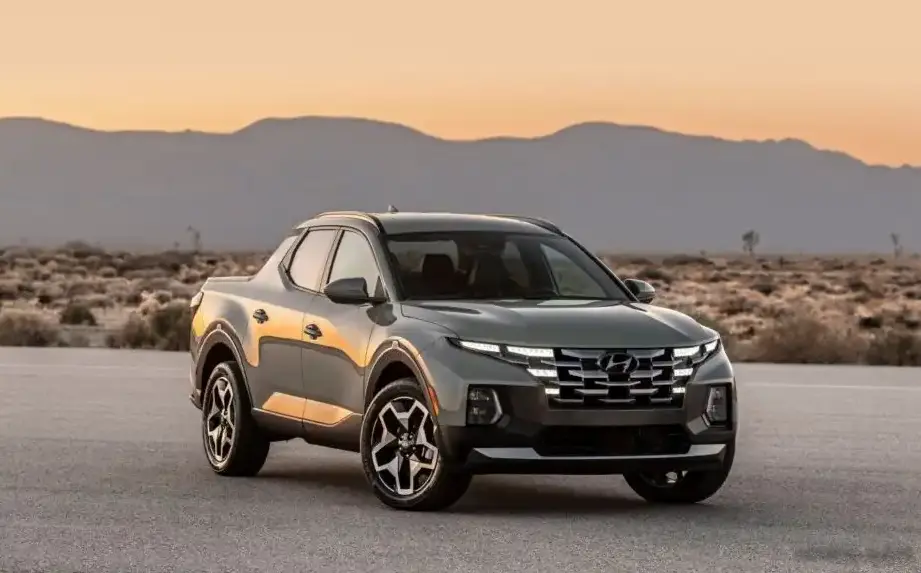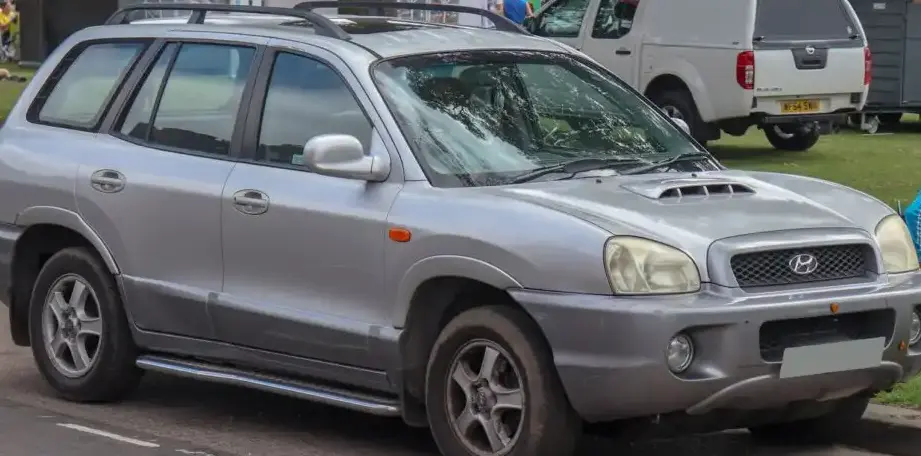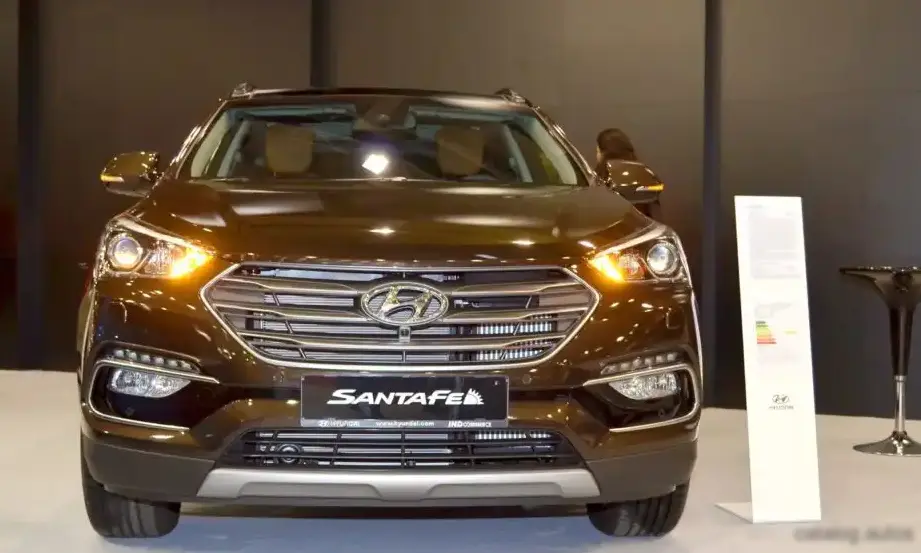
The Hyundai Santa Fe Sport 2.0 Turbo GDI Automatic, produced from 2017 to 2018, represents a mid-cycle refresh of the third-generation (DM) Santa Fe. Positioned as a sporty variant within the Santa Fe lineup, it aimed to offer a balance of performance, features, and practicality in the popular mid-size SUV segment. This particular configuration, featuring the 2.0-liter turbocharged gasoline direct injection engine paired with a six-speed automatic transmission, was designed to appeal to buyers seeking a more engaging driving experience than the base engine options offered. The “Sport” designation indicated a focus on slightly enhanced aesthetics and a more responsive powertrain.
Technical Specifications
| Brand | Hyundai |
| Model | Santa Fe |
| Generation | Santa Fe III (DM, facelift 2015) |
| Type (Engine) | Sport 2.0 Turbo GDI (240 Hp) Automatic |
| Start of production | 2017 |
| End of production | 2018 |
| Powertrain Architecture | Internal Combustion engine |
| Body type | SUV |
| Seats | 5-7 |
| Doors | 5 |
| Fuel consumption (economy) – urban (NEDC) | 11.7 l/100 km (20.1 US mpg, 24.1 UK mpg, 8.5 km/l) |
| Fuel consumption (economy) – extra urban (NEDC) | 8.4 l/100 km (28 US mpg, 33.6 UK mpg, 11.9 km/l) |
| Fuel consumption (economy) – combined (NEDC) | 10.2 l/100 km (23.1 US mpg, 27.7 UK mpg, 9.8 km/l) |
| Fuel Type | Petrol (Gasoline) |
| Weight-to-power ratio | 7.1 kg/Hp, 141.5 Hp/tonne |
| Weight-to-torque ratio | 4.8 kg/Nm, 208.1 Nm/tonne |
| Power | 240 Hp @ 6000 rpm |
| Power per litre | 120.1 Hp/l |
| Torque | 353 Nm @ 1450-3500 rpm (260.36 lb.-ft. @ 1450-3500 rpm) |
| Engine layout | Front, Transverse |
| Engine Model/Code | Theta II / G4KH |
| Engine displacement | 1998 cm3 (121.93 cu. in.) |
| Number of cylinders | 4 |
| Engine configuration | Inline |
| Cylinder Bore | 86 mm (3.39 in.) |
| Piston Stroke | 86 mm (3.39 in.) |
| Compression ratio | 10:1 |
| Number of valves per cylinder | 4 |
| Fuel injection system | Direct injection |
| Engine aspiration | Turbocharger, Intercooler |
| Valvetrain | DOHC |
| Engine oil capacity | 4.8 l (5.07 US qt | 4.22 UK qt) |
| Coolant | 9.7 l (10.25 US qt | 8.53 UK qt) |
| Kerb Weight | 1696 kg (3739.04 lbs.) |
| Max. weight | 2270 kg (5004.49 lbs.) |
| Max load | 574 kg (1265.45 lbs.) |
| Trunk (boot) space – maximum | 1680 l (59.33 cu. ft.) |
| Fuel tank capacity | 66 l (17.44 US gal | 14.52 UK gal) |
| Permitted trailer load with brakes (12%) | 1588 kg (3500.94 lbs.) |
| Permitted trailer load without brakes | 748 kg (1649.06 lbs.) |
| Length | 4699 mm (185 in.) |
| Width | 1880 mm (74.02 in.) |
| Height | 1689 mm (66.5 in.) |
| Wheelbase | 2700 mm (106.3 in.) |
| Front track | 1628 mm (64.09 in.) |
| Rear (Back) track | 1639 mm (64.53 in.) |
| Minimum turning circle (turning diameter) | 10.9 m (35.76 ft.) |
| Drivetrain Architecture | The Internal combustion engine (ICE) drives the front wheels of the vehicle. |
| Drive wheel | Front wheel drive |
| Number of gears and type of gearbox | 6 gears, automatic transmission |
| Front suspension | Independent type McPherson |
| Rear suspension | Independent multi-link suspension |
| Front brakes | Ventilated discs |
| Rear brakes | Disc |
| Assisting systems | ABS (Anti-lock braking system) |
| Steering type | Steering rack and pinion |
| Power steering | Electric Steering |
| Tires size | 235/60 R18 |
| Wheel rims size | 7.5J x 18 |
Powertrain & Engine Architecture
The heart of the Santa Fe Sport 2.0T is Hyundai’s Theta II G4KH engine, a 1.998-liter inline-four cylinder powerplant. This engine utilizes gasoline direct injection (GDI) technology, injecting fuel directly into the combustion chamber for improved efficiency and power. A single twin-scroll turbocharger with an intercooler boosts output, providing increased horsepower and torque across a broad RPM range. The engine features a double overhead camshaft (DOHC) valvetrain with four valves per cylinder, optimizing airflow for enhanced performance. The six-speed automatic transmission, while not the most modern unit by today’s standards, was known for its relatively smooth shifts and adequate responsiveness. It was calibrated to provide a balance between fuel economy and performance, prioritizing comfortable cruising over aggressive acceleration.
Driving Characteristics
The 240 horsepower and 260 lb-ft of torque delivered by the 2.0T engine provided a noticeable improvement in acceleration compared to the base 2.4-liter naturally aspirated engine. While not a sports car, the Santa Fe Sport 2.0T offered brisk acceleration for merging onto highways and passing maneuvers. The automatic transmission, while generally smooth, could sometimes feel hesitant during quick downshifts. The front-wheel-drive configuration provided adequate traction in most conditions, but all-wheel drive was available as an option for enhanced stability in inclement weather. The suspension tuning leaned towards comfort, providing a relatively smooth ride over uneven surfaces, but at the expense of some handling precision.
Equipment & Trim Levels
The Santa Fe Sport 2.0T typically came well-equipped with standard features such as automatic headlights, a rearview camera, Bluetooth connectivity, a touchscreen infotainment system, and cloth upholstery. Higher trim levels added features like leather seats, a panoramic sunroof, a premium audio system, and advanced safety technologies such as blind-spot monitoring and rear cross-traffic alert. Optional extras included navigation, heated and ventilated front seats, and a power liftgate. The interior design was generally considered modern and functional, with a focus on user-friendliness.
Chassis & Braking
The Santa Fe Sport utilized a McPherson strut front suspension and a multi-link rear suspension, providing a comfortable and controlled ride. The front brakes were ventilated discs, while the rear brakes were solid discs. Anti-lock braking system (ABS) was standard. Steering was provided by an electric power steering system, offering light and easy steering feel. The chassis was designed to provide a balance between rigidity and weight, contributing to the vehicle’s overall stability and handling.
Market Reception & Comparison
The Santa Fe Sport 2.0T was generally well-received by automotive critics, who praised its strong engine performance and comfortable ride. However, some reviewers noted that the automatic transmission could be slow to respond at times. Compared to competitors like the Honda CR-V and Toyota RAV4, the Santa Fe Sport offered a more powerful engine option, but its fuel economy was slightly lower. The Santa Fe also offered a more spacious interior and a longer warranty than some of its rivals. Reliability was generally considered good, although some owners reported minor issues with the infotainment system.
Legacy
The Hyundai Santa Fe Sport 2.0T has proven to be a relatively reliable vehicle in the used car market. The Theta II engine, while not without its potential issues (such as occasional oil consumption), has generally been durable when properly maintained. The six-speed automatic transmission has also proven to be fairly robust. Today, these vehicles represent a good value for buyers seeking a spacious, well-equipped, and reasonably powerful mid-size SUV. Regular maintenance, including oil changes and timely servicing of the turbocharger, is crucial for ensuring the long-term reliability of this powertrain.