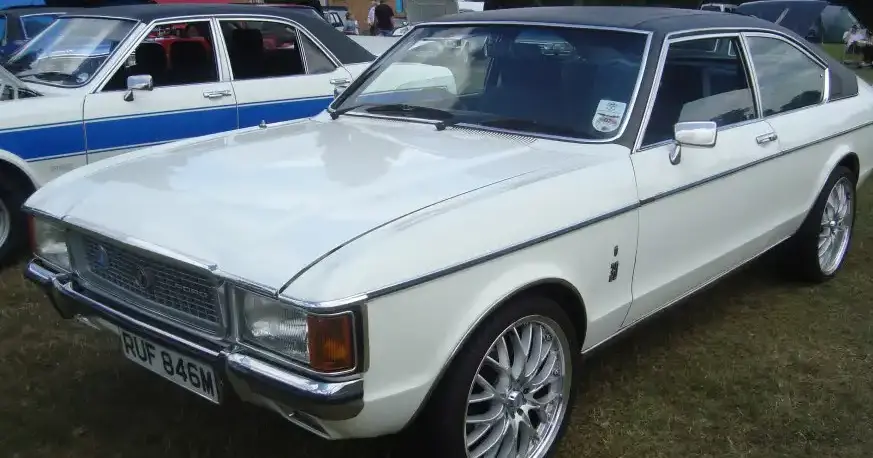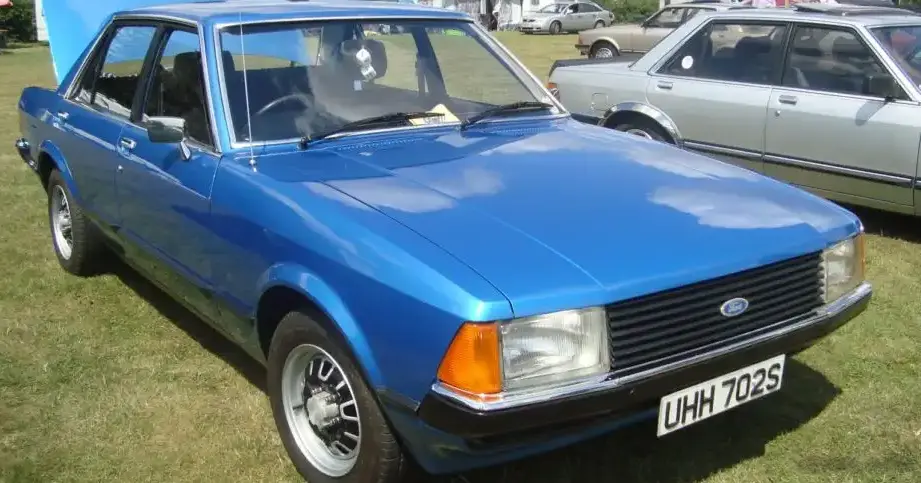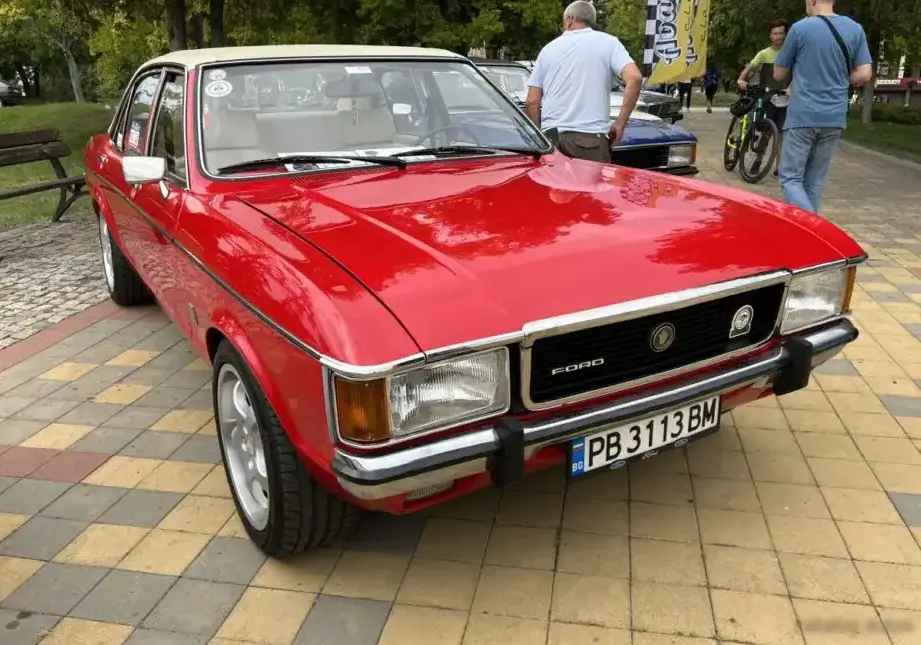
The Ford Granada 2.0L (90 hp) represents an entry-level variant of the first-generation Granada (GGTL, GGFL) produced between 1975 and 1977. Positioned as the most accessible engine option in the Granada lineup, it aimed to provide comfortable, reliable transportation for families and fleet buyers. The Granada itself was Ford of Britain’s response to the growing popularity of large, comfortable saloons, intended to replace the Ford Zephyr and Zodiac models. This 2.0L version played a crucial role in broadening the Granada’s appeal, offering a more economical alternative to the larger, more powerful engines available.
Technical Specifications
| Brand | Ford |
| Model | Granada |
| Generation | Granada (GGTL, GGFL) |
| Type (Engine) | 2.0 (90 hp) |
| Start of Production | 1975 |
| End of Production | 1977 |
| Powertrain Architecture | Internal Combustion Engine |
| Body Type | Sedan |
| Fuel Type | Petrol (Gasoline) |
| Power | 90 hp |
| Engine Aspiration | Naturally Aspirated |
Introduction
The Ford Granada, launched in 1972, was a significant model for Ford of Britain. It represented a move upmarket, offering a larger, more refined vehicle than its predecessors. The GGTL and GGFL designations refer to the body styles – the GG denoting a four-door saloon, TL and FL representing trim levels. The 2.0L engine, introduced as a more affordable option, was available throughout the initial production run of the first generation. It was designed to appeal to buyers who prioritized fuel economy and lower running costs over outright performance. This variant was particularly popular in the United Kingdom and other European markets where fuel prices were a concern.
Powertrain & Engine Architecture
The 2.0L engine in the Granada was a four-cylinder, inline engine, based on the Ford Taunus engine family. While not a particularly advanced design, it was known for its durability and relative simplicity. The engine featured a single overhead camshaft (SOHC) and a two-barrel carburetor, providing adequate, if not exhilarating, performance. The engine code is typically identified as the 2000cc unit. Fuel delivery was managed by a Zenith-Stromberg carburetor, a common setup for Ford engines of the era. The valvetrain utilized pushrods to actuate the valves, a design choice that contributed to the engine’s robustness. The automatic transmission offered with this engine was a three-speed unit, a Borg-Warner design licensed to Ford. This transmission was chosen for its smoothness and ease of use, further enhancing the Granada’s appeal as a comfortable cruiser. It wasn’t known for being particularly efficient, but it suited the intended market of drivers who preferred convenience over maximizing fuel economy.
Driving Characteristics
The Granada 2.0L Automatic offered a comfortable, but unhurried, driving experience. With 90 horsepower on tap, acceleration was modest, and overtaking required careful planning. The three-speed automatic transmission, while smooth, lacked the responsiveness of a manual gearbox. Gear ratios were optimized for cruising, resulting in a relaxed ride at highway speeds. However, this also meant that the engine could feel strained when climbing hills or accelerating quickly. Compared to the larger 2.8L V6 engine offered in the Granada, the 2.0L version felt significantly less powerful. The V6 provided a much more spirited driving experience, but at the cost of increased fuel consumption. The 2.0L’s softer suspension setup prioritized ride comfort over handling precision, making it a pleasant vehicle for long journeys. Steering was power-assisted, further contributing to the ease of driving.
Equipment & Trim Levels
The 2.0L Granada typically came equipped with a relatively basic level of trim, reflecting its position as the entry-level model. Standard features included cloth upholstery, a basic instrument panel, and manually operated windows. The interior was functional and well-built, but lacked the luxurious appointments found in higher-spec Granadas. Optional extras included a vinyl roof, upgraded upholstery, a radio, and a heater. The TL trim level generally offered a few more comfort features than the base model, such as a more comfortable seat fabric and additional interior trim. The Granada’s interior space was generous, providing ample room for passengers and luggage. The dashboard layout was straightforward and easy to use, with clearly labeled controls.
Chassis & Braking
The Granada utilized a traditional body-on-frame construction, providing a robust and durable chassis. The suspension consisted of independent front suspension with MacPherson struts and a live axle with leaf springs at the rear. This setup provided a comfortable ride, but wasn’t particularly sporty. Braking was initially provided by disc brakes at the front and drum brakes at the rear. Later models saw the introduction of rear disc brakes on some trim levels. The braking system was adequate for the vehicle’s weight and performance, but lacked the stopping power of more modern systems. Stabilizer bars were fitted to both the front and rear axles to reduce body roll during cornering. The steering was a recirculating ball system, providing a relatively light and easy steering feel.
Market Reception & Comparison
The Ford Granada 2.0L Automatic was generally well-received by critics as a practical and affordable family saloon. It was praised for its comfortable ride, spacious interior, and reliable engine. However, it was also criticized for its lack of performance and relatively high fuel consumption. Compared to rivals such as the Vauxhall Victor and Morris Marina, the Granada offered a more refined and modern driving experience. The 2.8L V6 Granada was often seen as a more desirable option for those who prioritized performance, but the 2.0L version appealed to buyers who were more concerned with value for money. Fuel economy was a key selling point for the 2.0L, particularly in the wake of the 1973 oil crisis. Reliability was generally good, although the automatic transmission could be prone to wear and tear if not properly maintained.
Legacy
The Ford Granada 2.0L Automatic, while not the most exciting version of the Granada, remains a fondly remembered classic. Its simplicity and durability have made it a popular choice among classic car enthusiasts. Parts availability is generally good, and the engine is relatively easy to maintain. In the used car market today, these Granadas are often sought after as affordable and reliable classic cars. The 2.0L engine, while not particularly powerful, is known for its longevity and ability to withstand years of use. The automatic transmission, while requiring occasional maintenance, can provide years of smooth and reliable operation. The Granada 2.0L represents a significant chapter in Ford’s history, showcasing the company’s commitment to providing comfortable and affordable transportation for the masses.