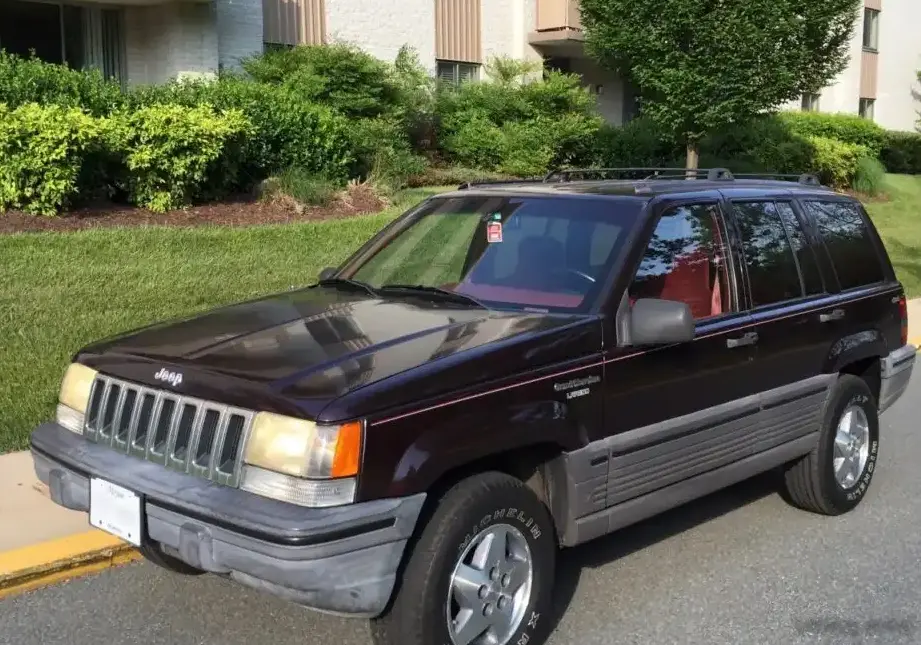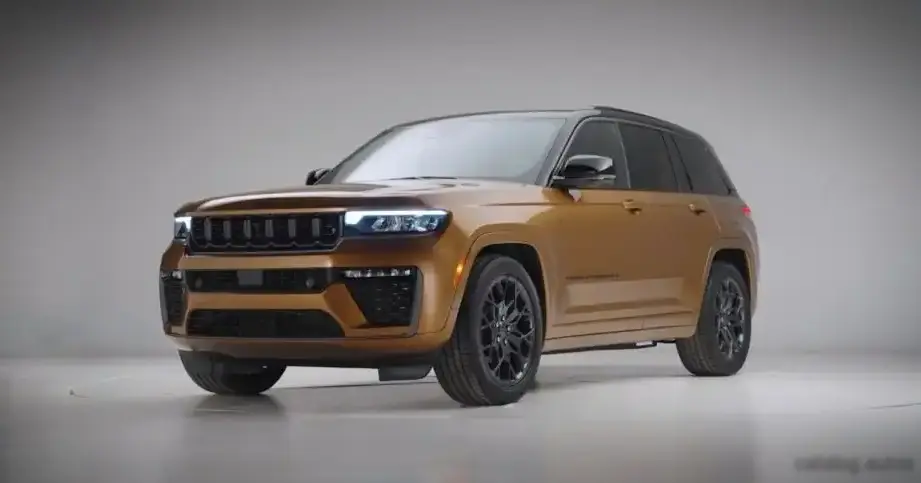
The Jeep Grand Cherokee V (WL), specifically the facelift model introduced in late 2025, represents the latest iteration of Jeep’s flagship SUV. This variant, equipped with the 3.6-liter Pentastar V6 engine producing 293 horsepower and paired with a TorqueFlite eight-speed automatic transmission and a 4×4 drivetrain, occupies a central position within the Grand Cherokee lineup. It serves as a balance between the more economical base models and the higher-performance trims like the Trailhawk or those featuring the V8 engine. Production commenced in October 2025, building upon the foundation of the WL platform which debuted in previous model years.
Technical Specifications
| Brand | Jeep |
| Model | Grand Cherokee |
| Generation | Grand Cherokee V (WL, facelift 2025) |
| Type (Engine) | 3.6 V6 Pentastar (293 Hp) 4×4 TorqueFlite |
| Start of production | October, 2025 |
| Powertrain Architecture | Internal Combustion engine |
| Body type | SUV |
| Seats | 5 |
| Doors | 5 |
| Fuel consumption (economy) – urban (EPA) | 12.4 l/100 km (19 US mpg, 22.8 UK mpg, 8.1 km/l) |
| Fuel consumption (economy) – extra urban (EPA) | 9 l/100 km (26.1 US mpg, 31.4 UK mpg, 11.1 km/l) |
| Fuel consumption (economy) – combined (EPA) | 10.7 l/100 km (22 US mpg, 26.4 UK mpg, 9.3 km/l) |
| Fuel Type | Petrol (Gasoline) |
| Power | 293 Hp @ 6400 rpm |
| Power per litre | 81.3 Hp/l |
| Torque | 353 Nm @ 4000 rpm (260.36 lb.-ft. @ 4000 rpm) |
| Maximum engine speed | 6700 rpm |
| Engine layout | Front, Longitudinal |
| Engine Model/Code | Pentastar |
| Engine displacement | 3604 cm3 (219.93 cu. in.) |
| Number of cylinders | 6 |
| Engine configuration | V-engine |
| Cylinder Bore | 96 mm (3.78 in.) |
| Piston Stroke | 83 mm (3.27 in.) |
| Compression ratio | 11.3:1 |
| Number of valves per cylinder | 4 |
| Fuel injection system | Multi-port manifold injection |
| Engine aspiration | Naturally aspirated engine |
| Valvetrain | DOHC |
| Engine oil capacity | 4.7 l (4.97 US qt | 4.14 UK qt) |
| Coolant | 13.25 l (14 US qt | 11.66 UK qt) |
| Max. weight | 2744 kg (6049.48 lbs.) |
| Trunk (boot) space – minimum | 1068 l (37.72 cu. ft.) |
| Trunk (boot) space – maximum | 2005 l (70.81 cu. ft.) |
| Fuel tank capacity | 87 l (22.98 US gal | 19.14 UK gal) |
| Permitted trailer load with brakes (12%) | 2818 kg (6212.63 lbs.) |
| Length | 4914 mm (193.46 in.) |
| Width | 1968 mm (77.48 in.) |
| Width with mirrors folded | 1968 mm (77.48 in.) |
| Width including mirrors | 2149 mm (84.61 in.) |
| Height | 1799-1801 mm (70.83 – 70.91 in.) |
| Wheelbase | 2964 mm (116.69 in.) |
| Front track | 1660 mm (65.35 in.) |
| Rear (Back) track | 1660 mm (65.35 in.) |
| Ride height (ground clearance) | 214-276 mm (8.43 – 10.87 in.) |
| Drag coefficient (Cd) | 0.357 |
| Minimum turning circle (turning diameter) | 11.58 m (37.99 ft.) |
| Approach angle | 20.5-30.1° |
| Departure angle | 19.1-24° |
| Ramp-over (brakeover) angle | 26.6° |
| Drivetrain Architecture | The Internal combustion engine (ICE) drives permanently the four wheels of the vehicle. |
| Drive wheel | All wheel drive (4×4) |
| Number of gears and type of gearbox | 8 gears, automatic transmission TorqueFlite |
| Front suspension | Coil spring, Independent multi-link suspension, Transverse stabilizer, Air Suspension – Optional |
| Rear suspension | Independent multi-link spring suspension with stabilizer, Air Suspension – Optional |
| Front brakes | Ventilated discs, 354×28 mm |
| Rear brakes | Ventilated discs, 350×22 mm |
| Assisting systems | ABS (Anti-lock braking system) |
| Steering type | Steering rack and pinion |
| Power steering | Electric Steering |
| Tires size | 245/70 R17; 265/60 R18; 265/50 R20; 275/45 R21 |
| Wheel rims size | 8J x 17; 8J x 18; 8.5J x 20; 9J x 21 |
Powertrain & Engine Architecture
The heart of this Grand Cherokee variant is the 3.6-liter Pentastar V6 engine. This engine, a staple in Chrysler/Jeep vehicles for over a decade, is known for its robust design and relatively simple maintenance. The 2025 facelifted version continues to utilize multi-port fuel injection, a proven technology that delivers reliable fuel delivery. The engine features a double overhead camshaft (DOHC) valvetrain, optimizing airflow for improved performance. The 11.3:1 compression ratio contributes to efficient combustion. The TorqueFlite eight-speed automatic transmission is a crucial component, offering smooth shifts and a wide gear ratio spread to maximize fuel economy and provide adequate acceleration. This transmission is known for its durability and responsiveness.
Driving Characteristics
The 293 horsepower and 260 lb-ft of torque delivered by this combination provide adequate performance for everyday driving and moderate towing. While not as quick as the V8-equipped Grand Cherokees, the 3.6L offers a comfortable and capable driving experience. The eight-speed transmission helps keep the engine in its optimal power band, providing decent acceleration from a standstill and during highway passing maneuvers. Compared to manual transmission versions (which were not widely available in the US market for this generation), the automatic prioritizes convenience and ease of use. The automatic’s gear ratios are tuned for a balance between fuel efficiency and responsiveness, resulting in a slightly less engaging driving experience than a manual, but a more refined one for most drivers.
Equipment & Trim Levels
The 3.6L V6 Automatic Grand Cherokee typically came standard with features such as keyless entry, a touchscreen infotainment system (typically 8.4-inch), Apple CarPlay and Android Auto compatibility, and a suite of safety features including blind-spot monitoring and rear cross-traffic alert. Higher trim levels, such as the Limited or Overland, added features like leather upholstery, heated and ventilated seats, a premium sound system, and advanced driver-assistance systems like adaptive cruise control and lane-keeping assist. Optional extras included a panoramic sunroof, a rear-seat entertainment system, and various appearance packages.
Chassis & Braking
The Grand Cherokee WL utilizes an independent suspension system both front and rear, providing a comfortable ride and good handling characteristics. The front suspension employs a coil spring and multi-link design, while the rear features a similar multi-link setup. Many models offered optional air suspension, which allowed for adjustable ride height and improved off-road capability. Braking duties are handled by ventilated discs on all four wheels, providing ample stopping power. The inclusion of ABS (Anti-lock Braking System) is standard, enhancing safety during emergency braking situations. Stabilizer bars are fitted both front and rear to reduce body roll during cornering.
Market Reception & Comparison
Critics generally praised the 3.6L V6 Grand Cherokee for its comfortable ride, spacious interior, and user-friendly technology. However, some reviewers noted that the engine could feel strained when fully loaded or during aggressive driving. Compared to the V8 models, the V6 offered significantly better fuel economy, making it a more practical choice for daily commuting. Against competitors like the Ford Explorer, Chevrolet Traverse, and Honda Pilot, the Grand Cherokee stood out for its more upscale interior and superior off-road capability (particularly in 4×4 trims). The fuel economy, while respectable, was generally in line with other mid-size SUVs in its class.
Legacy
The 3.6L Pentastar V6, paired with the TorqueFlite transmission, has proven to be a reliable powertrain combination in the Grand Cherokee. While not without its minor issues (such as potential oil leaks in some early production years), the engine is generally considered durable and relatively inexpensive to maintain. In the used car market, this variant represents a good value proposition, offering a blend of comfort, capability, and affordability. Its widespread availability and relatively simple design contribute to its continued popularity among used car buyers.