
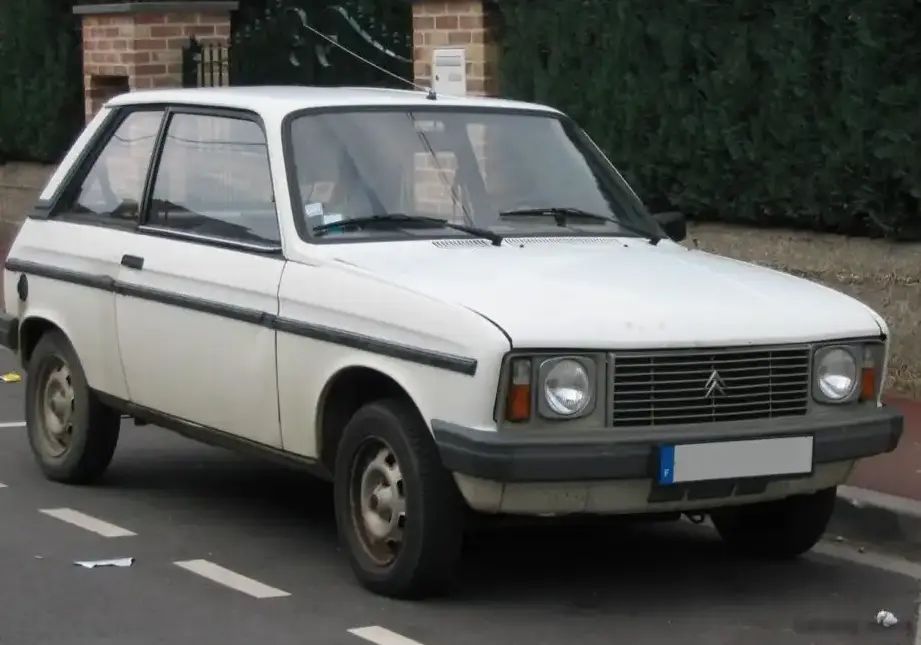
The Citroën LNA 0.6, produced between 1983 and 1986, was a budget-focused hatchback positioned as the entry-level model within the Citroën LN range. It represented a simplified and more affordable alternative to the more sophisticated Citroën Visa and served as a crucial part of Citroën’s strategy to offer a compact, economical vehicle in a competitive European market. The LNA, internally designated as the XEV, was built on the platform shared with the Visa, but with significant cost-cutting measures implemented to achieve a lower price point. This variant, powered by a 652cc engine producing 34 horsepower, was primarily aimed at first-time car buyers and those seeking a basic, reliable mode of transportation.
Technical Specifications
| Brand | Citroen |
| Model | LN |
| Generation | LNA |
| Type (Engine) | 0.6 (34 Hp) |
| Start of production | 1983 |
| End of production | 1986 |
| Powertrain Architecture | Internal Combustion engine |
| Body type | Hatchback |
| Seats | 4 |
| Doors | 3 |
| Fuel consumption (urban) | 6.5 l/100 km (36.2 US mpg) |
| Fuel consumption (extra urban) | 5.1 l/100 km (46.1 US mpg) |
| Fuel Type | Petrol (Gasoline) |
| Acceleration 0 – 100 km/h | 24.8 sec |
| Acceleration 0 – 62 mph | 24.8 sec |
| Acceleration 0 – 60 mph | 23.6 sec |
| Maximum speed | 125 km/h (77.67 mph) |
| Weight-to-power ratio | 20.9 kg/Hp |
| Weight-to-torque ratio | 14.5 kg/Nm |
| Power | 34 Hp @ 5500 rpm |
| Power per litre | 52.1 Hp/l |
| Torque | 49 Nm @ 3500 rpm (36.14 lb.-ft. @ 3500 rpm) |
| Engine layout | Front, Longitudinal |
| Engine displacement | 652 cm3 (39.79 cu. in.) |
| Number of cylinders | 2 |
| Engine configuration | Boxer |
| Cylinder Bore | 77 mm (3.03 in.) |
| Piston Stroke | 70 mm (2.76 in.) |
| Compression ratio | 9.5:1 |
| Fuel injection system | Carburettor |
| Engine aspiration | Naturally aspirated |
| Kerb Weight | 710 kg (1565.28 lbs.) |
| Max. weight | 1035 kg (2281.78 lbs.) |
| Max load | 325 kg (716.5 lbs.) |
| Trunk (boot) space – minimum | 214 l (7.56 cu. ft.) |
| Trunk (boot) space – maximum | 532 l (18.79 cu. ft.) |
| Fuel tank capacity | 40 l (10.57 US gal) |
| Max. roof load | 50 kg (110.23 lbs.) |
| Permitted trailer load with brakes (12%) | 500 kg (1102.31 lbs.) |
| Permitted trailer load without brakes | 350 kg (771.62 lbs.) |
| Length | 3427 mm (134.92 in.) |
| Width | 1540 mm (60.63 in.) |
| Height | 1380 mm (54.33 in.) |
| Ride height (ground clearance) | 130 mm (5.12 in.) |
| Minimum turning circle | 8.9 m (29.2 ft.) |
| Drivetrain Architecture | Front wheel drive |
| Number of gears and type of gearbox | 4 gears, manual transmission |
| Front suspension | Independent, McPherson with coil spring and anti-roll bar |
| Rear suspension | Spring Strut, Trailing arm |
| Front brakes | Disc |
| Rear brakes | Drum |
| Steering type | Steering rack and pinion |
Powertrain & Engine Architecture
The heart of the LNA 0.6 was the Citroën 2CV-derived 652cc two-cylinder, boxer engine. This engine, designated as the M650, was known for its simplicity and robustness, rather than outright performance. It utilized a single Solex carburetor for fuel delivery and featured a relatively low compression ratio of 9.5:1. The boxer configuration, with horizontally opposed cylinders, contributed to a low center of gravity, aiding in handling, but also presented packaging challenges. The engine produced 34 horsepower at 5500 rpm and 49 Nm (36.14 lb-ft) of torque at 3500 rpm. This power was transmitted to the front wheels through a four-speed manual transmission. The transmission was chosen for its cost-effectiveness and simplicity, contributing to the LNA’s affordability.
Driving Characteristics
The LNA 0.6’s driving experience was defined by its modest performance. Acceleration was slow, taking approximately 24.8 seconds to reach 100 km/h (62 mph). Top speed was limited to around 125 km/h (77.67 mph). The four-speed gearbox had relatively long ratios, prioritizing fuel economy over spirited driving. Compared to the more powerful Visa models, the LNA felt significantly underpowered, especially when fully loaded or tackling inclines. However, the engine was surprisingly flexible for its size, offering usable torque at lower revs. The steering was light and precise, typical of Citroën’s hydraulic power steering systems, even in this entry-level model. The suspension, while basic, provided a reasonably comfortable ride, absorbing bumps and imperfections in the road surface.
Equipment & Trim Levels
The LNA 0.6 was deliberately spartan in its equipment levels. Standard features included cloth upholstery, basic instrumentation (speedometer, fuel gauge), and a three-spoke steering wheel. Optional extras were limited, but could include a radio, heated rear window, and upgraded interior trim. The interior was functional and utilitarian, with hard-wearing plastics and minimal ornamentation. The LNA’s dashboard layout was simple and straightforward, prioritizing ease of use over aesthetic appeal. The exterior featured black plastic bumpers and hubcaps, further emphasizing its budget-conscious nature.
Chassis & Braking
The LNA 0.6 utilized a front-wheel-drive layout with an independent McPherson strut suspension at the front and a trailing arm suspension at the rear. The front brakes were disc brakes, providing adequate stopping power, while the rear brakes were drums, a cost-saving measure. The steering was a rack and pinion system, offering precise control. The LNA’s relatively light weight (710 kg or 1565 lbs) helped to offset the engine’s limited power, contributing to reasonable handling characteristics. A stabilizer bar was included at the front to reduce body roll during cornering.
Market Reception & Comparison
The Citroën LNA 0.6 was generally well-received as an affordable and economical city car. Critics praised its fuel efficiency (around 6.5 l/100 km urban, 5.1 l/100 km extra-urban) and its robust engine. However, its lack of power and basic equipment levels were often criticized. Compared to the Citroën Visa, the LNA offered significantly less performance and refinement, but at a considerably lower price point. The Renault 5 and Peugeot 205 were key competitors in the same segment, offering similar levels of affordability and practicality. The LNA’s main advantage over these rivals was its unique Citroën character and its comfortable ride.
Legacy
The Citroën LNA 0.6, while not a performance icon, holds a place in automotive history as a testament to Citroën’s ability to produce affordable and reliable transportation. The 652cc boxer engine proved to be remarkably durable, and many examples are still on the road today. In the used car market, the LNA 0.6 is valued by enthusiasts for its simplicity, its quirky charm, and its low running costs. Parts availability can be a challenge, but the engine’s robust construction and the availability of aftermarket components ensure that it remains a viable classic car option. The LNA represents a unique chapter in Citroën’s history, showcasing the brand’s commitment to innovation and accessibility.
