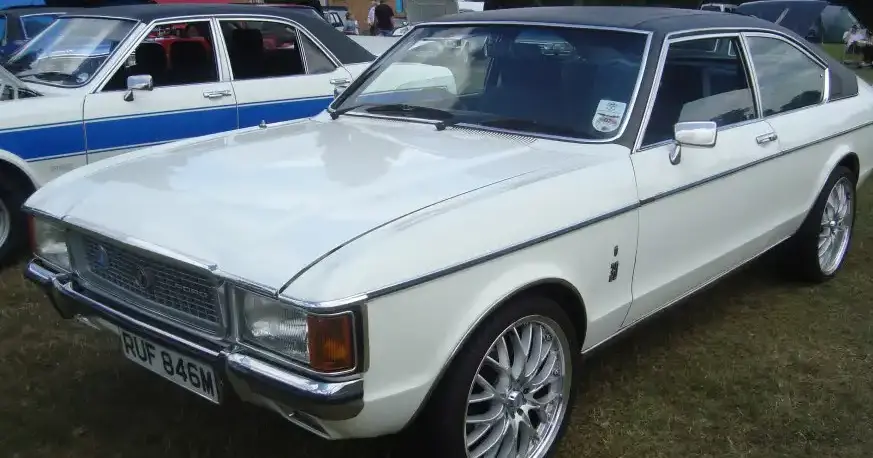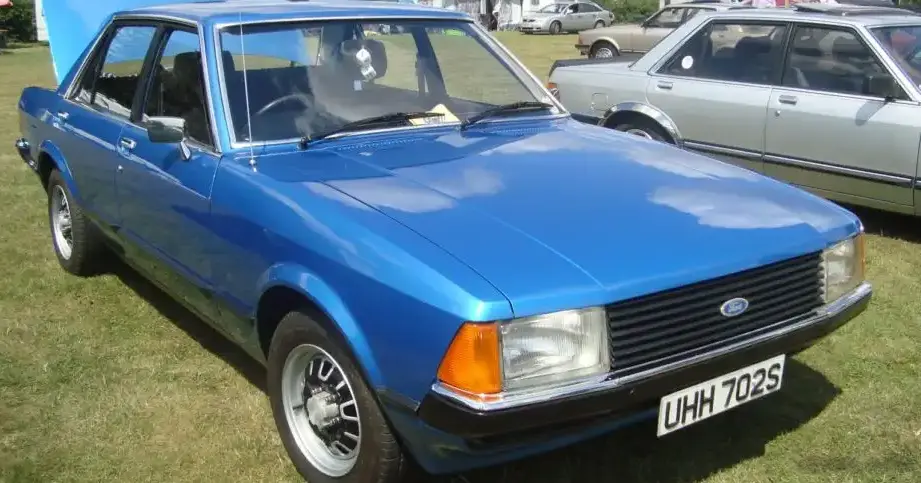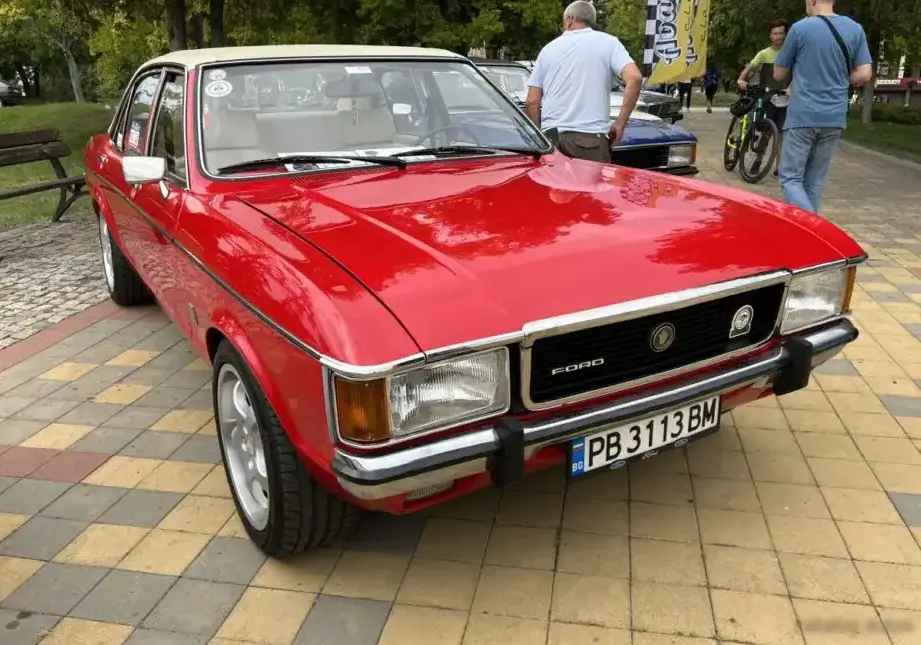
The Ford Granada 2.3L (107 hp) represents a significant entry point into the first generation of Ford’s large family car, produced between 1975 and 1977 (GGTL, GGFL chassis codes). Introduced as a replacement for the Ford Zephyr and Zodiac, the Granada aimed to offer a more modern and internationally competitive vehicle. The 2.3L variant, while not the most powerful in the Granada lineup, was a popular choice for buyers seeking a balance of affordability, reasonable performance, and Ford’s established reliability. It served as the base model, offering a comfortable and spacious sedan for families and business users alike. This model was primarily sold in the European market, including the UK, Germany, and other key European countries, and was not officially offered in the United States.
Technical Specifications
| Brand | Ford |
| Model | Granada |
| Generation | Granada (GGTL, GGFL) |
| Type (Engine) | 2.3L (107 hp) |
| Start of Production | 1975 |
| End of Production | 1977 |
| Powertrain Architecture | Internal Combustion Engine |
| Body Type | Sedan |
| Fuel Type | Petrol (Gasoline) |
| Power | 107 hp |
| Engine Aspiration | Naturally Aspirated |
Powertrain & Engine Architecture
The Granada 2.3L was powered by the Ford Taunus V4 engine, a 60-degree V4 configuration. This engine, designated as the Type 2300, displaced 2294 cc (140.1 cubic inches). It featured a single overhead camshaft (SOHC) and utilized a two-barrel Weber carburetor for fuel delivery. The engine produced 107 horsepower at 5000 rpm and 133 lb-ft of torque at 3000 rpm. While the V4 configuration was relatively compact, it was known for its inherent imbalance, which could lead to vibrations, although Ford implemented various measures to mitigate this. The engine block was cast iron, while the cylinder head was aluminum. The transmission paired with the 2.3L engine was typically a four-speed manual, but a three-speed automatic transmission (Ford C3) was also available, and frequently chosen by buyers prioritizing comfort over performance. The automatic transmission, while providing ease of use, did impact acceleration and fuel economy.
Driving Characteristics
The Granada 2.3L offered a comfortable, if not particularly sporty, driving experience. With 107 hp, acceleration was adequate for everyday driving, but overtaking maneuvers required planning. The automatic transmission, while smooth, had relatively widely spaced gear ratios, which contributed to a feeling of sluggishness compared to the manual transmission versions. The V4 engine, while generally reliable, lacked the refinement of inline-six or V8 engines offered in higher-spec Granada models. Steering was power-assisted, making maneuvering easy, but the car’s size and weight were noticeable in tight spaces. The suspension, consisting of MacPherson struts at the front and a live axle with leaf springs at the rear, provided a comfortable ride, absorbing bumps and imperfections in the road reasonably well. However, the rear suspension could exhibit some bounce over uneven surfaces.
Equipment & Trim Levels
The 2.3L Granada typically represented the base trim level. Standard equipment included cloth upholstery, a basic instrument panel, and manually operated windows and door locks. Features like a radio, heater, and whitewall tires were often included, but more luxurious options like air conditioning, power steering (often standard), and upgraded interior trim were typically reserved for higher-spec models like the 2.8L or 3.0L versions. The interior design was functional and straightforward, prioritizing practicality over luxury. The dashboard layout was relatively simple, with clearly marked gauges for speed, fuel level, coolant temperature, and battery voltage. Optional extras included a vinyl roof, upgraded sound systems, and various exterior trim enhancements.
Chassis & Braking
The Granada was built on a body-on-frame construction, providing a robust and durable chassis. The front suspension utilized MacPherson struts, while the rear suspension employed a live axle with leaf springs. This setup prioritized ride comfort and load-carrying capacity over handling precision. Braking was initially accomplished with disc brakes at the front and drum brakes at the rear. Later models saw the introduction of rear disc brakes on some trims, but the 2.3L typically retained rear drums. The braking system was hydraulically operated, providing adequate stopping power for the car’s weight and performance. Steering was power-assisted, making the car relatively easy to maneuver, especially at low speeds. The Granada’s wheelbase was 113.4 inches, and its overall length was approximately 186 inches.
Market Reception & Comparison
The Ford Granada 2.3L was generally well-received as an affordable and practical family car. Critics praised its spacious interior, comfortable ride, and Ford’s reputation for reliability. However, the V4 engine was often criticized for its lack of refinement and inherent vibrations. Compared to the higher-spec Granada models, such as the 2.8L or 3.0L versions, the 2.3L offered significantly less performance. The 2.8L inline-six, for example, provided a much smoother and more powerful driving experience, but at a higher price point. The 2.3L also lagged behind the 2.0L and 2.3L versions of the rival Opel Rekord in terms of performance and refinement. Fuel economy for the 2.3L was reasonable for the time, averaging around 22-26 mpg, depending on driving conditions and transmission type. The automatic transmission reduced fuel economy compared to the manual.
Legacy
The Ford Granada 2.3L, while not the most sought-after variant, remains a relatively common sight in the classic car market. The V4 engine, while prone to some issues like oil leaks and timing chain wear, is generally durable and relatively easy to maintain. Parts availability is generally good, although some specific components can be difficult to find. The Granada’s robust construction and relatively simple mechanicals make it a popular choice for restoration projects. Today, the 2.3L Granada represents an affordable entry point into classic Ford ownership, offering a nostalgic driving experience and a glimpse into the automotive landscape of the 1970s. Its enduring appeal lies in its practicality, reliability, and the iconic Ford brand name.