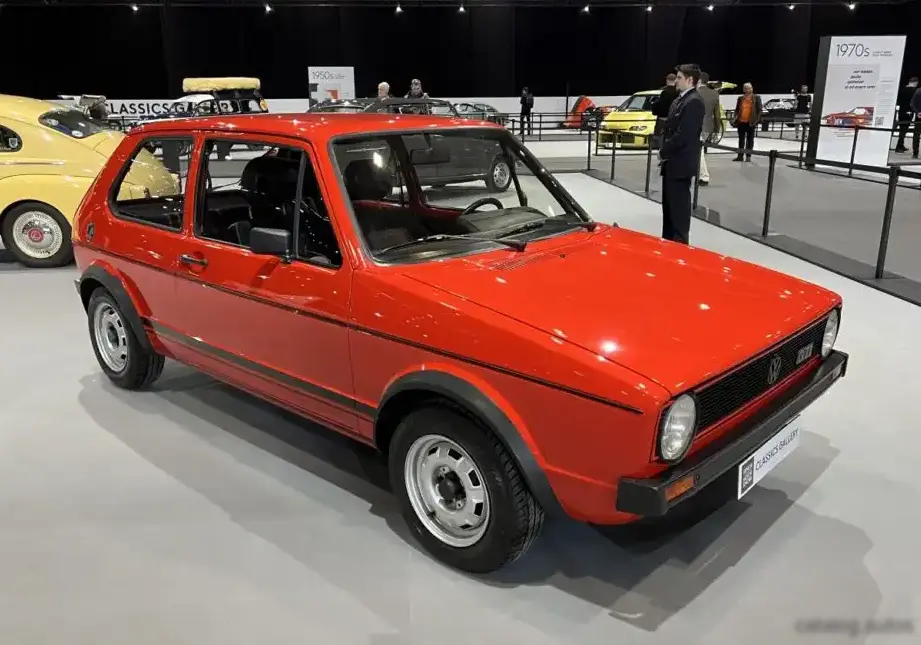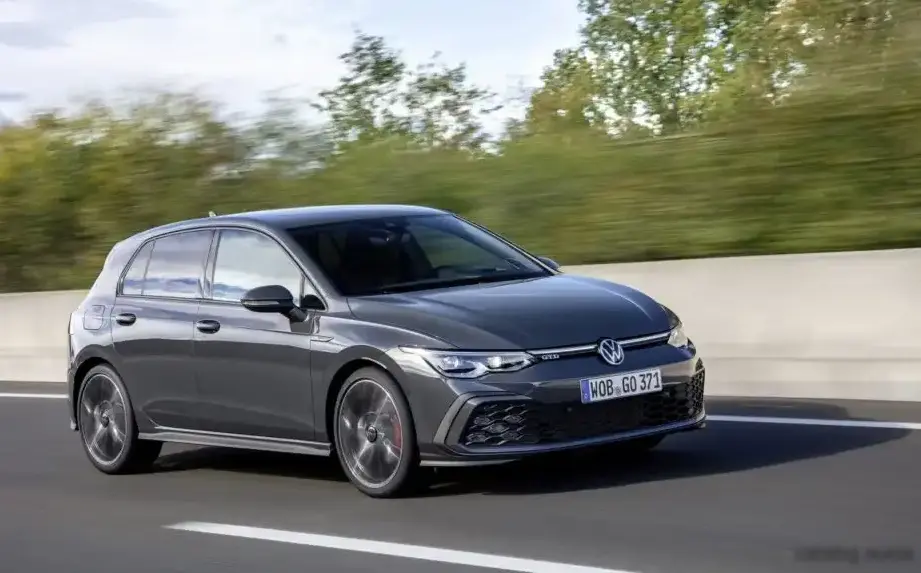
The Volkswagen Golf VIII GTD 2.0 TDI, produced from 2020 to 2024, represents a significant iteration in Volkswagen’s long-running Golf lineage. Positioned as a performance-oriented diesel variant within the eighth-generation Golf (Mk8) range, the GTD aimed to deliver a blend of efficiency, driving pleasure, and practicality. It occupied a middle ground in the lineup, offering more performance than the standard diesel models but remaining more accessible than the full-fledged GTI or R variants. The GTD’s core appeal lay in its potent turbocharged diesel engine paired with a dual-clutch gearbox (DSG), making it a popular choice in European markets where diesel fuel remained prevalent and where efficient performance was highly valued.
Technical Specifications
| Brand | Volkswagen |
| Model | Golf |
| Generation | Golf VIII |
| Type (Engine) | GTD 2.0 TDI (200 Hp) DSG |
| Start of production | 2020 |
| End of production | 2024 |
| Powertrain Architecture | Internal Combustion engine |
| Body type | Hatchback |
| Seats | 5 |
| Doors | 5 |
| Fuel consumption at Low speed (WLTP) | 7.6 l/100 km (30.9 US mpg, 37.2 UK mpg, 13.2 km/l) |
| Fuel consumption at Medium speed (WLTP) | 5.1 l/100 km (46.1 US mpg, 55.4 UK mpg, 19.6 km/l) |
| Fuel consumption at high speed (WLTP) | 4.4 l/100 km (53.5 US mpg, 64.2 UK mpg, 22.7 km/l) |
| Fuel consumption at very high speed (WLTP) | 5.1 l/100 km (46.1 US mpg, 55.4 UK mpg, 19.6 km/l) |
| Combined fuel consumption (WLTP) | 5.2 l/100 km (45.2 US mpg, 54.3 UK mpg, 19.2 km/l) |
| CO2 emissions (WLTP) | 137 g/km |
| Fuel consumption (economy) – urban (NEDC) | 5.4 l/100 km (43.6 US mpg, 52.3 UK mpg, 18.5 km/l) |
| Fuel consumption (economy) – extra urban (NEDC) | 3.9 l/100 km (60.3 US mpg, 72.4 UK mpg, 25.6 km/l) |
| Fuel consumption (economy) – combined (NEDC) | 4.4 l/100 km (53.5 US mpg, 64.2 UK mpg, 22.7 km/l) |
| CO2 emissions (NEDC) | 117 g/km |
| Fuel Type | Diesel |
| Acceleration 0 – 100 km/h | 7.1 sec |
| Acceleration 0 – 62 mph | 7.1 sec |
| Acceleration 0 – 60 mph | 6.7 sec |
| Maximum speed | 245 km/h (152.24 mph) |
| Emission standard | EURO 6d-ISC-FCM |
| Weight-to-power ratio | 7 kg/Hp, 143.9 Hp/tonne |
| Weight-to-torque ratio | 3.5 kg/Nm, 287.8 Nm/tonne |
| Power | 200 Hp @ 3500 rpm |
| Torque | 400 Nm @ 1750-3500 rpm (295.02 lb.-ft. @ 1750-3500 rpm) |
| Engine layout | Front, Transverse |
| Engine Model/Code | DTUA |
| Engine displacement | 1968 cm3 (120.09 cu. in.) |
| Number of cylinders | 4 |
| Engine configuration | Inline |
| Cylinder Bore | 81 mm (3.19 in.) |
| Piston Stroke | 95.5 mm (3.76 in.) |
| Number of valves per cylinder | 4 |
| Fuel injection system | Diesel Commonrail |
| Engine aspiration | Turbocharger, Intercooler |
| Valvetrain | DOHC |
| Engine oil capacity | 5.5 l (5.81 US qt | 4.84 UK qt) |
| Kerb Weight | 1390 kg (3064.43 lbs.) |
| Max. weight | 1950 kg (4299.01 lbs.) |
| Max load | 560 kg (1234.59 lbs.) |
| Trunk (boot) space – minimum | 381 l (13.45 cu. ft.) |
| Trunk (boot) space – maximum | 1237 l (43.68 cu. ft.) |
| Fuel tank capacity | 50 l (13.21 US gal | 11 UK gal) |
| AdBlue tank | 12 l (3.17 US gal | 2.64 UK gal) |
| Max. roof load | 75 kg (165.35 lbs.) |
| Permitted trailer load with brakes (8%) | 1800 kg (3968.32 lbs.) |
| Permitted trailer load with brakes (12%) | 1600 kg (3527.4 lbs.) |
| Permitted trailer load without brakes | 730 kg (1609.37 lbs.) |
| Permitted towbar download | 80 kg (176.37 lbs.) |
| Length | 4287 mm (168.78 in.) |
| Width | 1789 mm (70.43 in.) |
| Width including mirrors | 2073 mm (81.61 in.) |
| Height | 1478 mm (58.19 in.) |
| Wheelbase | 2626 mm (103.39 in.) |
| Front track | 1535-1545 mm (60.43 – 60.83 in.) |
| Rear (Back) track | 1513-1523 mm (59.57 – 59.96 in.) |
| Minimum turning circle (turning diameter) | 10.9 m (35.76 ft.) |
| Drivetrain Architecture | The Internal combustion engine (ICE) drives the front wheels of the vehicle. |
| Drive wheel | Front wheel drive |
| Number of gears and type of gearbox | 7 gears, automatic transmission DSG |
| Front suspension | Independent type McPherson |
| Rear suspension | Independent multi-link suspension |
| Front brakes | Ventilated discs |
| Rear brakes | Disc |
| Assisting systems | ABS (Anti-lock braking system) |
| Steering type | Steering rack and pinion |
| Power steering | Electric Steering |
| Tires size | 225/45 R 17 |
| Wheel rims size | 7.5 J x 17 |
INTRODUCTION
The Golf VIII GTD 2.0 TDI, launched in 2020, is part of the eighth generation of the iconic Volkswagen Golf. Built on the MQB Evo platform (internally designated as 1HX0/A3), the GTD aimed to provide a compelling alternative to petrol-powered performance models, capitalizing on the efficiency and torque characteristics of modern diesel technology. It was positioned as a step up from the standard Golf TDI models, offering increased power and a more dynamic driving experience. The GTD’s target audience consisted of drivers seeking a refined, economical, and capable hatchback for both daily commuting and longer journeys.
Powertrain & Engine Architecture
At the heart of the Golf VIII GTD lies the DTUA engine, a 2.0-liter inline-four cylinder turbocharged diesel engine. This engine is a member of Volkswagen’s EA288 family, known for its robust construction and advanced technology. The DTUA produces 200 horsepower at 3500 rpm and a substantial 400 Nm (295 lb-ft) of torque available from 1750 to 3500 rpm. The engine utilizes a common rail direct injection system, delivering fuel directly into the combustion chamber at extremely high pressure for optimized combustion. A variable geometry turbocharger (VGT) with intercooling further enhances performance and responsiveness. The GTD exclusively paired with a seven-speed dual-clutch transmission (DSG), offering quick and seamless gear changes. This DSG unit is electronically controlled and features paddle shifters for manual gear selection. The engine also incorporates a diesel particulate filter (DPF) and a Selective Catalytic Reduction (SCR) system with AdBlue injection to minimize emissions and comply with stringent Euro 6d-ISC-FCM standards.
Driving Characteristics
The Golf VIII GTD delivers a refined and surprisingly brisk driving experience. The 200 hp output and readily available torque provide strong acceleration, with a 0-62 mph (0-100 km/h) time of around 7.1 seconds. The DSG transmission contributes to this performance, providing rapid shifts and keeping the engine within its optimal power band. Compared to lower-powered Golf TDI models, the GTD feels noticeably more responsive and capable, particularly during overtaking maneuvers. While not as overtly sporty as the GTI, the GTD offers a good balance between performance and comfort. The suspension is tuned to provide a firm but compliant ride, and the steering is precise and well-weighted. The DSG transmission’s gear ratios are optimized for both acceleration and fuel efficiency, contributing to the GTD’s impressive combined fuel economy of around 5.2 l/100 km (45.2 US mpg).
Equipment & Trim Levels
The Golf VIII GTD came well-equipped as standard. Key features included sports seats upholstered in fabric and suede, a leather-wrapped multi-function steering wheel, and stainless steel pedal caps. The interior also featured distinctive GTD badging and ambient lighting. Infotainment was provided by a Discover Pro touchscreen system with navigation, Apple CarPlay, and Android Auto compatibility. Standard safety features included adaptive cruise control, lane assist, and automatic emergency braking. Optional extras included a panoramic sunroof, upgraded sound system, and various driver assistance packages. The GTD’s interior design was generally more sophisticated than the base Golf models, with a focus on sporty aesthetics and premium materials.
Chassis & Braking
The Golf VIII GTD utilizes an independent suspension setup, with a McPherson strut front axle and a multi-link rear axle. This configuration provides a good balance between ride comfort and handling precision. The GTD typically featured slightly stiffer springs and dampers compared to standard Golf models, contributing to its more dynamic driving characteristics. Braking duties are handled by ventilated disc brakes at the front and solid disc brakes at the rear. The GTD also incorporates ABS (Anti-lock Braking System), electronic brake-force distribution (EBD), and brake assist for enhanced safety. The steering system is an electric power steering system, providing precise and responsive steering feel.
Market Reception & Comparison
The Golf VIII GTD was generally well-received by automotive critics. It was praised for its strong performance, excellent fuel economy, and refined driving experience. Compared to the Golf GTI, the GTD offered a more economical alternative with comparable performance in many real-world driving situations. However, the GTI was often preferred by drivers seeking a more overtly sporty and engaging driving experience. Compared to other diesel-powered hatchbacks in its class, such as the Peugeot 308 GT BlueHDi, the Golf GTD was often considered to be the benchmark for refinement and overall quality. The GTD’s fuel economy was competitive, and its reliability was generally considered to be good, although some early models experienced software glitches related to the infotainment system.
Legacy
The Golf VIII GTD represents a high point in Volkswagen’s diesel performance offerings. While the future of diesel technology remains uncertain, the GTD’s combination of efficiency, performance, and practicality has cemented its place as a popular choice among discerning drivers. The DTUA engine, while subject to ongoing emissions scrutiny, has proven to be a robust and reliable unit when properly maintained. On the used car market, the Golf VIII GTD holds its value well, reflecting its strong reputation and desirable specification. As emissions regulations continue to tighten, the GTD may become a sought-after model for those seeking a capable and economical performance hatchback.