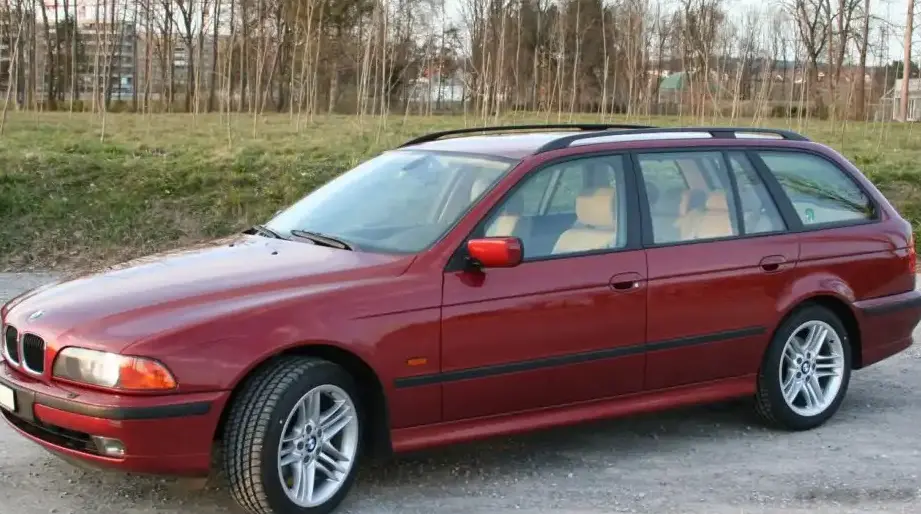
The BMW 5 Series Touring (E39) 525tds Automatic, produced between 1996 and 2000, represents a unique offering within the broader E39 5 Series range. This variant combined the practicality of the touring (station wagon) body style with BMW’s renowned diesel technology, specifically the M51D25 engine, paired with a five-speed automatic transmission. Positioned as a mid-range option, the 525tds aimed to deliver a balance of fuel efficiency, comfortable cruising, and respectable performance for European markets where diesel engines were – and continue to be – highly favored. It served as an alternative to the petrol-powered 523i, 528i, and 530i models, and the higher-performance 535d.
Technical Specifications
| Brand | BMW |
| Model | 5 Series |
| Generation | 5 Series Touring (E39) |
| Type (Engine) | 525tds (143 Hp) Automatic |
| Start of production | 1996 |
| End of production | 2000 |
| Powertrain Architecture | Internal Combustion engine |
| Body type | Station wagon (estate) |
| Seats | 5 |
| Doors | 5 |
| Fuel consumption (urban) | 11 l/100 km (21.4 US mpg, 25.7 UK mpg, 9.1 km/l) |
| Fuel consumption (extra urban) | 6 l/100 km (39.2 US mpg, 47.1 UK mpg, 16.7 km/l) |
| Fuel Type | Diesel |
| Acceleration 0 – 100 km/h | 10.7 sec |
| Acceleration 0 – 62 mph | 10.7 sec |
| Acceleration 0 – 60 mph | 10.2 sec |
| Maximum speed | 210 km/h (130.49 mph) |
| Weight-to-power ratio | 11 kg/Hp, 90.8 Hp/tonne |
| Weight-to-torque ratio | 5.6 kg/Nm, 177.8 Nm/tonne |
| Power | 143 Hp @ 4600 rpm |
| Power per litre | 57.2 Hp/l |
| Torque | 280 Nm @ 2200 rpm (206.52 lb.-ft. @ 2200 rpm) |
| Engine layout | Front, Longitudinal |
| Engine Model/Code | M51D25 |
| Engine displacement | 2498 cm3 (152.44 cu. in.) |
| Number of cylinders | 6 |
| Engine configuration | Inline |
| Cylinder Bore | 80 mm (3.15 in.) |
| Piston Stroke | 82.8 mm (3.26 in.) |
| Compression ratio | 22:1 |
| Number of valves per cylinder | 2 |
| Fuel injection system | Precombustion chamber injection |
| Engine aspiration | Turbocharger, Intercooler |
| Valvetrain | OHC |
| Engine oil capacity | 6.75 l (7.13 US qt | 5.94 UK qt) |
| Coolant | 10 l (10.57 US qt | 8.8 UK qt) |
| Kerb Weight | 1575 kg (3472.28 lbs.) |
| Max. weight | 2205 kg (4861.19 lbs.) |
| Max load | 630 kg (1388.91 lbs.) |
| Trunk (boot) space – minimum | 410 l (14.48 cu. ft.) |
| Trunk (boot) space – maximum | 1525 l (53.85 cu. ft.) |
| Fuel tank capacity | 70 l (18.49 US gal | 15.4 UK gal) |
| Length | 4805 mm (189.17 in.) |
| Width | 1800 mm (70.87 in.) |
| Height | 1440 mm (56.69 in.) |
| Wheelbase | 2850 mm (112.2 in.) |
| Front track | 1512 mm (59.53 in.) |
| Rear (Back) track | 1522 mm (59.92 in.) |
| Ride height (ground clearance) | 120 mm (4.72 in.) |
| Drivetrain Architecture | Rear wheel drive |
| Number of gears and type of gearbox | 5 gears, automatic transmission |
| Front suspension | Wishbone |
| Rear suspension | Inclined Lever |
| Front brakes | Ventilated discs |
| Rear brakes | Ventilated discs |
| Assisting systems | ABS (Anti-lock braking system) |
| Steering type | Steering rack and pinion |
| Power steering | Hydraulic Steering |
| Tires size | 205/65 R16 |
| Wheel rims size | 16 |
Powertrain & Engine Architecture
The heart of the 525tds is the BMW M51D25 engine, a 2.5-liter inline-six diesel. This engine utilized precombustion chamber injection, a system common in European diesels of the era, offering a balance between efficiency and refinement. The M51 family was known for its durability and relatively quiet operation for a diesel. A turbocharger with an intercooler was employed to boost power output to 143 horsepower and 280 Nm (206.52 lb-ft) of torque. The engine’s longitudinal mounting and rear-wheel-drive configuration were typical for BMW models of the time. The five-speed automatic transmission, a ZF-sourced unit, was specifically calibrated to suit the diesel engine’s torque characteristics. It wasn’t designed for rapid shifts, but rather smooth, comfortable gear changes optimized for fuel economy and relaxed cruising.
Driving Characteristics
The 525tds Automatic offered a distinctly different driving experience compared to its petrol-powered siblings or even the more powerful 535d. Acceleration was respectable, with a 0-60 mph time of around 10.2 seconds, but the focus was on effortless cruising and fuel efficiency. The automatic transmission, while smooth, lacked the responsiveness of a manual gearbox. The torque-rich diesel engine provided ample pulling power for everyday driving and highway overtaking, but it didn’t rev as freely or enthusiastically as the petrol engines. The gear ratios were optimized for economy, meaning the engine often operated at lower RPMs, contributing to its quiet operation and reduced fuel consumption. Compared to the manual version of the 525tds, the automatic sacrificed some performance and driver engagement.
Equipment & Trim Levels
The 525tds Automatic typically came equipped with a reasonable level of standard features. This included power windows, central locking, air conditioning, and an AM/FM radio. Interior upholstery was usually cloth, although leather was available as an option. Dashboard trim was typically wood or a metallic finish. Optional extras included a sunroof, heated seats, a premium sound system, and BMW’s navigation system. The trim level was generally considered mid-range, offering a good balance of comfort and features without the luxury appointments of the higher-end models.
Chassis & Braking
The E39 5 Series chassis was renowned for its balance and handling. The 525tds utilized a wishbone front suspension and an inclined lever rear suspension. Braking was handled by ventilated discs on all four wheels, coupled with an Anti-lock Braking System (ABS). Due to the added weight of the diesel engine and automatic transmission, the 525tds often featured slightly stiffer suspension components compared to the lighter petrol models. The steering was a hydraulic power-assisted rack and pinion system, providing precise and responsive control.
Market Reception & Comparison
The 525tds Automatic was well-received in European markets, particularly by drivers who prioritized fuel economy and long-distance comfort. Critics praised its quiet engine, smooth ride, and spacious interior. However, some reviewers noted the automatic transmission’s lack of responsiveness and the car’s relatively modest performance compared to the petrol-powered models. Compared to the 523i, the 525tds offered superior fuel economy and torque, but less outright power. Against the 535d, it lacked the performance of the more powerful diesel, but was significantly more affordable. Reliability was generally good, although the precombustion chamber injection system could require maintenance over time.
Legacy
The BMW E39 5 Series, in general, is considered a classic of the era, and the 525tds Automatic holds a special place for diesel enthusiasts. The M51D25 engine proved to be remarkably durable, and many examples are still on the road today. While not as sought-after as the higher-performance models, the 525tds offers a unique combination of practicality, comfort, and fuel efficiency. In the used car market, these models are typically priced lower than their petrol counterparts, making them an attractive option for buyers seeking a well-built and reliable touring car. The precombustion chamber injection system does require specialized knowledge for maintenance, which can be a factor for potential buyers.