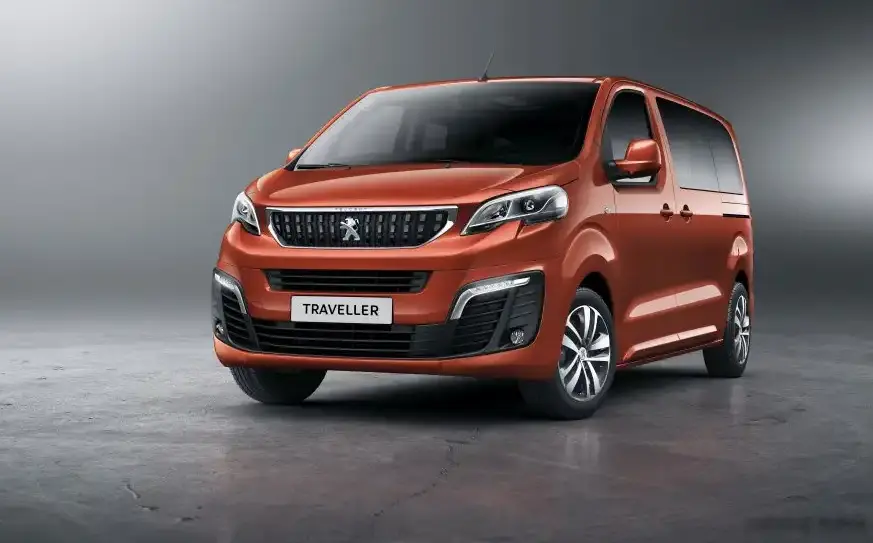
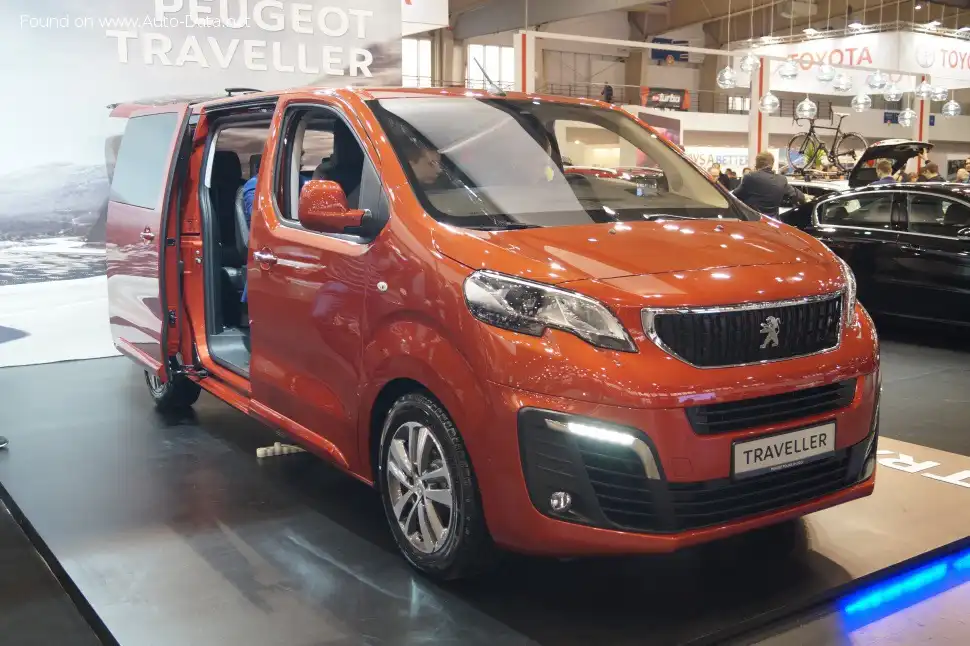
The Peugeot Traveller L3 e-Traveller 75 kWh, producing 136 horsepower, represents Peugeot’s entry into the electric minivan segment, launched with the facelift in April 2024. Positioned as a versatile family and commercial vehicle, the e-Traveller L3 is a key component of Peugeot’s broader electrification strategy. It builds upon the existing Traveller platform (based on the EMP2 architecture) but replaces the internal combustion engine options with a fully electric powertrain. The “L3” designation indicates a long wheelbase version, offering increased interior space and cargo capacity compared to the standard L2 model. This variant specifically targets buyers seeking a practical, spacious, and environmentally conscious vehicle for both personal and professional use.
Technical Specifications
| Brand | Peugeot |
| Model | Traveller |
| Generation | Traveller L3 (facelift 2024) |
| Type (Engine) | e-Traveller 75 kWh (136 Hp) |
| Start of production | April, 2024 |
| Powertrain Architecture | BEV (Electric Vehicle) |
| Body type | Minivan |
| Seats | 5-8 |
| Doors | 5 |
| Fuel Type | Electricity |
| Acceleration 0 – 100 km/h | 14.2 sec |
| Acceleration 0 – 62 mph | 14.2 sec |
| Acceleration 0 – 60 mph | 13.5 sec |
| Maximum speed | 130 km/h (80.78 mph) |
| Weight-to-power ratio | 15.9 kg/Hp, 62.8 Hp/tonne |
| Weight-to-torque ratio | 8 kg/Nm, 124.7 Nm/tonne |
| Gross battery capacity | 75 kWh |
| Battery technology | Lithium-ion (Li-Ion) |
| Battery location | Below the floor |
| All-electric range (WLTP) | 333-348 km (206.92 – 216.24 mi) |
| Average Energy consumption (WLTP) | 24.6-25.0 kWh/100 km (39.59 – 40.23 kWh/100 mi) |
| MPGe | 85 – 84 |
| km/kWh | 4.1 – 4 |
| mi/kWh | 2.5 – 2.5 |
| Electric motor power | 136 Hp @ 6000 rpm |
| Electric motor Torque | 270 Nm (199.14 lb.-ft.) |
| Electric motor model/code | ZK01 |
| Electric motor location | Front axle, Transverse |
| Electric motor type | Synchronous |
| Kerb Weight | 2165-2486 kg (4773.01 – 5480.69 lbs.) |
| Max. weight | 3090 kg (6812.28 lbs.) |
| Max load | 604-925 kg (1331.59 – 2039.28 lbs.) |
| Trunk (boot) space – minimum | 989-1384 l (34.93 – 48.88 cu. ft.) |
| Trunk (boot) space – maximum | 3300 l (116.54 cu. ft.) |
| Max. roof load | 150 kg (330.69 lbs.) |
| Permitted trailer load with brakes (12%) | 1000 kg (2204.62 lbs.) |
| Permitted trailer load without brakes | 750 kg (1653.47 lbs.) |
| Permitted towbar download | 60 kg (132.28 lbs.) |
| Length | 5333 mm (209.96 in.) |
| Width | 1920 mm (75.59 in.) |
| Width with mirrors folded | 2010 mm (79.13 in.) |
| Width including mirrors | 2204 mm (86.77 in.) |
| Height | 1890 mm (74.41 in.) |
| Wheelbase | 3275 mm (128.94 in.) |
| Front track | 1627 mm (64.06 in.) |
| Rear (Back) track | 1600 mm (62.99 in.) |
| Front overhang | 904 mm (35.59 in.) |
| Rear overhang | 1153 mm (45.39 in.) |
| Minimum turning circle | 12.9 m (42.32 ft.) |
| Drivetrain Architecture | One electric motor drives the front wheels. |
| Drive wheel | Front wheel drive |
| Number of gears | 1 |
| Gearbox type | automatic transmission |
| Front brakes | Ventilated discs |
| Rear brakes | Disc |
| Assisting systems | ABS (Anti-lock braking system) |
| Steering type | Steering rack and pinion |
| Power steering | Electric Steering |
| Tires size | 225/55 R17 101V |
| Wheel rims size | 17 |
Powertrain & Engine Architecture
The e-Traveller L3 utilizes a single electric motor, designated ZK01, producing 136 horsepower at 6000 rpm and 270 Nm (199.14 lb.-ft.) of torque. This synchronous motor is mounted transversely at the front axle, driving the front wheels. Power is delivered through a single-speed automatic transmission, characteristic of most electric vehicles. The heart of the system is the 75 kWh lithium-ion battery pack, positioned under the vehicle floor to optimize space and lower the center of gravity. The battery supports fast charging capabilities, allowing for a significant range boost in a relatively short period when connected to a compatible charging station. The vehicle’s electronic control unit (ECU) manages the power flow between the battery, motor, and other vehicle systems, optimizing efficiency and performance.
Driving Characteristics
The 136 hp electric powertrain in the e-Traveller L3 prioritizes efficiency and smooth operation over outright performance. Acceleration from 0-60 mph takes approximately 13.5 seconds, and the top speed is limited to 80.78 mph. While not particularly quick, the instant torque delivery of the electric motor provides adequate responsiveness for everyday driving situations. The single-speed transmission ensures seamless acceleration, without the gear changes associated with traditional automatic transmissions. The long wheelbase and relatively high center of gravity contribute to a comfortable ride, but also result in noticeable body roll during cornering. Compared to internal combustion engine versions of the Traveller, the e-Traveller offers a quieter and more refined driving experience.
Equipment & Trim Levels
The e-Traveller L3 typically comes well-equipped, reflecting its position as a modern family vehicle. Standard features often include air conditioning, a touchscreen infotainment system with smartphone integration (Apple CarPlay and Android Auto), and a suite of safety features such as automatic emergency braking, lane departure warning, and cruise control. Higher trim levels may add features like a panoramic sunroof, leather upholstery, and advanced driver-assistance systems. The L3 configuration provides ample space for passengers and luggage, with seating for up to eight occupants depending on the configuration. Optional extras can include a tow hitch, upgraded audio system, and various interior customization options.
Chassis & Braking
The e-Traveller L3 utilizes a conventional suspension setup, featuring MacPherson struts at the front and a twist beam axle at the rear. The suspension is tuned for comfort, prioritizing ride quality over sporty handling. Braking duties are handled by ventilated discs at the front and solid discs at the rear, supplemented by an anti-lock braking system (ABS) and electronic brakeforce distribution (EBD). The added weight of the battery pack necessitates a robust braking system to ensure adequate stopping power. Electric steering provides light and precise steering feel, making the vehicle easy to maneuver in urban environments.
Market Reception & Comparison
The Peugeot e-Traveller L3 has been generally well-received by critics and consumers alike, praised for its spacious interior, comfortable ride, and zero-emission operation. Compared to other electric minivans, such as the Volkswagen ID. Buzz, the e-Traveller offers a more affordable price point and a more conventional interior layout. However, it may lack the distinctive styling and advanced technology features of some competitors. Fuel economy, expressed as MPGe, is estimated to be in the range of 84-85, and energy consumption is around 24.6-25.0 kWh per 100 km. Reliability reports are still emerging, but early indications suggest that the electric powertrain is proving to be durable and dependable.
Legacy
The Peugeot e-Traveller L3 represents a significant step forward in Peugeot’s commitment to electric mobility. The 75 kWh powertrain, while not the most powerful available, offers a good balance of range and performance for everyday use. As battery technology continues to improve and charging infrastructure expands, the e-Traveller is likely to become an increasingly popular choice for families and businesses seeking a practical and sustainable transportation solution. The long-term reliability of the electric powertrain remains to be seen, but Peugeot’s reputation for build quality and engineering suggests that the e-Traveller will prove to be a durable and dependable vehicle in the used car market.