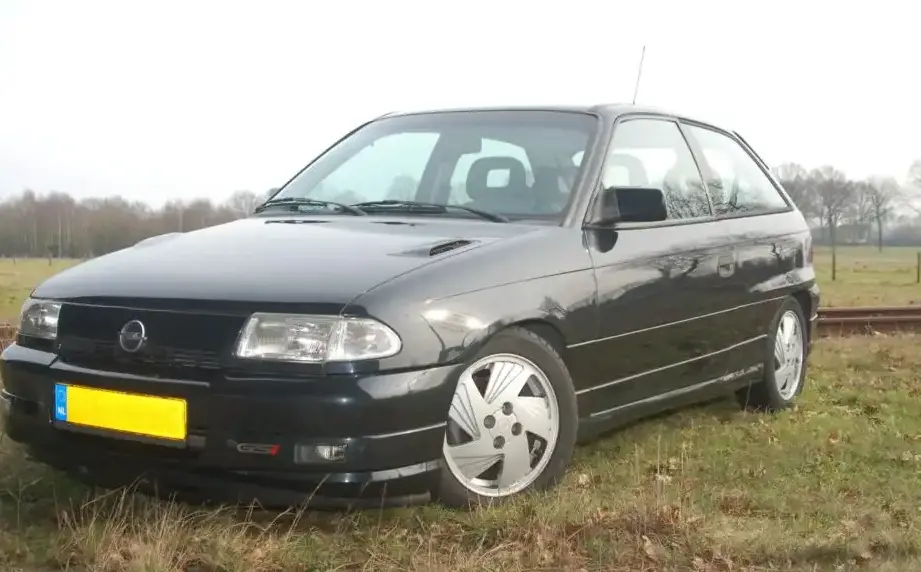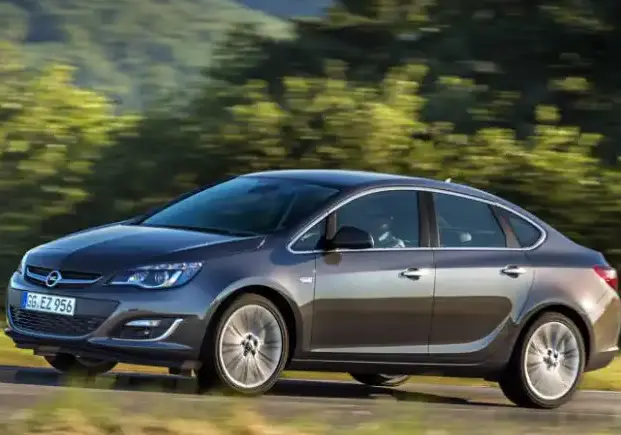
The Opel Astra J Sedan 1.6 CDTI (110 hp) was a mainstream offering within the broader Astra J Sedan range, produced between 2014 and 2018. Positioned as a fuel-efficient and practical option, it catered to buyers seeking a comfortable and economical compact sedan. This variant played a significant role in Opel’s European market strategy, offering a diesel-powered alternative to gasoline engines, and appealing to those prioritizing low running costs. It was part of the J series, which represented a substantial step forward for the Astra in terms of refinement, technology, and overall design.
Technical Specifications
| Brand | Opel |
| Model | Astra |
| Generation | Astra J Sedan |
| Type (Engine) | 1.6 CDTI (110 Hp) |
| Start of production | 2014 |
| End of production | 2018 |
| Powertrain Architecture | Internal Combustion engine |
| Body type | Sedan |
| Seats | 5 |
| Doors | 4 |
| Fuel consumption (urban) | 5.6 l/100 km (42 US mpg, 50.4 UK mpg, 17.9 km/l) |
| Fuel consumption (extra urban) | 4 l/100 km (58.8 US mpg, 70.6 UK mpg, 25 km/l) |
| Fuel consumption (combined) | 4.6 l/100 km (51.1 US mpg, 61.4 UK mpg, 21.7 km/l) |
| CO2 emissions | 122 g/km |
| Fuel Type | Diesel |
| Acceleration 0 – 100 km/h | 12.4 sec |
| Acceleration 0 – 62 mph | 12.4 sec |
| Acceleration 0 – 60 mph | 11.8 sec |
| Maximum speed | 188 km/h (116.82 mph) |
| Emission standard | Euro 5 |
| Weight-to-power ratio | 12.8 kg/Hp, 78.3 Hp/tonne |
| Weight-to-torque ratio | 4.7 kg/Nm, 213.5 Nm/tonne |
| Power | 110 Hp @ 3500 rpm |
| Power per litre | 68.8 Hp/l |
| Torque | 300 Nm @ 1750-2000 rpm (221.27 lb.-ft. @ 1750-2000 rpm) |
| Engine layout | Front, Transverse |
| Engine Model/Code | B16DTL |
| Engine displacement | 1598 cm3 (97.52 cu. in.) |
| Number of cylinders | 4 |
| Engine configuration | Inline |
| Cylinder Bore | 79.7 mm (3.14 in.) |
| Piston Stroke | 80.1 mm (3.15 in.) |
| Compression ratio | 16:1 |
| Number of valves per cylinder | 4 |
| Fuel injection system | Diesel Commonrail |
| Engine aspiration | Turbocharger, Intercooler |
| Engine oil capacity | 5 l (5.28 US qt | 4.4 UK qt) |
| Coolant | 6.2 l (6.55 US qt | 5.46 UK qt) |
| Kerb Weight | 1405 kg (3097.49 lbs.) |
| Max. weight | 1895 kg (4177.76 lbs.) |
| Max load | 490 kg (1080.27 lbs.) |
| Trunk (boot) space – minimum | 460 l (16.24 cu. ft.) |
| Trunk (boot) space – maximum | 1010 l (35.67 cu. ft.) |
| Fuel tank capacity | 56 l (14.79 US gal | 12.32 UK gal) |
| Length | 4658 mm (183.39 in.) |
| Width | 1814 mm (71.42 in.) |
| Width including mirrors | 2013 mm (79.25 in.) |
| Height | 1500 mm (59.06 in.) |
| Wheelbase | 2685 mm (105.71 in.) |
| Front track | 1541 mm (60.67 in.) |
| Rear (Back) track | 1551 mm (61.06 in.) |
| Front overhang | 974 mm (38.35 in.) |
| Rear overhang | 999 mm (39.33 in.) |
| Minimum turning circle | 11.5 m (37.73 ft.) |
| Drivetrain Architecture | ICE to Front Wheels |
| Drive wheel | Front wheel drive |
| Number of gears | 6 |
| Gearbox type | Manual transmission |
| Front brakes | Ventilated discs |
| Assisting systems | ABS (Anti-lock braking system) |
| Steering type | Steering rack and pinion |
| Power steering | Electric Steering |
INTRODUCTION
The Opel Astra J Sedan 1.6 CDTI (110 hp), launched in 2014, represented a key component of Opel’s strategy to offer a diverse range of efficient and practical vehicles. Built on the 1HX0 platform (shared with the Chevrolet Cruze), the Astra J Sedan aimed to provide a more conventional sedan body style alongside the hatchback version. The 1.6 CDTI engine, part of Opel’s new generation of small-capacity diesel engines, was designed to deliver a balance of performance and fuel economy. This particular variant occupied the lower-mid range of the Astra J Sedan lineup, serving as a more affordable and economical alternative to the higher-powered diesel and gasoline options.
Powertrain & Engine Architecture
The heart of the Astra J Sedan 1.6 CDTI (110 hp) is the B16DTL engine, a 1.6-liter inline-four cylinder diesel. This engine utilizes a common-rail direct injection system, delivering fuel directly into the combustion chamber at extremely high pressure. This technology, coupled with a turbocharger and intercooler, allows for efficient combustion and increased power output. The engine boasts 110 horsepower at 3500 rpm and a respectable 300 Nm (221 lb-ft) of torque between 1750 and 2000 rpm. The engine features four valves per cylinder and a compression ratio of 16:1, contributing to its efficiency. The 6-speed manual transmission was standard, providing a good balance between fuel economy and driver control. The engine also incorporated a Start & Stop system and a particulate filter to reduce emissions.
Driving Characteristics
The 1.6 CDTI (110 hp) variant of the Astra J Sedan offered a comfortable and refined driving experience, prioritizing fuel efficiency over outright performance. Acceleration from 0 to 100 km/h (0-62 mph) took approximately 12.4 seconds, which was noticeably slower than the more powerful diesel options. However, the engine’s strong low-end torque made it well-suited for everyday driving and overtaking maneuvers. The 6-speed manual transmission allowed drivers to effectively manage the engine’s power band, while the relatively long gear ratios contributed to improved fuel economy. Compared to the higher-output 1.6 CDTI (136 hp) or the gasoline engines, this variant felt less responsive, but it provided a smoother and more relaxed driving experience.
Equipment & Trim Levels
The Astra J Sedan 1.6 CDTI (110 hp) typically came with a reasonable level of standard equipment. This included air conditioning, electric front windows, a basic audio system with USB connectivity, and ABS brakes. Higher trim levels offered additional features such as alloy wheels, cruise control, a more advanced infotainment system with touchscreen display, and parking sensors. Interior upholstery was typically cloth, with options for upgraded materials on higher trims. The dashboard layout was functional and well-designed, with a focus on ergonomics and ease of use.
Chassis & Braking
The Astra J Sedan 1.6 CDTI (110 hp) featured a MacPherson strut front suspension and a torsion beam rear suspension. This setup provided a good balance between ride comfort and handling. The front brakes were ventilated discs, while the rear brakes were typically solid discs, providing adequate stopping power for the vehicle’s weight and performance. Electric power steering was standard, offering light and precise steering feel. The chassis was designed to minimize weight and maximize rigidity, contributing to improved handling and stability.
Market Reception & Comparison
The Astra J Sedan 1.6 CDTI (110 hp) was generally well-received by automotive critics for its fuel efficiency and comfortable ride. It was often praised as a practical and economical choice for those seeking a compact sedan. However, some critics noted that the engine lacked the punch of the more powerful options. Compared to the 1.6 CDTI (136 hp) variant, the 110 hp version offered lower running costs but sacrificed some performance. Against gasoline-powered Astra J Sedans, the 1.6 CDTI provided significantly better fuel economy, making it an attractive option for high-mileage drivers.
Legacy
The 1.6 CDTI engine, including the B16DTL variant found in the Astra J Sedan, has proven to be a relatively reliable powertrain. While some early examples experienced issues with the diesel particulate filter (DPF), these were largely addressed with software updates and improved maintenance procedures. Today, used Astra J Sedan 1.6 CDTI models represent a good value proposition for buyers seeking an affordable and fuel-efficient compact sedan. The engine’s durability and relatively low maintenance costs make it a practical choice for everyday use. However, potential buyers should ensure that the DPF has been properly maintained and that the vehicle has a full service history.