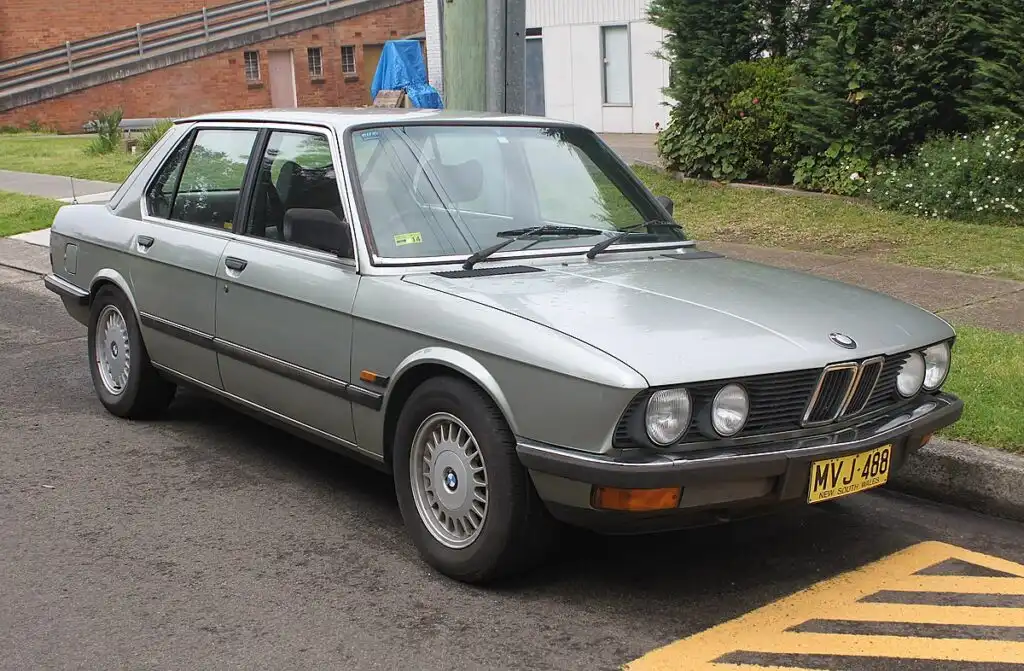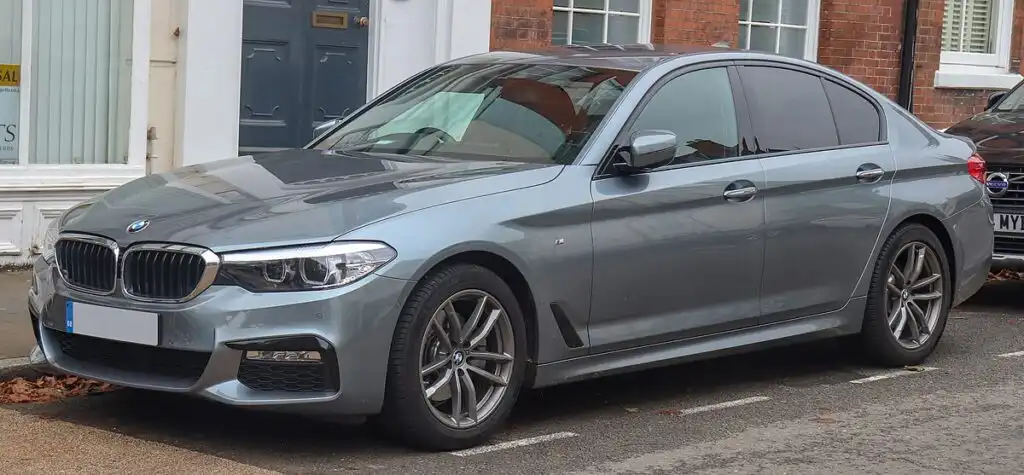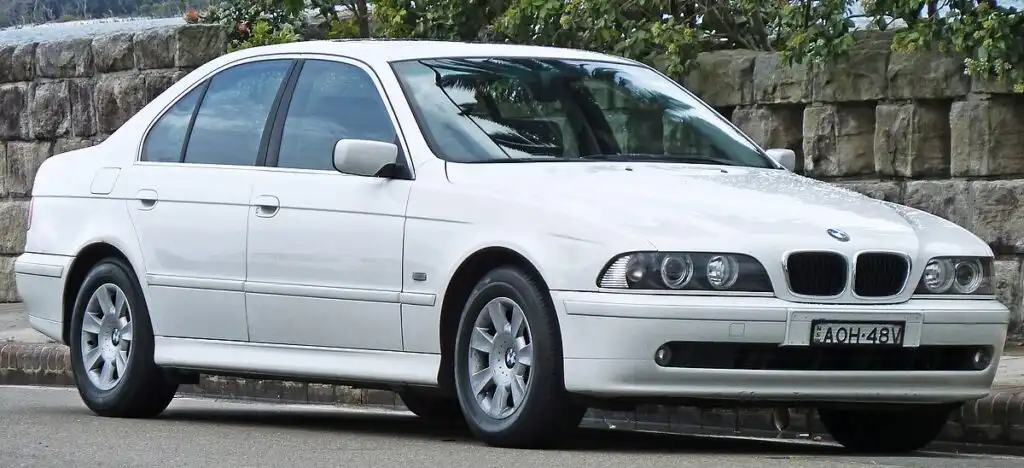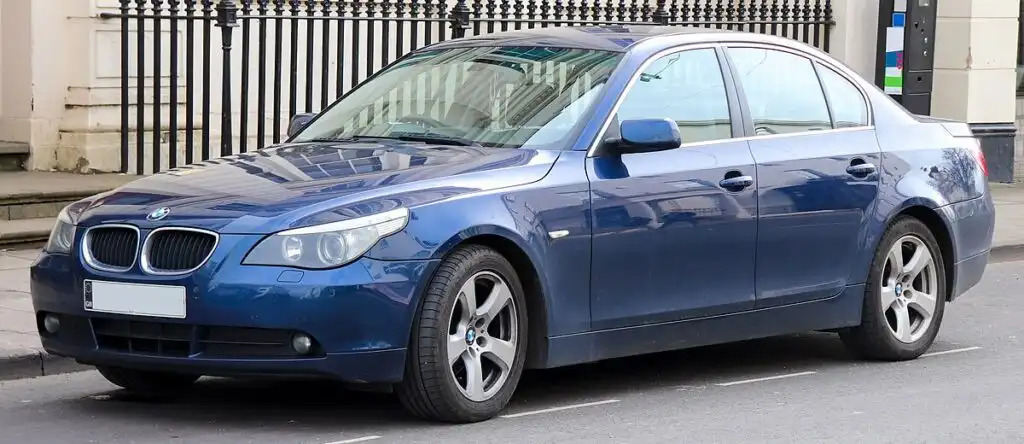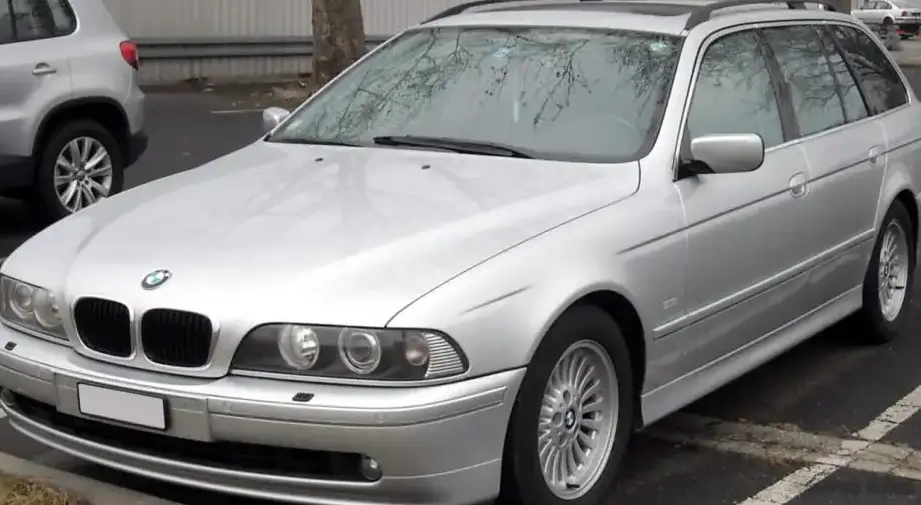
The BMW 5 Series Touring (E39) facelift 520d, produced from 2000 to 2003, represented BMW’s entry point into the premium wagon segment with a diesel engine. This variant, powered by the M47D20 engine producing 136 horsepower, offered a blend of practicality, fuel efficiency, and the driving experience expected from the 5 Series. It occupied the lower-mid range of the E39 Touring lineup, positioned below the more powerful 530d and petrol-powered models like the 528i and 540i. The 520d Touring aimed to appeal to buyers prioritizing economy and space without sacrificing BMW’s core values of build quality and driving dynamics.
Technical Specifications
| Brand | BMW |
| Model | 5 Series |
| Generation | 5 Series Touring (E39, Facelift 2000) |
| Type (Engine) | 520d (136 Hp) |
| Start of production | 2000 |
| End of production | 2003 |
| Powertrain Architecture | Internal Combustion engine |
| Body type | Station wagon (estate) |
| Seats | 5 |
| Doors | 5 |
| Fuel consumption (urban) | 8.1 l/100 km (29 US mpg, 34.9 UK mpg, 12.3 km/l) |
| Fuel consumption (extra urban) | 5 l/100 km (47 US mpg, 56.5 UK mpg, 20 km/l) |
| Fuel Type | Diesel |
| Acceleration 0 – 100 km/h | 10.9 sec |
| Acceleration 0 – 62 mph | 10.9 sec |
| Acceleration 0 – 60 mph | 10.4 sec |
| Maximum speed | 204 km/h (126.76 mph) |
| Weight-to-power ratio | 11.7 kg/Hp, 85.3 Hp/tonne |
| Weight-to-torque ratio | 5.7 kg/Nm, 175.5 Nm/tonne |
| Power | 136 Hp @ 4000 rpm |
| Power per litre | 69.7 Hp/l |
| Torque | 280 Nm @ 1750 rpm (206.52 lb.-ft. @ 1750 rpm) |
| Engine layout | Front, Longitudinal |
| Engine Model/Code | M47D20 |
| Engine displacement | 1951 cm3 (119.06 cu. in.) |
| Number of cylinders | 4 |
| Engine configuration | Inline |
| Cylinder Bore | 84 mm (3.31 in.) |
| Piston Stroke | 88 mm (3.46 in.) |
| Compression ratio | 19:1 |
| Number of valves per cylinder | 4 |
| Fuel injection system | Diesel Commonrail |
| Engine aspiration | Turbocharger, Intercooler |
| Valvetrain | OHC |
| Engine oil capacity | 6 l (6.34 US qt | 5.28 UK qt) |
| Coolant | 8.4 l (8.88 US qt | 7.39 UK qt) |
| Kerb Weight | 1595 kg (3516.37 lbs.) |
| Max. weight | 2220 kg (4894.26 lbs.) |
| Max load | 625 kg (1377.89 lbs.) |
| Trunk (boot) space – minimum | 410 l (14.48 cu. ft.) |
| Trunk (boot) space – maximum | 1525 l (53.85 cu. ft.) |
| Fuel tank capacity | 70 l (18.49 US gal | 15.4 UK gal) |
| Length | 4805 mm (189.17 in.) |
| Width | 1800 mm (70.87 in.) |
| Height | 1440 mm (56.69 in.) |
| Wheelbase | 2830 mm (111.42 in.) |
| Front track | 1512 mm (59.53 in.) |
| Rear (Back) track | 1526 mm (60.08 in.) |
| Drivetrain Architecture | The Internal combustion engine (ICE) drives the rear wheels of the vehicle. |
| Drive wheel | Rear wheel drive |
| Number of gears and type of gearbox | 5 gears, manual transmission |
| Front suspension | Wishbone |
| Rear suspension | Inclined Lever |
| Front brakes | Ventilated discs |
| Rear brakes | Disc |
| Assisting systems | ABS (Anti-lock braking system) |
| Steering type | Steering rack and pinion |
| Power steering | Hydraulic Steering |
| Tires size | 205/65R15 V |
| Wheel rims size | 15 |
Introduction
The E39 5 Series Touring, launched in 1996, brought BMW’s renowned driving dynamics and luxury to the practical station wagon format. The facelifted version, introduced in 2000, featured subtle styling revisions and, crucially, updated engine options, including the M47D20-powered 520d. This model aimed to broaden the appeal of the E39 Touring by offering a more fuel-efficient and accessible entry point into the range. The 520d Touring was primarily sold in Europe, where diesel engines were – and continue to be – highly favored for their economy and torque. It was not officially offered in the North American market, where BMW focused on petrol-powered models.
Powertrain & Engine Architecture
The heart of the 520d Touring is the M47D20, a 2.0-liter inline-four diesel engine. This engine utilizes common rail direct injection, a technology that significantly improved fuel efficiency and reduced noise compared to earlier diesel injection systems. The M47D20 features a single overhead camshaft (OHC) operating four valves per cylinder. A turbocharger with an intercooler is employed to boost power and torque, delivering 136 horsepower at 4000 rpm and 280 Nm (206.52 lb-ft) of torque at a low 1750 rpm. The engine’s relatively high compression ratio of 19:1 is typical for diesel engines and contributes to its efficiency. The 5-speed manual transmission was standard, providing a balance between fuel economy and drivability. While an automatic transmission was available, it was less common and often criticized for slightly diminishing the car’s responsiveness.
Driving Characteristics
The 520d Touring, with its 136 hp and 280 Nm of torque, offered a respectable, if not exhilarating, driving experience. Acceleration from 0-60 mph took around 10.4 seconds, and top speed was limited to 204 km/h (126.76 mph). The engine’s strong low-end torque made it well-suited for everyday driving and overtaking maneuvers. However, it lacked the outright punch of the 530d or the petrol-powered variants. The manual transmission provided precise shifts and allowed drivers to make the most of the available power. The automatic transmission, while convenient, could feel sluggish and sometimes hunted for gears, especially under heavy load. The E39 Touring’s well-tuned suspension provided a comfortable ride without sacrificing handling precision, a hallmark of BMW engineering.
Equipment & Trim Levels
The 520d Touring typically came with a reasonable level of standard equipment, including power windows, central locking, air conditioning, and an anti-lock braking system (ABS). Interior upholstery was usually cloth, although leather was available as an option. Trim levels varied depending on the market, but common options included a sunroof, heated seats, a premium sound system, and parking sensors. The dashboard layout was typical of the E39, with a clear and functional design. The wood trim was standard, but aluminum trim was also available for a sportier look.
Chassis & Braking
The E39 Touring utilized a robust chassis with a MacPherson strut front suspension and an independent multi-link rear suspension. This setup provided a good balance of ride comfort and handling. The 520d Touring typically featured ventilated disc brakes at the front and solid disc brakes at the rear. ABS was standard, enhancing braking performance and stability. The steering was a hydraulic power-assisted rack and pinion system, offering precise and responsive control.
Market Reception & Comparison
The 520d Touring was generally well-received by automotive critics as a practical and economical option within the premium wagon segment. It was praised for its fuel efficiency, comfortable ride, and spacious interior. However, some critics noted that the engine lacked the refinement and power of its larger counterparts. Compared to the 530d, the 520d offered significantly lower running costs but sacrificed performance. Against competitors like the Mercedes-Benz E-Class Estate and the Audi A6 Avant, the 520d Touring offered a more engaging driving experience, although it may have been slightly less luxurious in some respects.
Legacy
The M47D20 engine, while not without its quirks, proved to be a relatively reliable unit when properly maintained. Common issues included injector failures and turbocharger wear, but these were often addressable with preventative maintenance. Today, the E39 520d Touring is a sought-after classic among BMW enthusiasts, particularly those looking for a practical and economical way to experience the E39 platform. Well-maintained examples command reasonable prices in the used car market, and the car’s enduring appeal is a testament to BMW’s engineering prowess and the timeless design of the E39.