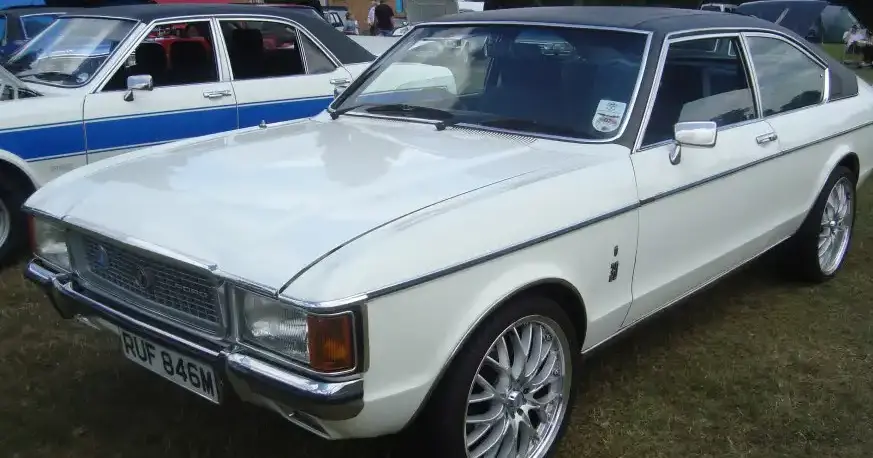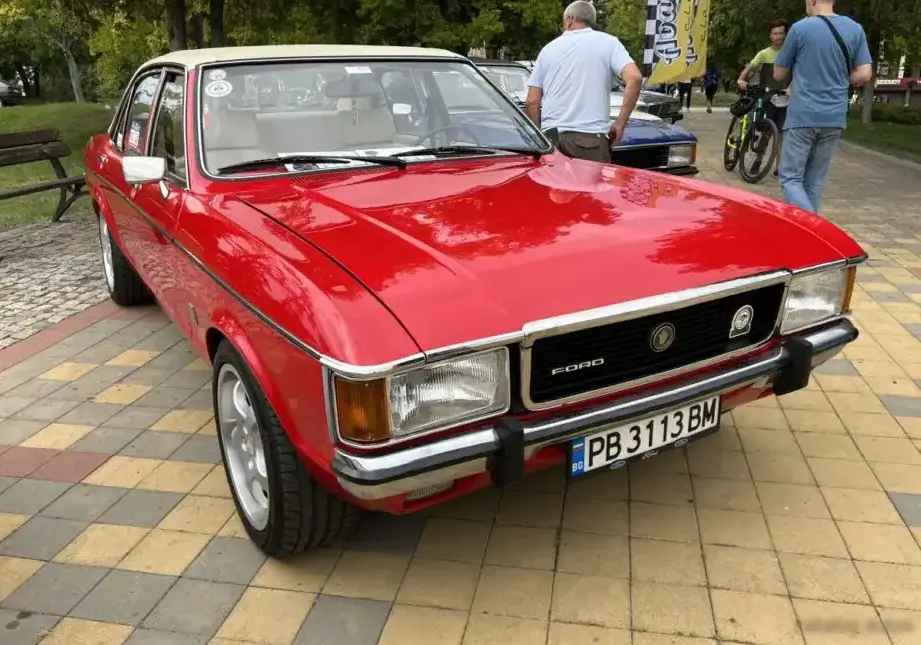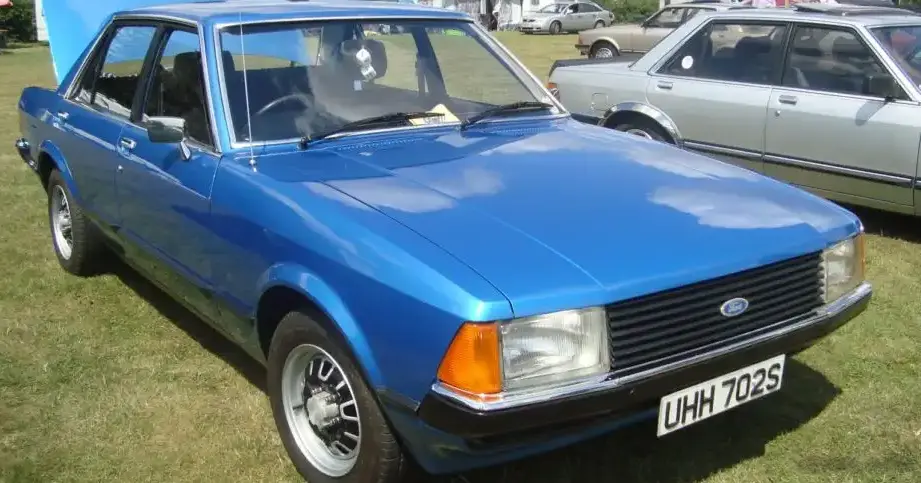
The Ford Granada GU 2.3, produced between 1977 and 1979, represented a mid-range offering within the larger Granada (GU) series. Introduced as a replacement for the Ford Zephyr and Zodiac, the Granada aimed to provide a more modern and spacious alternative in the large family car segment. The GU series, built between 1972 and 1979, was Ford of Britain’s attempt to create a globally competitive vehicle, and the 2.3-liter variant occupied a crucial position in the lineup, balancing affordability with acceptable performance for the era. It was primarily marketed in the United Kingdom and continental Europe, with limited exports to other markets.
Technical Specifications
| Brand | Ford |
| Model | Granada |
| Generation | Granada (GU) |
| Type (Engine) | 2.3 (107 Hp) |
| Start of production | 1977 |
| End of production | 1979 |
| Powertrain Architecture | Internal Combustion engine |
| Body type | Sedan |
| Fuel Type | Petrol (Gasoline) |
| Power | 107 Hp |
| Engine aspiration | Naturally aspirated engine |
| Length | 4630 mm (182.28 in.) |
| Width | 1740 mm (68.5 in.) |
| Height | 1380 mm (54.33 in.) |
| Wheelbase | 2770 mm (109.06 in.) |
Powertrain & Engine Architecture
The Granada 2.3 utilized the Ford Taunus V4 engine, a 60-degree V4 displacing 2294cc (140 cubic inches). This engine, designated as the Type 2300, was a naturally aspirated, overhead camshaft design. While not a particularly sophisticated engine by modern standards, it was known for its relative smoothness compared to inline-four engines of the time. Fuel delivery was managed by a single downdraft carburetor, typically a Ford 32 DFEV, providing adequate but not exceptional fuel atomization. The engine produced 107 horsepower at 5000 rpm and approximately 138 lb-ft of torque at 3000 rpm. The engine block was cast iron, while the cylinder head was aluminum, contributing to a reasonable weight for its size. The transmission paired with the 2.3-liter engine was typically a three-speed automatic, a Borg-Warner unit, although a four-speed manual transmission was also available. The automatic transmission, while offering convenience, did impact acceleration and fuel economy.
Driving Characteristics
The Granada 2.3 automatic offered a comfortable, if not particularly sporty, driving experience. Acceleration was adequate for highway cruising and general commuting, but the 107 horsepower and the weight of the vehicle (approximately 3,200 lbs) meant that brisk acceleration was not a hallmark of this variant. The three-speed automatic transmission featured relatively widely spaced gear ratios, prioritizing fuel economy over performance. The first gear was geared for smooth take-offs, while the top gear was designed for relaxed highway cruising. Compared to the more powerful 3.0-liter inline-six versions of the Granada, the 2.3 automatic felt noticeably slower, particularly when attempting to overtake. However, it offered a smoother and quieter ride than the smaller 1.6-liter models. The steering was power-assisted, providing light and easy maneuverability, but lacked the precision of more modern systems.
Equipment & Trim Levels
The 2.3-liter Granada typically occupied a mid-range position in the lineup. Standard equipment included cloth upholstery, a basic AM radio, and a heater. Power steering was often included as standard, but air conditioning was usually an optional extra. Trim levels varied depending on the market, but generally included options for upgraded interior materials, such as vinyl or leather upholstery, and additional features like a sunroof or electric windows. The dashboard layout was functional and straightforward, with clearly labeled gauges for speed, fuel level, coolant temperature, and battery voltage. The 2.3 models often featured a woodgrain trim on the dashboard and door panels, adding a touch of sophistication.
Chassis & Braking
The Granada GU utilized a traditional body-on-frame construction, providing a robust and durable chassis. The front suspension consisted of independent wishbones and coil springs, while the rear suspension employed a live axle with leaf springs. This setup provided a comfortable ride, but handling was not particularly sharp. Braking was initially accomplished with front disc brakes and rear drum brakes. Later models often featured all-round disc brakes, improving stopping performance. The braking system was hydraulic, with power assistance. Stabilizer bars were fitted to both the front and rear axles, helping to reduce body roll during cornering. The steering was a recirculating ball system, providing relatively light steering effort but lacking the feel of more modern rack-and-pinion systems.
Market Reception & Comparison
The Ford Granada 2.3 automatic was generally well-received as a practical and comfortable family car. Critics praised its spacious interior, comfortable ride, and relatively affordable price. However, the engine’s performance was often criticized as being somewhat underwhelming, particularly when paired with the automatic transmission. Compared to the 3.0-liter inline-six versions, the 2.3 automatic offered significantly less power and acceleration. However, it did offer better fuel economy, which was a significant consideration during the fuel crises of the 1970s. The 2.3 automatic was often seen as a good compromise for buyers who prioritized comfort and economy over outright performance. It competed with other large family cars of the era, such as the Vauxhall Victor, Austin Princess, and Rover SD1.
Legacy
The Ford Granada GU 2.3, while not a particularly groundbreaking vehicle, played an important role in the British automotive landscape of the 1970s. The Taunus V4 engine proved to be reasonably reliable, although it was prone to oil leaks as it aged. The automatic transmission, while not particularly sophisticated, was generally durable. Today, the Granada GU 2.3 is a relatively rare sight on the roads, but it has gained a following among classic car enthusiasts. Parts availability can be challenging, but a dedicated network of suppliers and enthusiasts helps to keep these cars running. The 2.3 automatic is often seen as a desirable entry point into Granada ownership, offering a comfortable and affordable classic car experience. Its enduring appeal lies in its simple design, comfortable ride, and nostalgic charm.