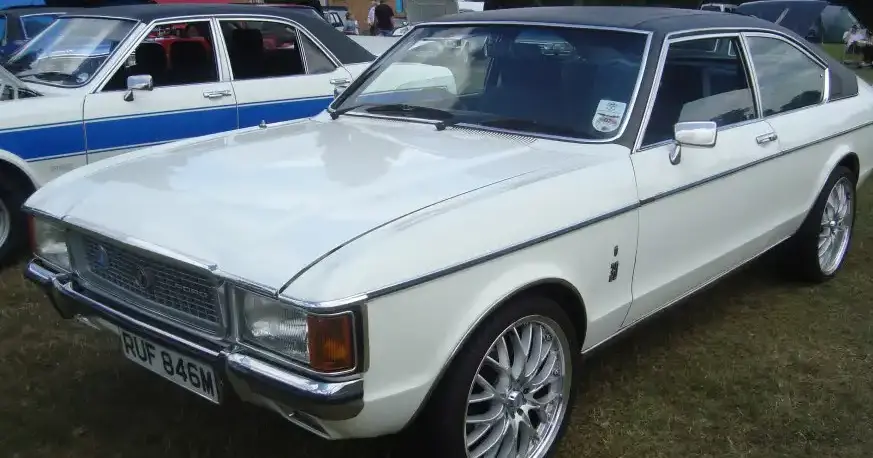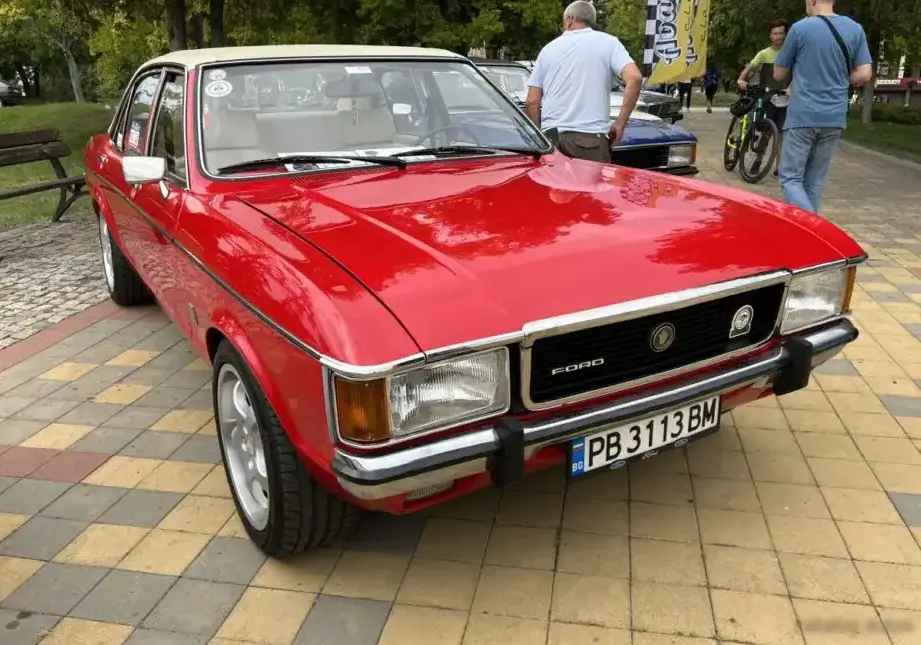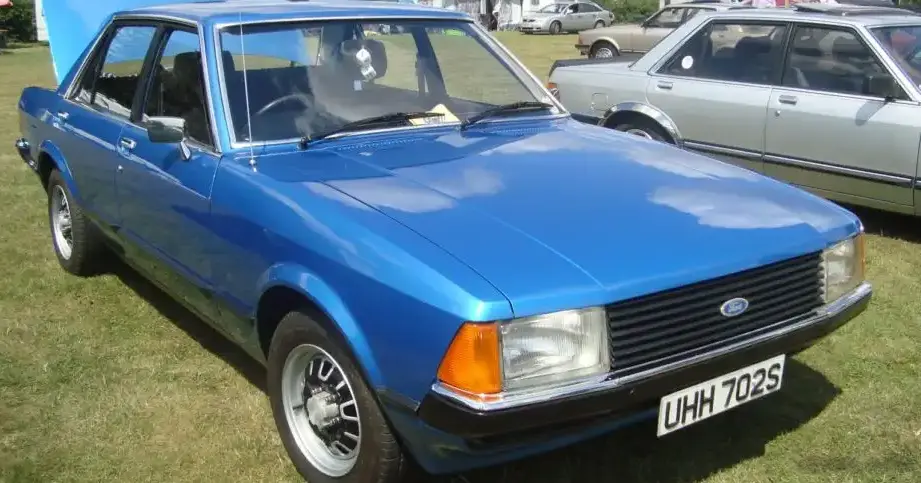
The Ford Granada GU, produced between 1979 and 1985, represented a significant evolution of Ford of Britain’s large family car. The 2.3-liter variant, developing 114 horsepower, occupied a middle ground within the Granada GU lineup, positioned as a more economical alternative to the larger, more powerful V6 engines while offering a step up in performance from the base 2.0-liter models. This version aimed to balance affordability with acceptable performance for typical family motoring needs in the European market. The GU series itself was a substantial redesign of the original Granada, offering improved comfort, refinement, and a more modern aesthetic.
Technical Specifications
| Brand | Ford |
| Model | Granada |
| Generation | Granada (GU) |
| Type (Engine) | 2.3 (114 Hp) |
| Start of production | 1979 |
| End of production | 1985 |
| Powertrain Architecture | Internal Combustion engine |
| Body type | Sedan |
| Fuel Type | Petrol (Gasoline) |
| Power | 114 Hp |
| Engine aspiration | Naturally aspirated engine |
| Length | 4630 mm (182.28 in.) |
| Width | 1740 mm (68.5 in.) |
| Height | 1380 mm (54.33 in.) |
| Wheelbase | 2770 mm (109.06 in.) |
Powertrain & Engine Architecture
The 2.3-liter engine, designated the Cologne 2300, was a four-cylinder, inline engine. It was a relatively simple design, utilizing a cast iron block and an aluminum cylinder head. Fuel delivery was managed by a Bosch K-Jetronic mechanical fuel injection system, a sophisticated system for its time that offered improved fuel efficiency and reduced emissions compared to carbureted engines. The engine featured a single overhead camshaft (SOHC) operating two valves per cylinder. This configuration prioritized reliability and ease of maintenance over outright performance. The 114 horsepower output was achieved at 5500 rpm, with peak torque of approximately 134 lb-ft at 3500 rpm. While Ford offered both manual and automatic transmissions with the 2.3-liter engine, this article focuses on the automatic variant, typically a three-speed unit. This transmission was chosen by many buyers for its convenience, particularly in a large, family-oriented vehicle.
Driving Characteristics
The 2.3-liter automatic Granada GU offered a comfortable, if not particularly sporty, driving experience. The three-speed automatic transmission, while smooth, did detract from acceleration compared to the available five-speed manual. The gear ratios were geared towards fuel economy and relaxed cruising, rather than rapid acceleration. 0-60 mph times were typically in the 11-12 second range, making it adequate for highway merging and overtaking, but not a performance leader. The engine’s torque delivery was relatively linear, providing usable power across a broad rev range. However, it did require the transmission to downshift on inclines or when carrying a full load. Compared to the V6 models, the 2.3-liter felt noticeably less powerful, but it offered a significant improvement in fuel economy. The suspension, tuned for comfort, absorbed bumps well, but body roll was evident during cornering.
Equipment & Trim Levels
The 2.3-liter Granada GU was typically offered in ‘L’, ‘GL’, and ‘Ghia’ trim levels. The base ‘L’ trim was fairly spartan, featuring cloth upholstery, basic instrumentation, and steel wheels. The ‘GL’ trim added features such as a more comfortable interior, upgraded trim, and potentially a vinyl roof. The top-of-the-line ‘Ghia’ trim offered the highest level of luxury, with leather upholstery, wood veneer trim, electric windows, and central locking. Even the base ‘L’ trim included features considered standard for the time, such as a heated rear window and a basic stereo. Optional extras included a sunroof, air conditioning, and upgraded sound systems. The automatic transmission was often paired with the ‘GL’ or ‘Ghia’ trims, as buyers opting for the convenience of an automatic were generally willing to pay for a higher level of equipment.
Chassis & Braking
The Granada GU utilized a rear-wheel-drive layout with a MacPherson strut front suspension and a live axle rear suspension. The 2.3-liter models typically featured disc brakes on the front wheels and drum brakes on the rear. Steering was by a recirculating ball system, which provided a relatively heavy but precise feel. Stabilizer bars were fitted to both the front and rear axles to reduce body roll. The suspension was tuned for comfort, prioritizing ride quality over handling precision. The braking system was adequate for the vehicle’s weight and performance, but lacked the stopping power of more modern systems. The chassis was robust and well-built, contributing to the Granada’s reputation for durability.
Market Reception & Comparison
The 2.3-liter automatic Granada GU was generally well-received as a practical and comfortable family car. Critics praised its fuel efficiency and reliability, but noted its lack of outright performance. Compared to the V6 models, the 2.3-liter offered a significant cost saving, both in terms of purchase price and running costs. However, it lacked the refinement and power of its larger-engined siblings. Against competitors such as the Vauxhall Carlton and Rover SD1, the Granada GU offered a good balance of features, comfort, and reliability. Fuel economy was competitive for the time, averaging around 22-26 mpg in mixed driving conditions. The automatic transmission, while convenient, did slightly reduce fuel economy compared to the manual version.
Legacy
The Ford Granada GU 2.3 automatic has become a relatively sought-after classic car, particularly among enthusiasts who appreciate its simplicity and reliability. The Cologne 2300 engine is known for its durability, and well-maintained examples can still provide years of reliable service. Parts availability is generally good, although some trim-specific items can be difficult to find. The automatic transmission, while not particularly sophisticated, is also generally reliable if properly maintained. Today, these Granadas represent a piece of British automotive history, offering a glimpse into a time when large, comfortable family cars were the norm. The 2.3-liter automatic variant, while not the most powerful or glamorous version, remains a practical and enjoyable classic for those seeking a comfortable and reliable vintage vehicle.