
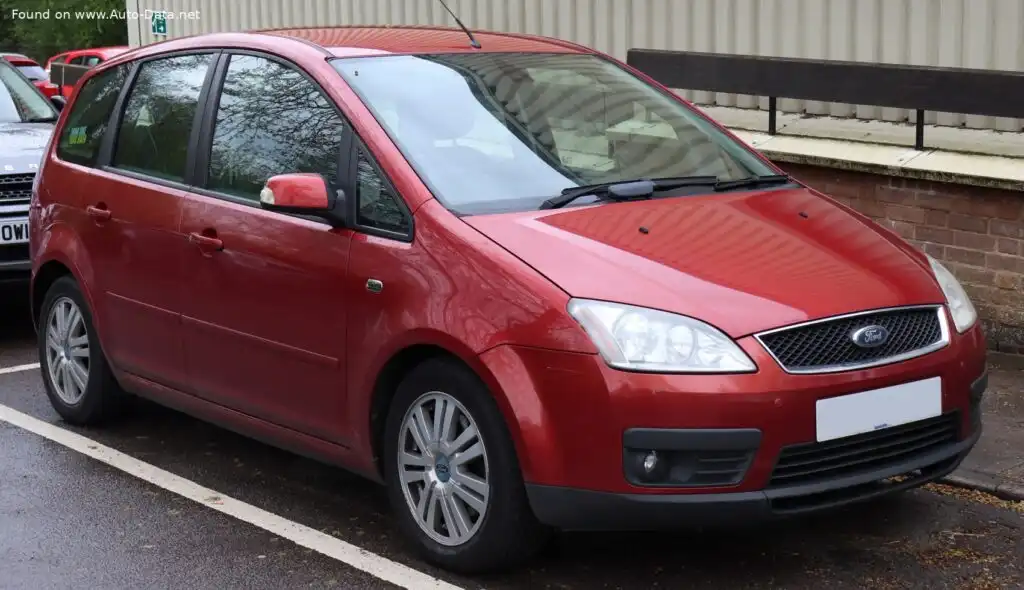
The Ford C-MAX 1.6 16V Ti-VCT, produced between 2004 and 2007, represented an entry-level offering within the first generation of the C-MAX compact multi-purpose vehicle (MPV). Positioned as a more affordable alternative to the higher-spec engines, this variant aimed to provide practical family transport with reasonable fuel economy. It was primarily sold in the European market, where the C-MAX competed with vehicles like the Opel/Vauxhall Zafira, Renault Scenic, and Volkswagen Touran. This model utilized the Ford C-platform, shared with the Focus, offering a blend of practicality and driving dynamics.
Technical Specifications
| Brand | Ford |
| Model | C-MAX |
| Generation | C-MAX (First Generation) |
| Type (Engine) | 1.6 16V (116 Hp) Ti-VCT |
| Start of production | 2004 |
| End of production | 2007 |
| Powertrain Architecture | Internal Combustion Engine |
| Body type | MPV |
| Seats | 5 |
| Doors | 5 |
| Fuel consumption (urban) | 8.9 l/100 km (26.4 US mpg) |
| Fuel consumption (extra urban) | 5.3 l/100 km (44.4 US mpg) |
| Fuel consumption (combined) | 6.6 l/100 km (35.6 US mpg) |
| Fuel Type | Petrol (Gasoline) |
| Acceleration 0 – 100 km/h | 11.9 sec |
| Acceleration 0 – 62 mph | 11.9 sec |
| Acceleration 0 – 60 mph | 11.3 sec |
| Maximum speed | 186 km/h (115.58 mph) |
| Weight-to-power ratio | 10.5 kg/Hp |
| Weight-to-torque ratio | 7.9 kg/Nm |
| Power | 116 Hp @ 6000 rpm |
| Torque | 155 Nm @ 4150 rpm (114.32 lb.-ft. @ 4150 rpm) |
| Engine layout | Front, Transverse |
| Engine Model/Code | HXDA |
| Engine displacement | 1596 cm3 (97.39 cu. in.) |
| Number of cylinders | 4 |
| Engine configuration | Inline |
| Cylinder Bore | 79 mm (3.11 in.) |
| Piston Stroke | 81.4 mm (3.2 in.) |
| Compression ratio | 11:1 |
| Number of valves per cylinder | 4 |
| Fuel injection system | Multi-port manifold injection |
| Engine aspiration | Naturally aspirated |
| Valvetrain | DOHC |
| Engine oil capacity | 4.1 l (4.33 US qt | 3.61 UK qt) |
| Coolant capacity | 6 l (6.34 US qt | 5.28 UK qt) |
| Kerb Weight | 1223 kg (2696.25 lbs.) |
| Fuel tank capacity | 55 l (14.53 US gal | 12.1 UK gal) |
| Length | 4330 mm (170.47 in.) |
| Width | 1820 mm (71.65 in.) |
| Height | 1600 mm (62.99 in.) |
| Wheelbase | 2640 mm (103.94 in.) |
| Minimum turning circle | 10.7 m (35.1 ft.) |
| Drivetrain Architecture | Front-wheel drive, Internal Combustion Engine |
| Number of gears | 5 |
| Gearbox type | Manual Transmission |
| Front brakes | Disc |
| Rear brakes | Disc |
| Assisting systems | ABS (Anti-lock braking system) |
| Steering type | Steering rack and pinion |
| Power steering | Hydraulic |
| Tires size | 205/55 R16 |
| Wheel rims size | 16 |
Powertrain & Engine Architecture
The heart of this C-MAX variant is the HXDA engine, a 1.6-liter inline-four cylinder petrol engine. This engine belongs to the Duratec family, known for its relatively simple design and durability. The ‘Ti-VCT’ designation indicates the use of Twin Independent Variable Camshaft Timing, a technology designed to optimize valve timing for improved performance and fuel efficiency across the rev range. The engine utilizes a multi-port fuel injection system, delivering fuel directly into the intake ports. The DOHC (Double Overhead Camshaft) valvetrain further contributes to efficient cylinder filling and exhaust scavenging. The five-speed manual transmission was the standard offering, providing a balance between fuel economy and driver engagement. The transmission’s gear ratios were tuned for everyday usability rather than outright performance, prioritizing smooth shifts and reasonable acceleration.
Driving Characteristics
The 1.6-liter engine, producing 116 horsepower, delivered adequate performance for typical daily driving. Acceleration from 0-60 mph took around 11.3 seconds, which was noticeably slower than the higher-powered 1.8 or 2.0-liter versions of the C-MAX. The engine felt somewhat strained when fully loaded or tackling steep inclines. However, the Ti-VCT system helped to maintain a reasonable level of responsiveness throughout the rev range. The five-speed manual transmission allowed drivers to keep the engine in its optimal power band, but frequent downshifts were often necessary for overtaking or merging onto highways. Compared to the automatic transmissions offered with other engines in the C-MAX lineup, the manual provided a more direct and engaging driving experience.
Equipment & Trim Levels
The 1.6 16V Ti-VCT C-MAX typically came with a fairly basic level of equipment. Standard features generally included power steering, ABS brakes, front airbags, and air conditioning. Interior upholstery was typically cloth, and the dashboard featured a functional, if somewhat utilitarian, design. Optional extras included alloy wheels, a CD player, electric windows, and metallic paint. The trim level was generally considered the entry-level offering, appealing to buyers prioritizing affordability and practicality over luxury features. Higher trim levels, available with the more powerful engines, offered features like climate control, upgraded audio systems, and more premium interior materials.
Chassis & Braking
The C-MAX utilized a MacPherson strut front suspension and a multi-link rear suspension, providing a comfortable ride and decent handling characteristics. The suspension was tuned for everyday use, prioritizing ride comfort over sporty handling. Brakes consisted of disc brakes on all four wheels, providing adequate stopping power for the vehicle’s weight and performance. ABS (Anti-lock Braking System) was standard, enhancing safety during emergency braking situations. Stabilizer bars were fitted to both the front and rear axles to reduce body roll during cornering.
Market Reception & Comparison
The 1.6-liter C-MAX was generally well-received as an affordable and practical family vehicle. Critics praised its fuel economy and spacious interior, but noted its relatively modest performance. Compared to the 1.8 and 2.0-liter versions, the 1.6 offered significantly lower running costs but lacked the same level of driving excitement. The 1.6 was often seen as a sensible choice for buyers who primarily used their vehicle for commuting and short trips. The diesel variants, such as the 1.6 TDCi, offered even better fuel economy but came with a higher purchase price.
Legacy
The HXDA engine, while not known for being particularly groundbreaking, proved to be a reliable and durable unit. C-MAX models equipped with this engine have generally held up well over time, with many examples still on the road today. Common maintenance issues include wear and tear on suspension components and occasional oil leaks. The 1.6 16V Ti-VCT C-MAX remains a relatively affordable option on the used car market, appealing to buyers seeking a practical and economical MPV. Its simplicity and relatively low running costs make it a popular choice for first-time car owners or those on a tight budget.
