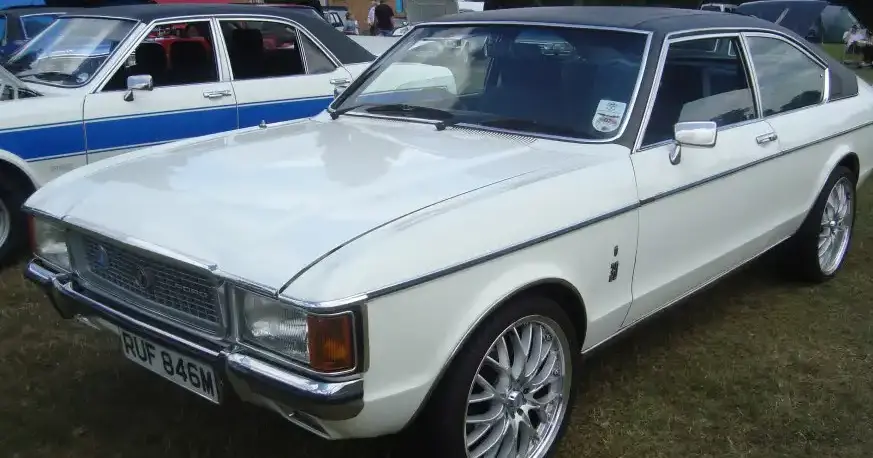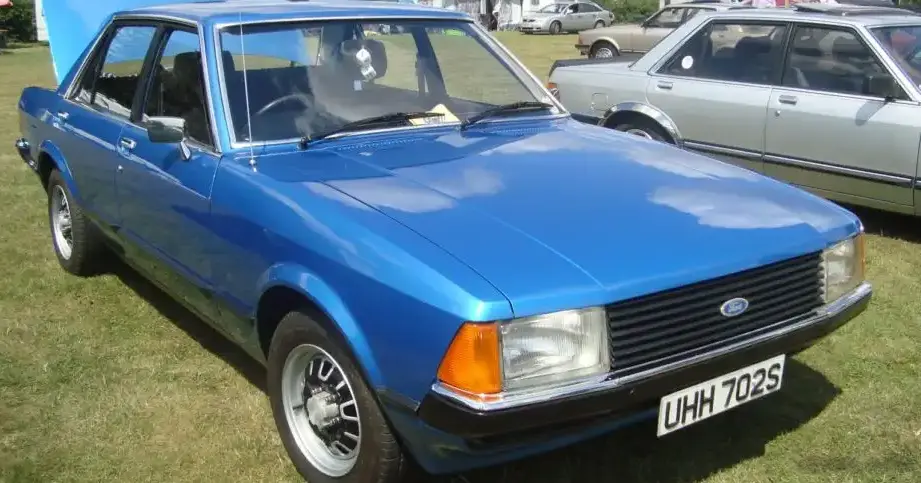
The Ford Granada GU 2.5 D, produced between 1982 and 1985, represented a fuel-conscious offering within the third generation of the Granada line. Positioned as the entry-level diesel variant, it catered to buyers prioritizing economy over outright performance in a large, comfortable sedan. The GU series, launched in 1981, was Ford of Britain’s response to changing market demands, offering a more modern and refined experience compared to its predecessors. This 2.5-liter diesel version, delivering 69 horsepower, was specifically aimed at fleet buyers and those undertaking long distances where fuel efficiency was paramount. It occupied the lower end of the Granada spectrum, sitting below the gasoline-powered models and the more powerful 2.5-liter diesel with optional turbocharging.
Technical Specifications
| Brand | Ford |
| Model | Granada |
| Generation | Granada (GU) |
| Type (Engine) | 2.5 D (69 Hp) |
| Start of production | 1982 |
| End of production | 1985 |
| Powertrain Architecture | Internal Combustion engine |
| Body type | Sedan |
| Fuel Type | Diesel |
| Power | 69 Hp |
| Engine aspiration | Naturally aspirated engine |
| Length | 4630 mm (182.28 in.) |
| Width | 1740 mm (68.5 in.) |
| Height | 1380 mm (54.33 in.) |
| Wheelbase | 2770 mm (109.06 in.) |
Powertrain & Engine Architecture
The Granada 2.5 D utilized the Ford York diesel engine, a 2495cc inline-four cylinder unit. This engine, while robust, was known for being relatively unsophisticated compared to contemporary diesel engines from other European manufacturers. It featured indirect injection, utilizing a pre-combustion chamber design. Fuel was injected into a small chamber connected to the main cylinder, where it was ignited by the compression heat, and then transferred to the main combustion chamber. This system, while reducing engine noise, also resulted in lower thermal efficiency. The engine employed a naturally aspirated configuration, meaning it did not utilize a turbocharger or intercooler. The engine’s modest 69 horsepower output was delivered at 3,800 rpm, with peak torque of approximately 123 lb-ft available at 1,800 rpm. The transmission paired with the 2.5 D was typically a four-speed manual, though a three-speed automatic transmission was also available, albeit less common. The automatic transmission, a Ford-sourced unit, was geared for economy rather than performance, further emphasizing the car’s focus on fuel efficiency.
Driving Characteristics
The driving experience in the Granada 2.5 D was defined by its relaxed pace. Acceleration was leisurely, and overtaking required careful planning. The engine’s limited horsepower and the weight of the Granada – a substantial vehicle for its time – meant that brisk driving was not its forte. The four-speed manual transmission allowed for some degree of control over engine speed, but even with the manual, the engine lacked the responsiveness of its gasoline counterparts. The automatic transmission, while providing convenience, further dulled performance. Gear ratios were tall, prioritizing fuel economy at cruising speeds. The engine was relatively noisy, typical of indirect injection diesels of the era, and vibration was noticeable, particularly at idle. However, the Granada’s comfortable suspension and sound insulation mitigated some of these drawbacks, making it a reasonably pleasant long-distance cruiser, provided drivers weren’t in a hurry. Compared to the 2.8i gasoline version, the 2.5 D offered significantly less power and acceleration, but substantially better fuel economy.
Equipment & Trim Levels
The 2.5 D Granada typically came with a fairly basic level of equipment, reflecting its position as the entry-level model. Standard features generally included cloth upholstery, a basic instrument panel, and manual windows and door locks. Air conditioning was often an optional extra, as were power steering and central locking. Trim levels were relatively simple, with the 2.5 D usually designated as the ‘L’ or ‘base’ model. Interior appointments were functional rather than luxurious, with durable materials chosen for longevity. The dashboard layout was typical of early 1980s Fords, featuring a straightforward design with clearly labeled controls. Optional extras could include a radio/cassette player, upgraded seat fabrics, and a sunroof.
Chassis & Braking
The Granada GU utilized a traditional body-on-frame construction, providing a robust and durable chassis. Suspension consisted of independent front suspension with MacPherson struts and a live axle with trailing arms at the rear. The rear suspension on the 2.5 D models often featured drum brakes, while higher-spec models received disc brakes all around. Front brakes were typically disc brakes. Steering was a recirculating ball system, providing a relatively heavy but precise feel. Stabilizer bars were fitted to both the front and rear axles to reduce body roll. The chassis was tuned for comfort rather than sporty handling, prioritizing a smooth ride over sharp cornering. The braking system, while adequate for normal driving, lacked the stopping power of more modern systems.
Market Reception & Comparison
The Ford Granada 2.5 D was generally well-received by those seeking an economical and comfortable large car. Critics acknowledged its fuel efficiency, particularly compared to the gasoline-powered models, but noted its lack of performance. It was often praised for its spacious interior and comfortable ride. Compared to rivals such as the Vauxhall/Opel Commodore and the Rover SD1, the Granada 2.5 D offered a more modern and refined driving experience, although the Rover often boasted more luxurious interiors. Fuel economy was a key selling point, with the 2.5 D achieving around 35-40 mpg on the combined cycle, significantly better than the gasoline alternatives. Reliability was generally good, although the York diesel engine was known to require regular maintenance. The 2.5 D was a popular choice for fleet operators and private buyers alike, who valued its low running costs and practicality.
Legacy
The Ford Granada GU 2.5 D, while not a performance icon, holds a significant place in automotive history as a representative of the fuel-efficient large cars of the early 1980s. The York diesel engine, while somewhat crude by modern standards, proved to be durable and long-lasting. Today, well-maintained examples are sought after by classic car enthusiasts, particularly those who appreciate the car’s simplicity and practicality. The 2.5 D powertrain, while not particularly powerful, is relatively straightforward to maintain, making it a viable option for those looking for a classic car project. Parts availability can be a challenge, but a dedicated network of Ford enthusiasts and specialist suppliers ensures that many components are still obtainable. The Granada GU 2.5 D remains a testament to Ford’s ability to produce comfortable, reliable, and economical vehicles for the mass market.