
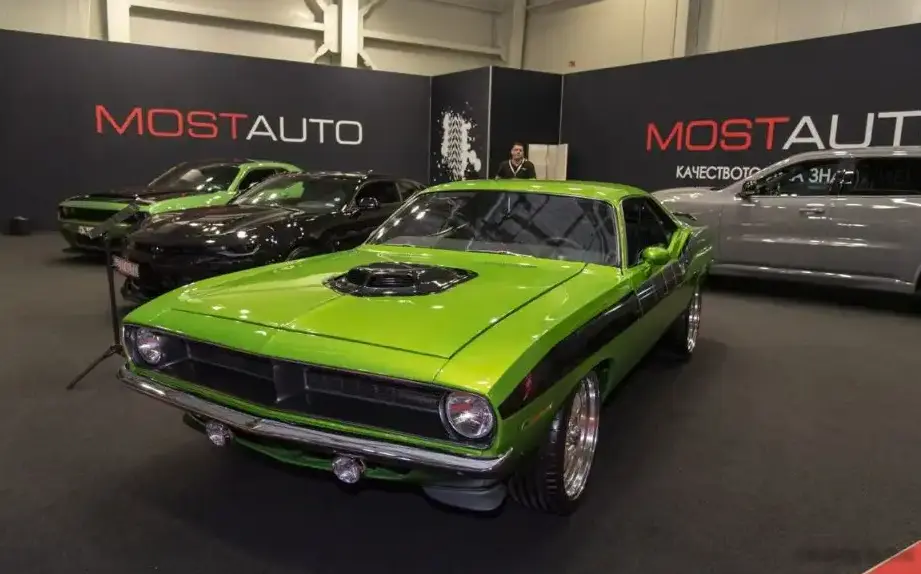
The Plymouth Barracuda III, specifically equipped with the 7.2-liter (439.74 cubic inch) V8 engine producing 375 horsepower, represents a pivotal moment in the muscle car era. Produced solely for the 1970 model year, this iteration of the Barracuda marked a significant departure from its earlier, more compact forms. It was the first year of the third-generation Barracuda, sharing its platform with the Dodge Challenger, and signaled Plymouth’s commitment to building a larger, more powerful, and more luxurious muscle car to compete with rivals like the Chevrolet Camaro and Ford Mustang. This particular variant, with its substantial engine, was positioned as a high-performance offering within the Barracuda lineup, aimed at enthusiasts seeking maximum power and a thrilling driving experience.
Technical Specifications
| Brand | Plymouth |
| Model | Barracuda |
| Generation | Barracuda III |
| Type (Engine) | 7.2 V8 (375 Hp) |
| Start of production | 1970 |
| End of production | 1970 |
| Powertrain Architecture | Internal Combustion engine |
| Body type | Coupe |
| Seats | 4 |
| Doors | 2 |
| Fuel Type | Petrol (Gasoline) |
| Power | 375 Hp @ 4600 rpm |
| Power per litre | 52 Hp/l |
| Torque | 651 Nm @ 3200 rpm / 480.15 lb.-ft. @ 3200 rpm |
| Engine layout | Front, Longitudinal |
| Engine Model/Code | RB |
| Engine displacement | 7206 cm3 / 439.74 cu. in. |
| Number of cylinders | 8 |
| Engine configuration | V-engine |
| Cylinder Bore | 109.7 mm / 4.32 in. |
| Piston Stroke | 95.3 mm / 3.75 in. |
| Compression ratio | 9.7:1 |
| Number of valves per cylinder | 2 |
| Fuel injection system | Carburettor |
| Engine aspiration | Naturally aspirated engine |
| Valvetrain | OHV |
| Engine oil capacity | 4.7 l / 4.97 US qt | 4.14 UK qt |
| Trunk (boot) space – minimum | 167 l / 5.9 cu. ft. |
| Fuel tank capacity | 72 l / 19.02 US gal | 15.84 UK gal |
| Length | 4742 mm / 186.69 in. |
| Width | 1902 mm / 74.88 in. |
| Height | 1293 mm / 50.91 in. |
| Wheelbase | 2743 mm / 107.99 in. |
| Front track | 1516 mm / 59.69 in. |
| Rear (Back) track | 1542 mm / 60.71 in. |
| Drivetrain Architecture | The Internal combustion engine (ICE) drives the rear wheels of the vehicle. |
| Drive wheel | Rear wheel drive |
| Number of gears and type of gearbox | 4 gears, manual transmission |
| Front suspension | Independent torsion bar, double wishbone, Transverse stabilizer |
| Rear suspension | Rigid axle suspension, Transverse stabilizer, Leaf spring |
| Front brakes | Drum, 279.4×76.2 mm |
| Rear brakes | Drum, 279.4×63.5 mm |
| Steering type | Cone worm with recirculation balls |
| Wheel rims size | 6J x 14; 7J x 15 |
Powertrain & Engine Architecture
The heart of the 1970 Barracuda III 7.2 V8 was the Chrysler RB engine, specifically the 440 cubic inch (7.2-liter) variant. This engine, designated within the RB family, was a robust and well-regarded powerplant known for its substantial torque output. The 375 horsepower rating was achieved through the use of a four-barrel carburetor, a performance camshaft, and high-flow exhaust manifolds. The engine featured a traditional overhead valve (OHV) valvetrain with two valves per cylinder. The engine’s longitudinal front-engine layout contributed to its balanced weight distribution. The standard transmission for this high-performance model was a four-speed manual, although a three-speed TorqueFlite automatic transmission was also available as an option. The 440 engine was known for its durability and responsiveness, making it a favorite among muscle car enthusiasts.
Driving Characteristics
The 1970 Barracuda III 7.2 V8 delivered a truly exhilarating driving experience. The substantial torque of the 440 engine provided strong acceleration across the entire rev range, making it a potent performer both on the street and at the drag strip. The four-speed manual transmission allowed for precise control over the engine’s power, while the optional automatic offered a more relaxed driving experience. The car’s relatively long wheelbase and robust suspension contributed to a stable and comfortable ride, even over rough surfaces. However, the Barracuda III was a large and heavy car, and its handling was not as nimble as some of its smaller competitors. The steering, while precise, required a fair amount of effort, particularly at low speeds.
Equipment & Trim Levels
The 1970 Barracuda III 7.2 V8 was generally well-equipped, although options were plentiful. Standard features included a vinyl interior, a basic instrument cluster, and a floor-mounted shifter (with the manual transmission). Optional extras included a deluxe interior with upgraded upholstery, a woodgrain-trimmed dashboard, a premium sound system, and power steering and brakes. The Barracuda was available in a variety of exterior colors, and buyers could also choose from a range of stripes and decals to personalize their car. The ‘70 Barracuda offered a step up in interior refinement compared to earlier models, aiming to appeal to buyers who wanted both performance and comfort.
Chassis & Braking
The Barracuda III utilized a robust chassis designed to handle the power of its larger engines. The front suspension featured an independent torsion bar setup with a double wishbone design and a transverse stabilizer bar, providing good handling and ride quality. The rear suspension employed a traditional leaf spring setup with a rigid axle and a transverse stabilizer bar. Braking duties were handled by drum brakes on all four wheels, although power brakes were available as an option. While adequate for the time, the drum brakes were not as effective as the disc brakes offered on some competing models. The car’s relatively wide track contributed to its stability in corners.
Market Reception & Comparison
The 1970 Plymouth Barracuda III 7.2 V8 was generally well-received by automotive critics and enthusiasts. It was praised for its powerful engine, comfortable ride, and stylish design. However, some critics noted its large size and weight, as well as its relatively unsophisticated suspension. Compared to other Barracuda trims, the 7.2 V8 model offered significantly more performance, but it also came with a higher price tag. The smaller-engined models, such as the 318 and 340 variants, were more affordable and fuel-efficient, while the 383 Magnum offered a good balance of performance and price. The 7.2 V8 was aimed at buyers who wanted the ultimate in muscle car performance.
Legacy
The 1970 Plymouth Barracuda III 7.2 V8 remains a highly sought-after muscle car among collectors and enthusiasts. The 440 engine is known for its durability and reliability, and well-maintained examples of this car can still provide a thrilling driving experience today. However, parts availability can be a challenge, and restoration projects can be expensive. The Barracuda III represents the pinnacle of the Barracuda’s evolution, and it is a testament to the muscle car era’s emphasis on power, performance, and style. Today, original and restored examples command high prices in the collector car market, solidifying its place as an icon of American automotive history.
