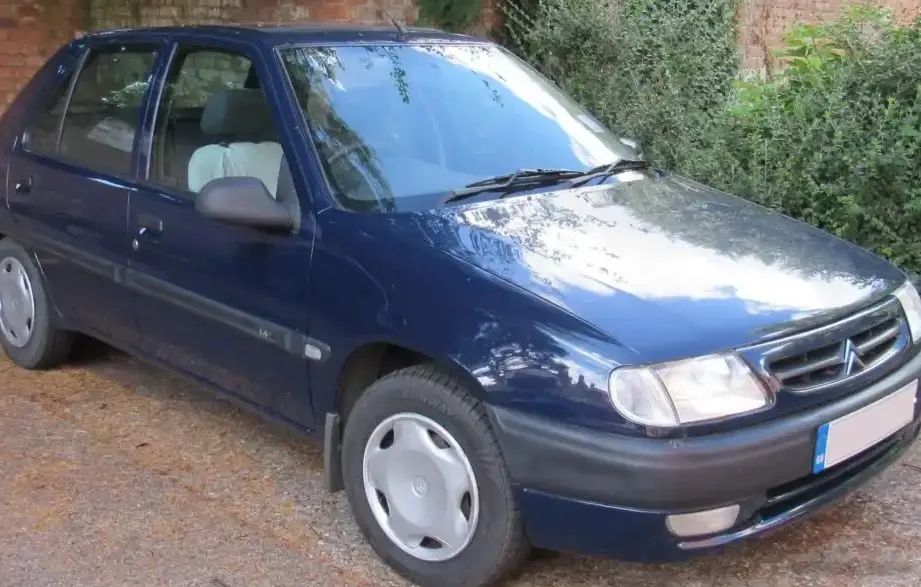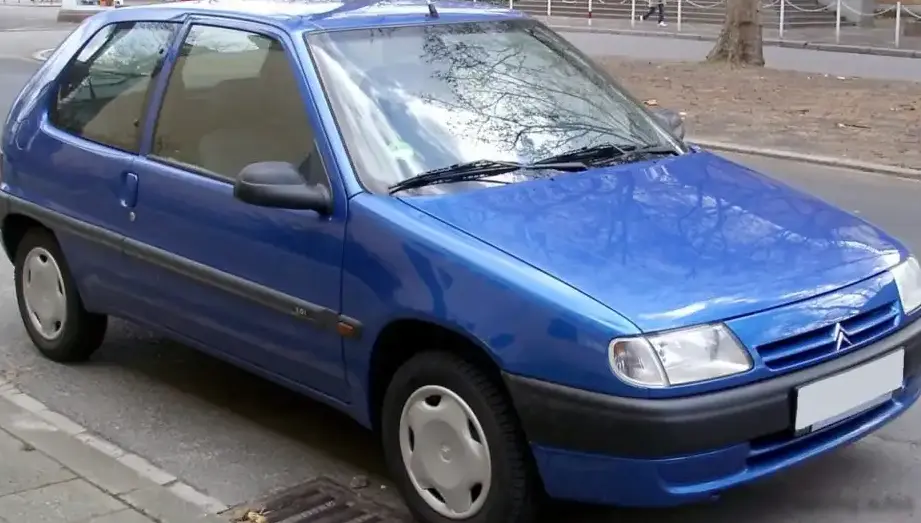
The Citroen Saxo 1.0, specifically the three-door model produced between 1996 and 1999, represented the entry point into the Saxo range. Launched as a replacement for the aging AX, the Saxo was Citroen’s supermini offering, designed to compete with vehicles like the Peugeot 206, Renault Clio, and Ford Fiesta. This particular 1.0-liter variant, producing 45 horsepower, was aimed at budget-conscious buyers and those seeking a simple, economical city car. It was a key component of the initial Saxo Phase I (1HX) generation, sharing its platform with the Peugeot 106.
Technical Specifications
| Brand | Citroen |
| Model | Saxo |
| Generation | Saxo (Phase I, 1996) 3-door |
| Type (Engine) | 1.0 (45 Hp) |
| Start of production | 1996 |
| End of production | 1999 |
| Powertrain Architecture | Internal Combustion engine |
| Body type | Hatchback |
| Seats | 5 |
| Doors | 3 |
| Fuel consumption (urban) | 8.3 l/100 km (28.3 US mpg, 34 UK mpg, 12 km/l) |
| Fuel consumption (extra urban) | 5.1 l/100 km (46.1 US mpg, 55.4 UK mpg, 19.6 km/l) |
| Fuel consumption (combined) | 6.2 l/100 km (37.9 US mpg, 45.6 UK mpg, 16.1 km/l) |
| Fuel Type | Petrol (Gasoline) |
| Acceleration 0 – 100 km/h | 19.1 sec |
| Acceleration 0 – 62 mph | 19.1 sec |
| Acceleration 0 – 60 mph | 18.1 sec |
| Maximum speed | 149 km/h (92.58 mph) |
| Weight-to-power ratio | 17.9 kg/Hp, 55.9 Hp/tonne |
| Weight-to-torque ratio | 10.9 kg/Nm, 91.9 Nm/tonne |
| Power | 45 Hp @ 6000 rpm |
| Power per litre | 47.2 Hp/l |
| Torque | 74 Nm @ 6000 rpm (54.58 lb.-ft. @ 6000 rpm) |
| Engine layout | Front, Transverse |
| Engine Model/Code | CDZ TU9M |
| Engine displacement | 954 cm3 (58.22 cu. in.) |
| Number of cylinders | 4 |
| Engine configuration | Inline |
| Cylinder Bore | 70 mm (2.76 in.) |
| Piston Stroke | 62 mm (2.44 in.) |
| Compression ratio | 9.4:1 |
| Number of valves per cylinder | 2 |
| Fuel injection system | Single-point injection |
| Engine aspiration | Naturally aspirated engine |
| Valvetrain | OHC |
| Engine oil capacity | 3.5 l (3.7 US qt | 3.08 UK qt) |
| Coolant | 6 l (6.34 US qt | 5.28 UK qt) |
| Kerb Weight | 805 kg (1774.72 lbs.) |
| Max. weight | 1220 kg (2689.64 lbs.) |
| Max load | 415 kg (914.92 lbs.) |
| Trunk (boot) space – minimum | 280 l (9.89 cu. ft.) |
| Trunk (boot) space – maximum | 953 l (33.65 cu. ft.) |
| Fuel tank capacity | 45 l (11.89 US gal | 9.9 UK gal) |
| Length | 3718 mm (146.38 in.) |
| Width | 1595 mm (62.8 in.) |
| Height | 1390 mm (54.72 in.) |
| Wheelbase | 2385 mm (93.9 in.) |
| Front track | 1381 mm (54.37 in.) |
| Rear (Back) track | 1301 mm (51.22 in.) |
| Front overhang | 748 mm (29.45 in.) |
| Rear overhang | 585 mm (23.03 in.) |
| Minimum turning circle | 10.9 m (35.76 ft.) |
| Drivetrain Architecture | Front wheel drive |
| Number of gears and type of gearbox | 5 gears, manual transmission |
| Front suspension | Independent type McPherson, Transverse stabilizer |
| Rear suspension | Trailing arm, Torsion |
| Front brakes | Disc |
| Rear brakes | Drum |
| Assisting systems | ABS (Anti-lock braking system) |
| Steering type | Steering rack and pinion |
| Power steering | Hydraulic Steering |
| Tires size | 155/70 R13 |
Powertrain & Engine Architecture
The heart of this Saxo variant is the Citroen CDZ engine, a 954cc inline-four cylinder unit. This engine belongs to the TU9M family, known for its simplicity and durability. It utilizes a single-point fuel injection system, a relatively basic setup compared to the multi-point injection found in higher-spec Saxo models. The engine features an overhead camshaft (OHC) valvetrain with two valves per cylinder. The 45 horsepower output is achieved at 6000 rpm, with a modest 54.58 lb-ft of torque available at the same engine speed. The engine’s design prioritized fuel efficiency over outright performance. The Saxo 1.0 typically came equipped with a five-speed manual transmission, although a four-speed automatic was also available, albeit less common. The automatic transmission was a three-speed unit, further emphasizing the car’s focus on ease of use rather than sporty driving.
Driving Characteristics
The Saxo 1.0 Automatic offered a very basic driving experience. Acceleration was slow, taking over 19 seconds to reach 62 mph. The three-speed automatic transmission had widely spaced gear ratios, meaning the engine often felt strained during acceleration, especially when fully loaded. However, in city driving, the automatic transmission proved convenient, and the light steering made maneuvering easy. Compared to the manual version, the automatic suffered a slight fuel economy penalty. Higher-output Saxo variants, such as the 1.4 or 1.6 models, offered significantly more performance, but at a higher price point and with increased running costs.
Equipment & Trim Levels
The 1.0-liter Saxo was typically offered in a basic trim level. Standard features included power steering, central locking, and a basic stereo system. Interior upholstery was typically cloth, and the dashboard was constructed from durable, but inexpensive, plastics. Optional extras included electric windows, a sunroof, and upgraded stereo systems. The interior was functional and practical, prioritizing space efficiency over luxury. The three-door body style meant access to the rear seats was somewhat restricted.
Chassis & Braking
The Saxo utilized a simple but effective chassis design. The front suspension featured independent McPherson struts with a transverse stabilizer bar, while the rear suspension employed a trailing arm torsion beam setup. This configuration provided a reasonable balance between ride comfort and handling. The 1.0-liter models typically featured disc brakes on the front wheels and drum brakes on the rear. ABS (Anti-lock Braking System) was available as an option, enhancing safety. The relatively light weight of the 1.0-liter Saxo helped to compensate for the modest braking performance.
Market Reception & Comparison
The Saxo 1.0 Automatic was generally well-received as an affordable and economical city car. Critics praised its low running costs and ease of use, but noted its lack of performance. Compared to other superminis of the time, the Saxo 1.0 offered a competitive price point, but its interior quality and driving experience were considered somewhat basic. The manual transmission version offered better fuel economy and performance, making it the preferred choice for drivers who prioritized driving enjoyment. The 1.4 and 1.6-liter variants provided a more refined driving experience, but at a higher cost.
Legacy
The Citroen Saxo 1.0, while not a performance icon, proved to be a reliable and durable vehicle. The TU9M engine is known for its longevity, and many examples are still on the road today. The Saxo’s simple construction makes it relatively easy and inexpensive to maintain. In the used car market, the 1.0-liter Saxo remains an affordable option for those seeking a basic, economical runabout. However, potential buyers should be aware of the car’s age and the possibility of rust, particularly in areas exposed to harsh weather conditions. The Saxo’s legacy lies in its affordability and practicality, making it a popular choice for first-time car owners and those on a tight budget.