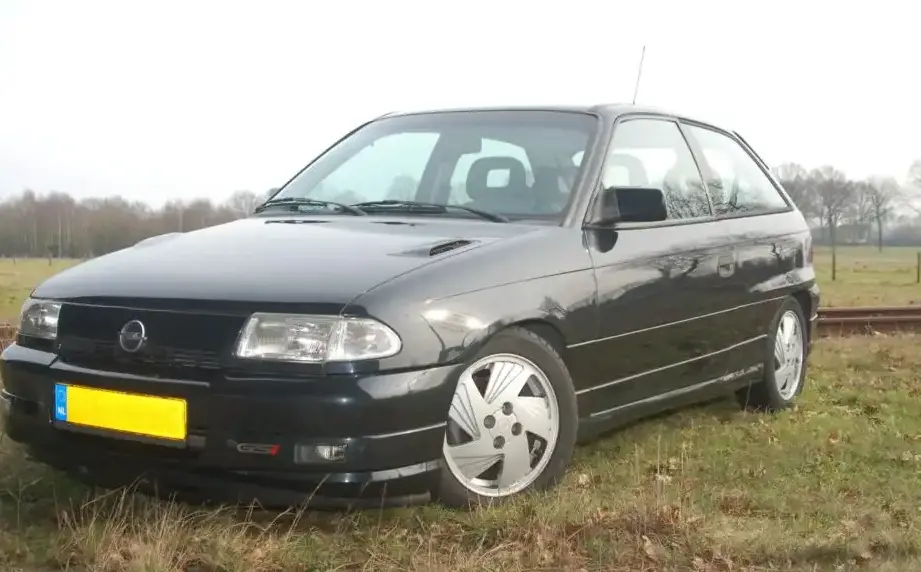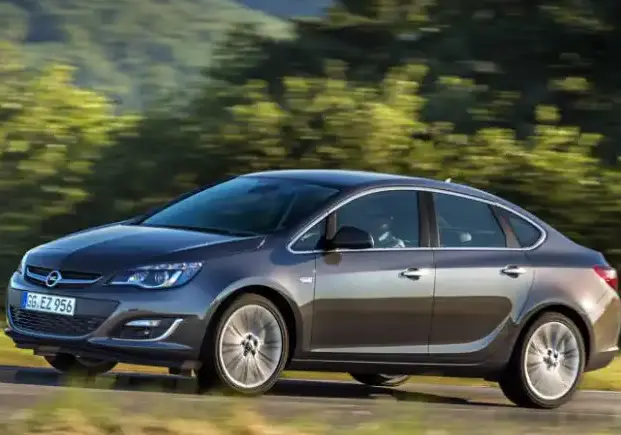
The Opel Astra J Sedan 2.0 CDTI (165 hp) Ecotec Automatic, produced between 2012 and 2015, represented a significant offering in the European compact sedan market. Positioned as a mid-to-upper trim level within the Astra J Sedan range, it aimed to provide a balance of fuel efficiency, performance, and comfort for drivers seeking a refined diesel-powered vehicle. This variant was part of the J series, the seventh generation of the globally sold Astra, and utilized the A17 platform. The sedan body style was particularly popular in markets where traditional three-box designs were favored, offering a more conventional aesthetic compared to the hatchback version.
Technical Specifications
| Brand | Opel |
| Model | Astra |
| Generation | Astra J Sedan |
| Type (Engine) | 2.0 CDTI (165 Hp) Ecotec Automatic |
| Start of production | 2012 |
| End of production | 2015 |
| Powertrain Architecture | Internal Combustion engine |
| Body type | Sedan |
| Seats | 5 |
| Doors | 4 |
| Fuel consumption (combined) | 5.8 l/100 km (40.6 US mpg, 48.7 UK mpg, 17.2 km/l) |
| CO2 emissions | 154 g/km |
| Fuel Type | Diesel |
| Acceleration 0 – 100 km/h | 9.2 sec |
| Acceleration 0 – 62 mph | 9.2 sec |
| Acceleration 0 – 60 mph | 8.7 sec |
| Maximum speed | 209 km/h (129.87 mph) |
| Emission standard | Euro 5 |
| Power | 165 Hp @ 4000 rpm |
| Torque | 350 Nm @ 1750-2500 rpm (258.15 lb.-ft. @ 1750-2500 rpm) |
| Engine layout | Front, Transverse |
| Engine Model/Code | A20DTH |
| Engine displacement | 1956 cm3 (119.36 cu. in.) |
| Number of cylinders | 4 |
| Engine configuration | Inline |
| Cylinder Bore | 83 mm (3.27 in.) |
| Piston Stroke | 90.4 mm (3.56 in.) |
| Number of valves per cylinder | 4 |
| Fuel injection system | Diesel Commonrail |
| Engine aspiration | Turbocharger, Intercooler |
| Engine oil capacity | 4.5 l (4.76 US qt | 3.96 UK qt) |
| Coolant capacity | 6.9 l (7.29 US qt | 6.07 UK qt) |
| Trunk (boot) space – minimum | 460 l (16.24 cu. ft.) |
| Trunk (boot) space – maximum | 1010 l (35.67 cu. ft.) |
| Fuel tank capacity | 56 l (14.79 US gal | 12.32 UK gal) |
| Length | 4658 mm (183.39 in.) |
| Width | 1814 mm (71.42 in.) |
| Width including mirrors | 2013 mm (79.25 in.) |
| Height | 1500 mm (59.06 in.) |
| Wheelbase | 2685 mm (105.71 in.) |
| Front track | 1541 mm (60.67 in.) |
| Rear track | 1551 mm (61.06 in.) |
| Front overhang | 974 mm (38.35 in.) |
| Rear overhang | 999 mm (39.33 in.) |
| Minimum turning circle | 11.5 m (37.73 ft.) |
| Drivetrain | Front wheel drive |
| Number of gears | 6 |
| Gearbox type | Automatic transmission |
| Front brakes | Ventilated discs |
Powertrain & Engine Architecture
The heart of the Astra J Sedan 2.0 CDTI was the A20DTH engine, a 1.956-liter inline-four cylinder diesel. This engine was a member of Opel/Vauxhall’s Ecotec family, known for its focus on efficiency and refinement. It featured a common rail direct injection system, delivering fuel at extremely high pressures for optimized combustion. The A20DTH utilized a variable geometry turbocharger (VGT) and an intercooler to boost power and torque while minimizing turbo lag. The engine also incorporated four valves per cylinder and a double overhead camshaft (DOHC) configuration. The six-speed automatic transmission, sourced from Aisin, was chosen for its smooth shifting characteristics and contribution to overall fuel economy. This transmission was a conventional torque converter automatic, offering a balance between comfort and efficiency, though not as sporty as some dual-clutch transmissions available on other Astra J variants.
Driving Characteristics
The 165 hp and 350 Nm (258 lb-ft) of torque provided by the 2.0 CDTI engine and automatic transmission delivered a comfortable and capable driving experience. Acceleration from 0-60 mph took approximately 8.7 seconds, making it reasonably quick for a compact sedan. The automatic transmission, while smooth, wasn’t particularly geared for aggressive driving. Gear changes were generally well-timed for everyday use, but lacked the responsiveness of a manual gearbox or a more performance-oriented automatic. Compared to the lower-powered 1.7 CDTI variants, the 2.0 CDTI offered noticeably more pulling power, especially when fully loaded or tackling inclines. It also provided a more relaxed cruising experience on the highway. Compared to the petrol-powered Astra J models, the 2.0 CDTI offered superior fuel economy and torque, but at the expense of some engine refinement and high-end power.
Equipment & Trim Levels
The Astra J Sedan 2.0 CDTI Automatic typically came equipped with a generous level of standard features. These included air conditioning, power windows and mirrors, a CD/MP3 stereo system, and alloy wheels. Higher trim levels, such as Sport or Cosmo, added features like leather upholstery, a touchscreen infotainment system with navigation, automatic climate control, parking sensors, and rain-sensing wipers. Optional extras included a panoramic sunroof, heated seats, and advanced safety systems like adaptive cruise control and lane departure warning. Interior upholstery was typically cloth on base models, with leather options available on higher trims. The dashboard layout was modern and functional, with a focus on ergonomics.
Chassis & Braking
The Astra J Sedan featured a MacPherson strut front suspension and a multi-link rear suspension, providing a good balance of ride comfort and handling. The 2.0 CDTI Automatic models generally had slightly stiffer suspension settings compared to the lower-powered variants to cope with the increased weight and power. Braking systems consisted of ventilated discs on the front wheels and solid discs on the rear. Anti-lock Braking System (ABS) was standard, along with Electronic Stability Program (ESP). Steering was electrically assisted, providing a light and precise feel.
Market Reception & Comparison
The Astra J Sedan 2.0 CDTI Automatic was generally well-received by automotive critics. It was praised for its fuel efficiency, comfortable ride, and refined engine. However, some reviewers noted that the automatic transmission could feel a bit sluggish at times. Compared to rivals like the Ford Focus, Volkswagen Golf, and Peugeot 308, the Astra J Sedan offered a competitive package in terms of price, features, and fuel economy. The 2.0 CDTI Automatic was often seen as a more sensible and practical choice than the higher-performance petrol variants, appealing to drivers who prioritized efficiency and comfort over outright speed.
Legacy
The A20DTH engine, while generally reliable, is known to have some potential issues with the diesel particulate filter (DPF) and the EGR valve, particularly if the vehicle is primarily used for short journeys. Regular maintenance and the use of high-quality diesel fuel are crucial for preventing these issues. Today, the Astra J Sedan 2.0 CDTI Automatic represents a good value proposition in the used car market. It offers a comfortable, efficient, and well-equipped package for those seeking a practical and reliable compact sedan. Its relatively simple mechanical design and readily available parts contribute to its affordability and ease of maintenance.