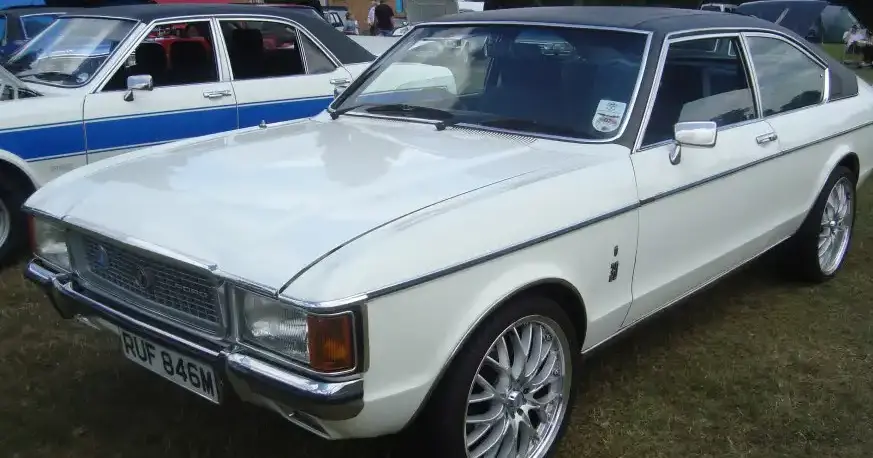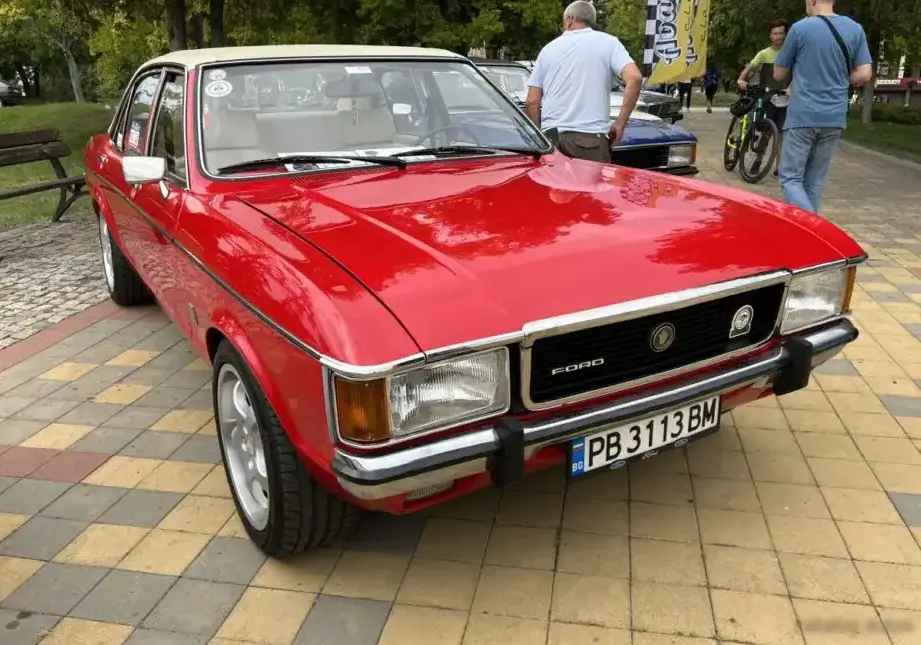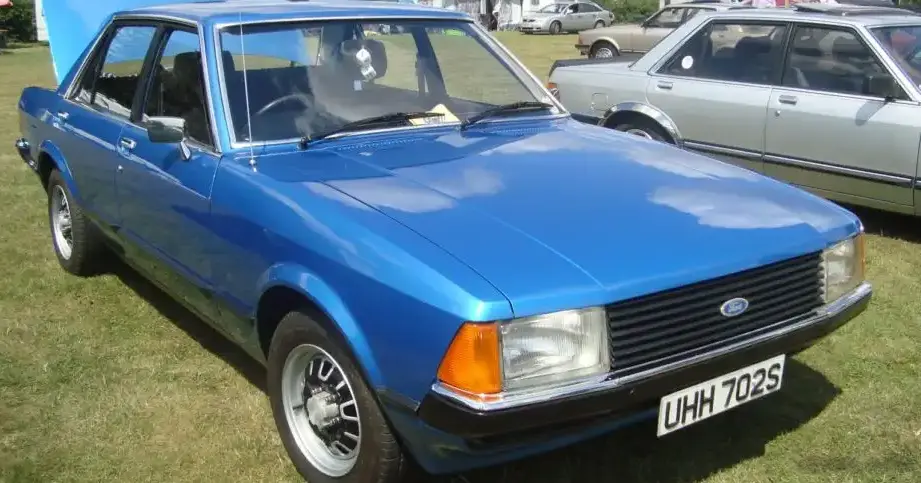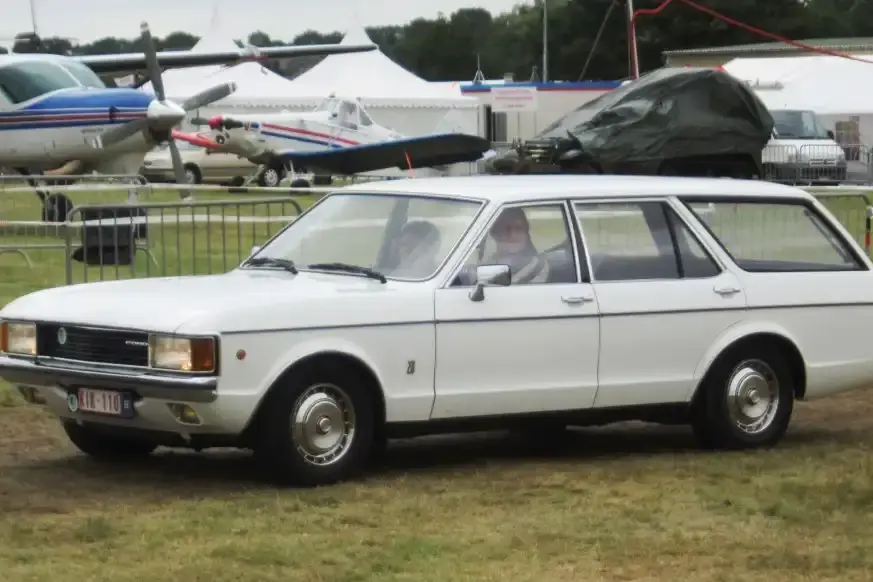
The Ford Granada Turnier 2.0, producing 90 horsepower, was a variant of the GGNL series Granada Turnier (estate) produced between 1975 and 1977. Positioned as a mid-range offering within the Granada lineup, it catered to buyers seeking a practical, family-oriented vehicle with reasonable performance and fuel economy. The Turnier body style, a station wagon, significantly expanded the Granada’s utility, making it a popular choice for those needing ample cargo space. This particular 2.0-liter engine and automatic transmission combination represented a balance between affordability and convenience, appealing to a broader segment of the market than the higher-performance or more luxurious Granada models.
Technical Specifications
| Brand | Ford |
| Model | Granada |
| Generation | Granada Turnier (GGNL) |
| Type (Engine) | 2.0 (90 Hp) |
| Start of production | 1975 |
| End of production | 1977 |
| Powertrain Architecture | Internal Combustion engine |
| Body type | Station wagon (estate) |
| Fuel Type | Petrol (Gasoline) |
| Power | 90 Hp |
| Engine aspiration | Naturally aspirated engine |
Powertrain & Engine Architecture
The Granada Turnier 2.0 utilized the Ford Taunus 2.0-liter inline-four cylinder engine, designated as the Cologne engine family. This engine, while not a cutting-edge design, was known for its durability and relative simplicity. It featured a cast iron block and cylinder head, with a single overhead camshaft operating two valves per cylinder. Fuel delivery was managed by a Ford-designed carburetor, typically a Weber or Solex unit, providing adequate but not exceptional fuel atomization. The 90 horsepower output was achieved at approximately 5,000 rpm, with peak torque of around 128 lb-ft at 3,000 rpm. This engine was paired with a three-speed automatic transmission, a Borg-Warner unit, offering smooth but not particularly quick shifts. The automatic transmission was a key selling point for buyers prioritizing ease of driving over outright performance. The transmission featured a torque converter and a relatively simple planetary gearset, prioritizing reliability over complex gear ratios.
Driving Characteristics
The 2.0-liter automatic Granada Turnier offered a comfortable, if somewhat leisurely, driving experience. Acceleration was adequate for everyday driving, but the 90 horsepower and the vehicle’s weight (approximately 3,100 lbs) meant that overtaking maneuvers required careful planning. Zero to sixty mph times were typically in the 13-15 second range. The three-speed automatic transmission, while providing convenience, contributed to a noticeable lack of responsiveness compared to the available four-speed manual transmission. Gear ratios were optimized for fuel economy and cruising comfort rather than spirited performance. The suspension, consisting of MacPherson struts at the front and a leaf spring rear suspension, provided a reasonably comfortable ride, although it could feel somewhat bouncy when fully loaded. Steering was power-assisted, making maneuvering in tight spaces easier, but lacked the precision of more modern systems. The overall driving experience was geared towards relaxed, long-distance cruising rather than sporty handling.
Equipment & Trim Levels
The 2.0-liter automatic Granada Turnier typically fell into a mid-range trim level, often positioned between the base models and the more luxurious Ghia trims. Standard equipment included cloth upholstery, a basic AM radio, and manually adjustable seats. The dashboard was functional and straightforward, featuring analog gauges for speed, fuel level, coolant temperature, and battery voltage. Optional extras included a vinyl roof, upgraded stereo systems (often with cassette players), power windows, and a sunroof. Air conditioning was also available as an option. The Turnier’s interior was spacious, offering ample headroom and legroom for both front and rear passengers. The rear cargo area was particularly generous, easily accommodating large items with the rear seats folded down – offering around 50 cubic feet of space with the seats down. Interior trim materials were generally durable but not particularly luxurious, reflecting the vehicle’s positioning as a practical family car.
Chassis & Braking
The Granada Turnier’s chassis was a traditional body-on-frame construction, providing a robust and durable platform. The front suspension utilized MacPherson struts with an anti-roll bar, while the rear suspension employed a leaf spring setup. This configuration prioritized ride comfort and load-carrying capacity over handling precision. Braking was initially accomplished with disc brakes at the front and drum brakes at the rear. Later models saw the introduction of rear disc brakes on some trims, but the 2.0-liter automatic version typically retained the drum brake setup. The braking system was hydraulically operated, providing adequate stopping power for normal driving conditions. Steering was power-assisted, reducing driver effort, but lacked the feedback of more modern steering systems. The wheelbase was approximately 108 inches, contributing to a stable ride.
Market Reception & Comparison
The Ford Granada Turnier 2.0 automatic received generally positive reviews for its practicality, comfort, and fuel economy. Critics noted that it wasn’t a particularly exciting vehicle to drive, but it fulfilled its intended purpose as a reliable and spacious family car. Compared to the higher-performance Granada models, such as the 3.0-liter V6, the 2.0-liter version offered significantly better fuel economy, achieving around 22-26 mpg on the highway. It was also more affordable to purchase and maintain. In comparison to the diesel-powered Granada models, the 2.0-liter petrol engine provided smoother and quieter operation, but lacked the diesel’s low-end torque and fuel efficiency. The automatic transmission was seen as a convenience feature, but some reviewers preferred the responsiveness of the manual gearbox. The Turnier body style, in general, was well-received, adding significant versatility to the Granada lineup. It competed with other European estates of the time, such as the Vauxhall/Opel Estate models and the Volvo 145.
Legacy
The Ford Granada Turnier 2.0, while not a particularly rare or collectible variant, holds a place in automotive history as a representative of the 1970s family car. The Cologne engine proved to be remarkably durable, and many examples are still on the road today, often maintained by dedicated enthusiasts. The automatic transmission, while not known for its longevity in some applications, generally provided reliable service with proper maintenance. In the used car market, these Granadas are appreciated for their simplicity, affordability, and classic styling. Parts availability is generally good, although some trim-specific components can be difficult to find. The 2.0-liter automatic version remains a viable option for enthusiasts seeking a classic Ford estate car that offers a comfortable and practical driving experience. Its enduring appeal lies in its blend of functionality, reliability, and nostalgic charm, making it a popular choice for classic car enthusiasts and collectors alike. The Granada Turnier, in general, helped establish the station wagon as a popular body style in Europe, and its influence can be seen in later Ford estate models.