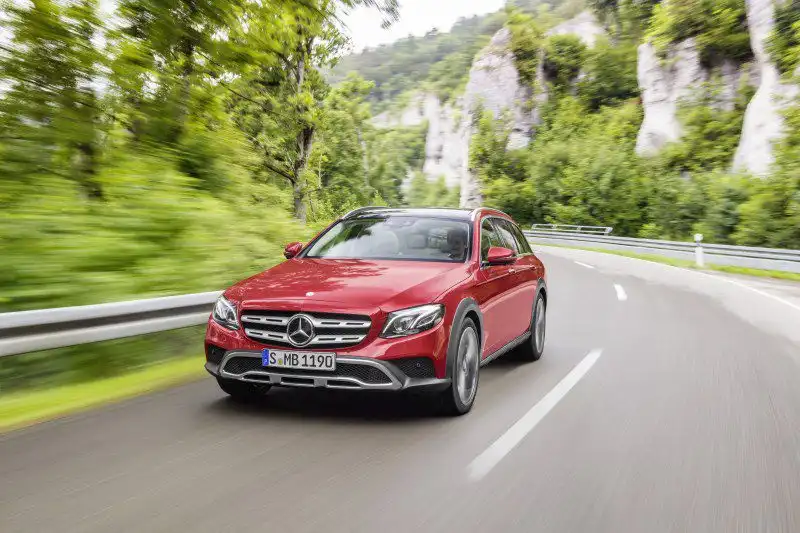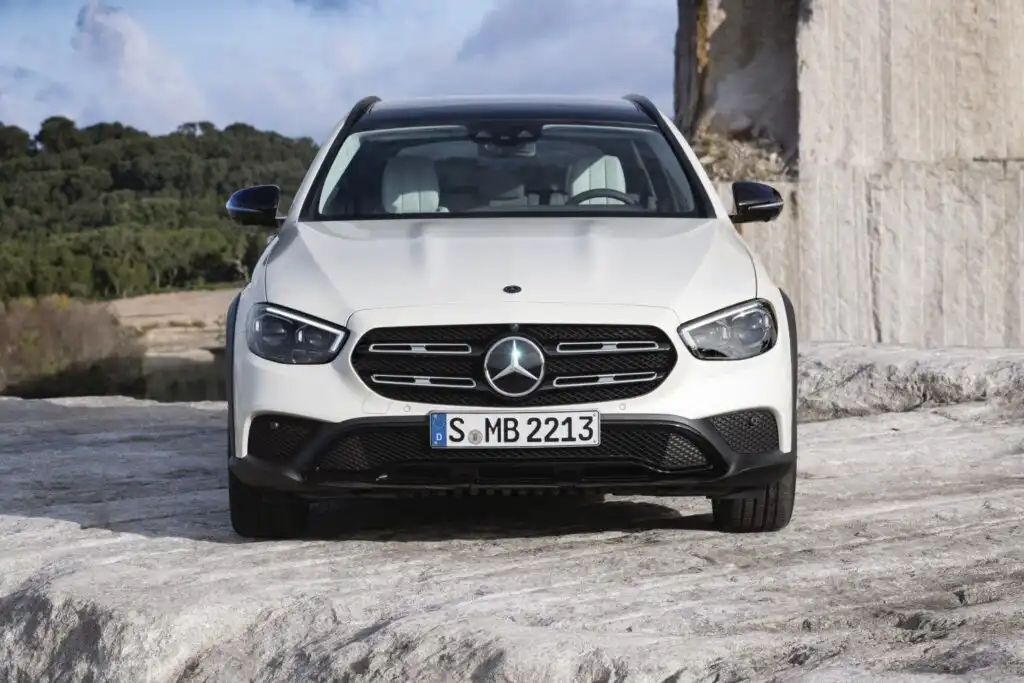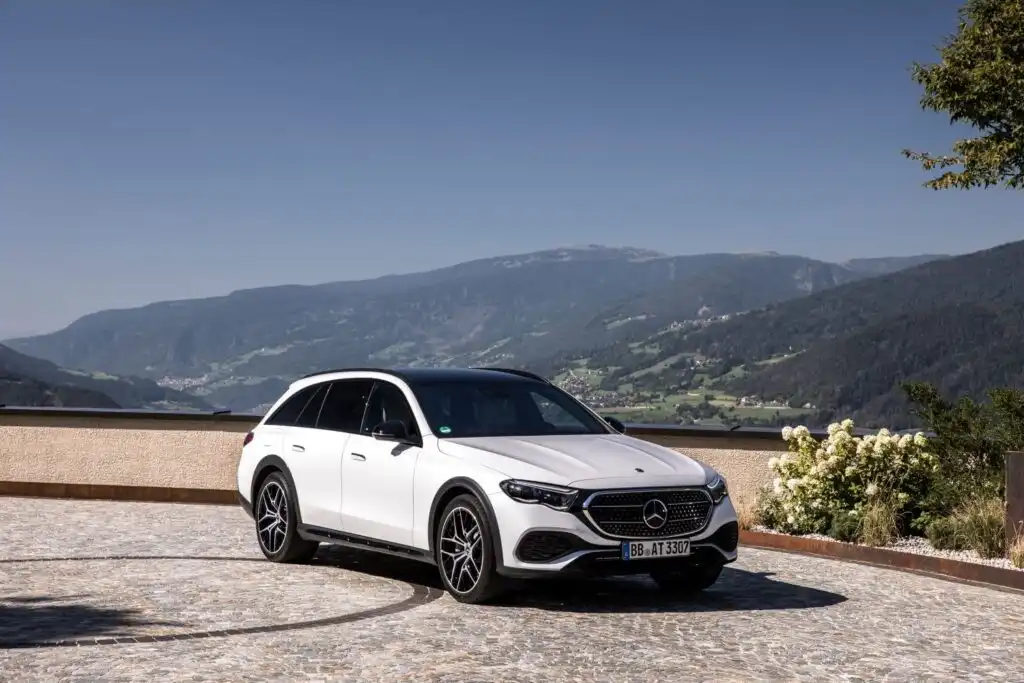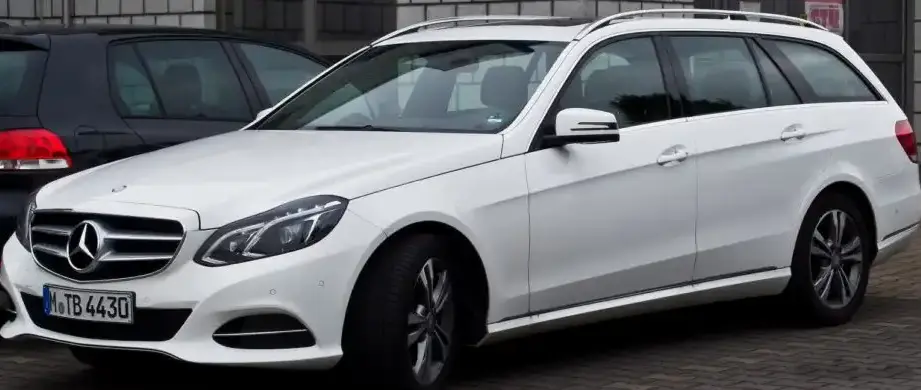
The Mercedes-Benz E 200 BlueTEC T-modell (S212 facelift) represents a compelling blend of practicality, efficiency, and luxury within the E-Class range. Produced from July 2014 to July 2016, this variant occupied a key position as an entry-level diesel option in the estate (wagon) body style, appealing to buyers prioritizing fuel economy and long-distance comfort. It falls within the S212 generation, which received a significant facelift in 2013, bringing updated styling, improved technology, and more efficient engine options. The E 200 BlueTEC T-modell was primarily marketed in Europe, where demand for diesel-powered wagons remained strong.
Technical Specifications
| Brand | Mercedes-Benz |
| Model | E-class |
| Generation | E-class T-modell (S212, facelift 2013) |
| Type (Engine) | E 200 BlueTEC (136 Hp) |
| Start of production | July, 2014 |
| End of production | July, 2016 |
| Powertrain Architecture | Internal Combustion engine |
| Body type | Station wagon (estate) |
| Seats | 5 |
| Doors | 5 |
| Fuel consumption (economy) – urban (NEDC) | 6.1 l/100 km (38.6 US mpg, 46.3 UK mpg, 16.4 km/l) |
| Fuel consumption (economy) – extra urban (NEDC) | 4.3-4.5 l/100 km (54.7 – 52.3 US mpg, 65.7 – 62.8 UK mpg, 23.3 – 22.2 km/l) |
| Fuel consumption (economy) – combined (NEDC) | 4.9-5.2 l/100 km (48 – 45.2 US mpg, 57.6 – 54.3 UK mpg, 20.4 – 19.2 km/l) |
| CO2 emissions (NEDC) | 129-135 g/km |
| Fuel Type | Diesel |
| Acceleration 0 – 100 km/h | 10.7 sec |
| Acceleration 0 – 62 mph | 10.7 sec |
| Acceleration 0 – 60 mph | 10.2 sec |
| Maximum speed | 205 km/h (127.38 mph) |
| Emission standard | Euro 6 |
| Weight-to-power ratio | 13 kg/Hp, 76.8 Hp/tonne |
| Weight-to-torque ratio | 4.9 kg/Nm, 203.4 Nm/tonne |
| Power | 136 Hp @ 2800-4600 rpm |
| Power per litre | 63.5 Hp/l |
| Torque | 360 Nm @ 1400-2600 rpm (265.52 lb.-ft. @ 1400-2600 rpm) |
| Engine layout | Front, Longitudinal |
| Engine Model/Code | OM 651.925 |
| Engine displacement | 2143 cm3 (130.77 cu. in.) |
| Number of cylinders | 4 |
| Engine configuration | Inline |
| Cylinder Bore | 83 mm (3.27 in.) |
| Piston Stroke | 99 mm (3.9 in.) |
| Compression ratio | 16.2:1 |
| Number of valves per cylinder | 4 |
| Fuel injection system | Diesel Commonrail |
| Engine aspiration | Turbocharger, Intercooler |
| Valvetrain | DOHC |
| Engine oil capacity | 6.5 l (6.87 US qt | 5.72 UK qt) |
| Coolant | 10 l (10.57 US qt | 8.8 UK qt) |
| Kerb Weight | 1770 kg (3902.18 lbs.) |
| Max. weight | 2410 kg (5313.14 lbs.) |
| Max load | 640 kg (1410.96 lbs.) |
| Trunk (boot) space – minimum | 600 l (21.19 cu. ft.) |
| Trunk (boot) space – maximum | 1855 l (65.51 cu. ft.) |
| Fuel tank capacity | 59 l (15.59 US gal | 12.98 UK gal) |
| AdBlue tank | 25.5 l (6.74 US gal | 5.61 UK gal) |
| Max. roof load | 100 kg (220.46 lbs.) |
| Permitted trailer load with brakes (8%) | 2100 kg (4629.71 lbs.) |
| Permitted trailer load with brakes (12%) | 1900 kg (4188.78 lbs.) |
| Permitted trailer load without brakes | 750 kg (1653.47 lbs.) |
| Permitted towbar download | 84 kg (185.19 lbs.) |
| Length | 4905 mm (193.11 in.) |
| Width | 1854 mm (72.99 in.) |
| Width including mirrors | 2071 mm (81.54 in.) |
| Height | 1507 mm (59.33 in.) |
| Wheelbase | 2874 mm (113.15 in.) |
| Front track | 1583 mm (62.32 in.) |
| Rear (Back) track | 1604 mm (63.15 in.) |
| Front overhang | 849 mm (33.43 in.) |
| Rear overhang | 1182 mm (46.54 in.) |
| Drag coefficient (Cd) | 0.29 |
| Minimum turning circle (turning diameter) | 11.28 m (37.01 ft.) |
| Drivetrain Architecture | The Internal combustion engine (ICE) drives the rear wheels of the vehicle. |
| Drive wheel | Rear wheel drive |
| Number of gears and type of gearbox | 6 gears, manual transmission |
| Front suspension | Coil spring, Independent multi-link suspension, Transverse stabilizer, Air Suspension – Optional |
| Rear suspension | Independent multi-link suspension, Air suspension, Transverse stabilizer |
| Front brakes | Ventilated discs |
| Rear brakes | Disc |
| Assisting systems | ABS (Anti-lock braking system) |
| Steering type | Steering rack and pinion |
| Power steering | Electric Steering |
| Tires size | Front wheel tires: 225/55 R16; 245/45 R17; 245/40 R18; 245/35 R19Rear wheel tires: 225/55 R16; 245/45 R17; 245/40 R18; 265/35 R18; 275/30 R19 |
| Wheel rims size | Front wheel rims: 7.5J x 16; 8J x 17; 8.5J x 18; 8.5J x 19Rear wheel rims: 7.5J x 16; 8J x 17; 8.5J x 18; 9J x 18; 9.5J x 19 |
Powertrain & Engine Architecture
The E 200 BlueTEC T-modell is powered by the OM651.925, a 2.1-liter inline-four cylinder diesel engine. This engine is a cornerstone of Mercedes-Benz’s diesel offerings, known for its durability and efficiency. It features a common-rail direct injection system, delivering fuel at extremely high pressure for optimized combustion. The engine utilizes a single turbocharger with an intercooler to boost power and torque. The valvetrain employs a double overhead camshaft (DOHC) design with four valves per cylinder, enhancing breathing and overall performance. The engine’s output of 136 horsepower at 2800-4600 rpm and 360 Nm (265.52 lb-ft) of torque between 1400-2600 rpm provides a good balance of power and fuel economy. The engine also incorporates a Start & Stop system and a particulate filter to reduce emissions, meeting Euro 6 standards.
Driving Characteristics
The E 200 BlueTEC T-modell, with its 136 hp and manual transmission, offers a comfortable and refined driving experience. Acceleration from 0-100 km/h (0-62 mph) takes approximately 10.7 seconds. While not particularly sporty, the engine delivers ample torque for everyday driving and overtaking maneuvers. The manual transmission provides precise gear changes, allowing drivers to maintain optimal engine speed for efficiency or performance. Compared to higher-output E-Class variants like the E 250 or E 350, the E 200 BlueTEC prioritizes fuel economy over outright speed. The gear ratios are tuned for maximizing fuel efficiency, resulting in a slightly less responsive feel than its more powerful siblings. However, this trade-off is appealing to drivers who prioritize long-distance comfort and low running costs.
Equipment & Trim Levels
The E 200 BlueTEC T-modell typically came equipped with a generous array of standard features, including automatic climate control, a multi-function steering wheel, and an audio system with Bluetooth connectivity. Interior upholstery was generally cloth, with leather options available as an upgrade. The dashboard layout was typical of the S212 E-Class, featuring a clean and functional design. Optional extras included a navigation system, parking sensors, a panoramic sunroof, and upgraded audio systems. Trim levels varied slightly depending on the market, but generally offered packages that bundled popular options together.
Chassis & Braking
The E 200 BlueTEC T-modell utilizes a coil spring, independent multi-link suspension at the front and an independent multi-link suspension at the rear. Air suspension was available as an optional extra, providing a more comfortable ride quality. The braking system consists of ventilated discs at the front and solid discs at the rear, coupled with ABS (Anti-lock Braking System) for enhanced safety. The electric power steering provides a precise and responsive feel. Stabilizer bars are fitted to both the front and rear axles to reduce body roll during cornering.
Market Reception & Comparison
The E 200 BlueTEC T-modell was generally well-received by critics for its fuel efficiency, comfortable ride, and spacious interior. It was often praised as a practical and sensible choice for families and individuals who frequently travel long distances. Compared to other trims in the E-Class lineup, the E 200 BlueTEC offered the best fuel economy, making it an attractive option for cost-conscious buyers. However, some reviewers noted that its performance was not as exhilarating as that of the more powerful variants. Against competitors like the Audi A6 Avant and BMW 5 Series Touring, the E 200 BlueTEC offered a compelling combination of luxury, practicality, and efficiency.
Legacy
The OM651 engine family, including the 2.1-liter variant found in the E 200 BlueTEC, has proven to be remarkably durable and reliable. With proper maintenance, these engines can easily exceed 200,000 kilometers (124,000 miles) without major issues. On the used car market, the E 200 BlueTEC T-modell represents a good value proposition, offering a comfortable and well-equipped estate car at a relatively affordable price. However, potential buyers should be aware of the potential for diesel particulate filter (DPF) issues, particularly if the vehicle has primarily been used for short journeys. Regular servicing and the use of high-quality diesel fuel are essential for maintaining the long-term reliability of this powertrain.